Nature awareness Addition & Subtraction Worksheets for Ages 3-7
8 filtered results
-
From - To
Explore our engaging Nature Awareness Addition & Subtraction Worksheets designed specifically for children ages 3 to 7! These colorful, interactive worksheets integrate math concepts with the beauty of the natural world, making learning fun and relatable. Young learners will develop essential addition and subtraction skills while observing and interacting with various elements of nature. Whether counting butterflies, adding up trees, or subtracting flowers, these worksheets foster creativity and critical thinking. Perfect for parents and educators, our materials encourage a love for math and nature simultaneously. Download now to inspire your child's learning journey!
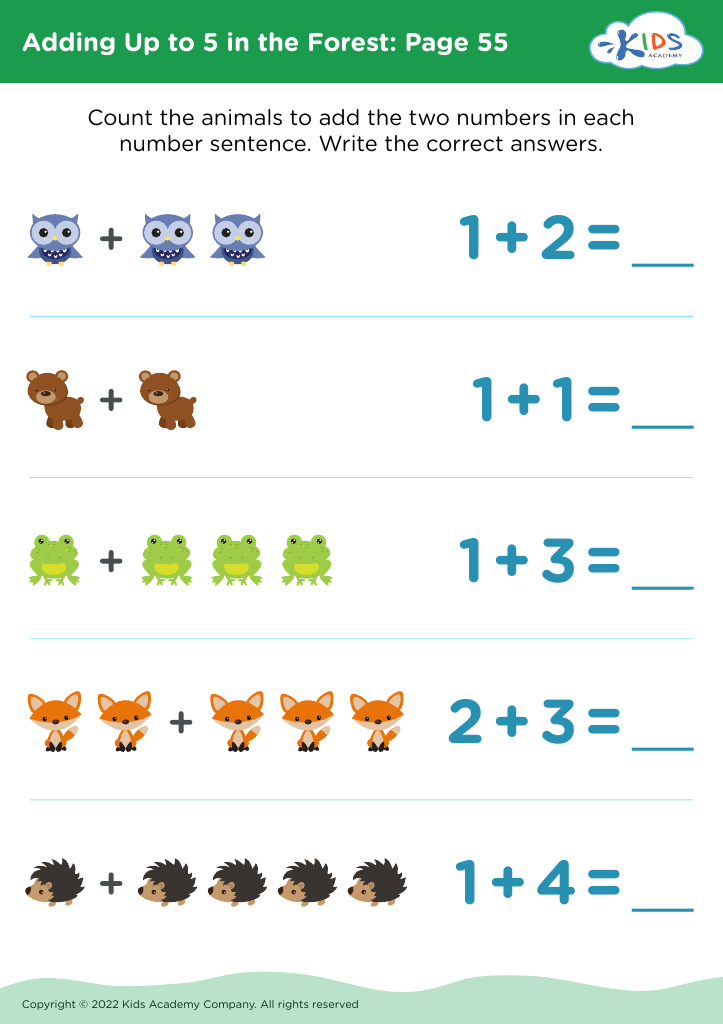
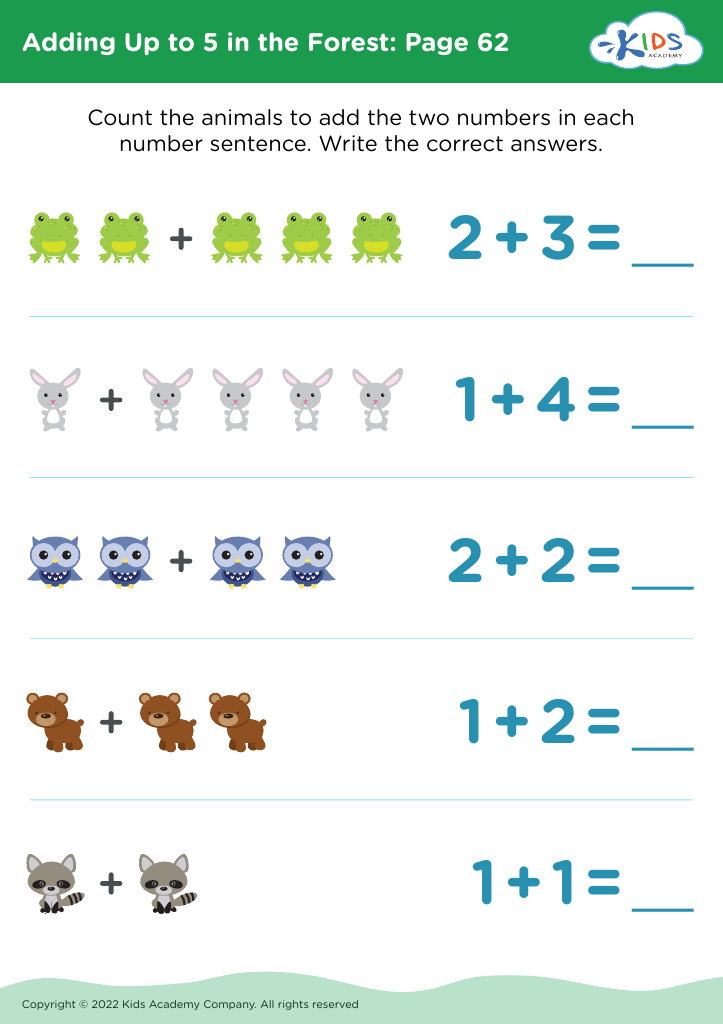
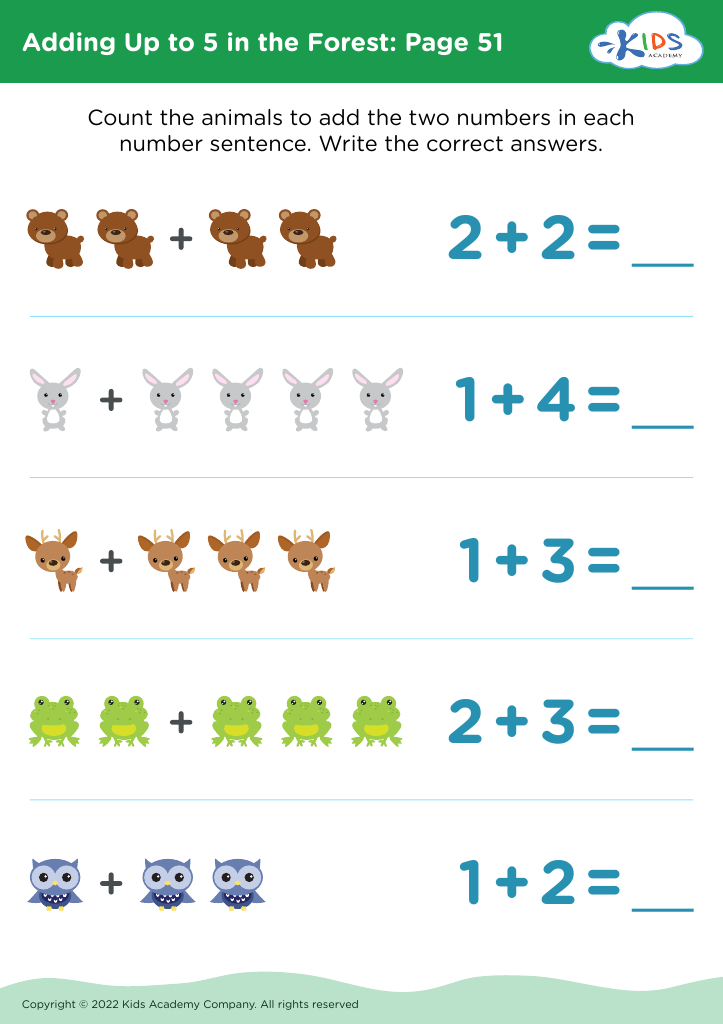
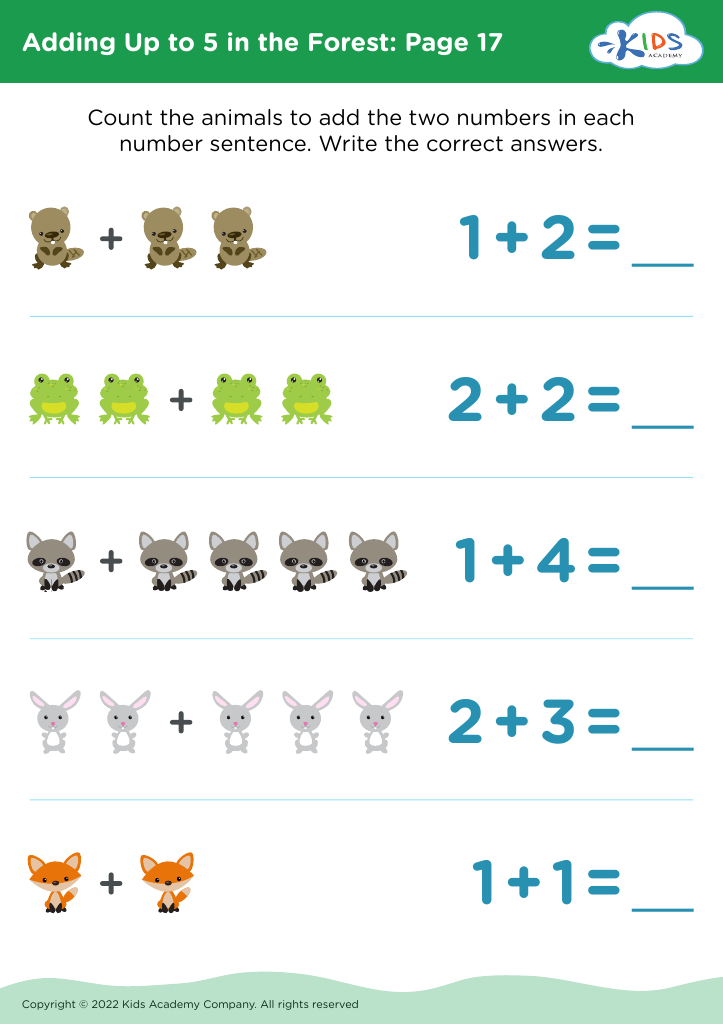
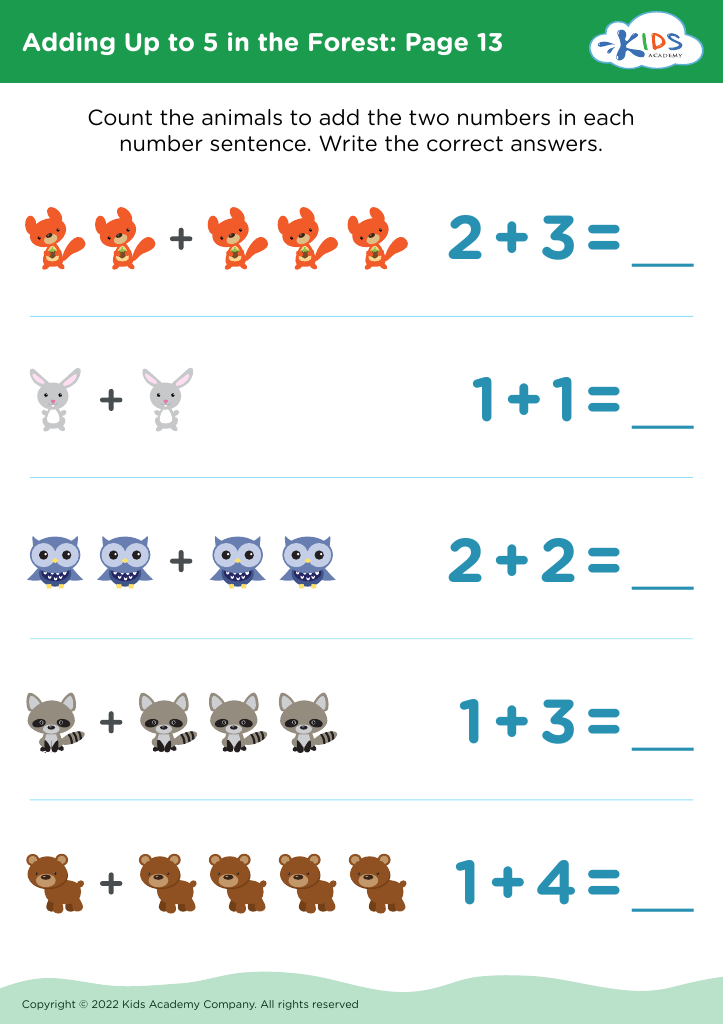
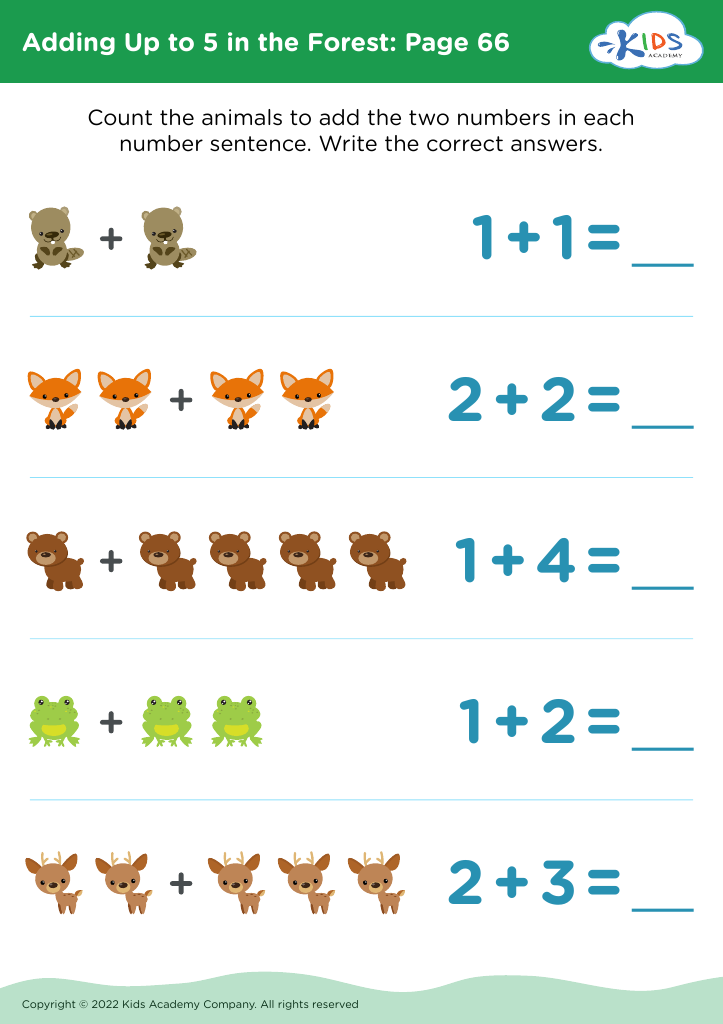
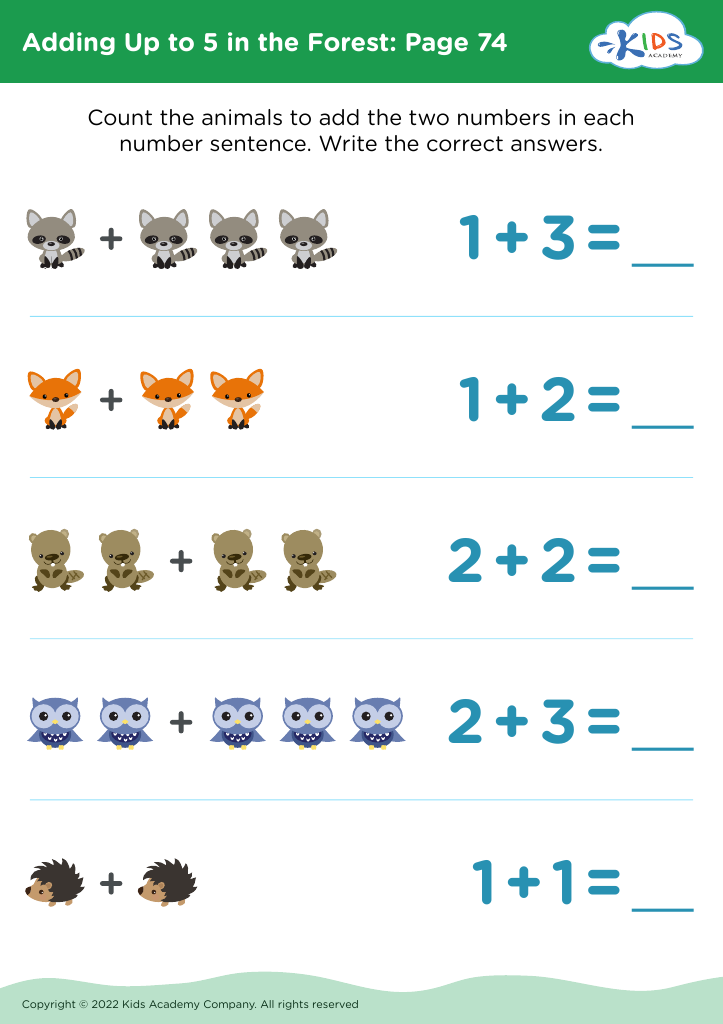
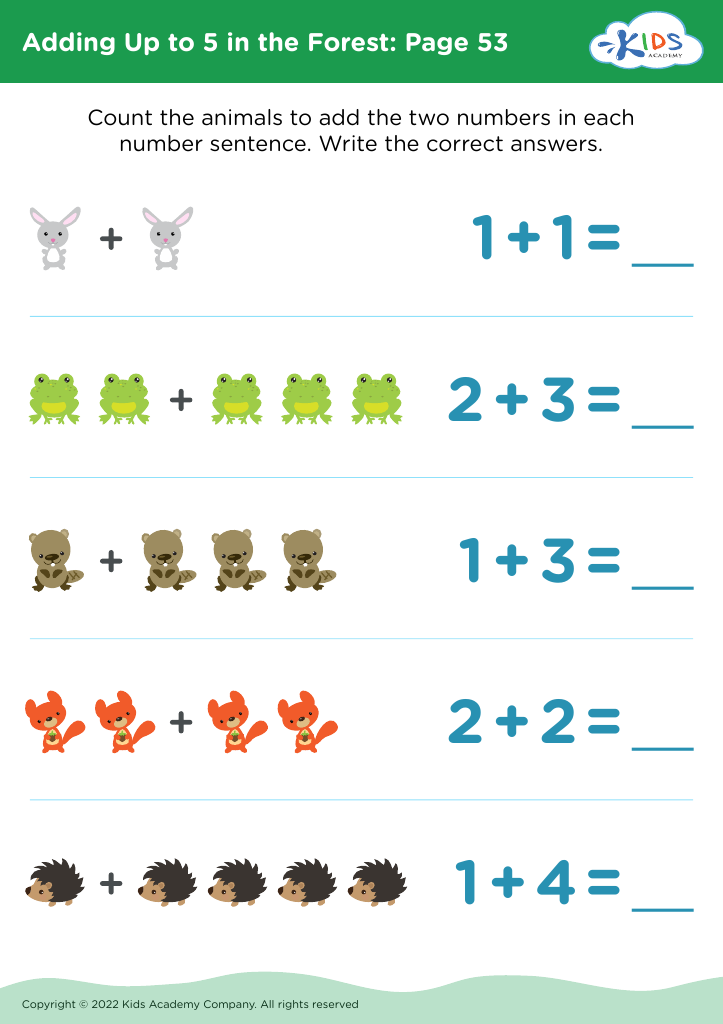








Nature awareness in teaching addition and subtraction for ages 3-7 is essential because it cultivates both mathematical and ecological understanding in young learners. By integrating nature-related themes into math lessons, children can connect mathematical concepts to the world around them. For instance, using leaves, stones, or natural objects allows children to visualize and manipulate items, transforming abstract numbers into concrete experiences. This hands-on approach makes learning more engaging and memorable.
Moreover, fostering nature awareness helps instill a sense of responsibility and curiosity about the environment. As children learn math through nature, they start to appreciate biodiversity, ecosystems, and the importance of conservation. This holistic approach encourages not only cognitive development but also emotional and social skills, as children often collaborate in outdoor settings.
Additionally, early experiences in nature can reduce stress and anxiety, contributing to healthier learning environments. Parents and teachers should care about this integration because it aligns with developmental goals, encourages critical thinking, and builds a foundation for lifelong learning. Ultimately, nurturing mathematical skills through nature can foster well-rounded individuals who respect and actively participate in their environment.








