Number comparison Addition & Subtraction Worksheets for Ages 3-7
3 filtered results
-
From - To
Enhance your child's math skills with our curated number comparison, addition, and subtraction worksheets, perfect for children ages 3-7. These engaging worksheets from Kids Academy help young learners understand the concepts of greater than, less than, and equal to, while also practicing foundational arithmetic. Vibrant illustrations and interactive exercises make learning fun and effective, fostering a love for math from an early age. Encourage critical thinking and boost your child’s confidence in counting and simple operations. Visit Kids Academy to download these educational resources and pave the way for your child's academic success.
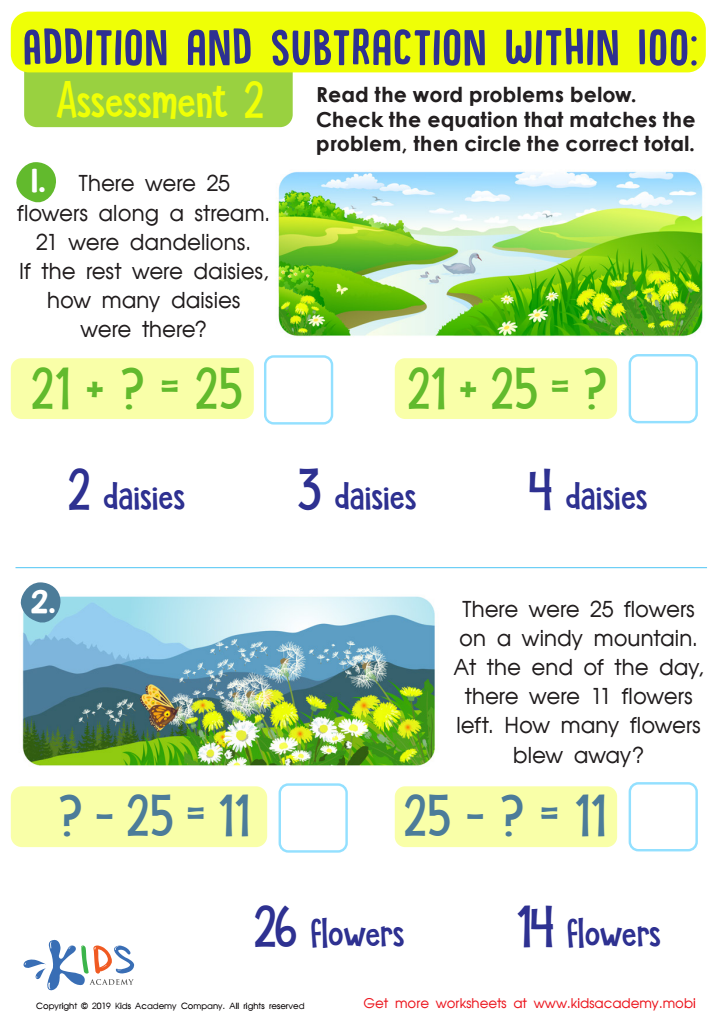
Assessment 2 Math Worksheet
 Assign to My Students
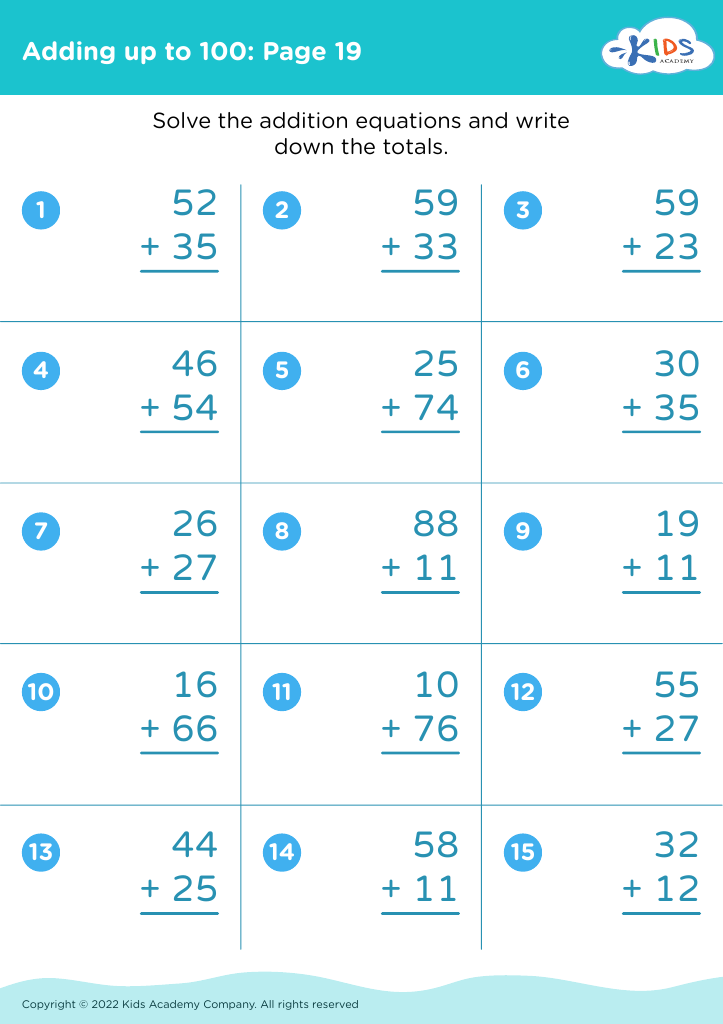
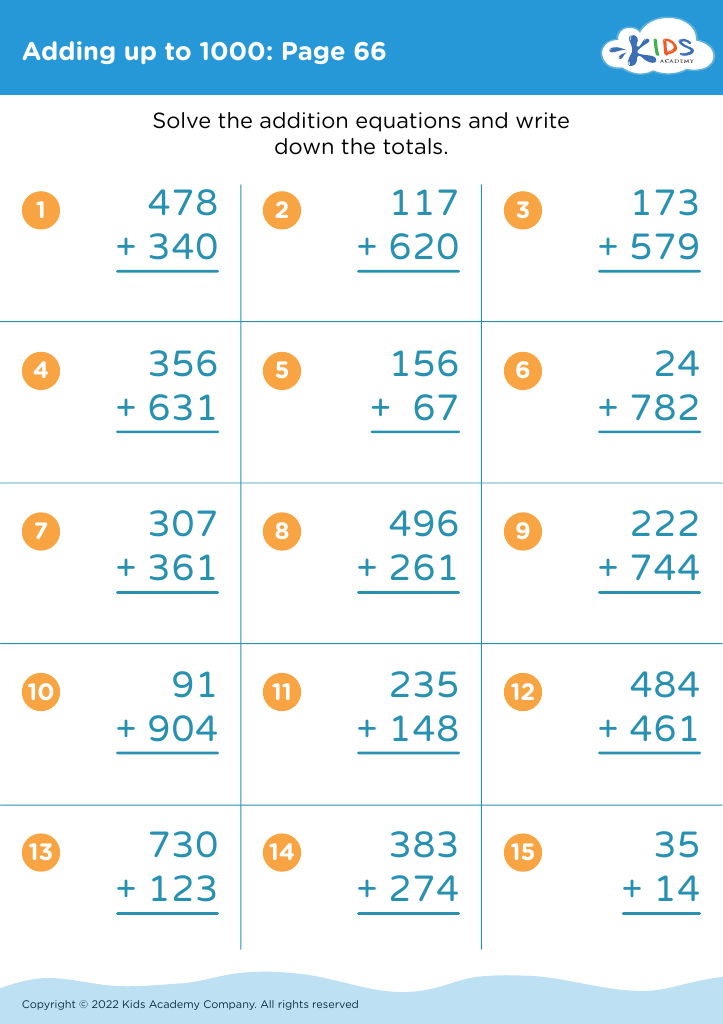








Understanding number comparison, addition, and subtraction for children ages 3-7 is fundamental for several reasons. Firstly, these basic mathematical concepts form the building blocks of future mathematical learning. When children grasp number comparison—knowing which numbers are larger, smaller, or equal—they develop an intuitive sense of number sense and magnitude. This fundamental skill is critical for more advanced math topics.
Secondly, addition and subtraction are the cornerstones of arithmetic. Mastering these operations enables children to handle more complex mathematical problems with confidence as they progress in their education. Engaging with these concepts early in life sets a solid foundation upon which other mathematical concepts can be built, including multiplication, division, fractions, and even algebra.
Moreover, these skills also enhance cognitive development. Learning how to compare numbers, add, and subtract promotes logical thinking, problem-solving skills, and critical reasoning. It aids in developing persistence and patience as children learn to solve mathematical problems methodically.
Lastly, proficiency in early math skills is linked to academic success across other subjects. A strong grasp of basic math principles enhances children's ability to engage in activities that require analytical skills, read instructions carefully, and follow sequences in tasks, all of which contribute to their overall academic and life success. Therefore, parents and teachers should give these early math concepts the attention they deserve.








