Problem-solving ability Addition & Subtraction Worksheets for Ages 3-7
3 filtered results
-
From - To
Enhance your child's problem-solving abilities with our engaging Addition and Subtraction Worksheets designed specifically for ages 3-7. These worksheets combine fun and education, allowing young learners to grasp fundamental math concepts while developing critical thinking skills. Each worksheet challenges children through interactive problems that encourage logical reasoning and creativity. With a variety of exercises tailored to different skill levels, your child will gain confidence in their mathematical abilities. Perfect for home or classroom use, our printable resources make learning math an enjoyable adventure! Start fostering a love for mathematics and problem-solving in your child today!
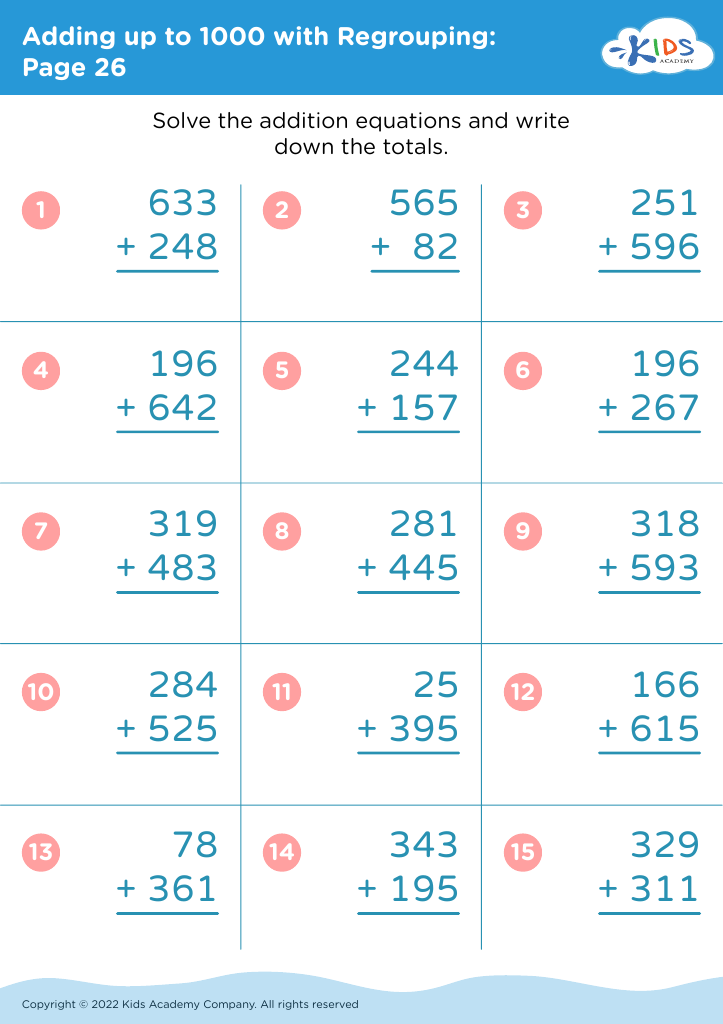
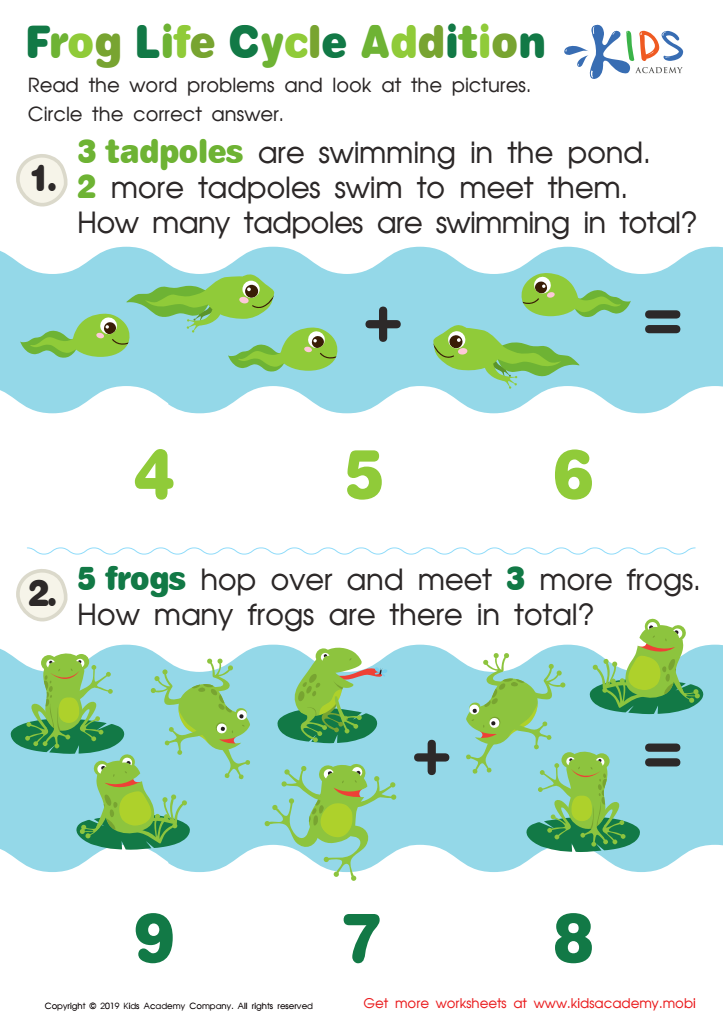
Frog Life Cycle Addition Worksheet
 Assign to My Students
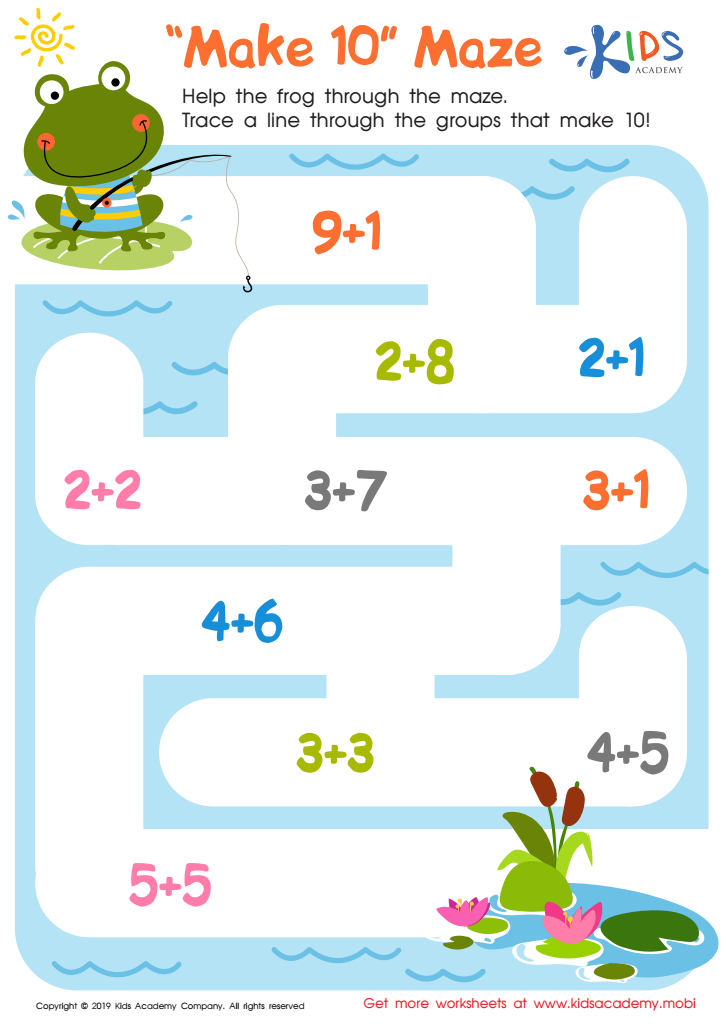
Make 10 Maze Worksheet








Problem-solving ability in addition and subtraction is crucial for children aged 3-7 as it lays the foundational skills they need for lifelong learning. During these formative years, children develop cognitive skills and learn how to think critically. Engaging with addition and subtraction encourages logical thinking and enhances their ability to approach challenges systematically.
Moreover, understanding basic math concepts helps children make sense of the world around them. When they solve problems related to real-life scenarios, such as sharing toys or counting snacks, they strengthen their understanding of numbers and their relationships. This early mathematical ability fosters confidence and can lead to greater proficiency in more complex subjects later in their education.
Furthermore, problem-solving in mathematics develops resilience. Children learn that striving to find a solution, even after making mistakes, is an essential part of the learning process. This determination translates into other areas of their lives, cultivating perseverance and critical thinking skills.
Ultimately, investing in the development of addition and subtraction problem-solving not only equips children with essential math skills but also nurtures their overall growth as inquisitive thinkers capable of tackling diverse challenges in their educational journey and beyond.








