Problem Solving Addition & Subtraction Worksheets for Ages 3-7 - Page 2
28 filtered results
-
From - To
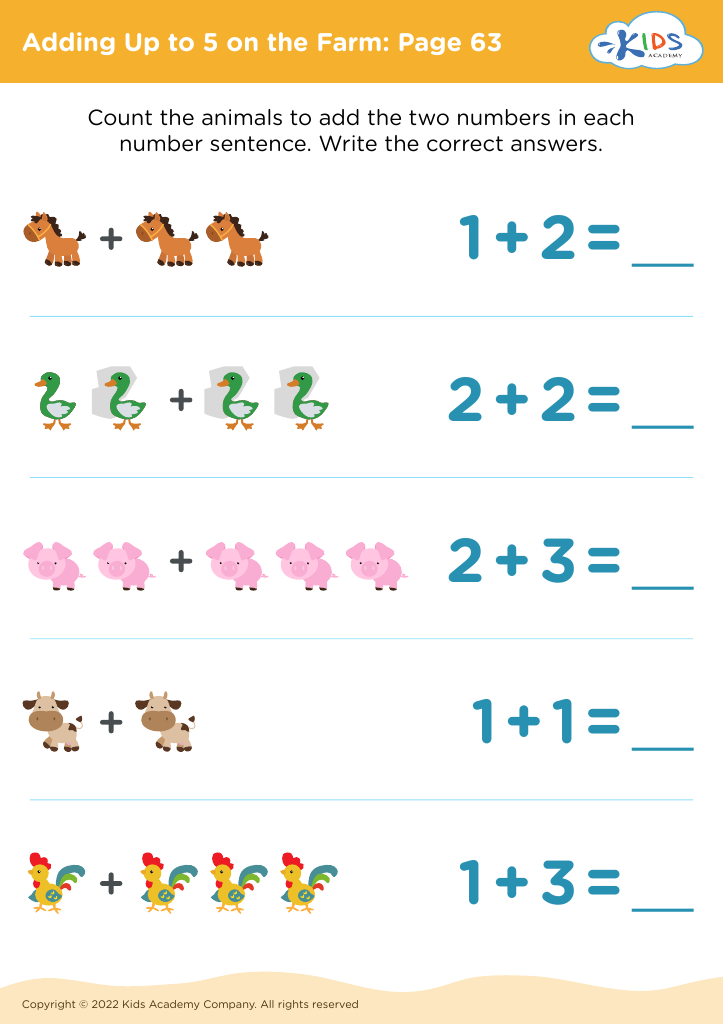
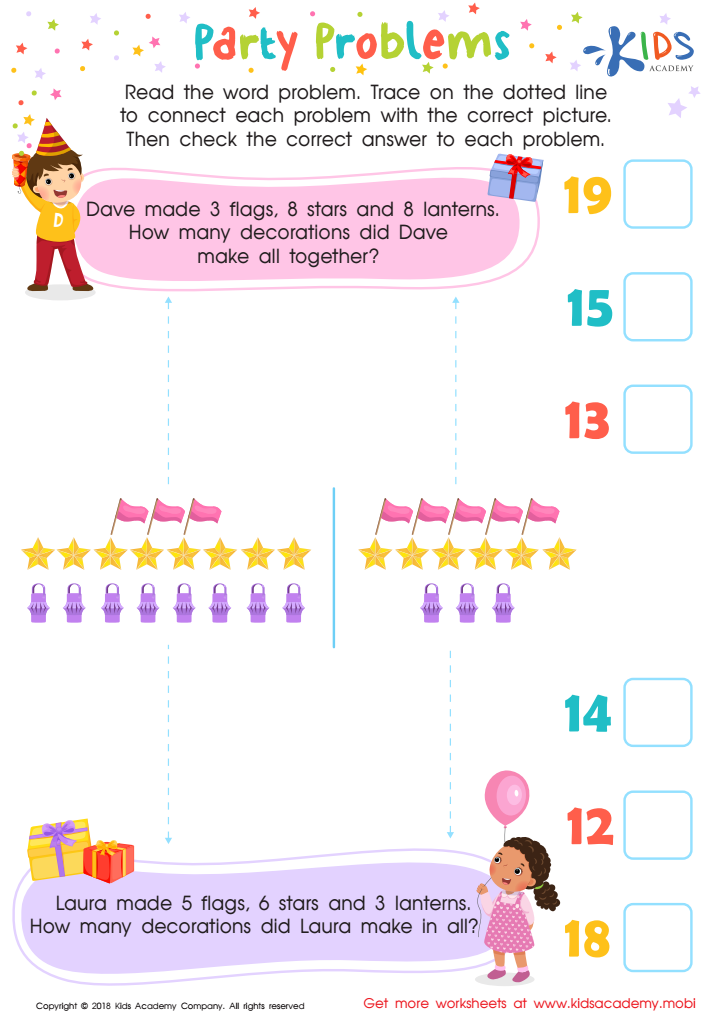
Party Problems Worksheet
 Assign to My Students
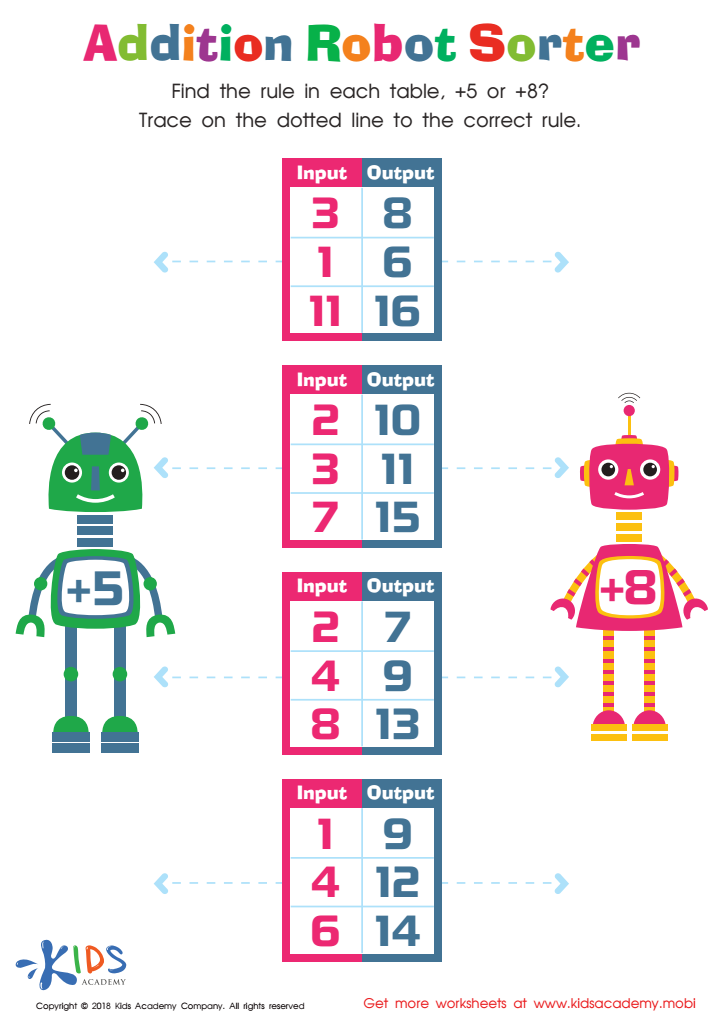
Addition Robot Sorter Worksheet
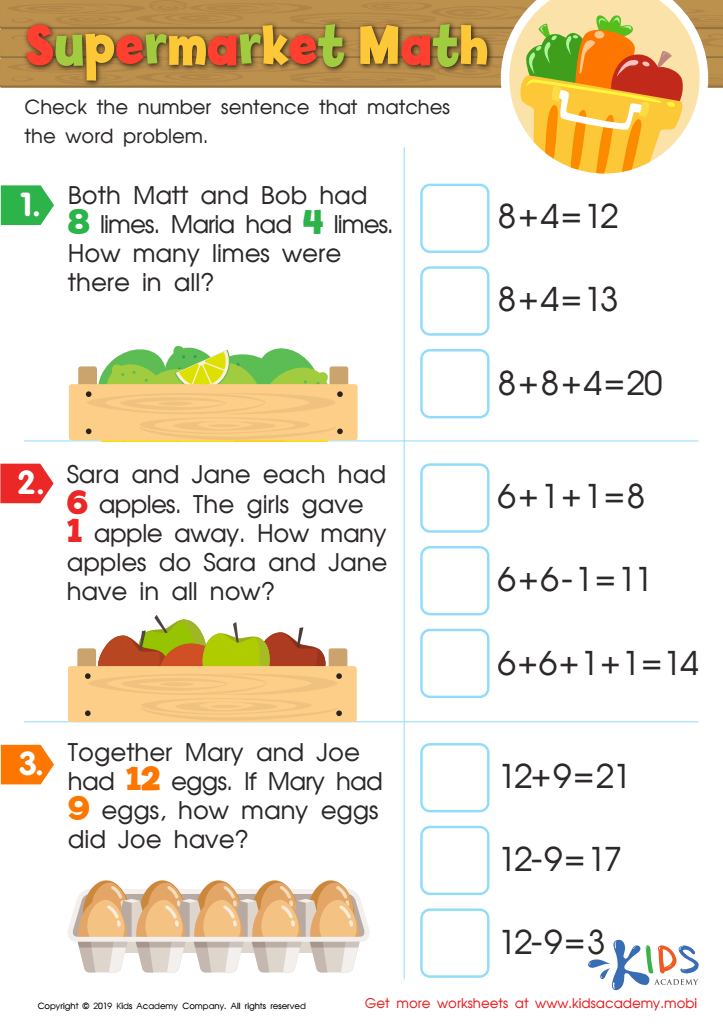
Supermarket Math Worksheet







Fostering problem-solving skills in addition and subtraction for children ages 3-7 lays a critical foundation for their cognitive and academic development. During these early years, young minds are highly receptive and ready to absorb basic arithmetic concepts, which can significantly enhance their overall learning trajectory.
Starting with problem-solving helps children understand numbers, quantify objects, and visualize mathematical relationships. This not only aids in developing math skills but also promotes logical thinking and analytical abilities. By facing basic math problems, children learn to approach challenges methodically, exploring multiple solutions and honing their reasoning capabilities.
Furthermore, mastering addition and subtraction at an early age builds confidence in children, encouraging a positive attitude towards math as they progress through their educational journey. It helps them to handle real-world scenarios, like sharing toys or managing time, promoting social skills and practical understanding.
Parents and teachers play a crucial role in creating a stimulating and supportive learning environment. Through interactive and engaging methods like games, stories, and hands-on activities, they can make the learning process enjoyable. Such early interventions ensure that children do not just memorize but truly comprehend the principles of math, setting a strong baseline for future complex problem-solving tasks.








