Sea creatures identification Addition & Subtraction Worksheets for Ages 3-7
3 filtered results
-
From - To
Explore our engaging Sea Creatures Identification Addition & Subtraction Worksheets designed for children ages 3-7! These fun, colorful worksheets enhance early math skills while introducing young learners to fascinating sea life. Your child will solve addition and subtraction problems using charming illustrations of marine animals, making math enjoyable and relatable. Each worksheet incorporates visual aids to help students identify different sea creatures and apply their math skills in a friendly and interactive way. Perfect for home or classroom use, these worksheets are an excellent resource for nurturing foundational math abilities and a love for learning in your little ocean explorer!
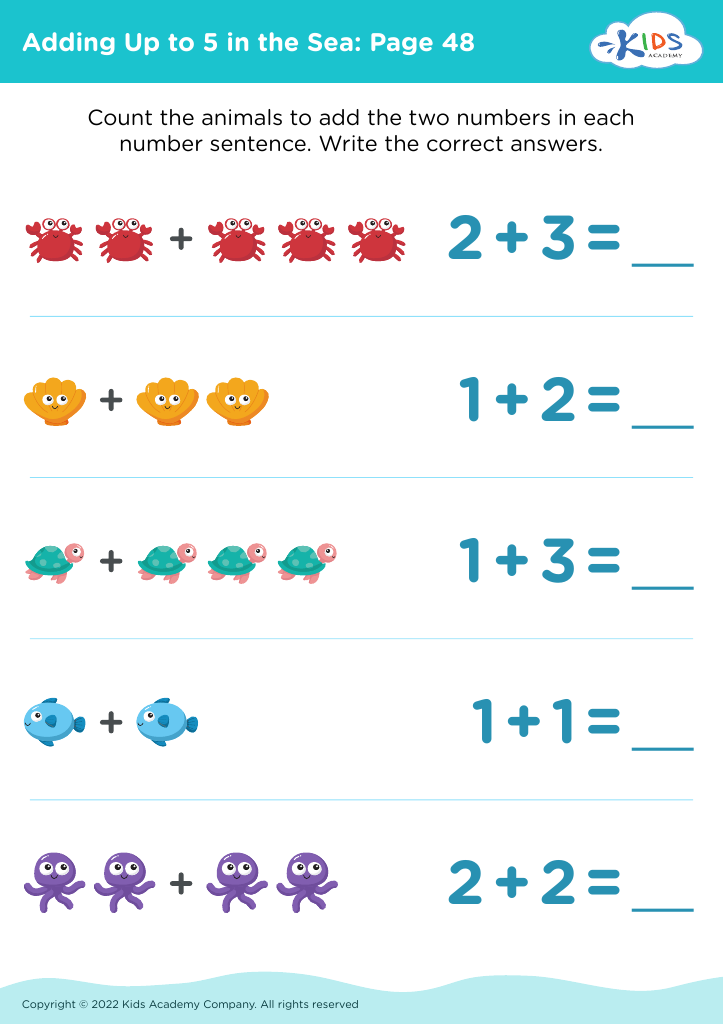
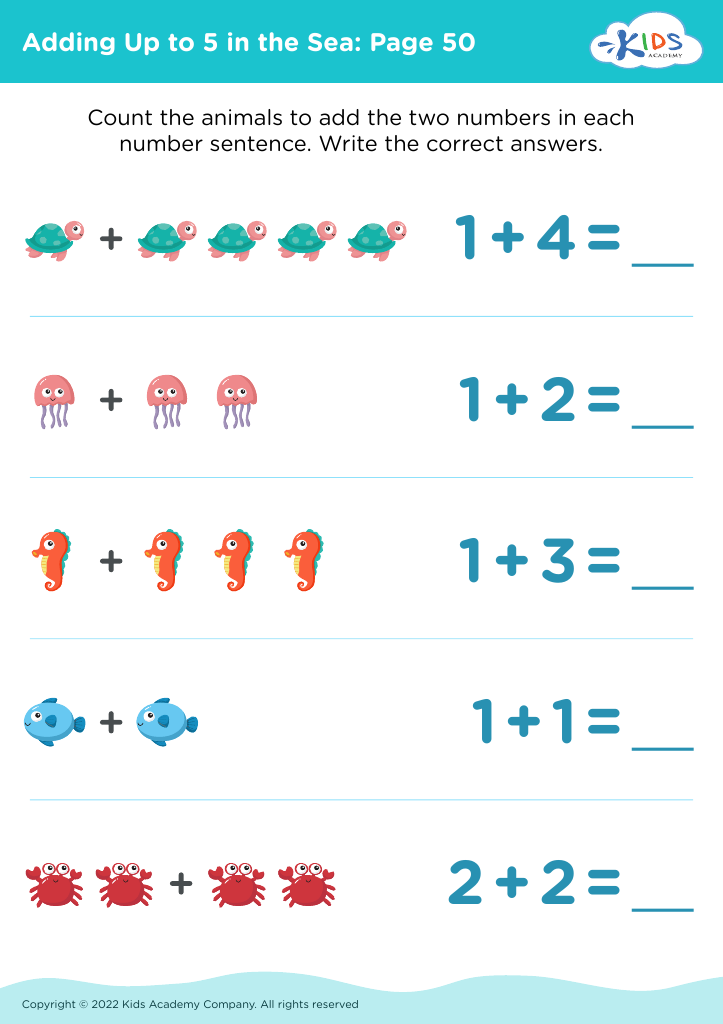
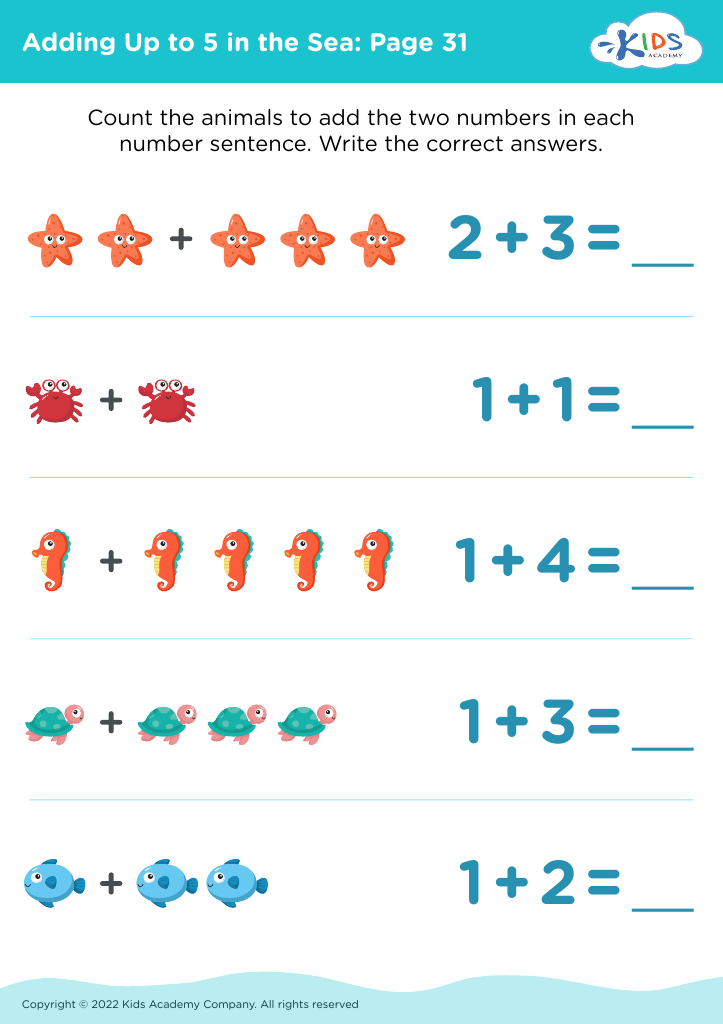








Understanding sea creatures and mastering addition and subtraction are vital for children's early development, especially in the ages of 3-7. Firstly, sea creature identification is an effective way to engage young learners with the fascinating world of marine life. It sparks curiosity, broadens their knowledge about ecology, and fosters a sense of responsibility towards ocean conservation. Teaching children to recognize different species promotes cognitive skills as they categorize and identify various creatures based on their characteristics.
On the other hand, addition and subtraction form the foundation of math literacy. By integrating these skills with sea creature themes—for example, counting the number of fish in a picture or subtracting clams to show what is left—learning becomes interactive and enjoyable.
When parents and teachers combine these topics, they create a rich, multidimensional learning experience that caters to different learning styles. It encourages critical thinking, enhances language skills, and enriches vocabulary through discussions about marine life. This integration supports holistic development, making math not just a number game, but a gateway to understanding and appreciating the world around them. By caring about both subjects, adults can foster an environment where curiosity and learning thrive.








