Sequencing Skills Addition & Subtraction Worksheets for Ages 3-7
3 filtered results
-
From - To
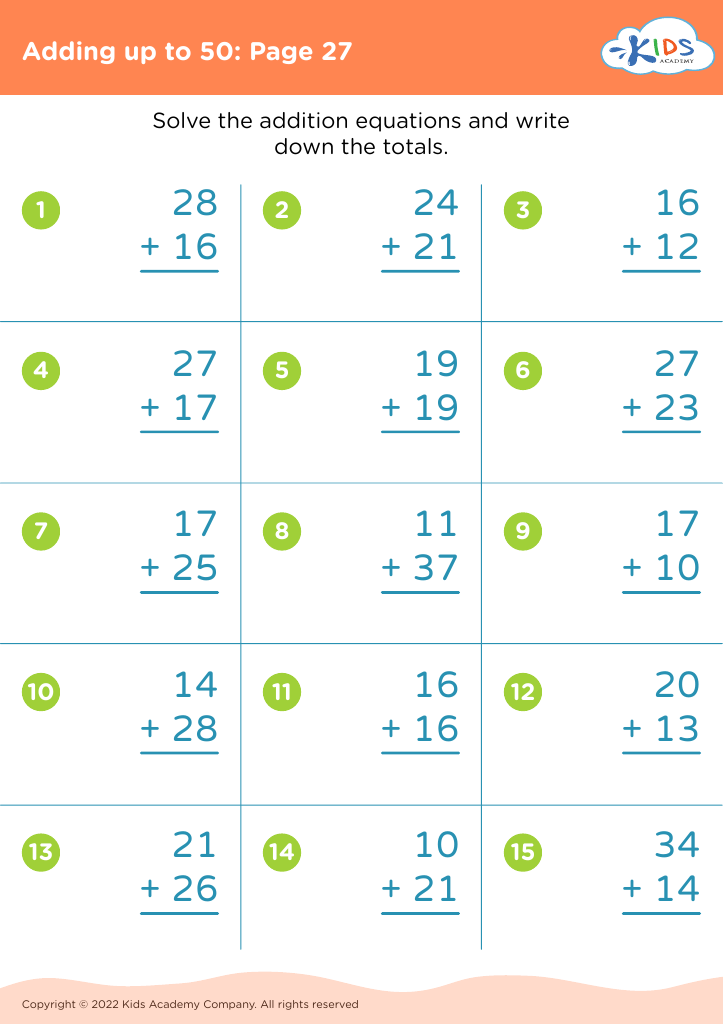
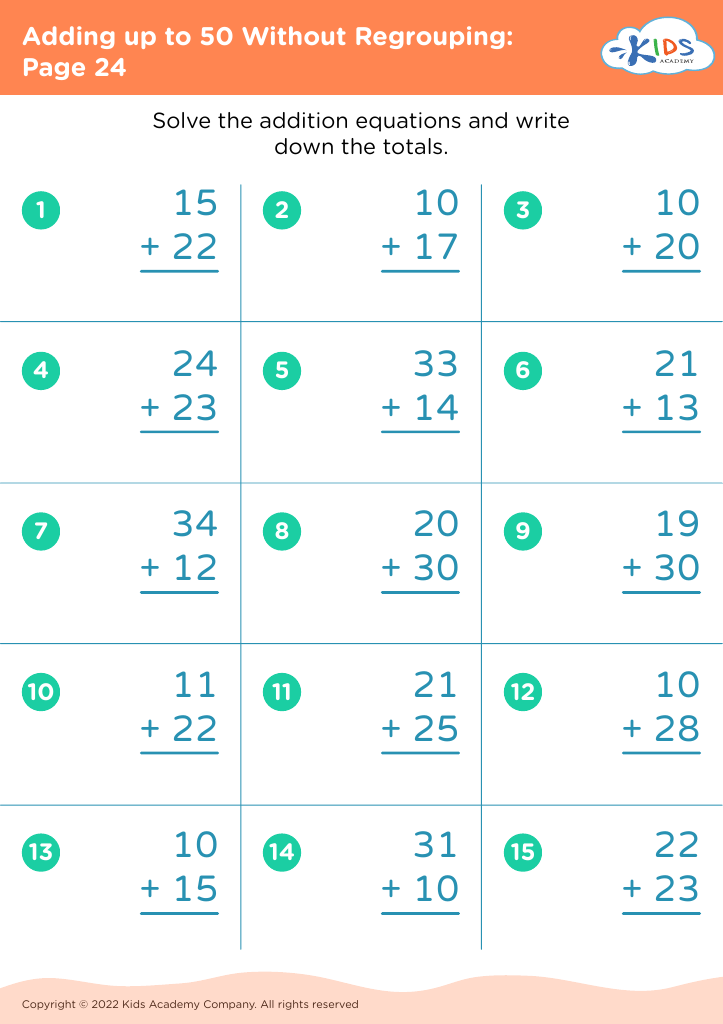
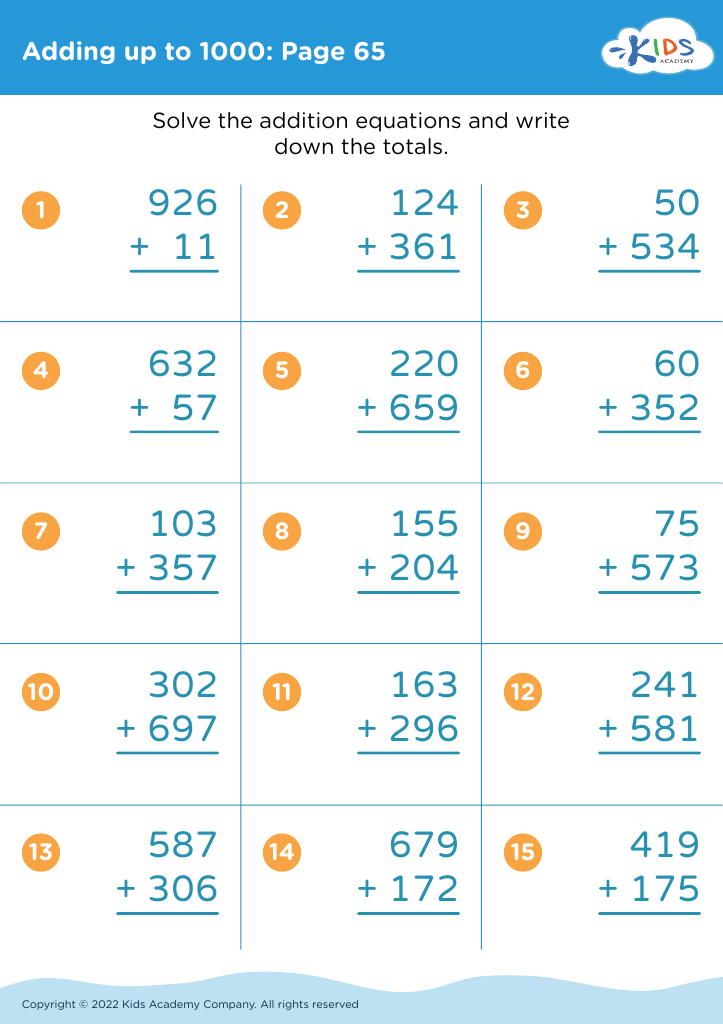
Unlock your child's mathematical potential with our Sequencing Skills Addition & Subtraction Worksheets for ages 3-7. Expertly crafted to enhance cognitive development, these fun and engaging printable worksheets from Kids Academy seamlessly integrate sequencing skills with essential math concepts. Tailored for early learners, the exercises promote number recognition, logical thinking, and problem-solving abilities. Empower your child to confidently tackle addition and subtraction while mastering the fundamental skill of sequencing. Ideal for both classroom enrichment and at-home practice, these worksheets create a solid foundation for future academic success. Download today and embark on an exciting educational journey!








Sequencing skills are the foundational abilities that allow children to place events, actions, or objects in a logical order. When it comes to early mathematics, specifically addition and subtraction for children aged 3-7, these skills are paramount. Teaching sequencing ensures that children understand the critical concept of order, which is essential for performing basic arithmetic operations.
For instance, in addition, children need to recognize that adding one quantity to another must follow a sequential process, where numbers are combined step-by-step. Similarly, subtraction requires understanding the sequence of taking away amounts in a logical order. If the sequence is disrupted or not understood, a child might get confused, leading to errors and a lack of confidence in handling mathematical problems.
Moreover, sequencing skills aid in developing critical thinking and problem-solving abilities. They nurture an understanding of patterns, which is not only beneficial in mathematics but also in reading, following instructions, and daily tasks. Additionally, mastering these skills before the age of 7 sets a strong academic foundation, creating a smoother transition into higher-level math and other subjects that require logical ordering. Thus, focusing on sequencing skills in addition and subtraction nurtures a child's comprehensive understanding and practical application of arithmetic.








