Understanding number bonds Addition & Subtraction Worksheets for Ages 3-7
3 filtered results
-
From - To
Welcome to our "Understanding Number Bonds Addition & Subtraction Worksheets" section, designed for children aged 3-7! Our engaging worksheets introduce young learners to the foundational concepts of number bonds, helping them grasp the relationships between numbers through addition and subtraction. These activities promote essential math skills while making learning fun and interactive. As kids work through colorful exercises, they will build confidence and improve their problem-solving abilities. Whether at home or in the classroom, our worksheets offer a variety of challenges suited for all learning styles. Start your child's math journey today and watch them thrive with number bonds!
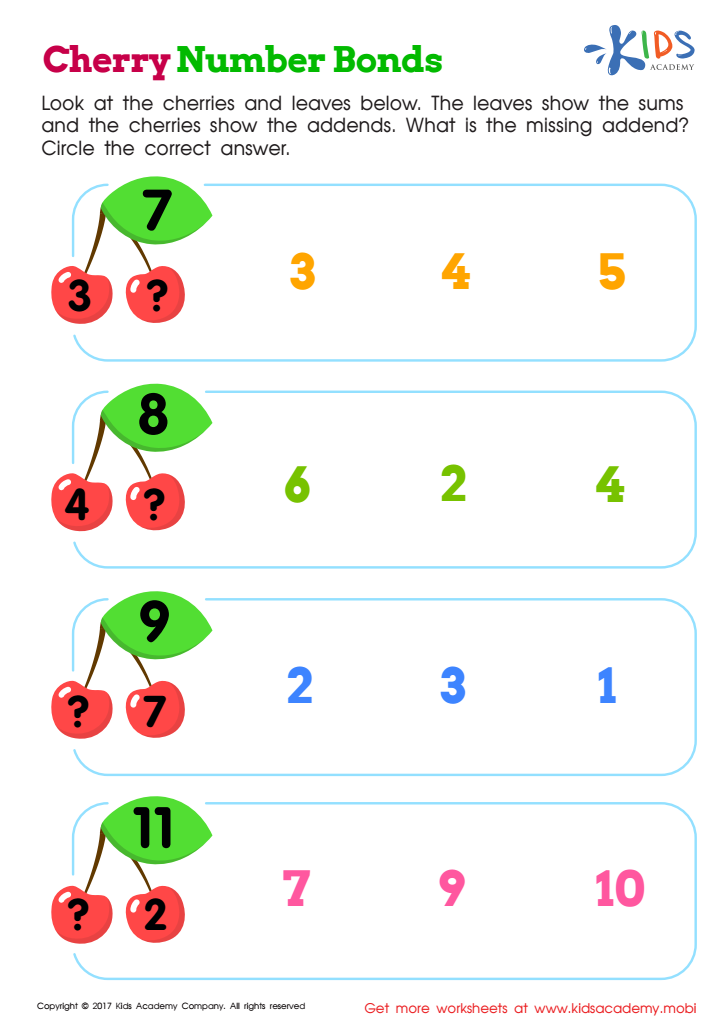
Cherry Number Bonds Worksheet
 Assign to My Students
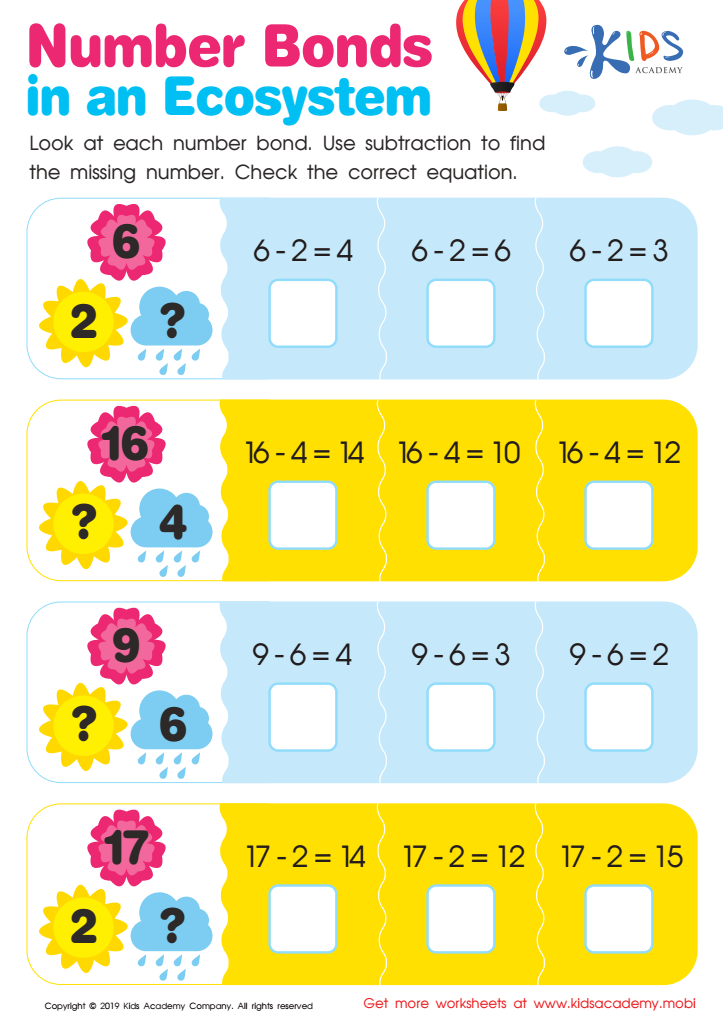
Number Bonds in an Ecosystem Worksheet
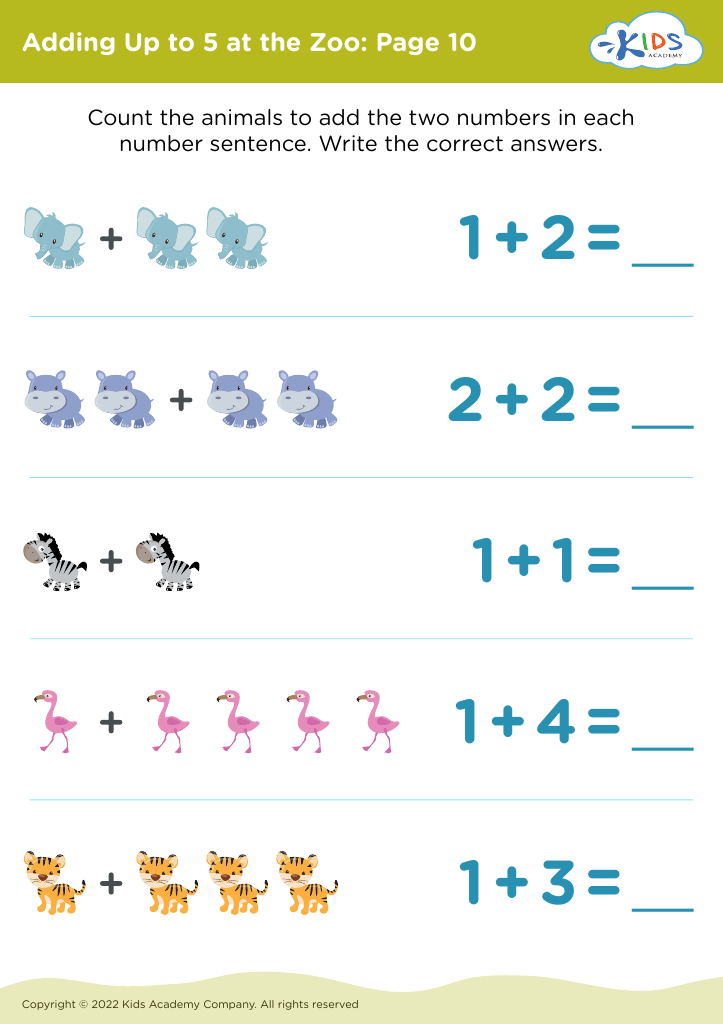








Parents and teachers should prioritize understanding number bonds for children aged 3-7 as this foundational concept significantly enhances early mathematical skills. Number bonds visually illustrate the relationship between numbers, revealing how numbers combine and break apart, which is crucial for mastering addition and subtraction. Understanding these relationships fosters number sense, allowing children to grasp how quantities relate to each other.
For early learners, actively engaging with number bonds promotes problem-solving abilities, encouraging children to explore different ways to combine numbers. This understanding goes beyond rote memorization of math facts; it cultivates mental math skills that improve fluency and confidence in mathematics.
Additionally, number bonds help demystify more complex mathematical concepts down the line, setting a solid groundwork for future learning. The ability to visualize and decompose numbers also facilitates logical thinking and reasoning abilities critical across all subjects.
Integrating number bonds into everyday activities not only makes learning fun but also helps children recognize the practical applications of math in daily life. Ultimately, fostering a strong grasp of number bonds equips children with essential skills that benefit their overall academic journey and lifelong learning in mathematics.








