Understanding number values Addition & Subtraction Worksheets for Ages 3-7
3 filtered results
-
From - To
Unlock the joy of learning with our "Understanding Number Values: Addition & Subtraction Worksheets" designed for ages 3-7. These engaging and educational resources foster foundational math skills, helping young learners grasp the concepts of addition and subtraction while developing a strong number sense. Each worksheet is thoughtfully crafted to challenge and inspire, featuring colorful illustrations and age-appropriate problems that keep kids motivated. Ideal for parents and teachers, these printables support your child’s mathematical journey, nurturing their confidence and enthusiasm for learning. Visit Kids Academy today to start building your child's numeric confidence!
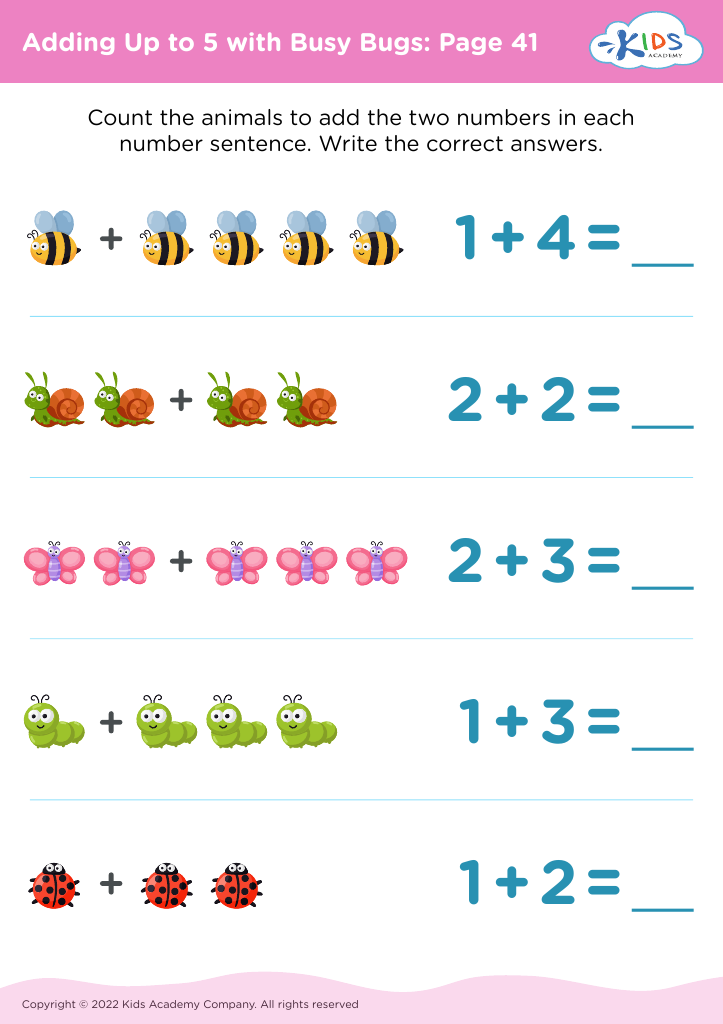
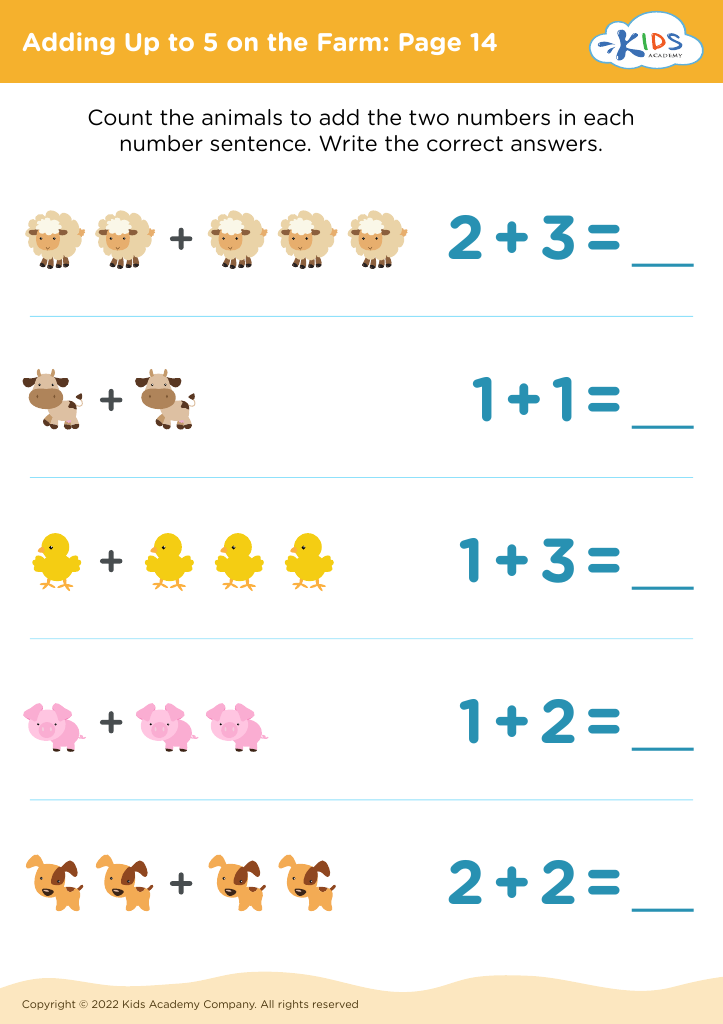
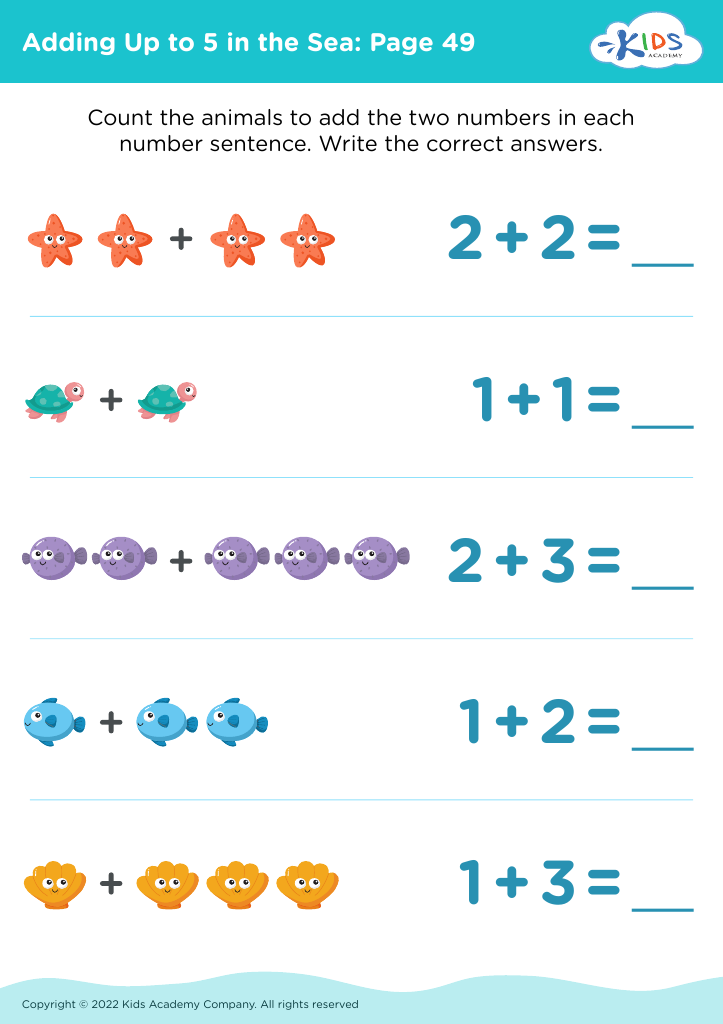








Understanding number values, addition, and subtraction at an early age (3-7 years) sets a crucial foundation for a child's future success in mathematics and overall cognitive development. During these formative years, children's brains are exceptionally receptive to new concepts. Introducing them to basic math skills early helps develop critical thinking, problem-solving, and logical reasoning abilities.
When children grasp number values, they learn to recognize quantities, compare magnitudes, and understand the relationships between different numbers. This foundational knowledge smooths their path toward more complex mathematical concepts later on. Addition and subtraction are fundamental operations that illustrate how numbers interact and change, which are core skills they'll build upon in every subsequent stage of math learning.
Moreover, early mastery of these skills boosts children's confidence in their abilities. Confidence in math can grow into a positive attitude towards learning in general. For teachers and parents, reinforcing these skills can be integrated into daily activities and play, making learning engaging and relevant. Using items like toys, games, and everyday objects to explore math concepts can make the experience enjoyable and memorable.
In essence, caring about a child’s early mathematical education means endowing them with tools for academic achievement, inspiring a lifelong love for learning, and nurturing crucial cognitive and socio-emotional skills.








