Understanding sequencing Addition & Subtraction Worksheets for Ages 3-7
7 filtered results
-
From - To
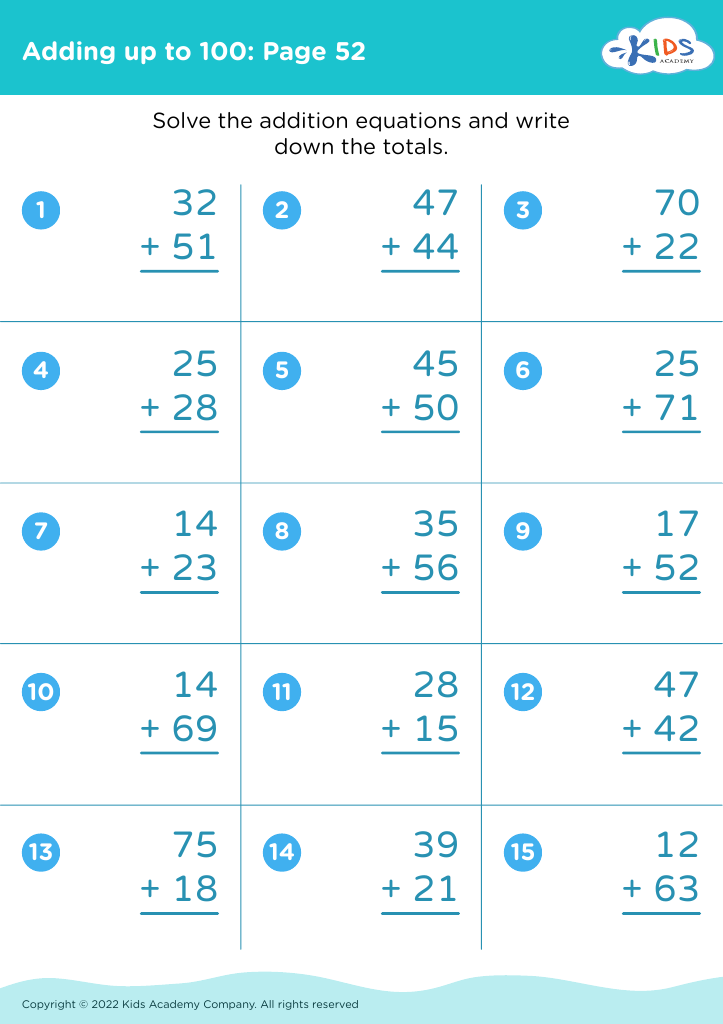
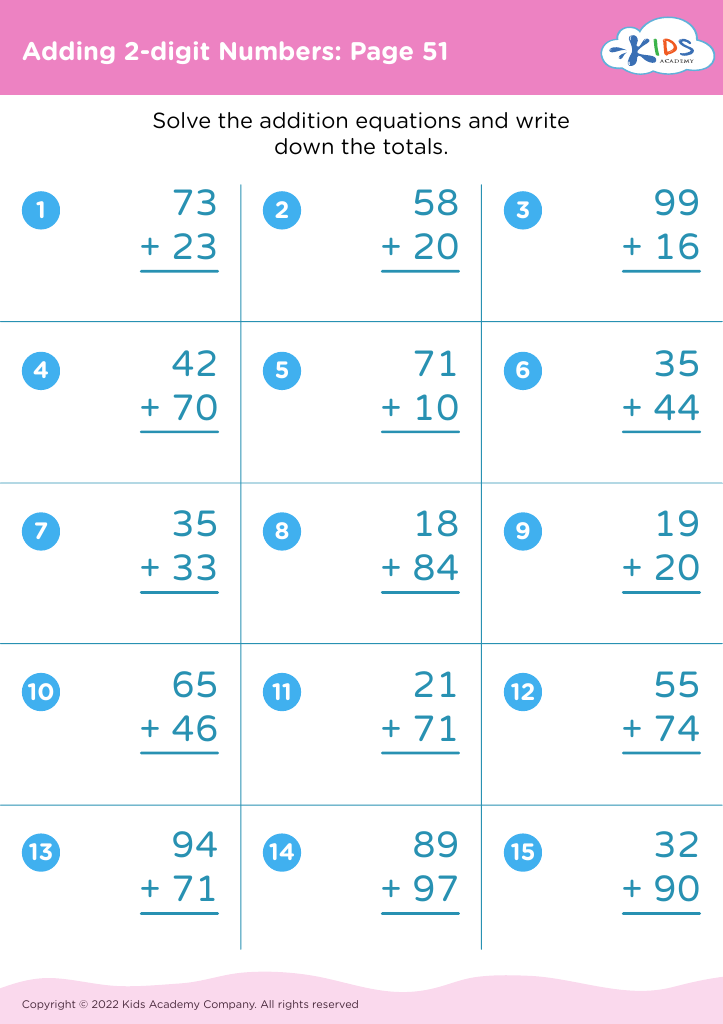
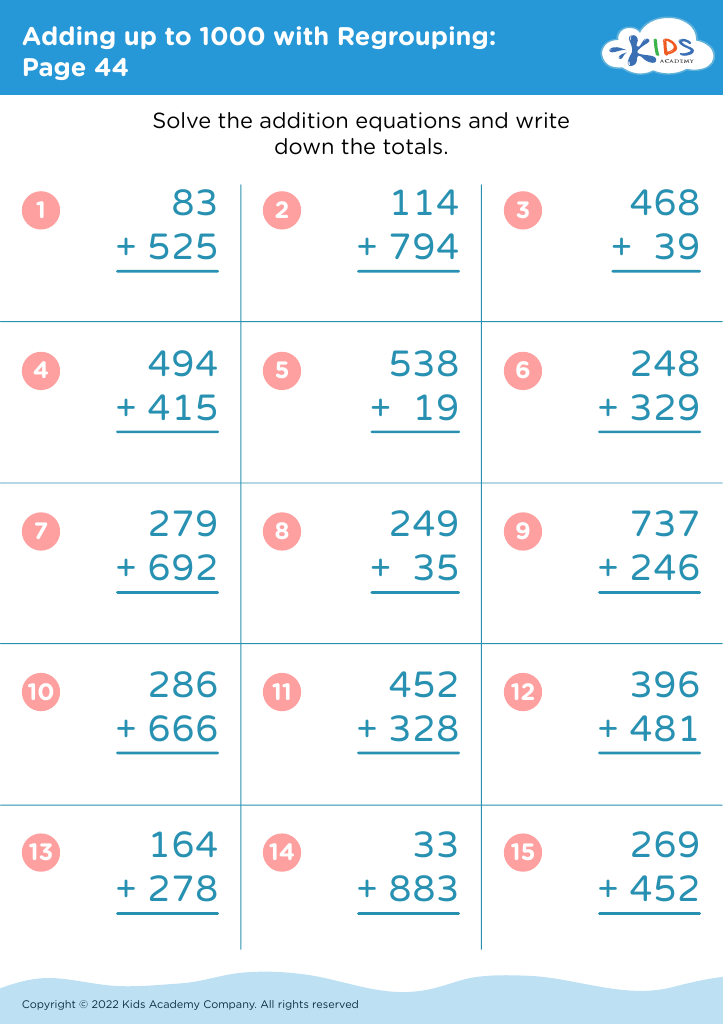
Our "Understanding Sequencing Addition & Subtraction Worksheets for Ages 3-7" provide an engaging way for young learners to master essential math skills. Developed to enhance kids' cognitive abilities through fun, interactive tasks, these worksheets help children recognize patterns and sequence numbers effectively. Through a variety of exercises, children can practice basic addition and subtraction while learning to order operations for clearer problem-solving. Designed with bright visuals and playful themes, these worksheets keep learners motivated and curious. Perfect for classroom use or at-home enrichment, give your child a strong mathematical foundation with these thoughtfully crafted worksheets.
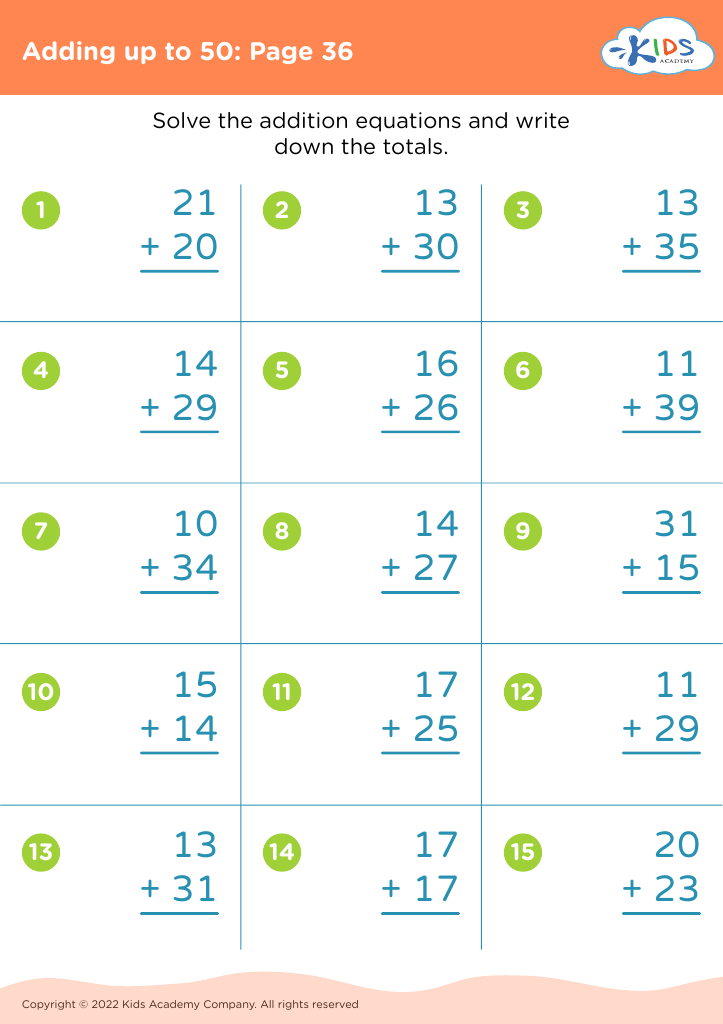
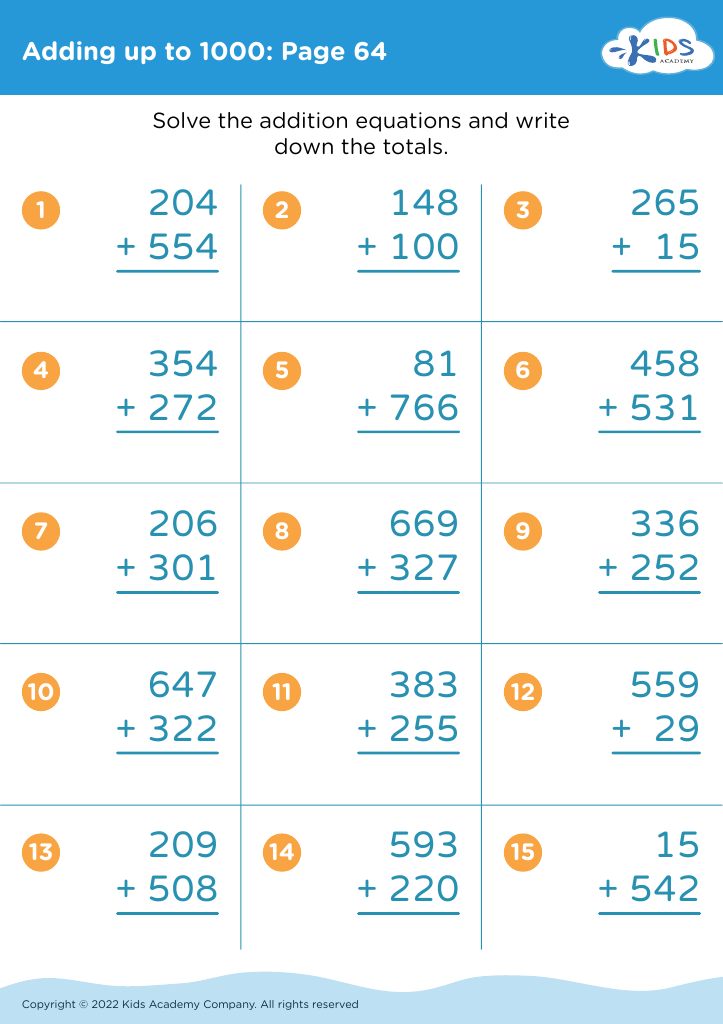
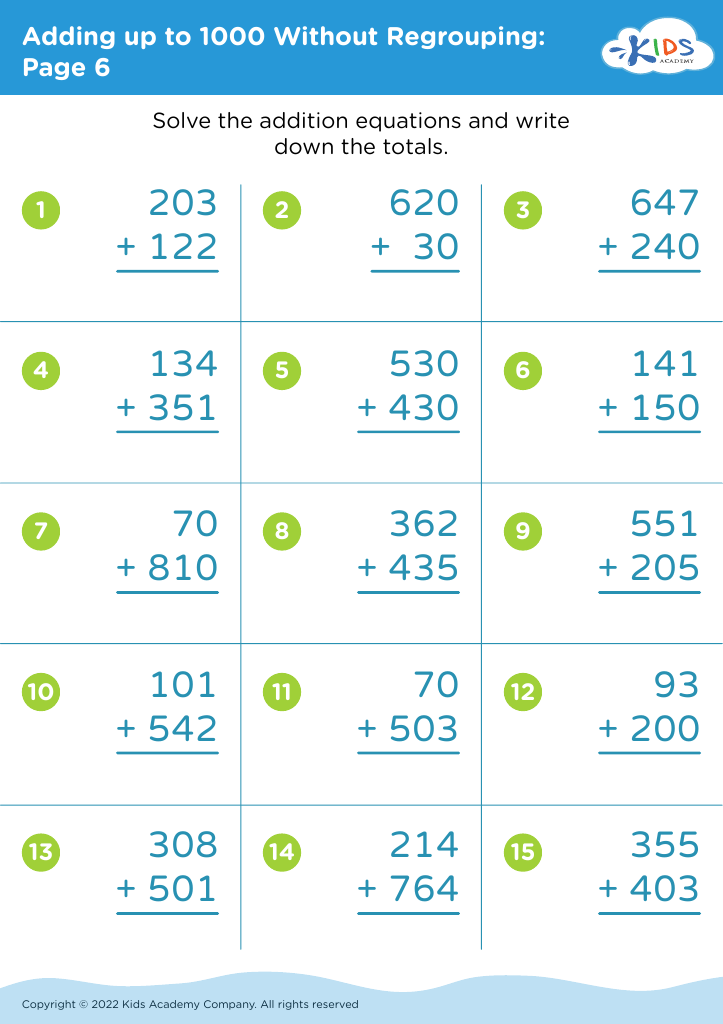
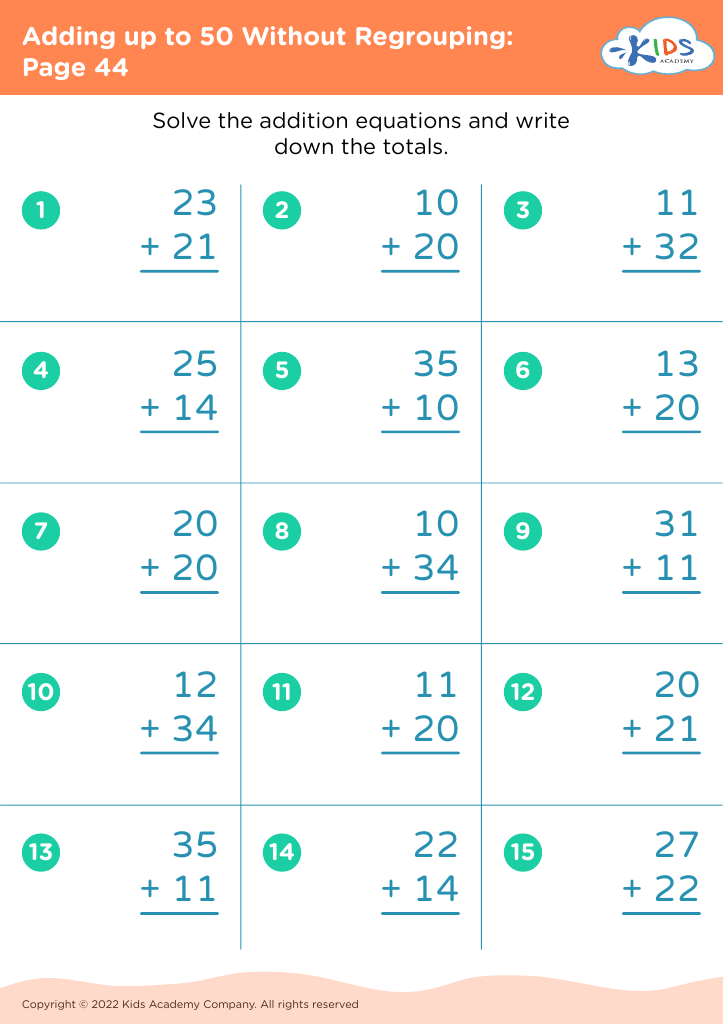








Understanding sequencing in addition and subtraction is crucial for young children aged 3-7 as it lays the foundational skills necessary for all future math learning. At this stage, children's brains are rapidly developing and they are beginning to understand the world through patterns and sequences. Grasping the concept of sequencing helps them follow a logical progression in tasks, understand cause and effect, and improve critical thinking skills.
For parents and teachers, emphasizing sequencing in addition and subtraction helps children see the connection between numbers and operations. When children understand that doing things in a particular order matters, they can better solve complex problems by breaking them down into simpler steps. Efficiently sequencing mathematical operations also fosters strong problem-solving abilities and numerical fluency.
Moreover, early mastery of these skills builds a child's confidence and positive attitude towards mathematics. It reduces future math anxiety as they progress academically. Practicing sequencing exercises also supports memory development and improves their ability to follow step-by-step instructions both in math and other areas.
Therefore, parents and teachers should prioritize understanding sequencing in addition and subtraction to provide children with a robust cognitive foundation, instilling essential life-long learning skills and stirring an early affinity for mathematics.








