Understanding word problems Addition & Subtraction Worksheets for Ages 3-7
3 filtered results
-
From - To
Welcome to our "Understanding Word Problems: Addition & Subtraction Worksheets for Ages 3-7" page! Our engaging worksheets are designed to help young learners develop essential problem-solving skills through fun and interactive word problems. Tailored for children aged 3-7, these printable resources encourage critical thinking and lay the foundation for math fluency in addition and subtraction. By presenting math in relatable real-life scenarios, kids will enhance their comprehension and application of mathematical concepts. Dive into our collection of colorful, age-appropriate worksheets that make learning math an enjoyable adventure! Perfect for parents and educators looking to enrich young minds.
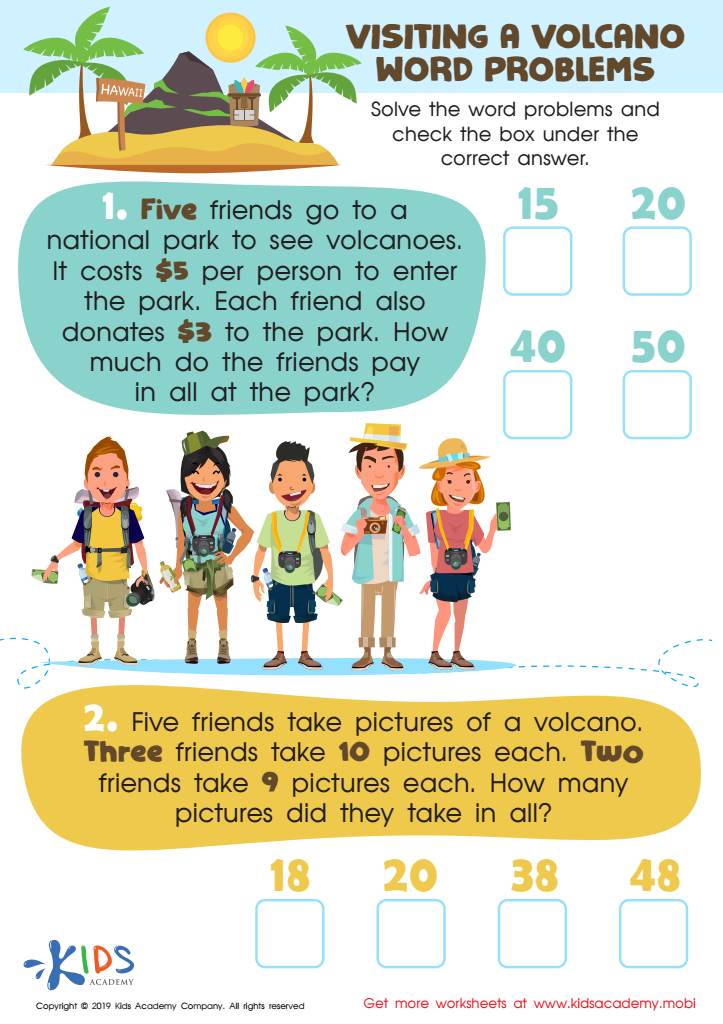
Visiting a Volcano Word Problems Worksheet
 Assign to My Students
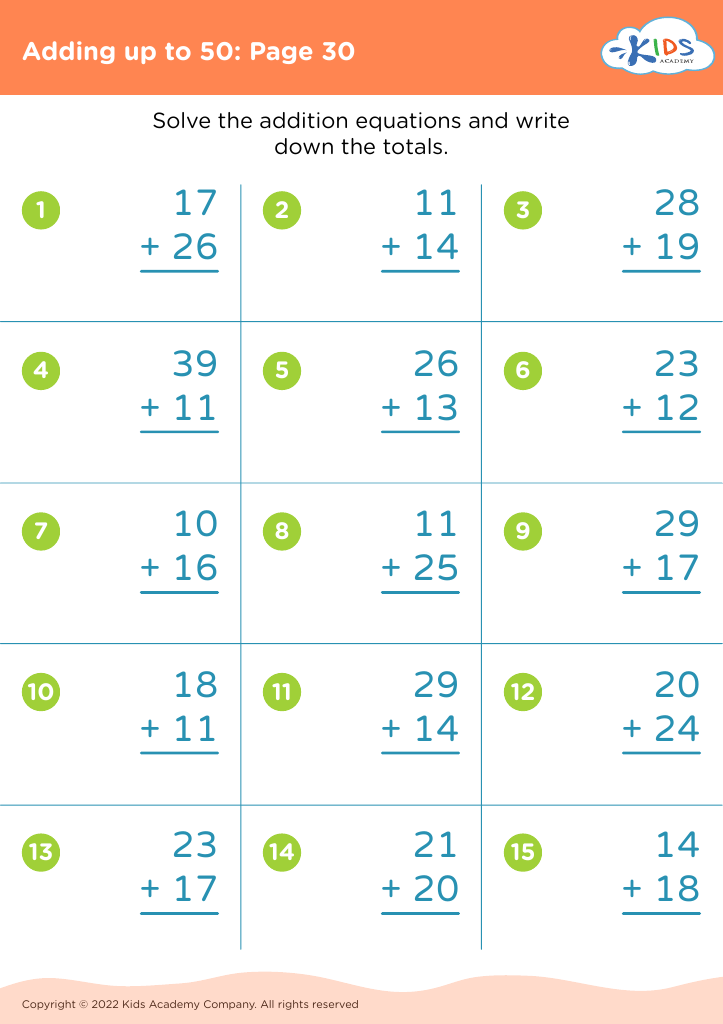
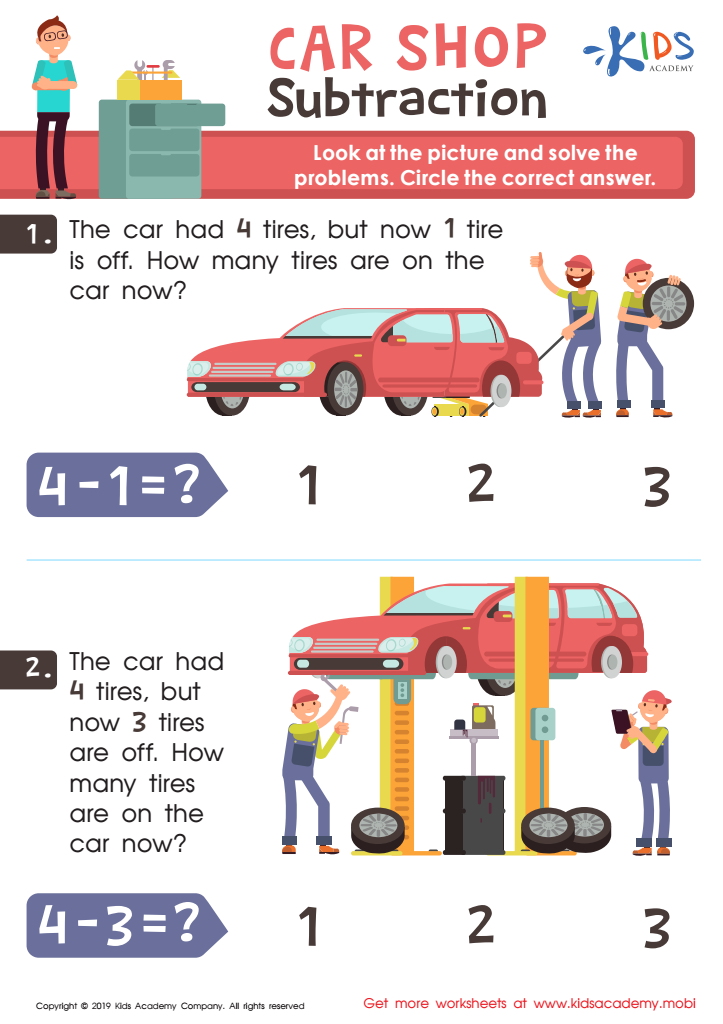
Car Shop Subtraction Worksheet








Understanding word problems involving addition and subtraction is crucial for children aged 3-7 as it forms the foundation of their mathematical skills and critical thinking abilities. At this developmental stage, children transition from basic counting to applying numeracy in real-world contexts. By engaging with word problems, they learn to interpret information, identify relevant data, and apply operations to solve practical issues.
Parents and teachers should prioritize this skill because it enhances comprehension and reasoning. Word problems encourage children to verbalize their thought processes, fostering communication skills and boosting confidence. Furthermore, they help children understand the relationship between numbers and everyday situations, making math more relatable and meaningful.
By regularly practicing word problems, educators and parents can nurture problem-solving abilities that extend beyond mathematics. Children learn to approach challenges logically and develop perseverance in seeking solutions, traits beneficial in all areas of life. Overall, incorporating word problems into early education cultivates not only mathematical understanding but also essential life skills, preparing children for future academic success and thoughtful decision-making. Recognizing the importance of this skill encourages a well-rounded educational approach, where numeracy is interconnected with language and critical thinking.








