Visual comprehension Addition & Subtraction Worksheets for Ages 3-7
7 filtered results
-
From - To
Enhance your child's math skills with our Visual Comprehension Addition & Subtraction Worksheets designed specifically for ages 3-7. These engaging worksheets use fun images and simple problems to teach foundational addition and subtraction concepts. Perfect for preschool and early elementary learners, the visual aids help children understand mathematical operations while boosting their problem-solving abilities. Our worksheets cater to various learning styles and are suitable for both classroom and at-home practice. Start building your child’s math confidence today by integrating these colorful and educational resources into your learning routine. Make math enjoyable and accessible with Kids Academy!
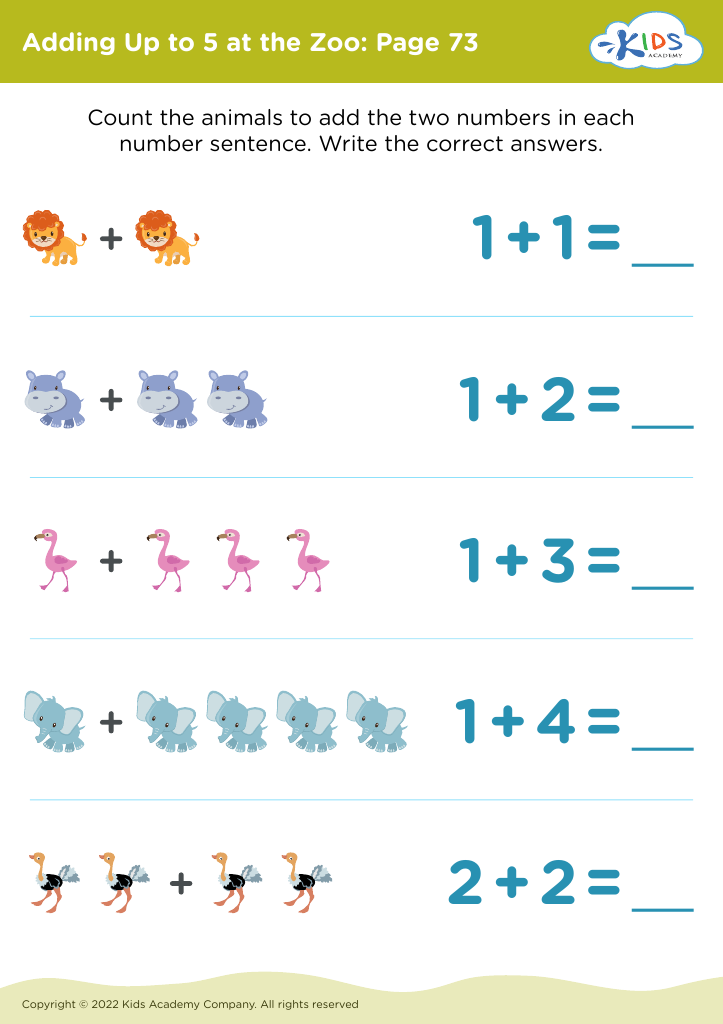
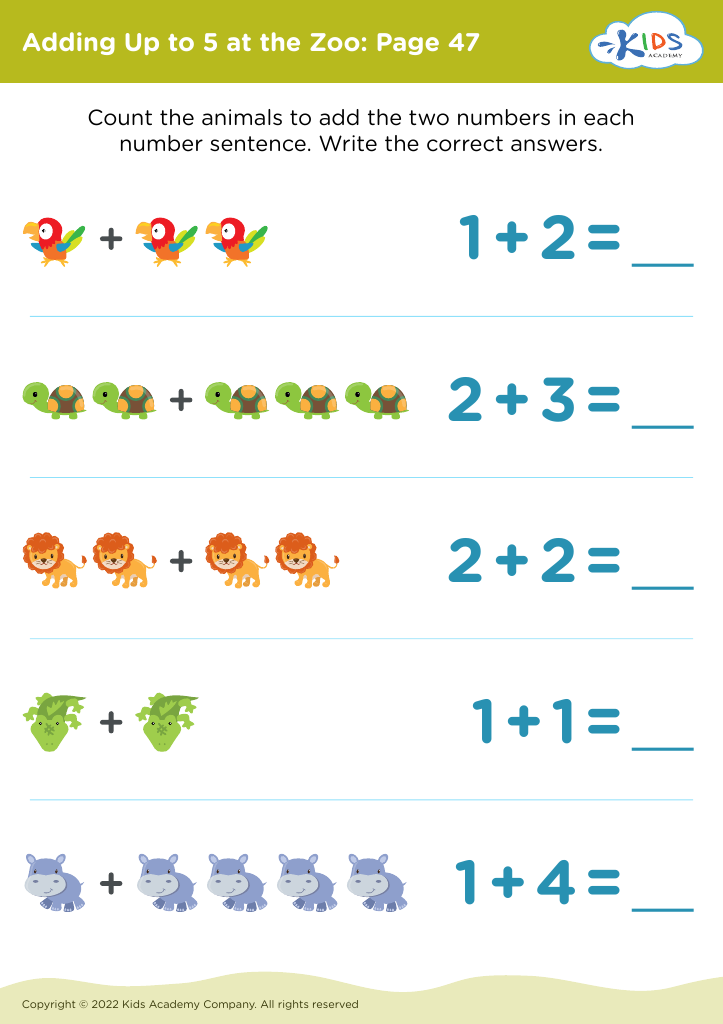
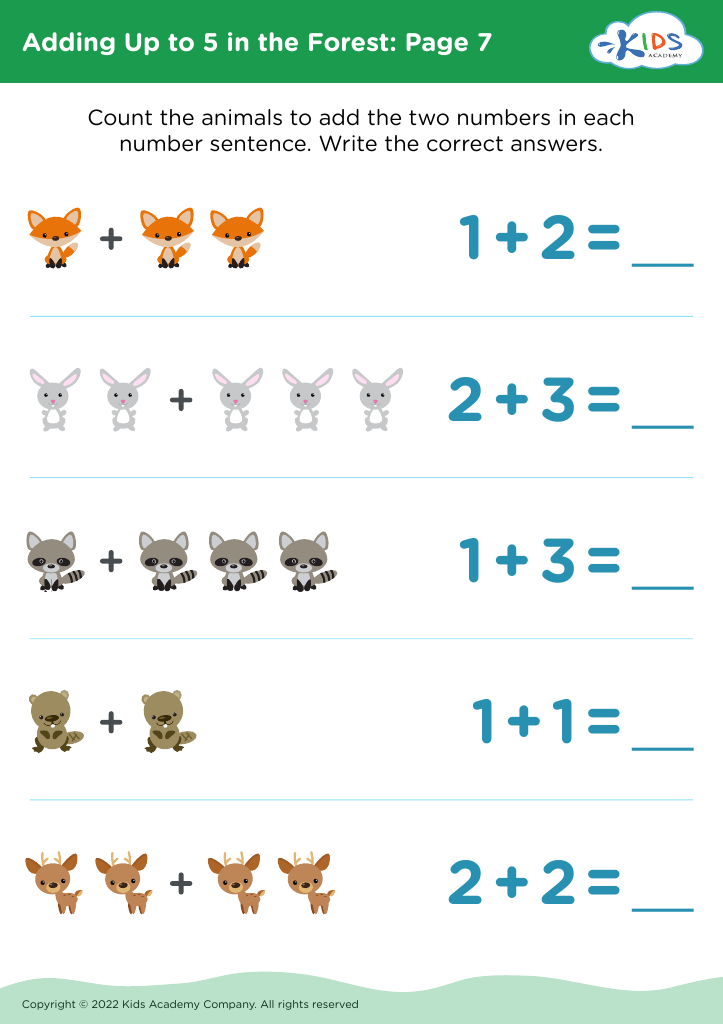
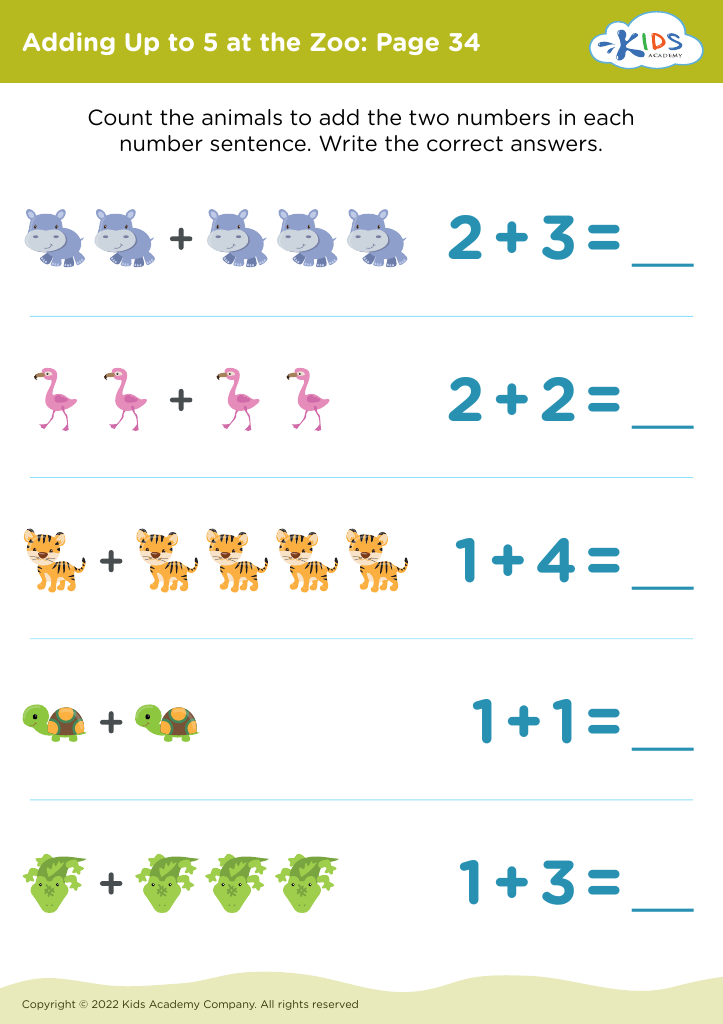
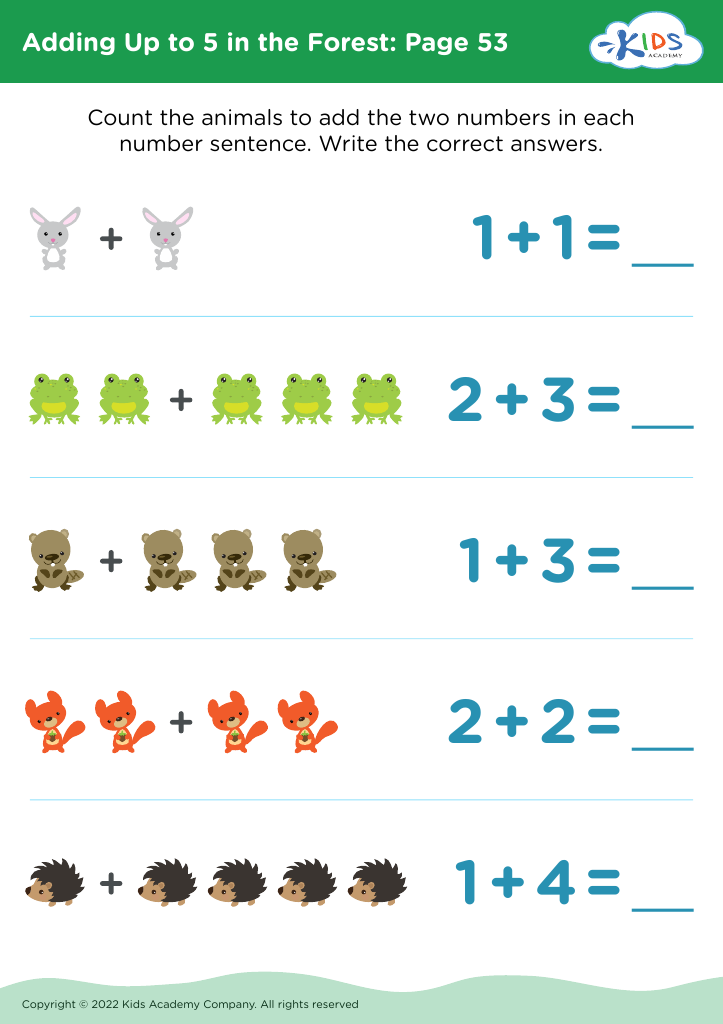
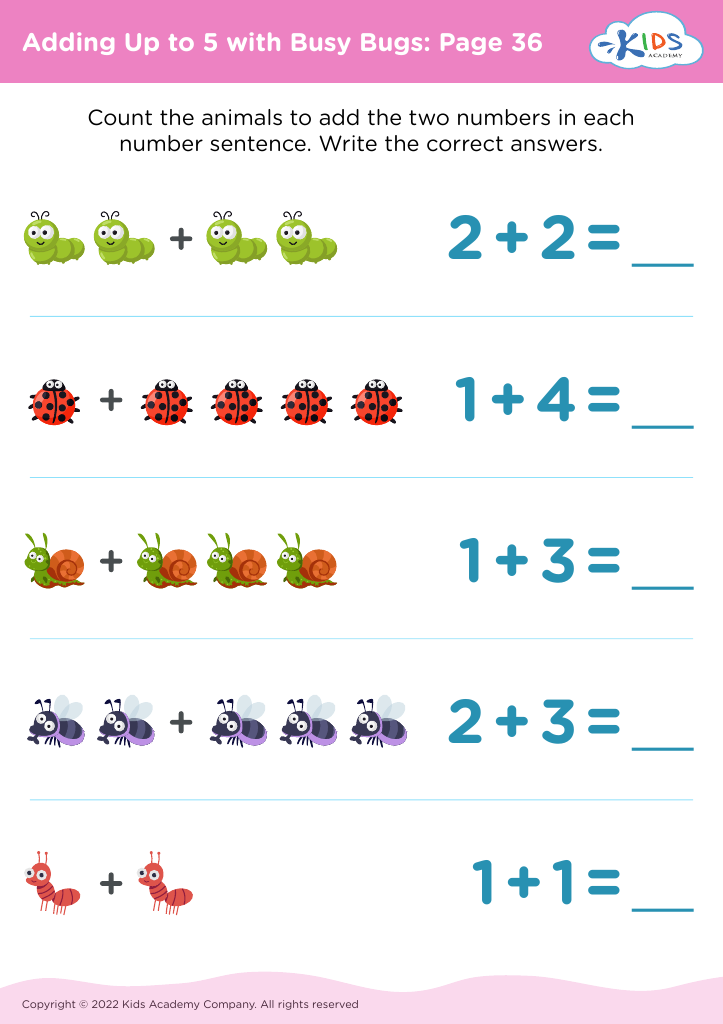
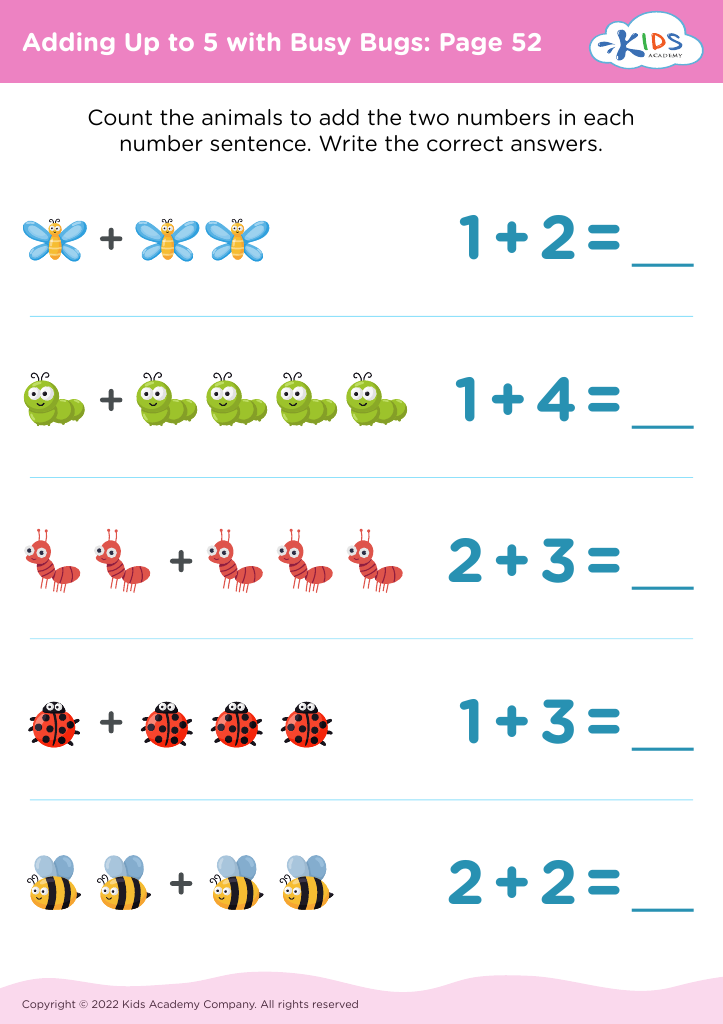








Parents and teachers should prioritize visual comprehension skills in addition and subtraction for children aged 3-7 because it establishes a strong foundation for mathematical understanding and cognitive development. Visual learning allows young children to grasp abstract concepts by connecting them to concrete, relatable images. For instance, using pictures of apples to demonstrate addition helps children understand that 2 apples plus 3 apples equals 5 apples. This concrete representation makes it easier for kids to comprehend the basic principles of math.
Developing these skills early also boosts children’s confidence and reduces math anxiety. When children see math in a visual context, it becomes less intimidating and more approachable. Visual tools such as number lines, counters, and pictorial representations engage children, making learning more interactive and fun.
Furthermore, visual comprehension supports bilingual learners and those with language processing difficulties, allowing them to understand mathematical concepts without relying heavily on verbal explanations. This inclusivity ensures that all students, regardless of their linguistic abilities, have the opportunity to excel in early math.
Finally, instilling these skills early fosters critical thinking and problem-solving abilities. Being able to visually break down and reconstruct mathematical problems encourages logical thinking and prepares children for more complex math courses in the future. Hence, focusing on visual comprehension in addition and subtraction from an early age sets a solid groundwork for lifelong mathematical success.








