
Visual perception Addition & Subtraction Worksheets for Ages 3-7
18 filtered results
Difficulty Level
Grade
Age
-
From - To
Subject
Activity
Standards
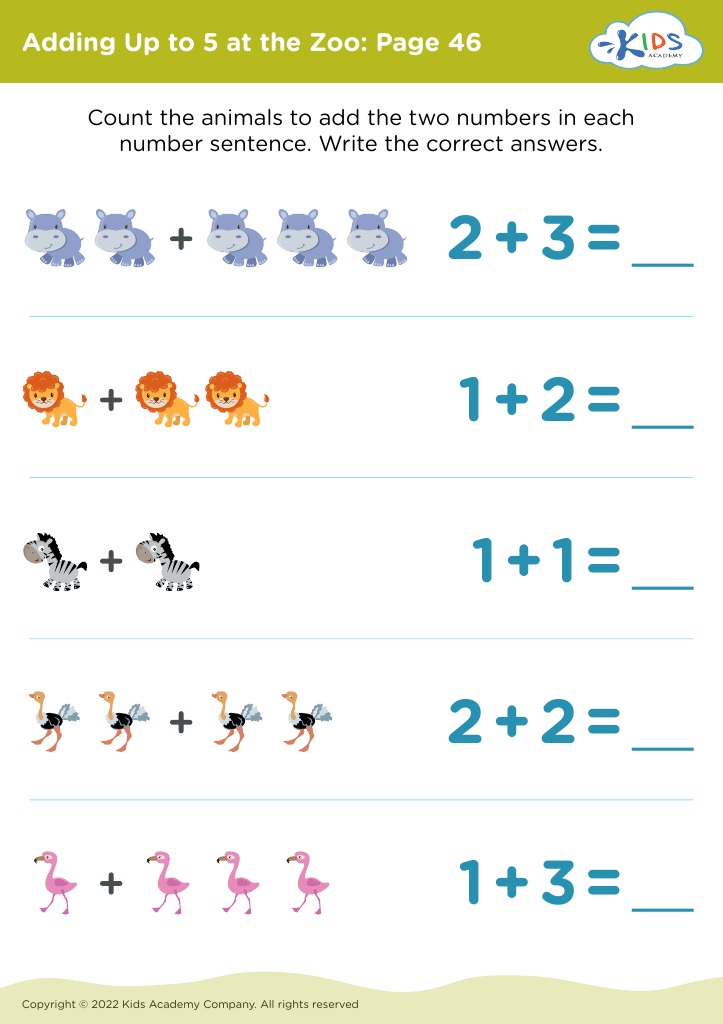
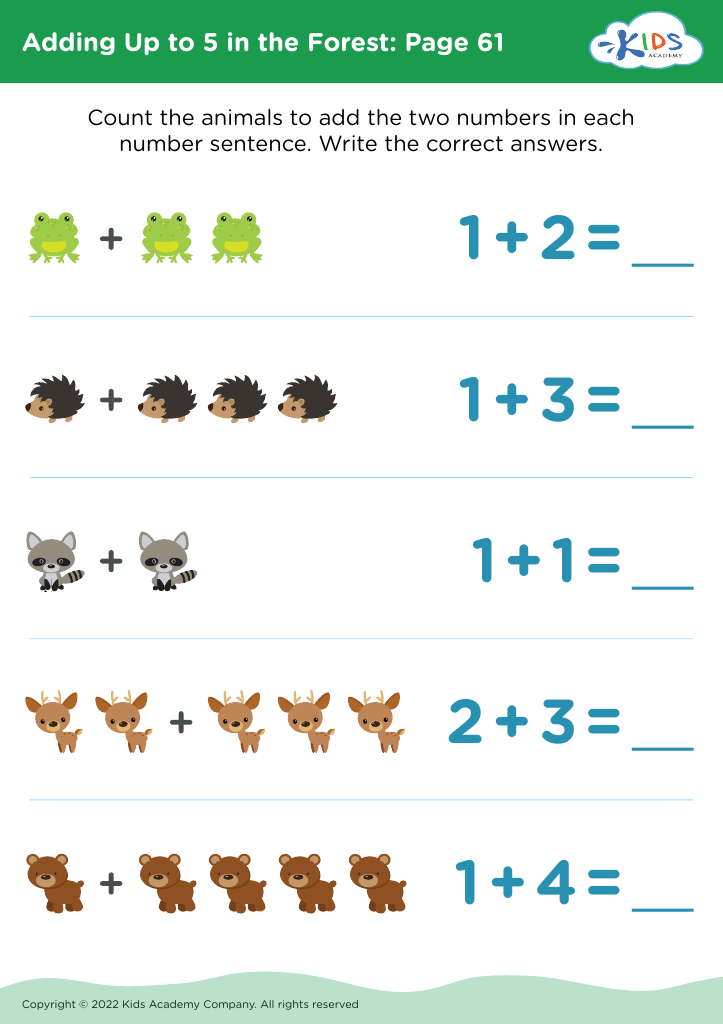
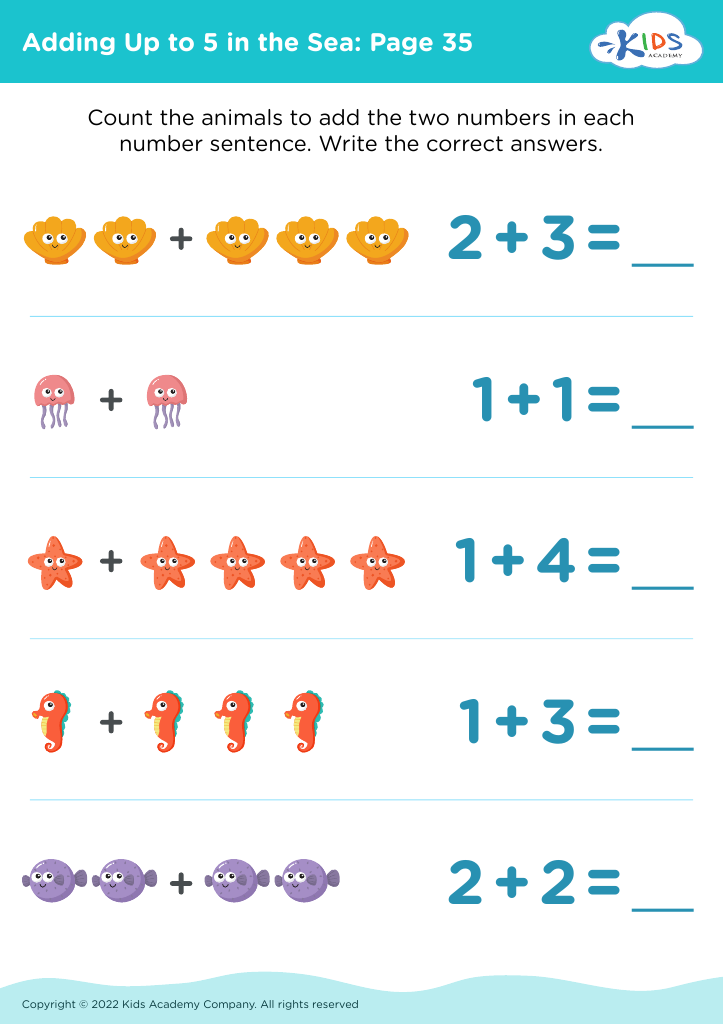
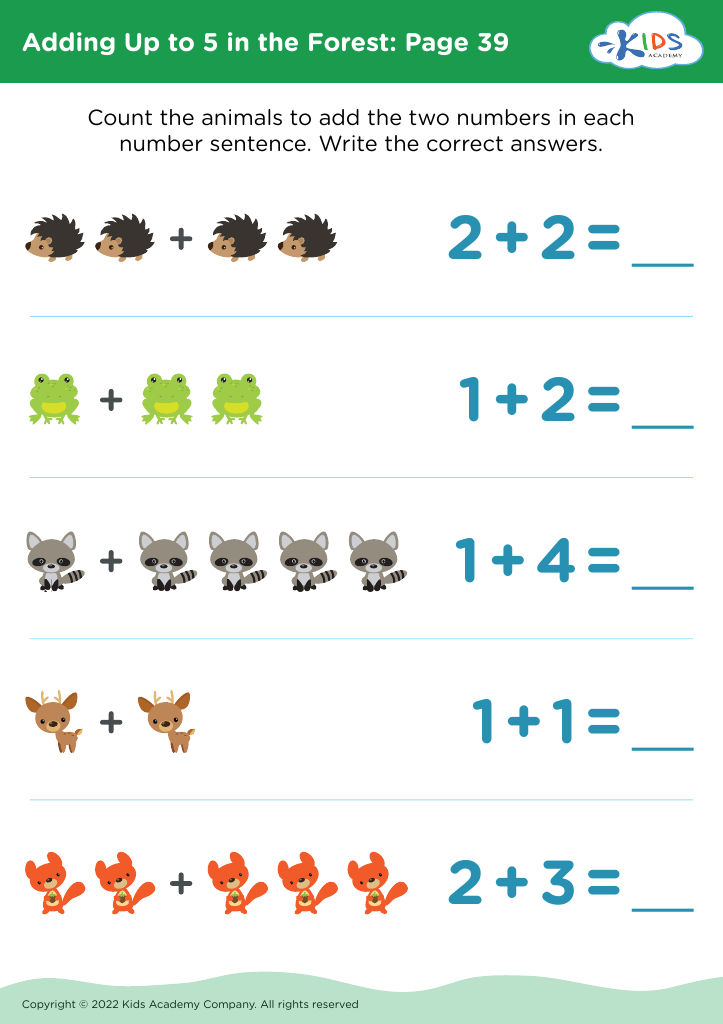
Discover our engaging Visual Perception Addition & Subtraction Worksheets, designed specifically for children ages 3-7! These worksheets combine fun visuals with essential math skills, helping young learners enhance their problem-solving abilities while building a strong foundation in basic arithmetic. By reinforcing visual perception skills, children improve their ability to recognize patterns and differences in objects—crucial for mastering addition and subtraction concepts. Fun illustrations captivate their interest and make learning enjoyable. Perfect for classroom settings or at-home practice, our resources aim to support the developmental milestones of early learners, ensuring a nurturing and effective introduction to mathematics! Explore our collection today!
Favorites
With answer key
Interactive
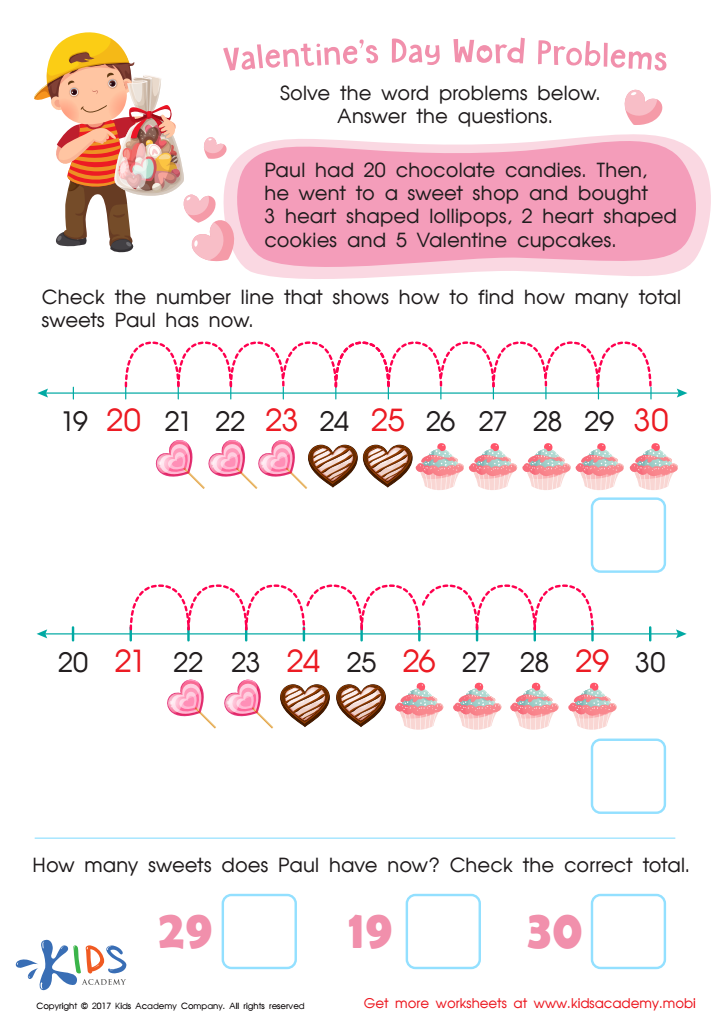
Valentines Day 2 Printable
This PDF worksheet uses a number line to help solve the problems. Your child will be ready for Valentine's Day after completing it. Counting and adding from 20 is also reinforced.
 Assign to My Students
Valentines Day 2 Printable
Worksheet
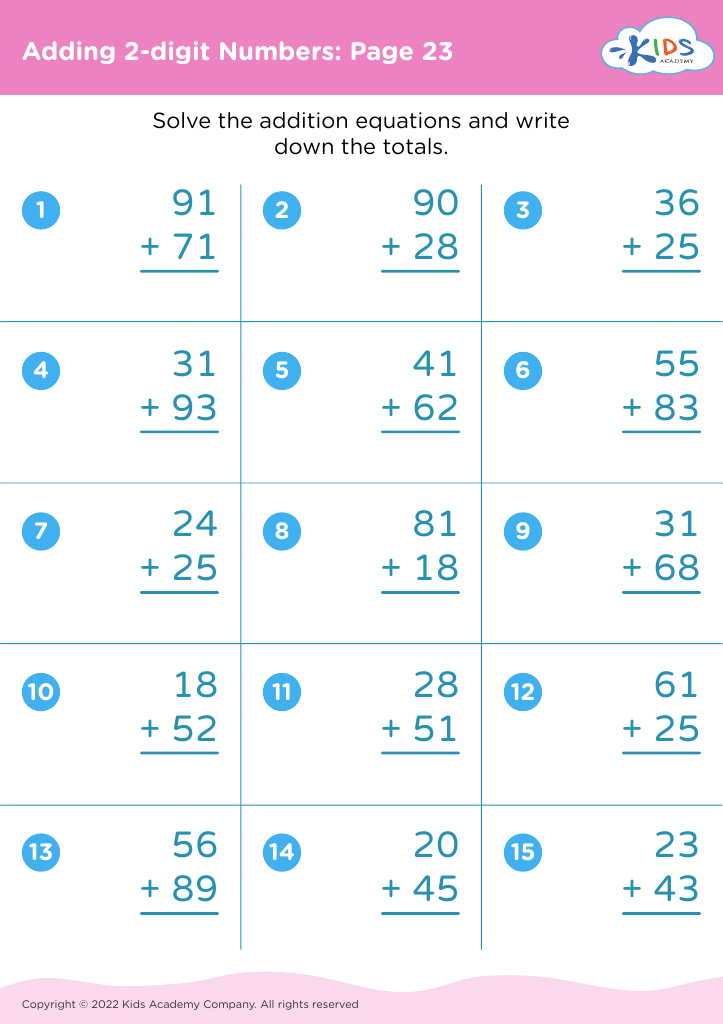
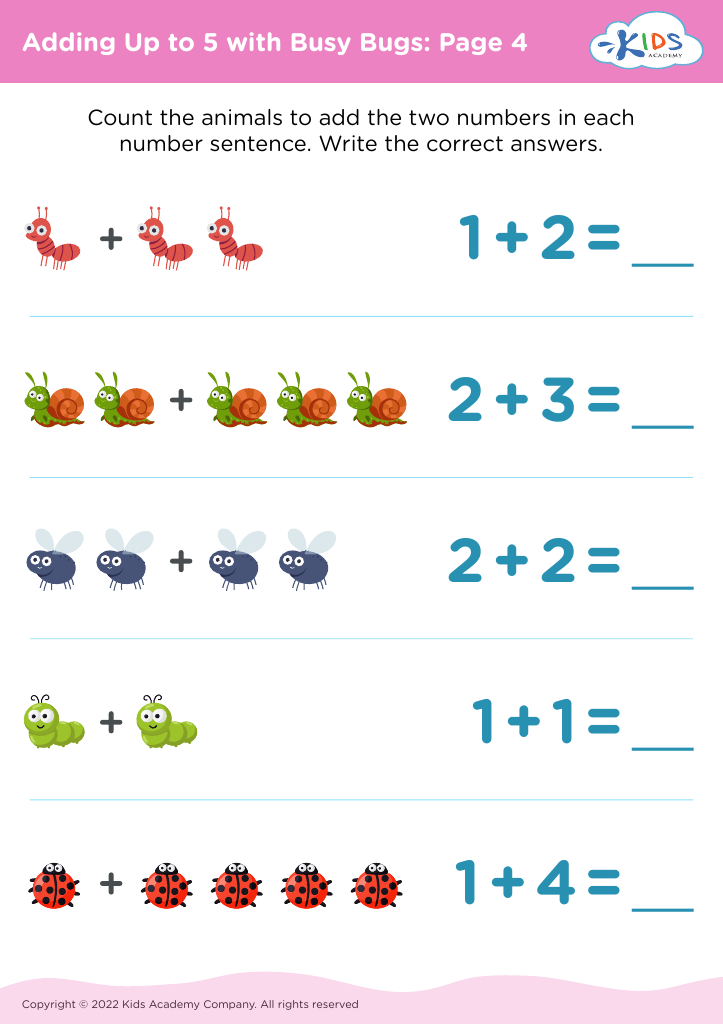
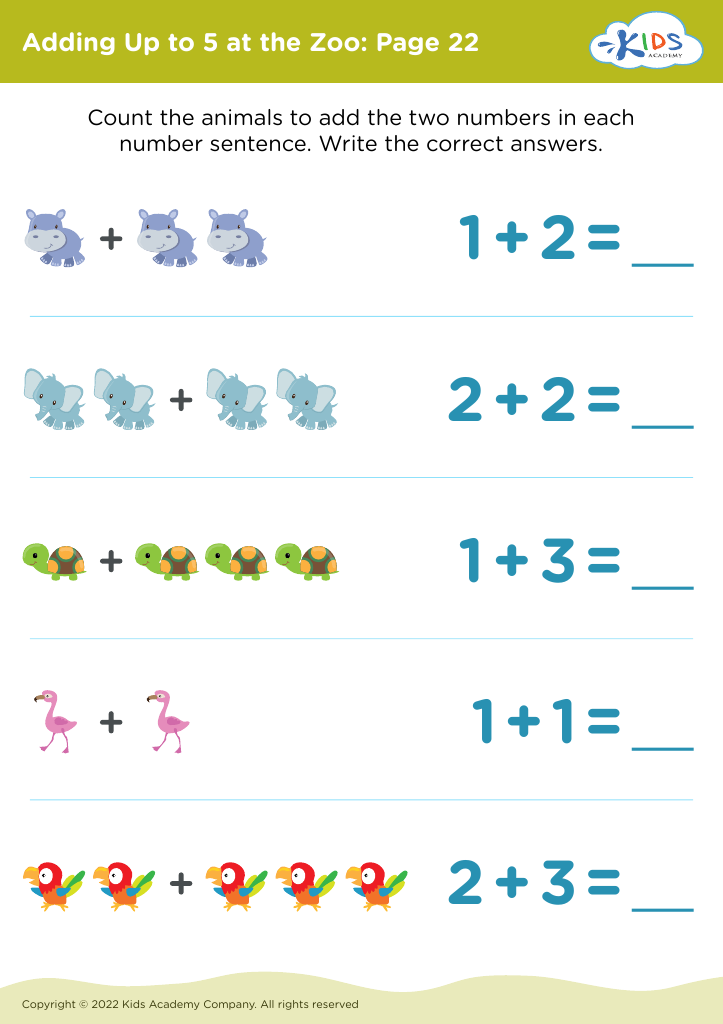
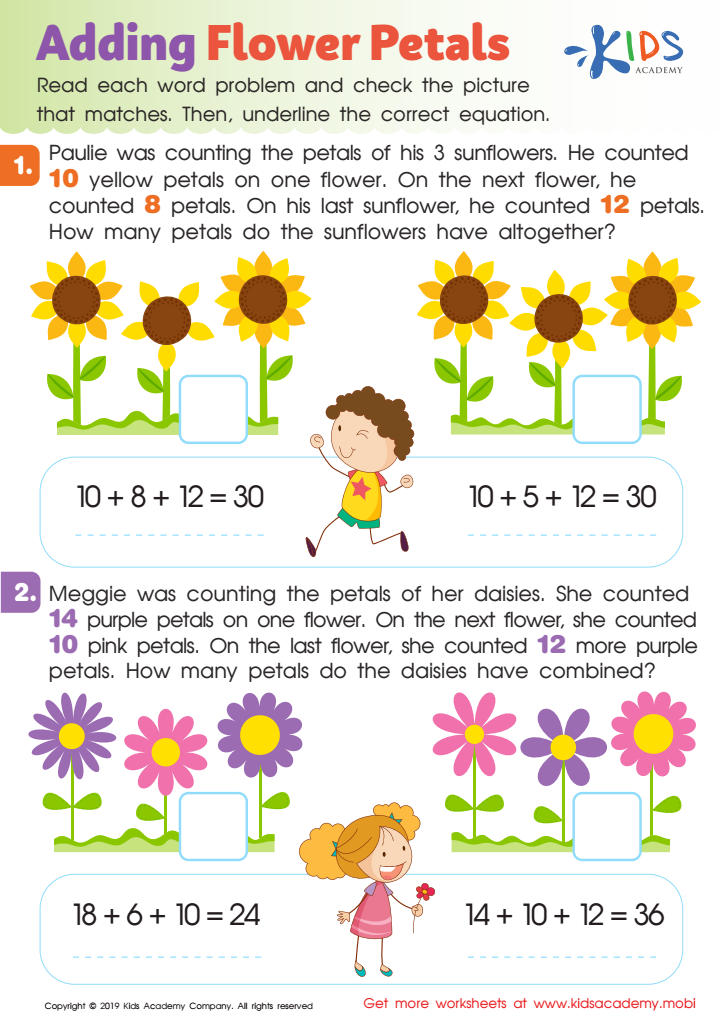
Adding Flower Petals Worksheet
This free worksheet helps little mathematicians learn to understand word problems. They'll read each one and match it to the corresponding picture. Important info is highlighted, teaching kids to look for key info when solving problems. Then they'll underline the correct number equation that matches the picture. A great way to practice problem-solving skills!
Adding Flower Petals Worksheet
Worksheet
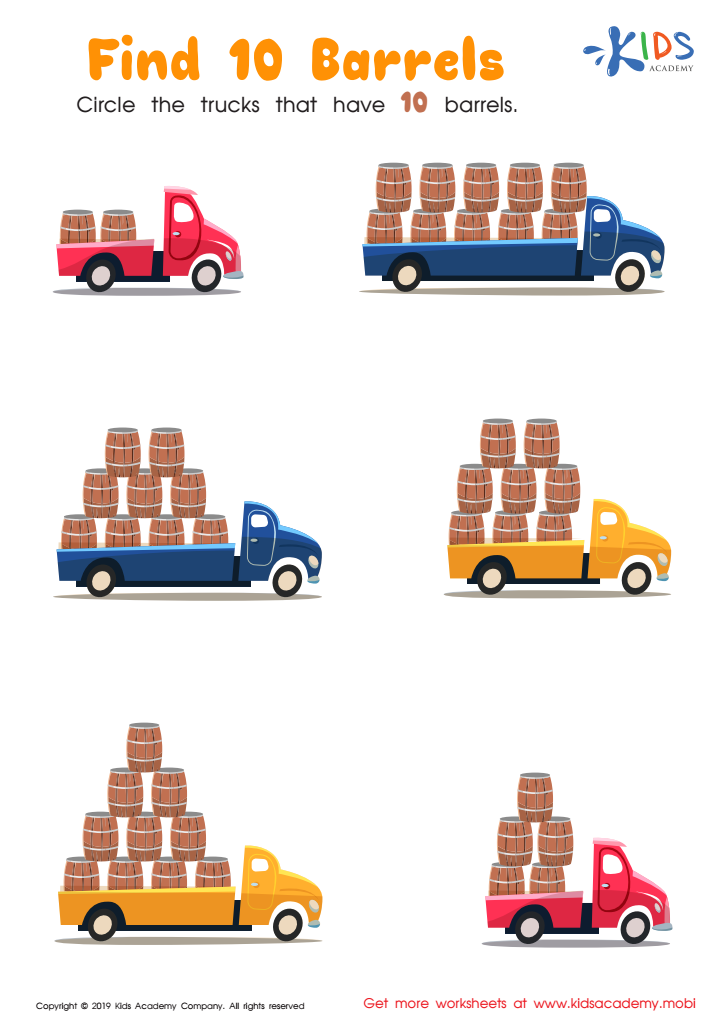
Find 10 Barrels Worksheet
Help your kids learn to count with 1, 2 and 3, then progress to tens and hundreds. Supplied with educational materials and colorful worksheets, they'll be counting as high as they can. Together, count the barrels on the trucks in the printout and encourage them to circle the ones with 10 barrels.
Find 10 Barrels Worksheet
Worksheet
Join Kids Academy for Free
Who is primarily going to use this learning content?








Visual perception is a crucial skill for children aged 3-7, particularly when it comes to mastering addition and subtraction. This stage of cognitive development is foundational in learning mathematics, as it equips young learners with the ability to recognize numbers, understand spatial relationships, and differentiate between quantities. By developing visual perception skills, children become better at picturing and mentally manipulating numbers—key components for addition and subtraction.
Parents and teachers should prioritize visual perception activities to enhance these mathematical skills. Engaging in games that involve counting objects or sorting by shape and size helps reinforce these concepts in a fun, interactive manner. Moreover, visual activities like puzzles and pattern recognition aid in developing critical thinking and problem-solving capabilities.
Enhanced visual perception can also inspire confidence in young learners as they tackle arithmetic challenges. This not only fosters a positive attitude toward math but also lays the groundwork for more complex mathematical concepts in the future. Investments in activities that promote visual perception ultimately cultivate a child's overall cognitive development, preparing them not just for mathematics but for lifelong learning and critical thinking skills essential for success in various subjects.








