Filters

18 filtered results

Clear all filters
Favorites
With answer key
Interactive

18 filtered results

Difficulty Level

Grade


Welcome to our Basic Addition Practice Worksheets page for ages 3-7! Designed to make learning engaging, these printable worksheets help young learners explore the fundamentals of addition in a fun and interactive way. Our resources include various exercises that cater to different learning levels, ensuring every child can build a strong mathematical foundation. With colorful visuals and simple instructions, children will enjoy counting, adding items, and solving basic problems. Perfect for home or classroom use, these worksheets not only solidify addition skills but also foster a love for math. Start your child's journey to math mastery today!
Check out this FREE Trial Lesson on Addition for age 3-7!

L

Favorites
With answer key
Interactive
  • 3-7
  • Basic addition practice
  • Addition
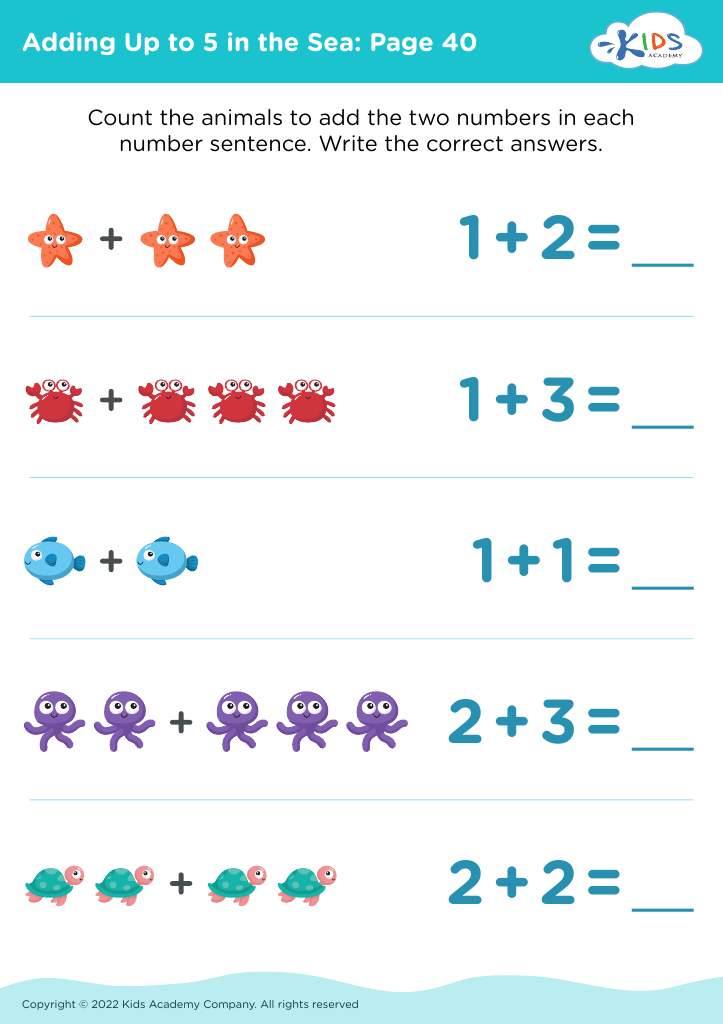
Adding Up to 5 in the Sea: Page 40
Worksheet
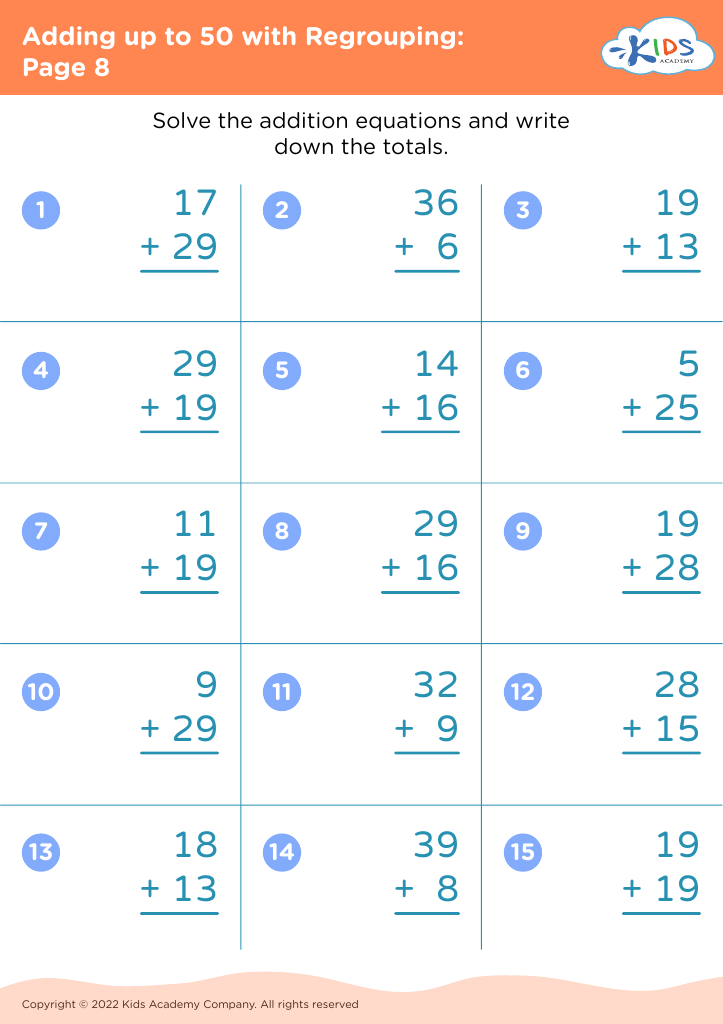
Adding up to 50 with Regrouping: Page 8
Worksheet
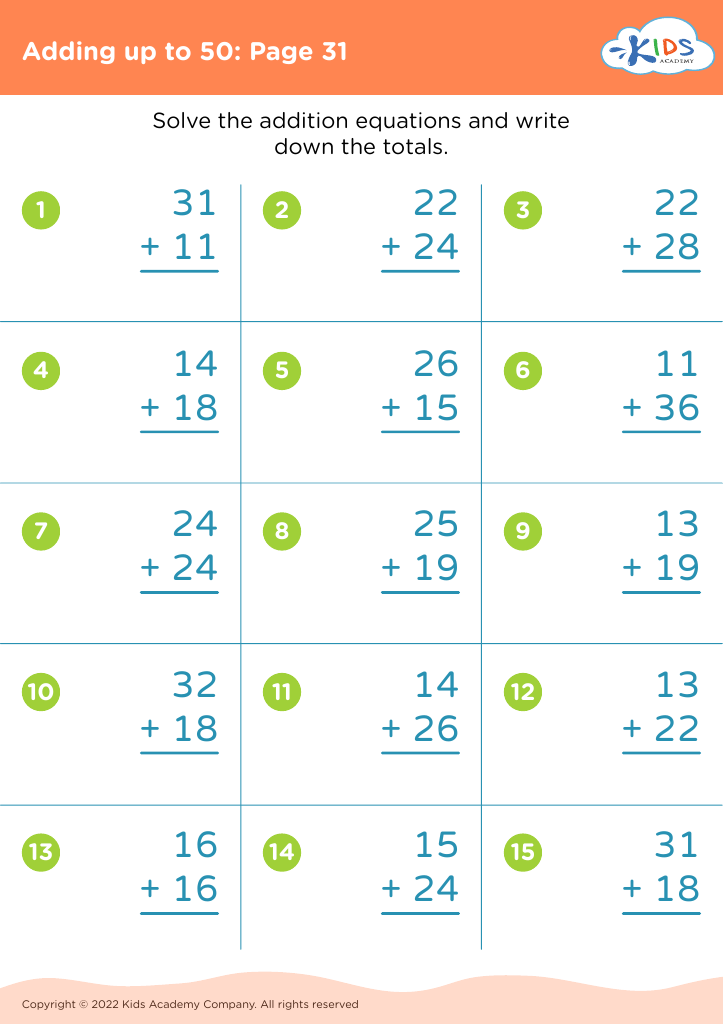
Adding up to 50: Page 31

Adding up to 50: Page 31

Adding up to 50: Page 31
Worksheet
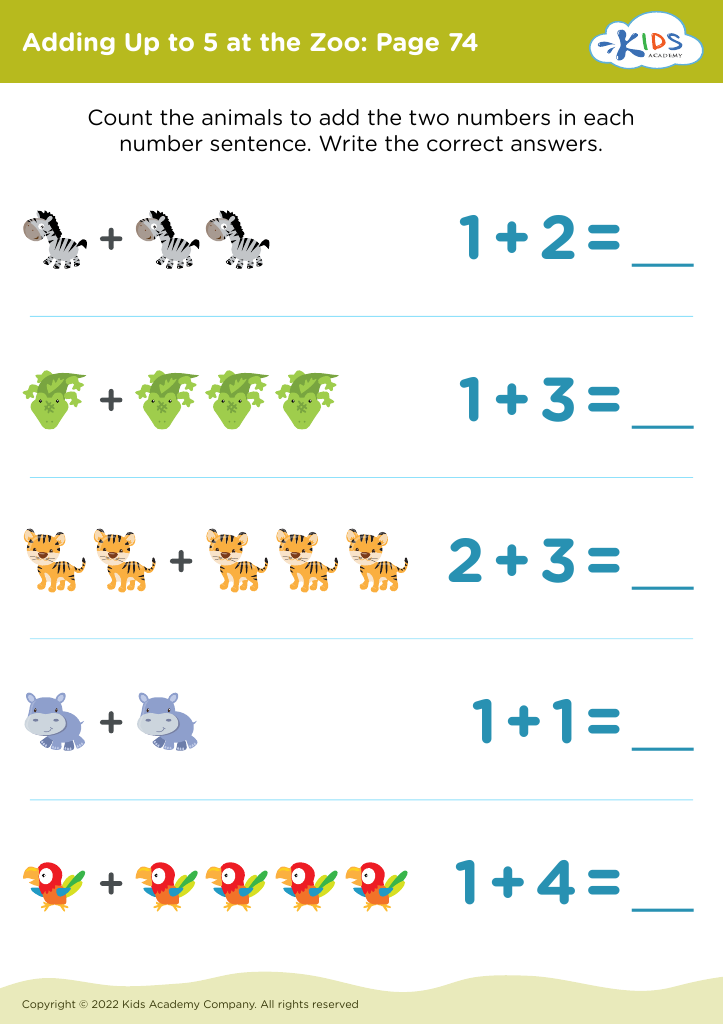
Adding Up to 5 at the Zoo: Page 74
Worksheet
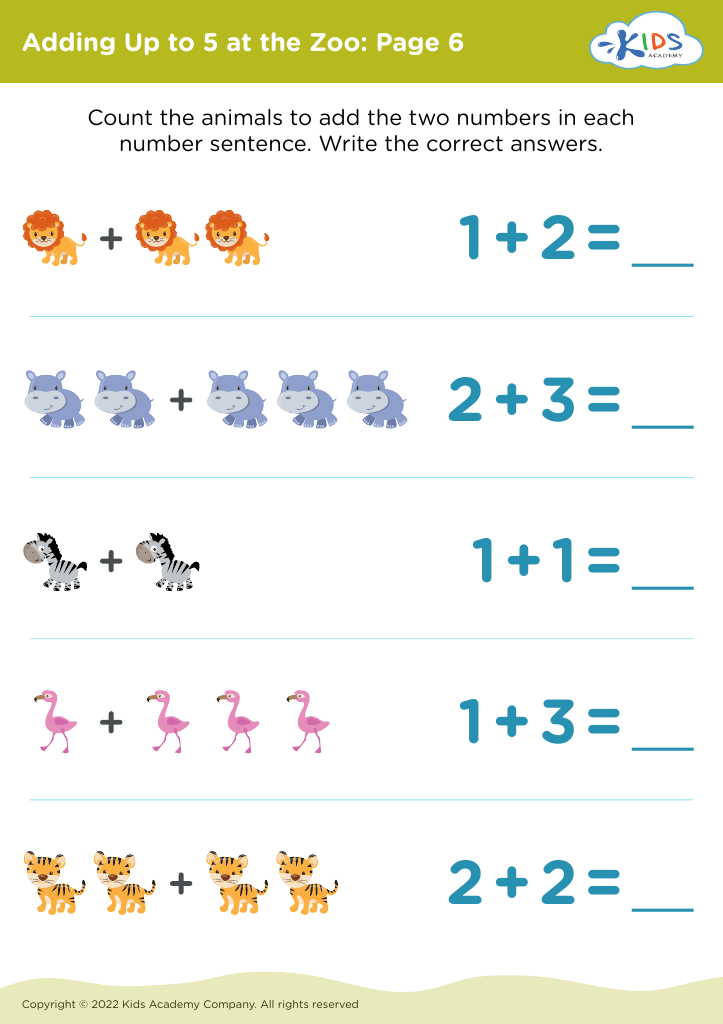
Adding Up to 5 at the Zoo: Page 6

Adding Up to 5 at the Zoo: Page 6

Adding Up to 5 at the Zoo: Page 6
Worksheet
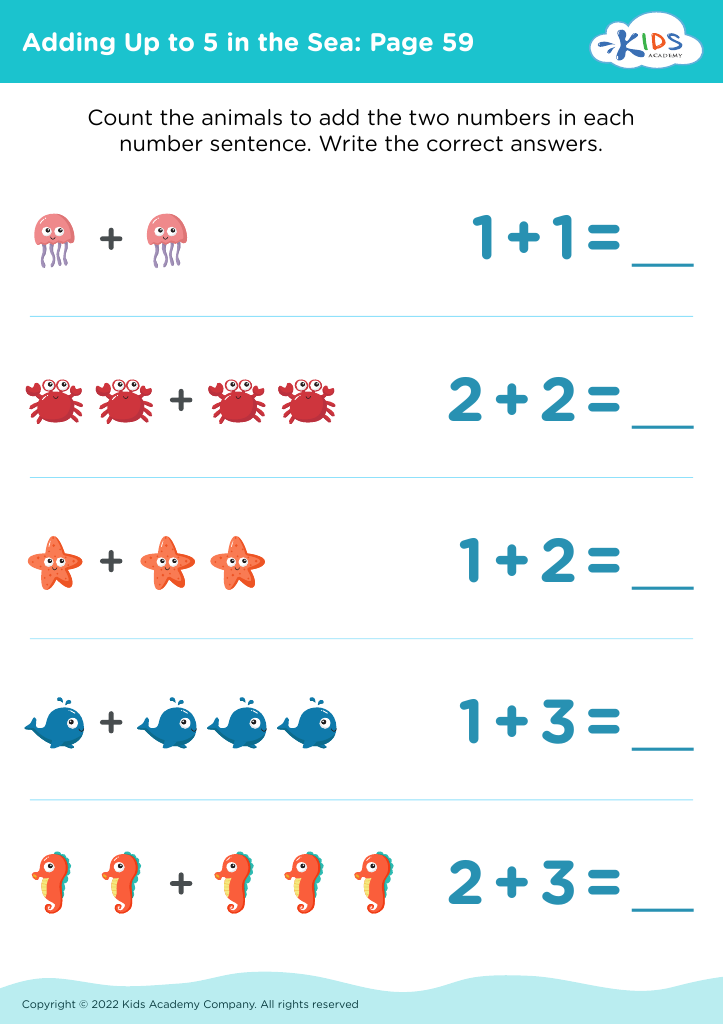
Adding Up to 5 in the Sea: Page 59
Worksheet
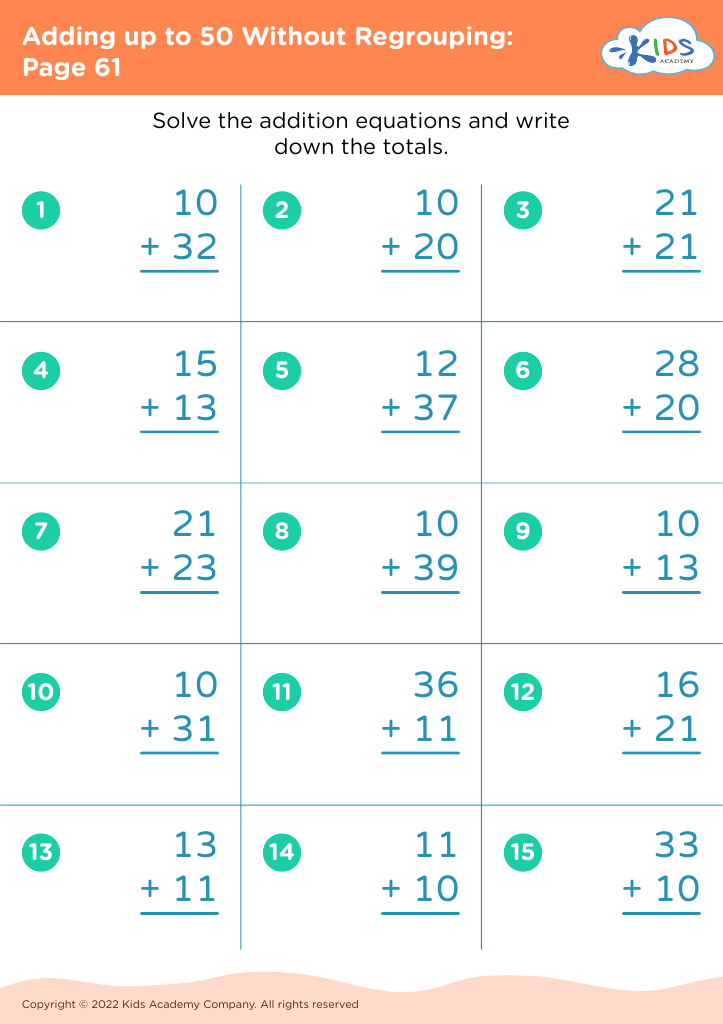
Adding up to 50 Without Regrouping: Page 61
Worksheet
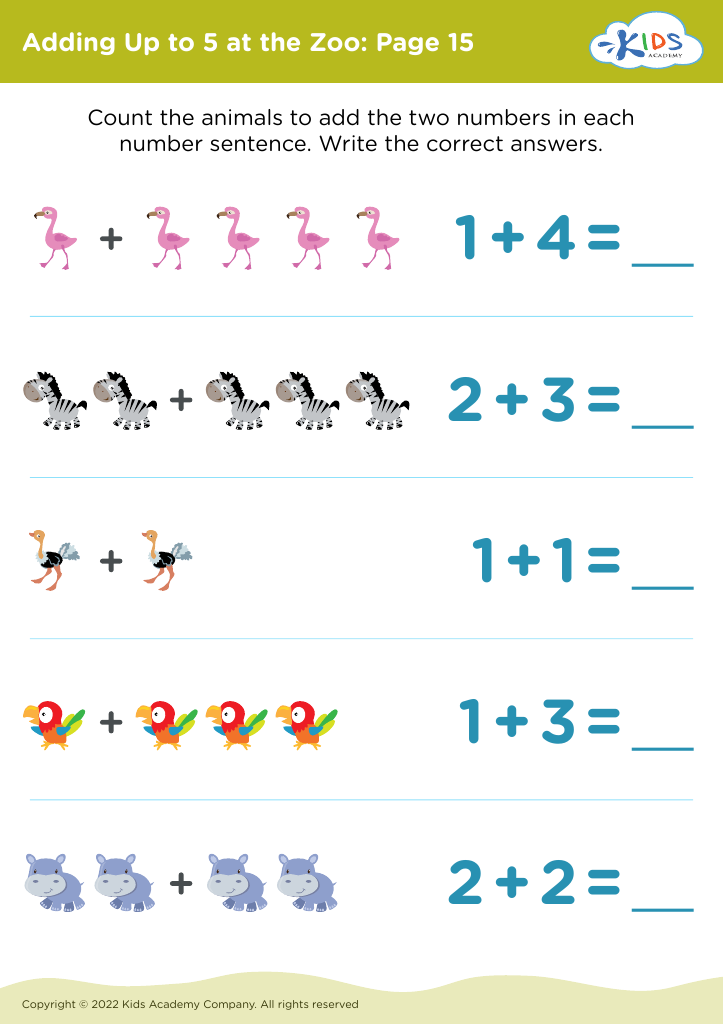
Adding Up to 5 at the Zoo: Page 15
Worksheet
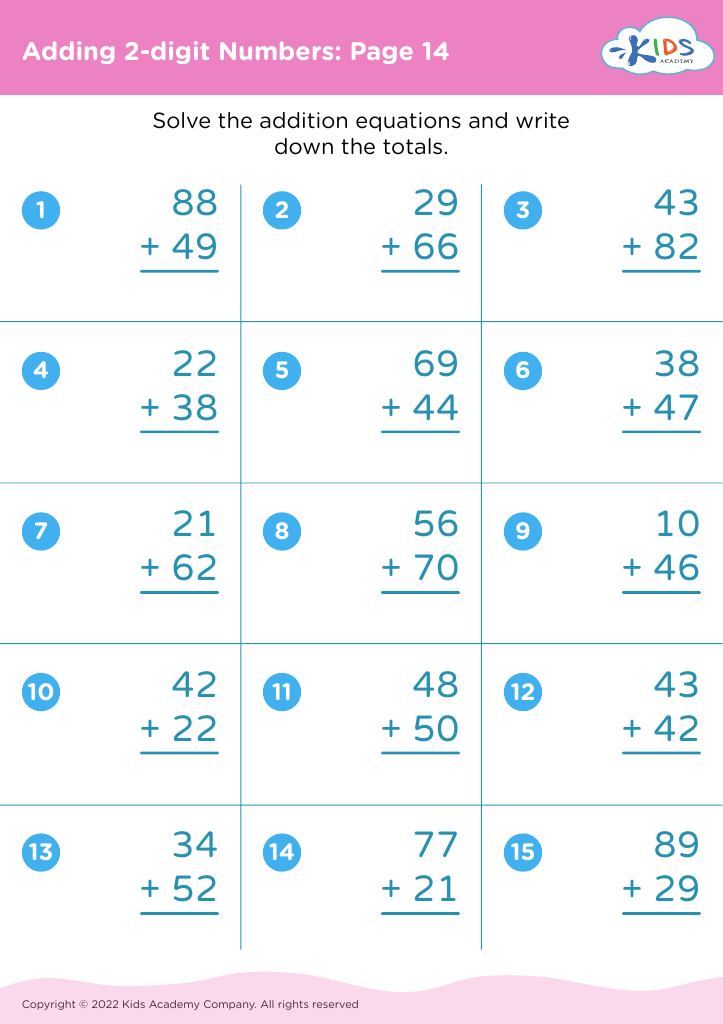
Adding 2-digit Numbers: Page 14

Adding 2-digit Numbers: Page 14

Adding 2-digit Numbers: Page 14
Worksheet
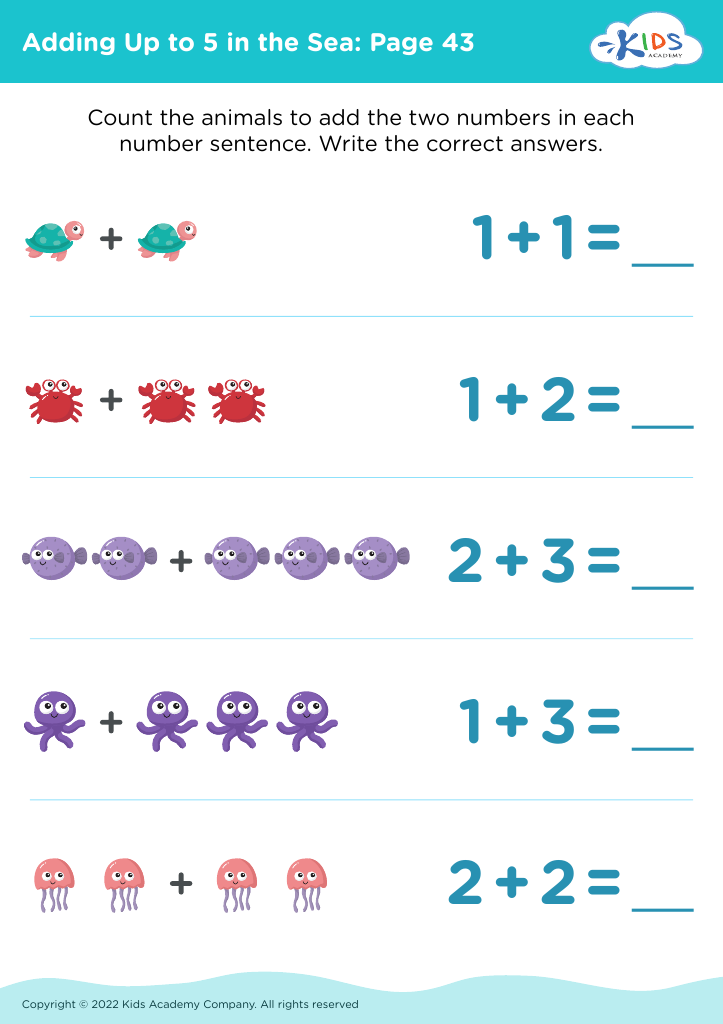
Adding Up to 5 in the Sea: Page 43
Worksheet
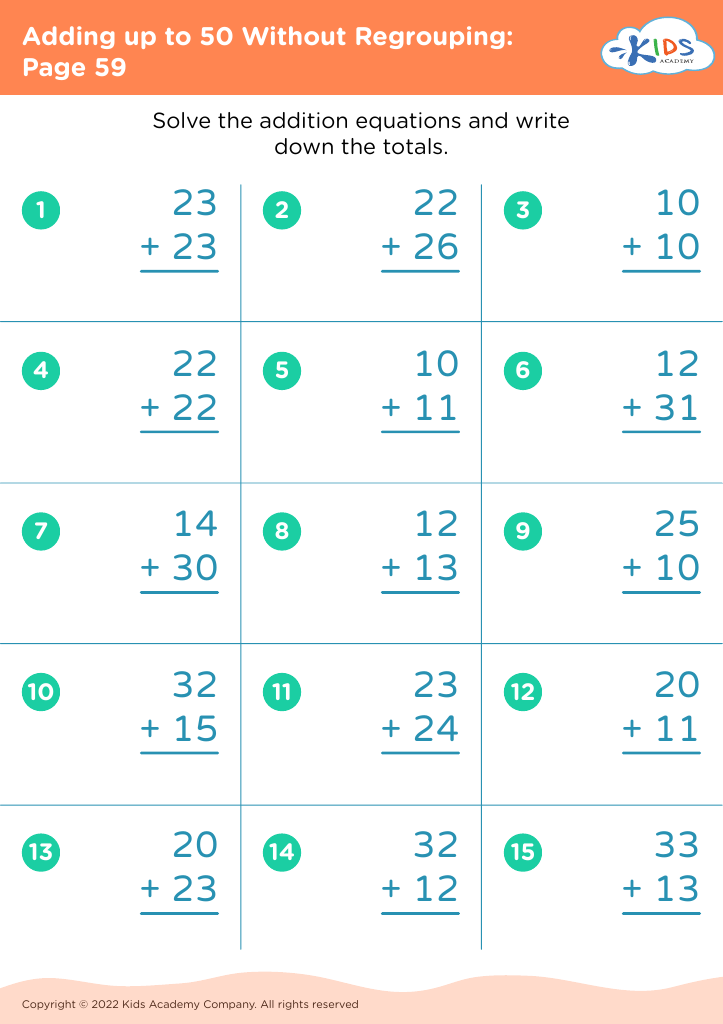
Adding up to 50 Without Regrouping: Page 59
Worksheet
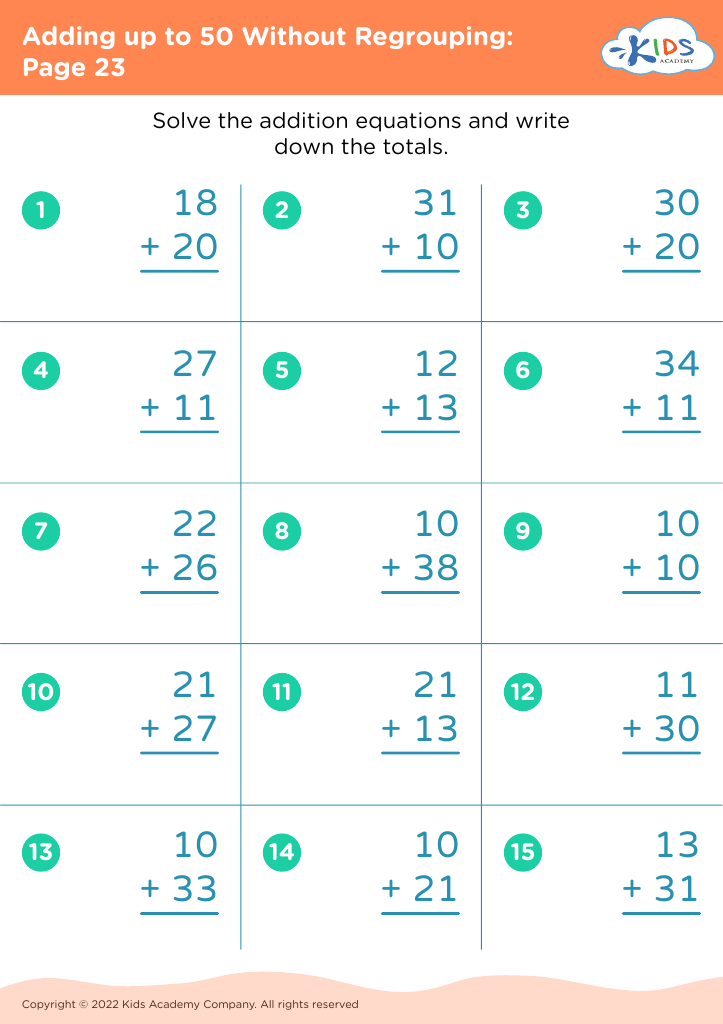
Adding up to 50 Without Regrouping: Page 23
Worksheet
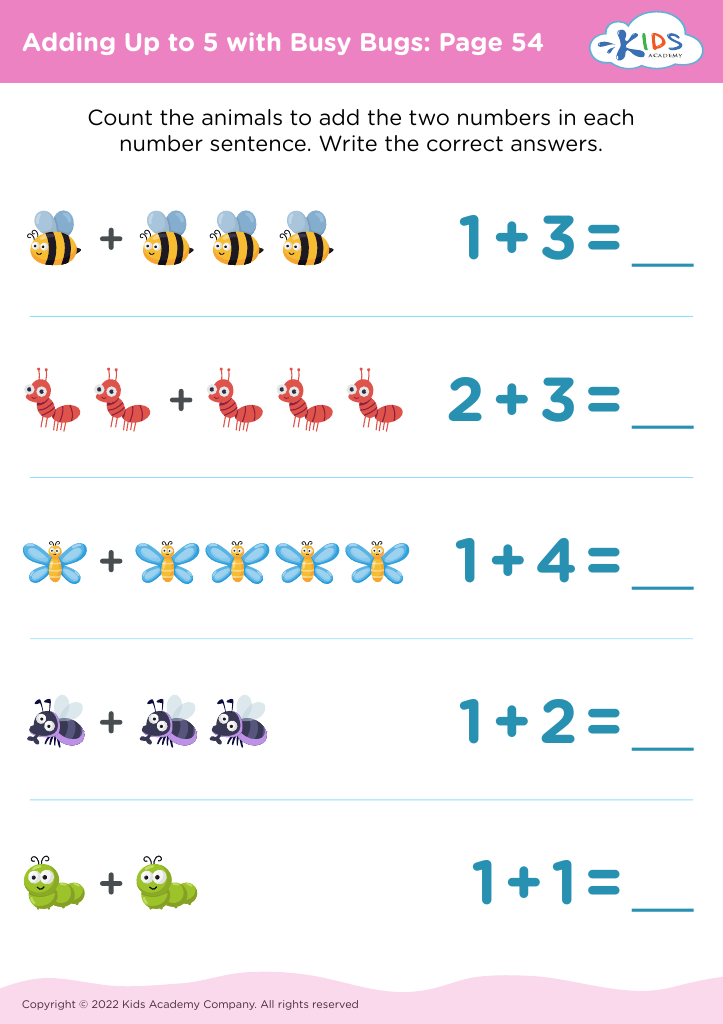
Adding Up to 5 with Busy Bugs: Page 54
Worksheet
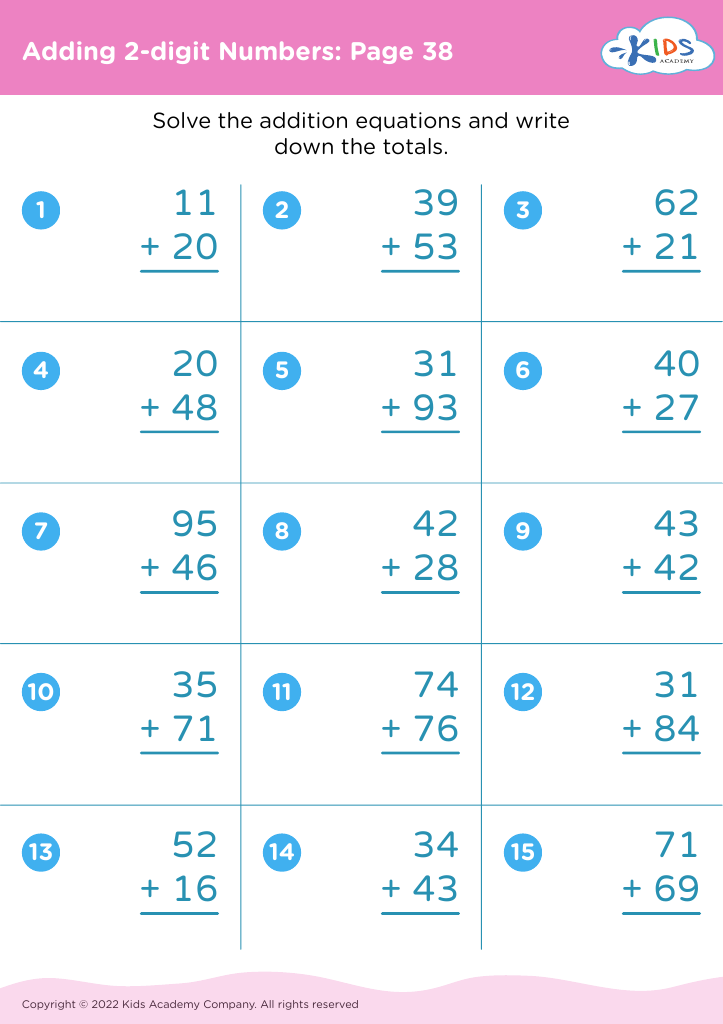
Adding 2-digit Numbers: Page 38

Adding 2-digit Numbers: Page 38

Adding 2-digit Numbers: Page 38
Worksheet
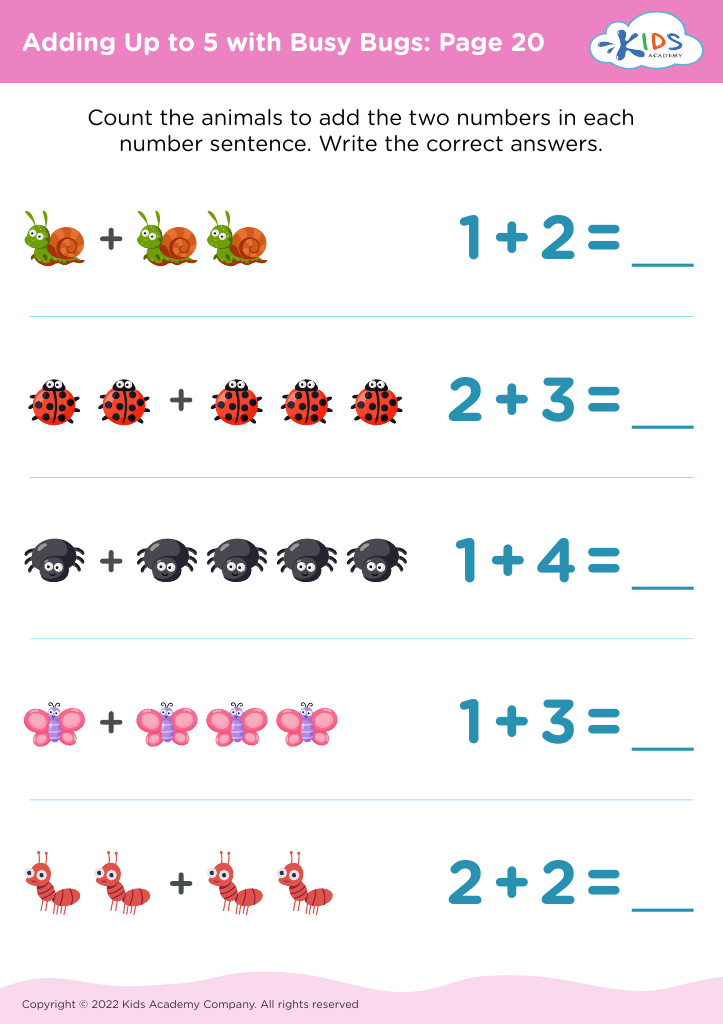
Adding Up to 5 with Busy Bugs: Page 20
Worksheet
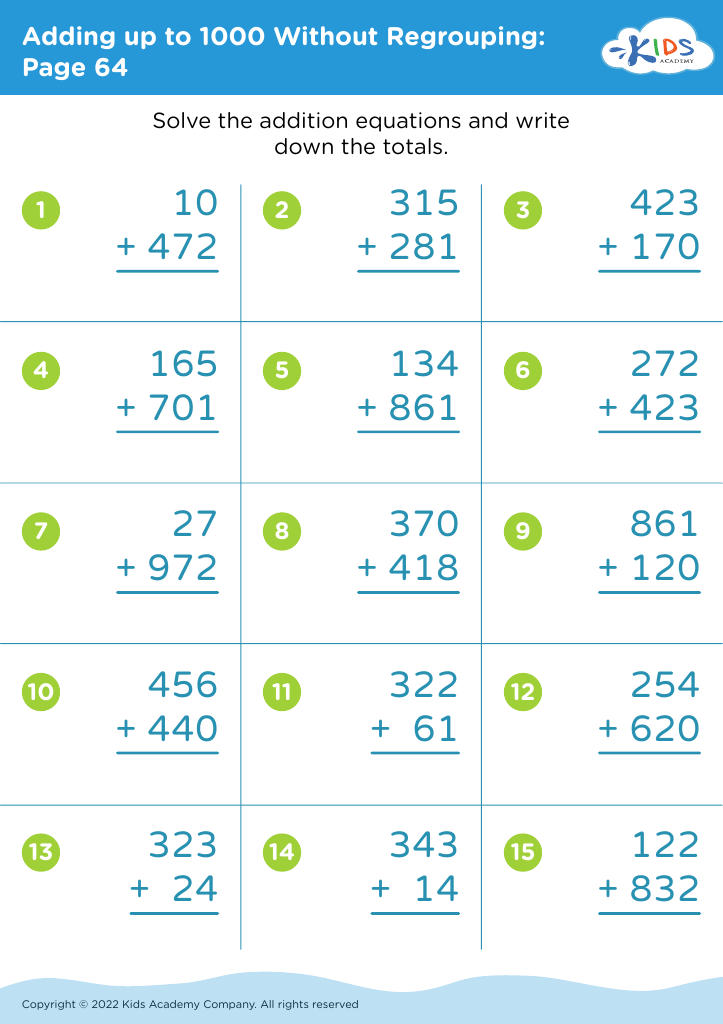
Adding up to 1000 Without Regrouping: Page 64
Worksheet
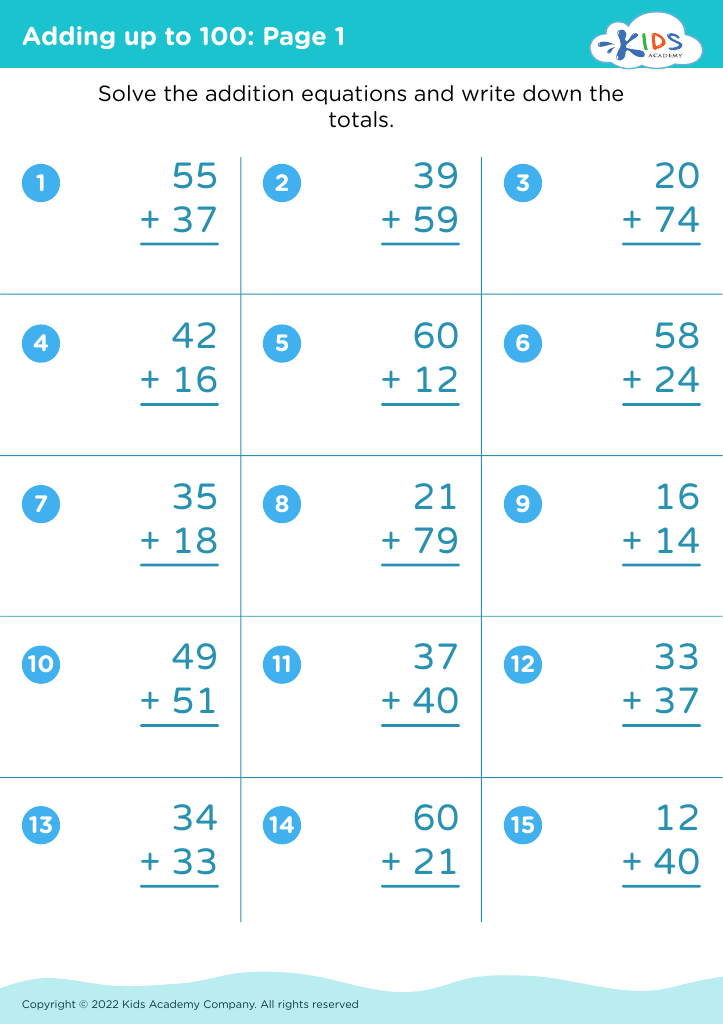
Adding up to 100: Page 1

Adding up to 100: Page 1

Adding up to 100: Page 1
Worksheet
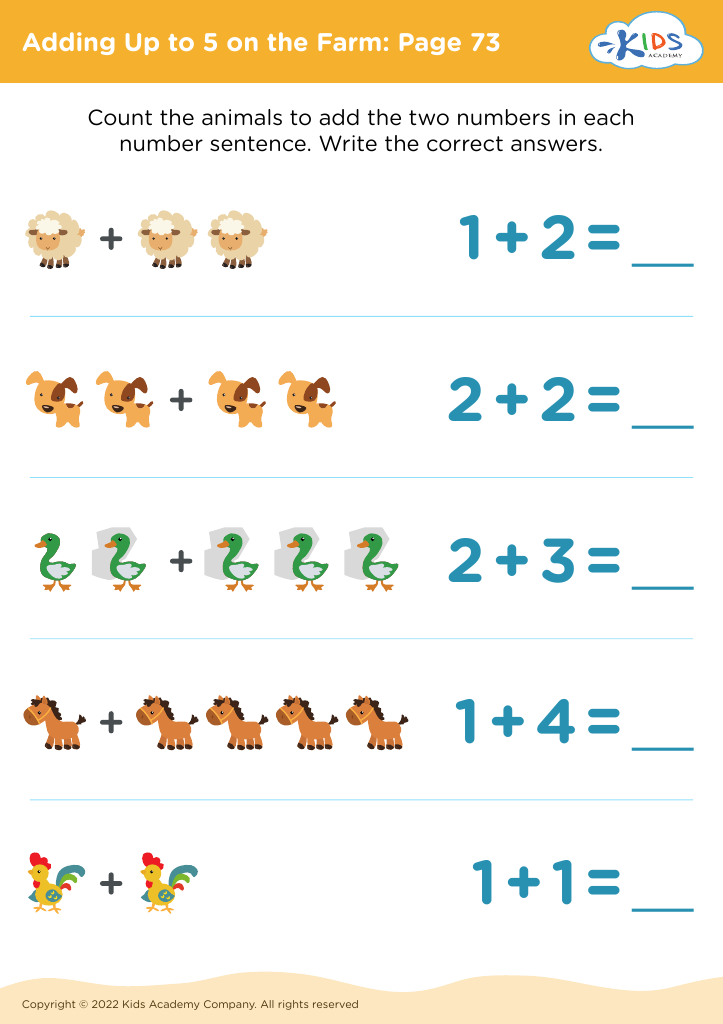
Adding Up to 5 on the Farm: Page 73
Worksheet


Parents and teachers should prioritize basic addition practice for children aged 3-7 because it lays the foundation for essential mathematical skills. During these formative years, children are particularly receptive to learning patterns, numbers, and arithmetic concepts. Mastering addition not only fosters numerical fluency, but it also enhances problem-solving abilities and logical thinking.

Additionally, basic addition provides a sense of accomplishment and boosts confidence in young learners. Engaging with addition in fun ways can make the learning process enjoyable, such as through games, songs, and interactive activities, thereby nurturing a positive attitude towards math. As children develop these skills, they become better prepared for more complex mathematical concepts, ultimately leading to improved academic performance in math later on.

Moreover, basic addition practice aligns with developmental milestones. At ages 3-7, children are transitioning from concrete thinking towards abstract reasoning, making it essential to introduce foundational skills that will support their future learning. By incorporating addition practice into daily routines or educational settings, parents and teachers can help cultivate a strong number sense, encourage curiosity, and promote critical thinking, ensuring that children have the tools they need to succeed academically and in everyday situations.