Basic arithmetic comprehension Addition Worksheets for Ages 3-7
3 filtered results
-
From - To
Discover engaging Basic Arithmetic Comprehension Addition Worksheets designed specifically for children aged 3-7. These carefully crafted resources help young learners build a strong foundation in addition through fun, interactive activities. Our worksheets promote number recognition, problem-solving skills, and a positive attitude toward math. With vibrant illustrations and step-by-step guidance, children will joyfully explore addition concepts while enhancing their critical thinking abilities. Ideal for both home and classroom use, these worksheets encourage independent learning and reinforce essential skills. Dive into our collection and watch your child flourish as they master the basics of addition, paving the way for future mathematical success!
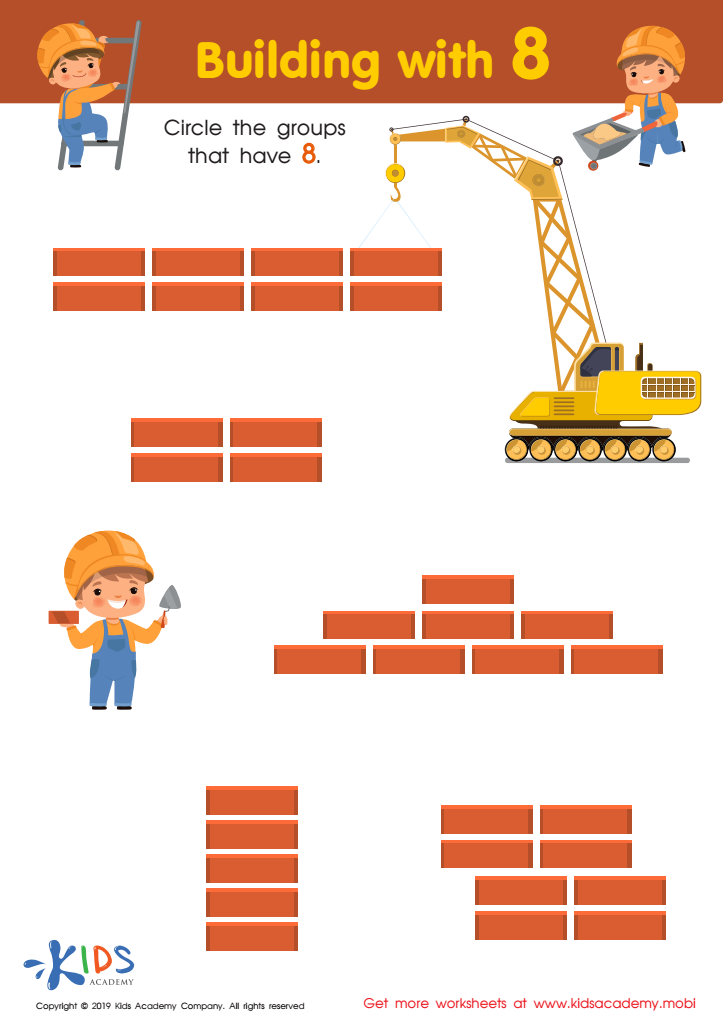
Building with 8 Worksheet
 Assign to My Students
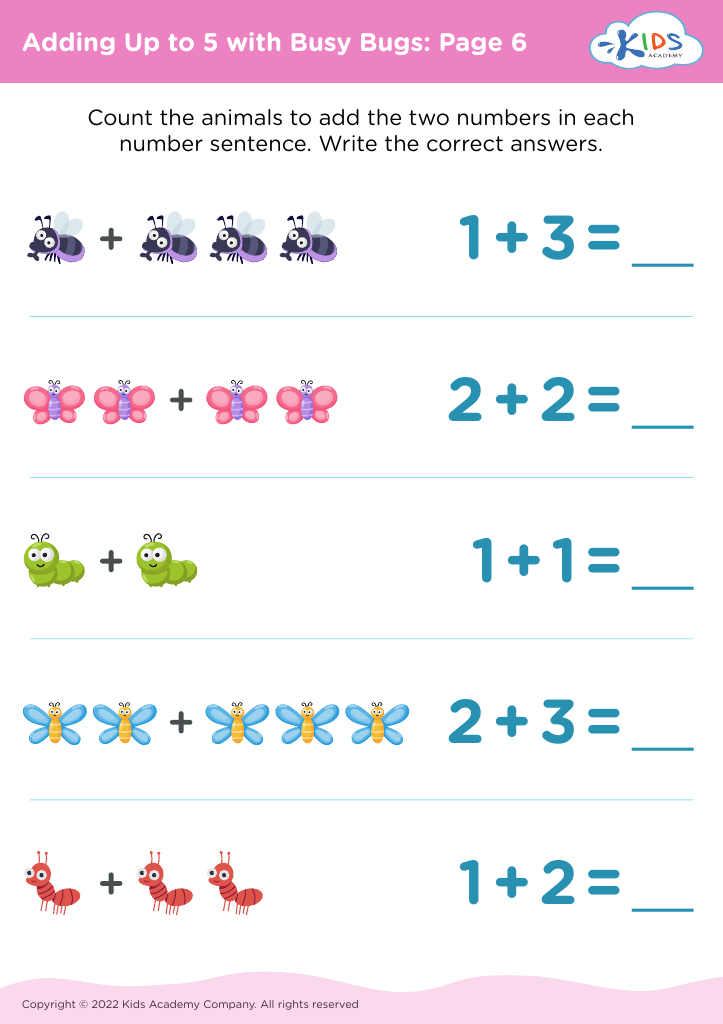
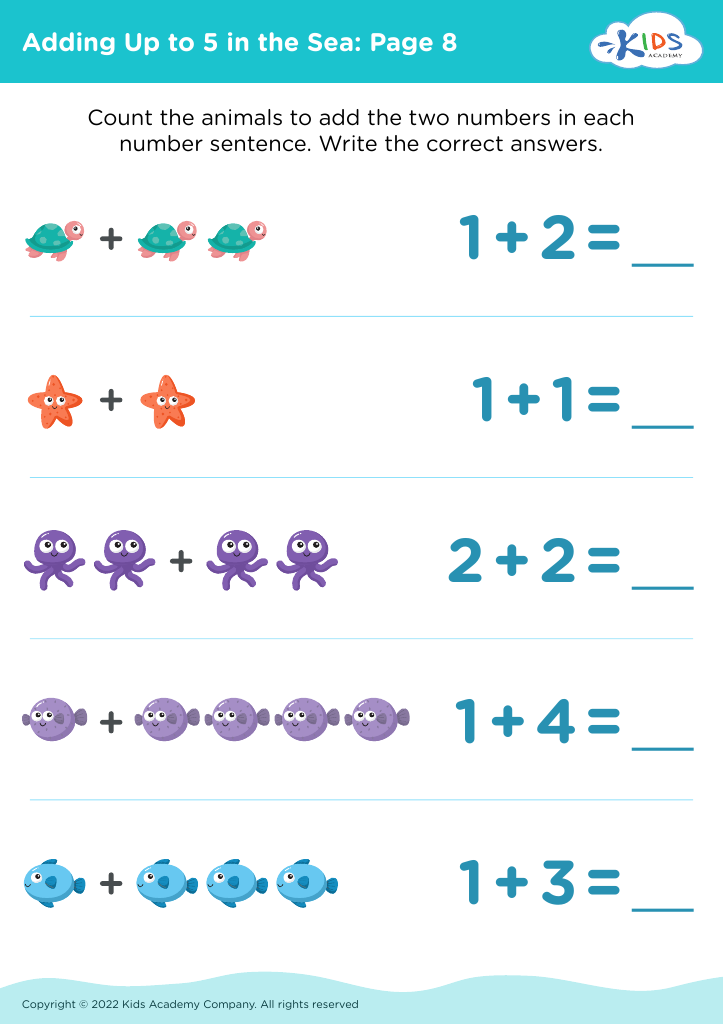







.jpg)
Basic arithmetic comprehension, particularly addition, is crucial for children aged 3-7 as it forms the foundation for their understanding of mathematics and problem-solving skills. During these formative years, children's brains are highly receptive to new concepts, making early exposure to mathematical principles vital. Mastering addition not only aids in numerical literacy but also enhances cognitive skills such as reasoning, critical thinking, and the ability to categorize and sequence information.
For parents and teachers, fostering a solid grasp of addition in early childhood can lead to long-term academic success. Children confident in their arithmetic abilities are more likely to embrace challenges in later math courses, reducing anxiety and building self-esteem. Additionally, learning addition nurtures essential skills that extend beyond academics, supporting everyday decision-making and financial literacy.
Moreover, engaging with basic arithmetic encourages social interaction during activities, fostering teamwork and communication skills. Simple games, songs, and interactive materials can make learning addition fun and relatable. By prioritizing arithmetic comprehension, parents and teachers can create a positive, enriching environment that not only prepares children for future educational endeavors but also equips them with essential life skills they will use throughout their lives.








