
Basic math learning Addition Worksheets for Ages 3-7
3 filtered results
Difficulty Level
Grade
Age
-
From - To
Subject
Activity
Standards
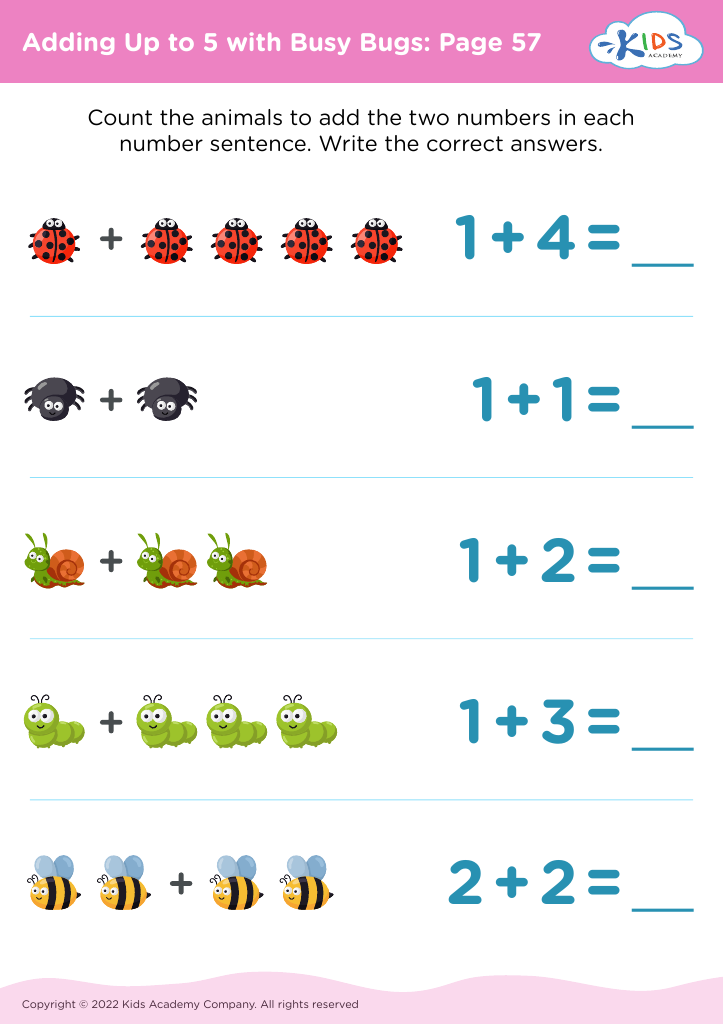
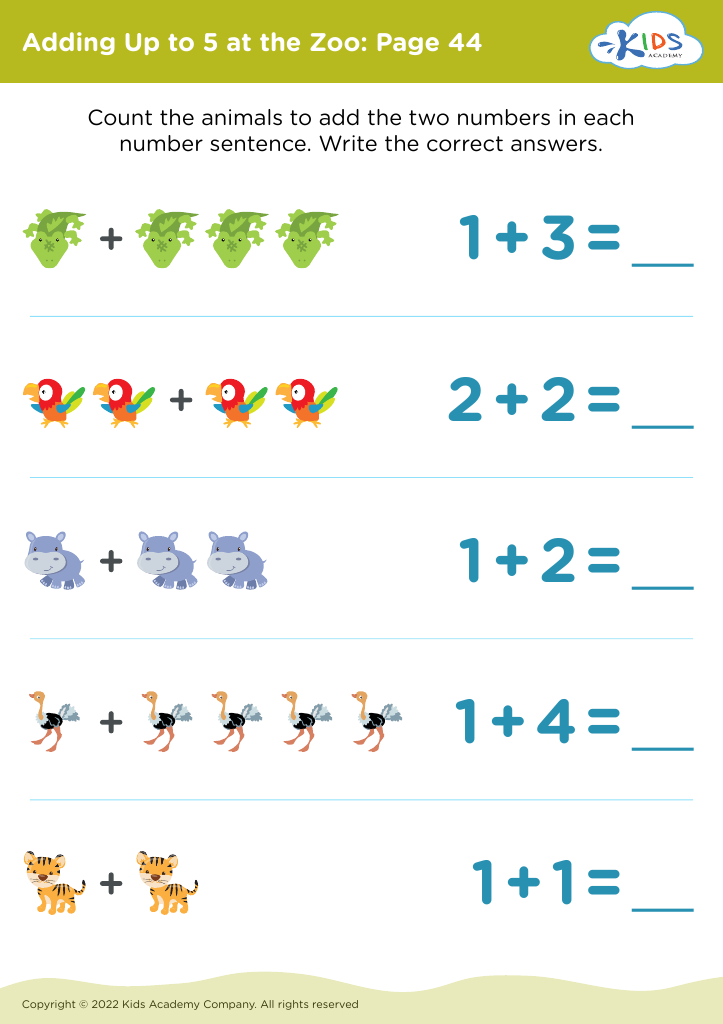
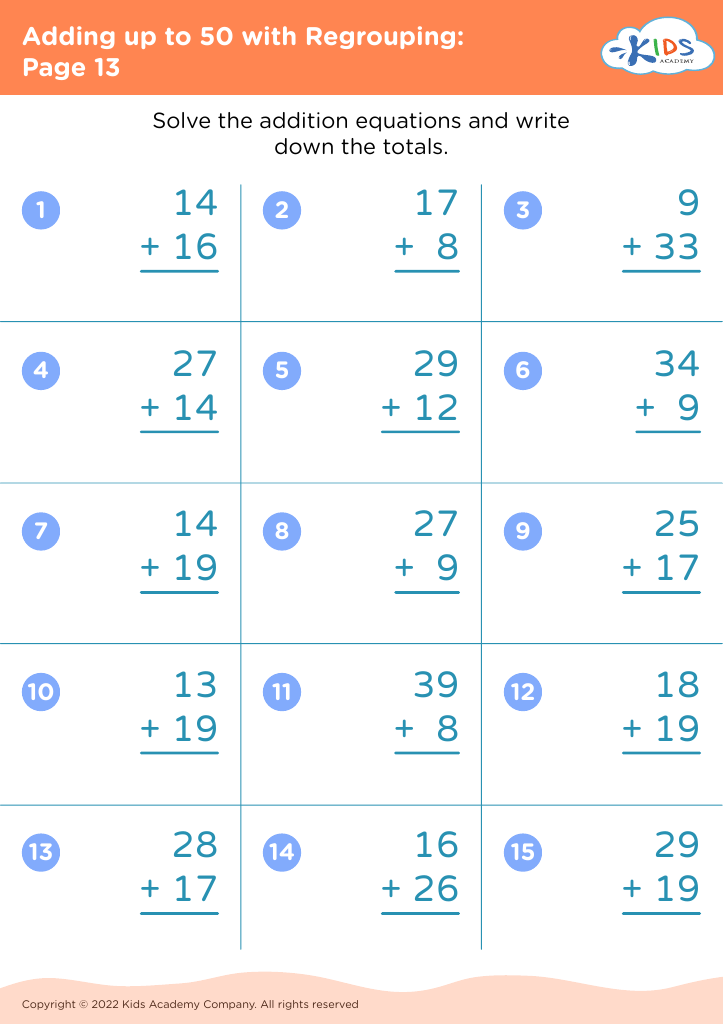
Discover engaging Basic Math Learning Addition Worksheets designed specifically for children aged 3 to 7! These worksheets help young learners develop essential addition skills through fun and interactive activities. Each worksheet features colorful graphics and relatable themes that make learning math enjoyable. Whether in the classroom or at home, these resources provide step-by-step guidance tailored to various skill levels, ensuring all children can progress with confidence. Parents and educators can track their child's understanding and growth in math. Get started today and establish a solid foundation in addition that fosters a lifelong love of learning! Download your free worksheets now!
Favorites
With answer key
Interactive
Join Kids Academy for Free
Who is primarily going to use this learning content?








Basic math learning, particularly addition, is crucial for children ages 3-7 as it lays the foundation for their cognitive development and problem-solving skills. At this formative age, children are naturally curious and eager to explore numerical concepts. Engaging them with addition not only fosters mathematical understanding but also enhances critical thinking, reasoning, and analytical skills necessary for lifelong learning.
Moreover, learning addition develops a child’s ability to recognize patterns and relationships, which is essential for future math concepts. It is also linked to everyday practical applications, from counting objects to solving simple problems in daily life.
Parental and teacher involvement in this stage of learning greatly influences a child’s attitude toward math. Positive reinforcement and interactive activities can nurture a love for mathematics, leading to greater confidence in their abilities. Early mastery of basic addition paves the way for success in more advanced mathematical concepts in later grades.
Additionally, understanding mathematics is not just an academic skill; it informs decision-making, budgeting, and logical thinking. Therefore, by investing in early addition skills, parents and teachers provide children with essential tools for their future academic and personal lives, fostering both competence and confidence.








