Develop problem-solving skills Addition Worksheets for Ages 3-7
7 filtered results
-
From - To
Unlock the potential of young learners with our engaging "Develop Problem-Solving Skills Addition Worksheets" designed for ages 3-7. These printable worksheets not only introduce basic addition concepts but also nurture critical thinking and reasoning abilities. Each activity encourages kids to approach problems creatively, fostering a love for math while building foundational skills. With vibrant illustrations and age-appropriate challenges, children will develop confidence in their problem-solving abilities. Explore our collection to provide a fun and interactive way for your child to learn addition while honing essential thinking skills. Perfect for classroom or home use, these worksheets make math an enjoyable adventure!
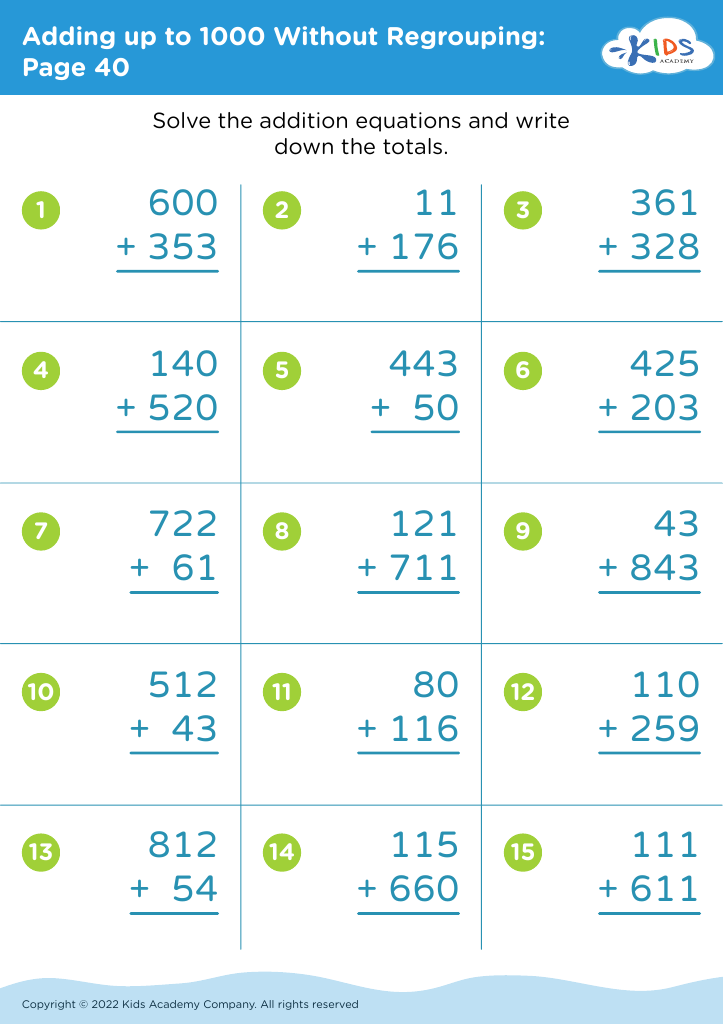
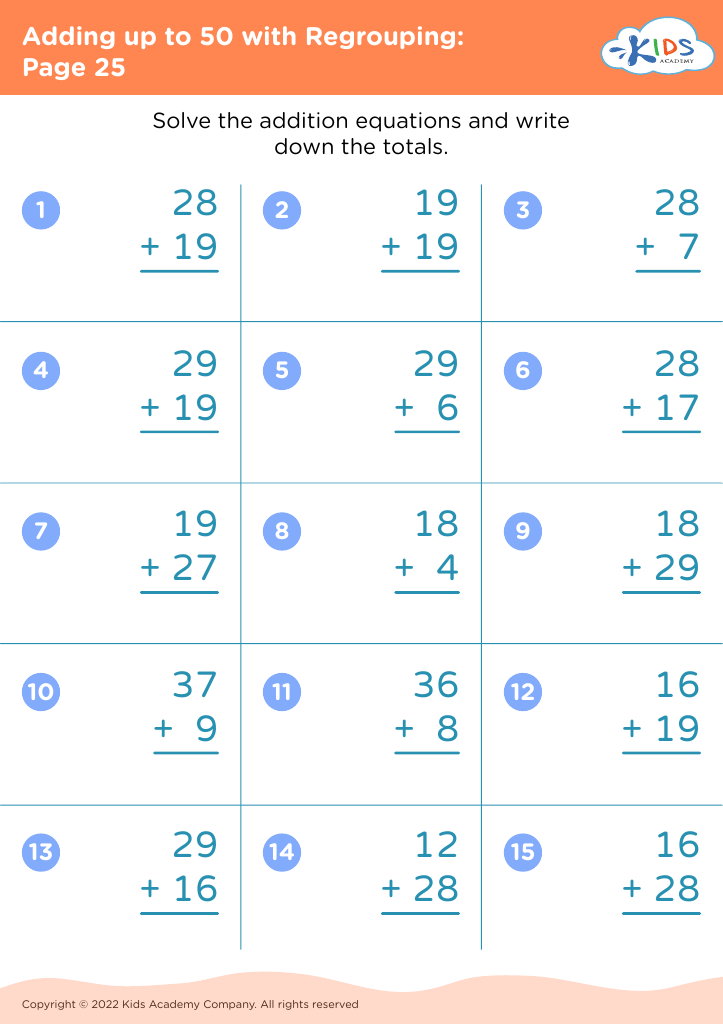
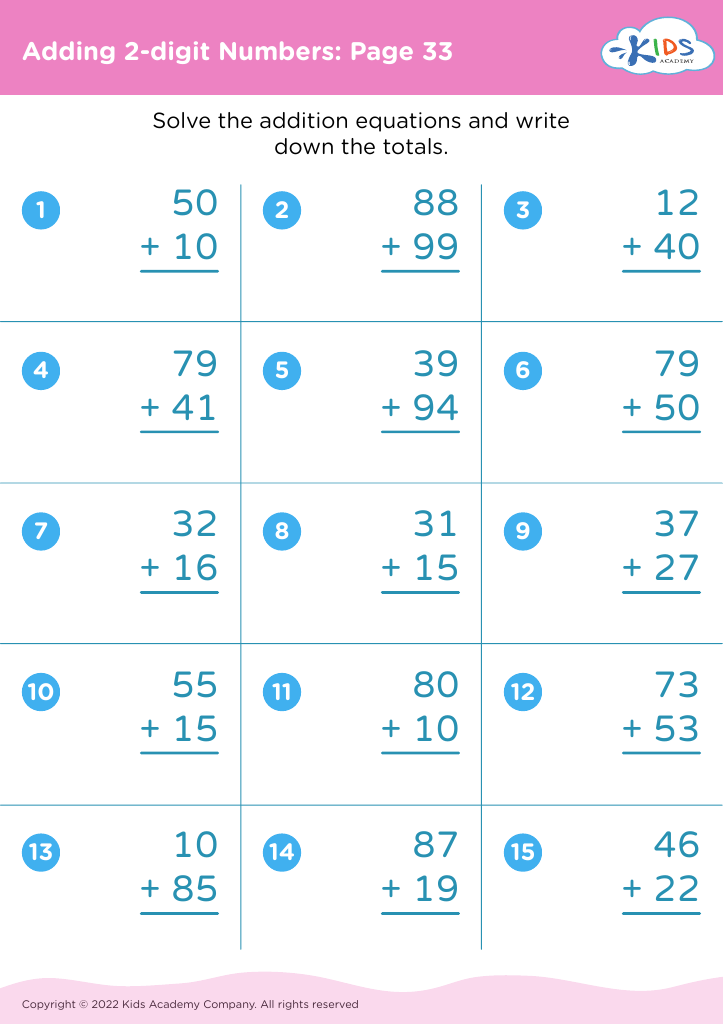
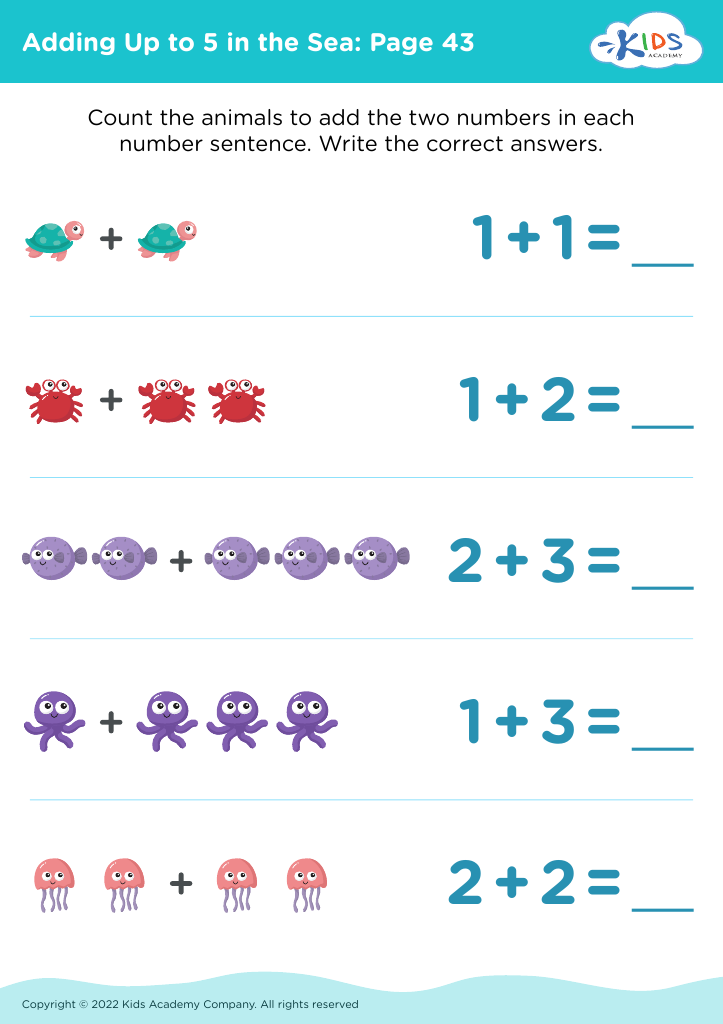
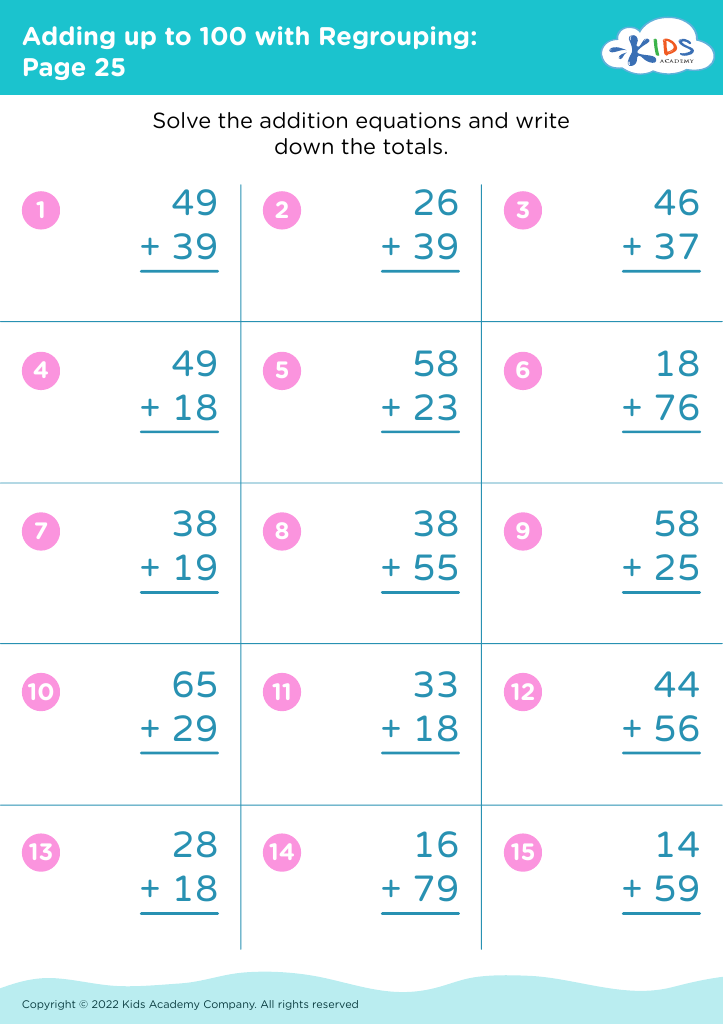
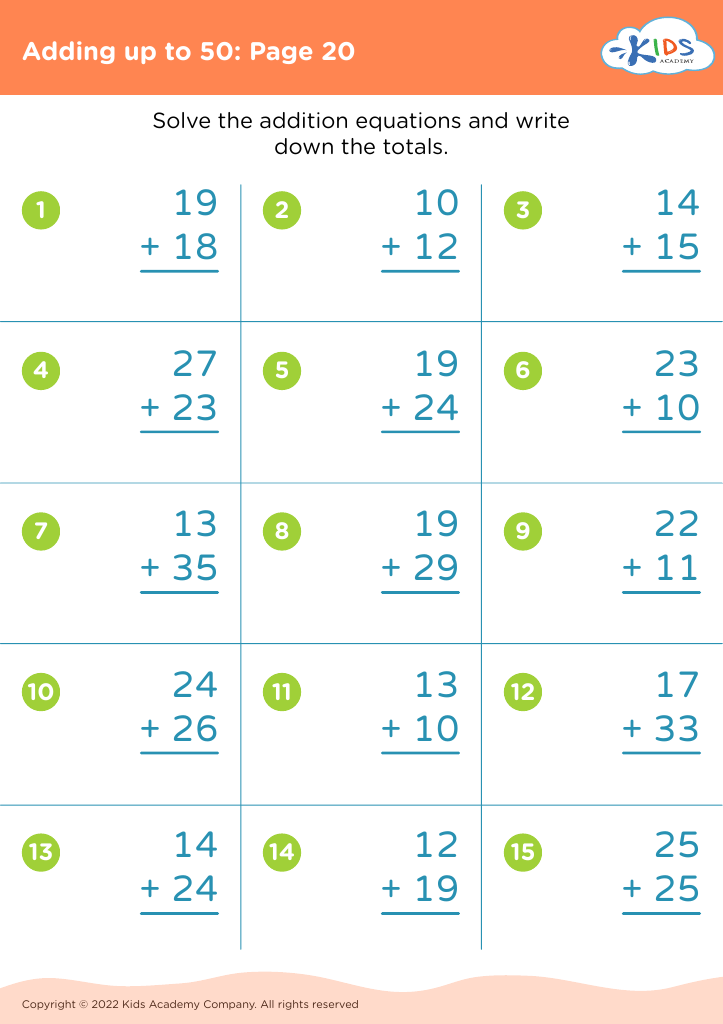
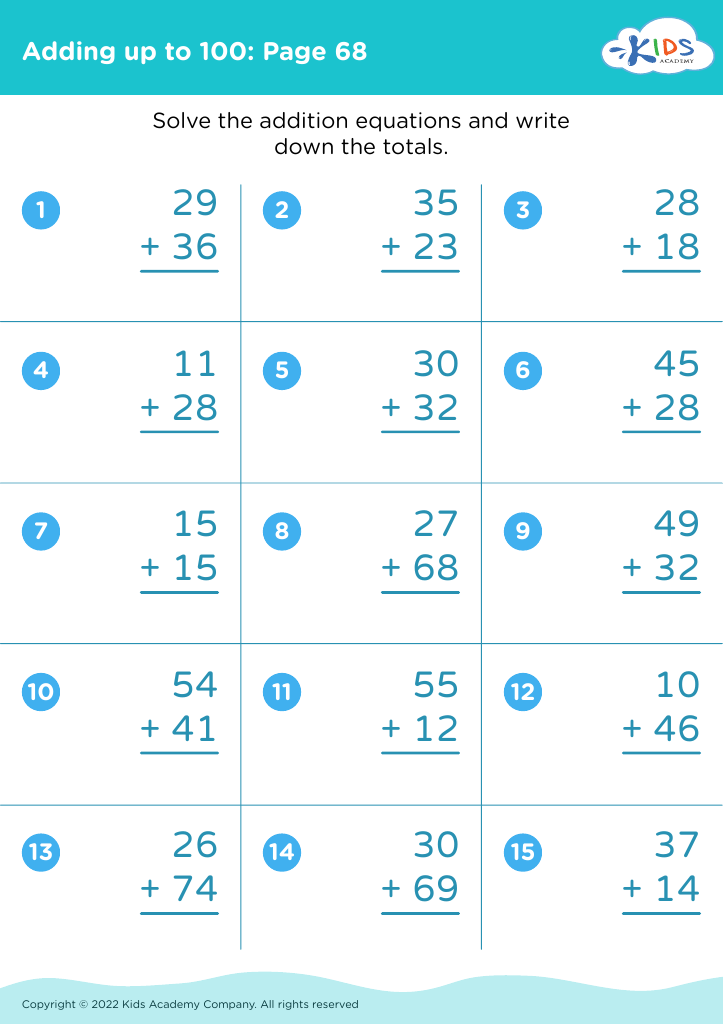








Developing problem-solving skills in children aged 3-7, particularly in the context of addition, is crucial for several reasons. First, this foundational mathematical ability supports cognitive development. Young learners engage in critical thinking and logical reasoning when they tackle addition problems, which fosters overall brain development.
Second, problem-solving through addition helps children understand mathematical concepts in a practical context. For example, by using everyday situations—like sharing snacks or counting toys—they can see the relevance of addition in real life, making learning more engaging and meaningful.
Moreover, early exposure to problem-solving boosts confidence and resilience. When children learn to approach challenges, figuring out solutions and reflecting on their strategies, they develop a growth mindset that transcends mathematics. Such skills are vital as they face more complex academic tasks in later years.
Lastly, a solid grasp of problem-solving skills lays the groundwork for future learning. As children progress in their education, the ability to analyze, interpret, and tackle problems enhances their capacity across subjects, making them more well-rounded individuals. Therefore, parents and teachers should prioritize teaching these skills in fun and age-appropriate ways, ensuring children are equipped for lifelong learning and success.








