Enhance number recognition Addition Worksheets for Ages 3-7
17 filtered results
-
From - To
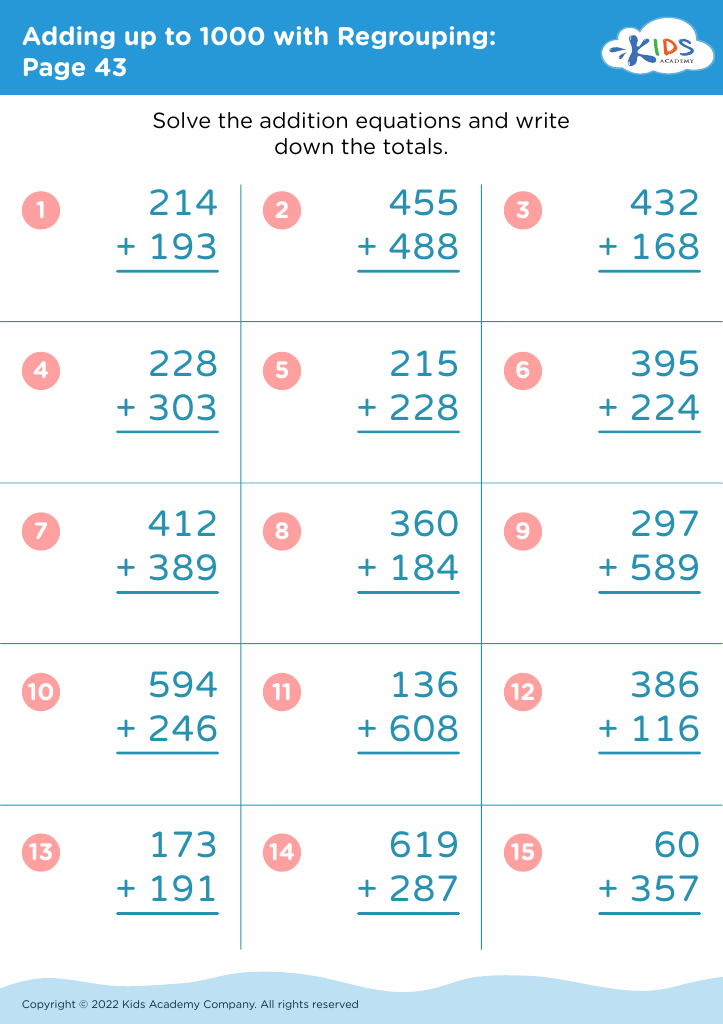
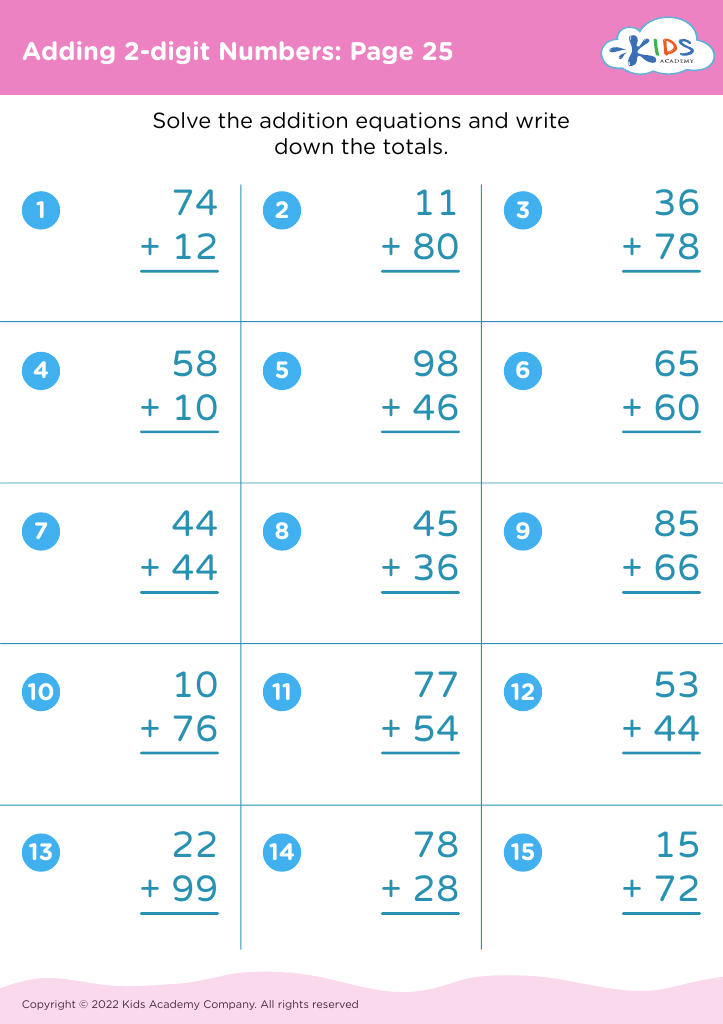
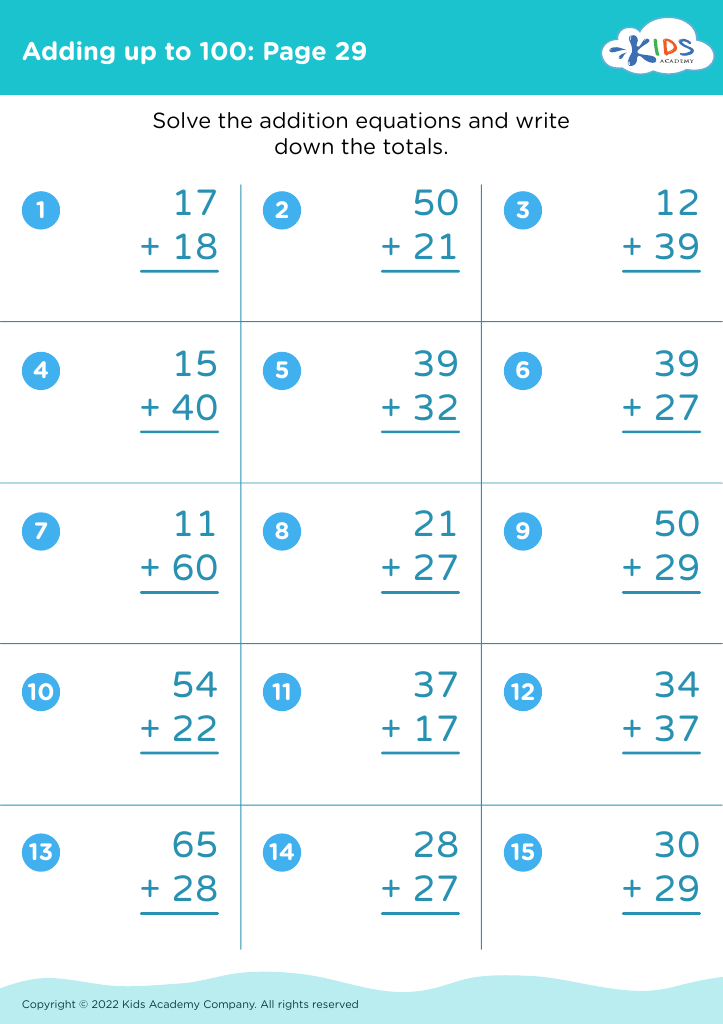
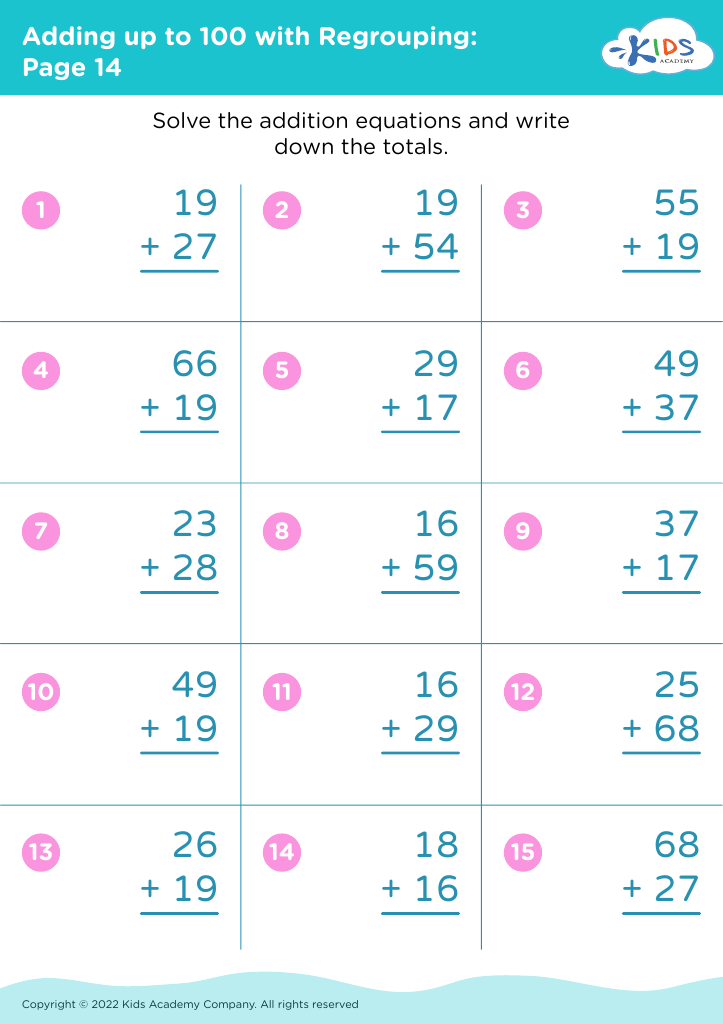
Discover the perfect tool to boost your child's math abilities with our "Enhance Number Recognition Addition Worksheets for Ages 3-7." Designed to make learning fun, these worksheets help young learners improve their addition skills while reinforcing number recognition. With engaging and age-appropriate exercises, children easily grasp basic math concepts, ensuring a strong foundation for future education. Our colorful, child-friendly prints capture attention, making study time enjoyable and effective. Ideal for both classroom use and at-home practice, our worksheets make mastering addition an exciting adventure. Start building your child's confidence and enthusiasm for math today!
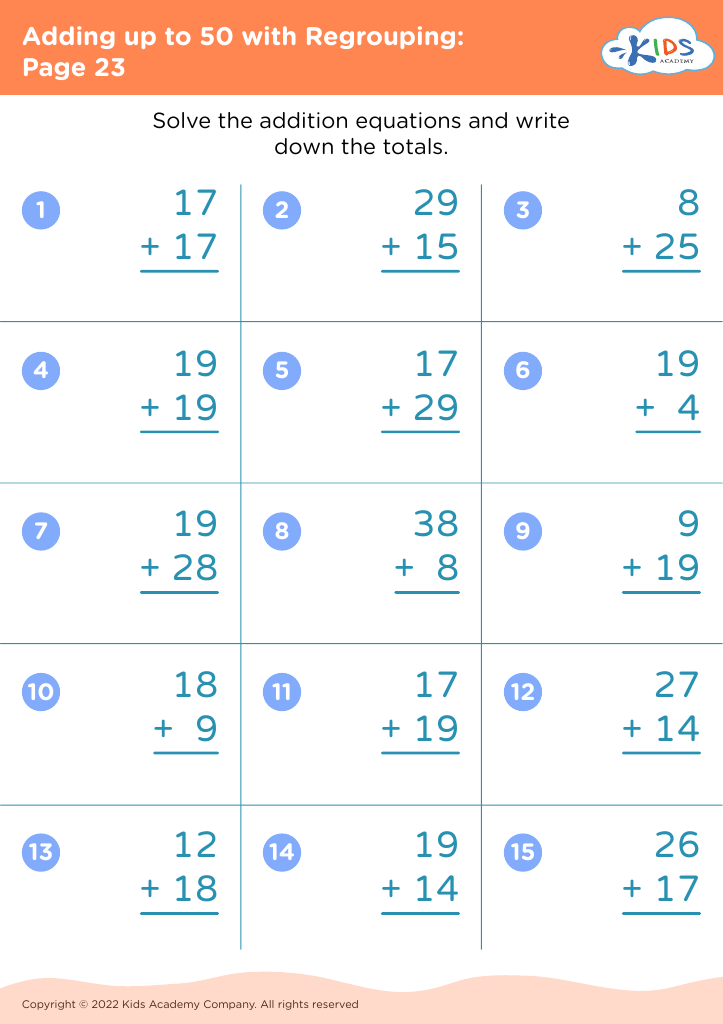
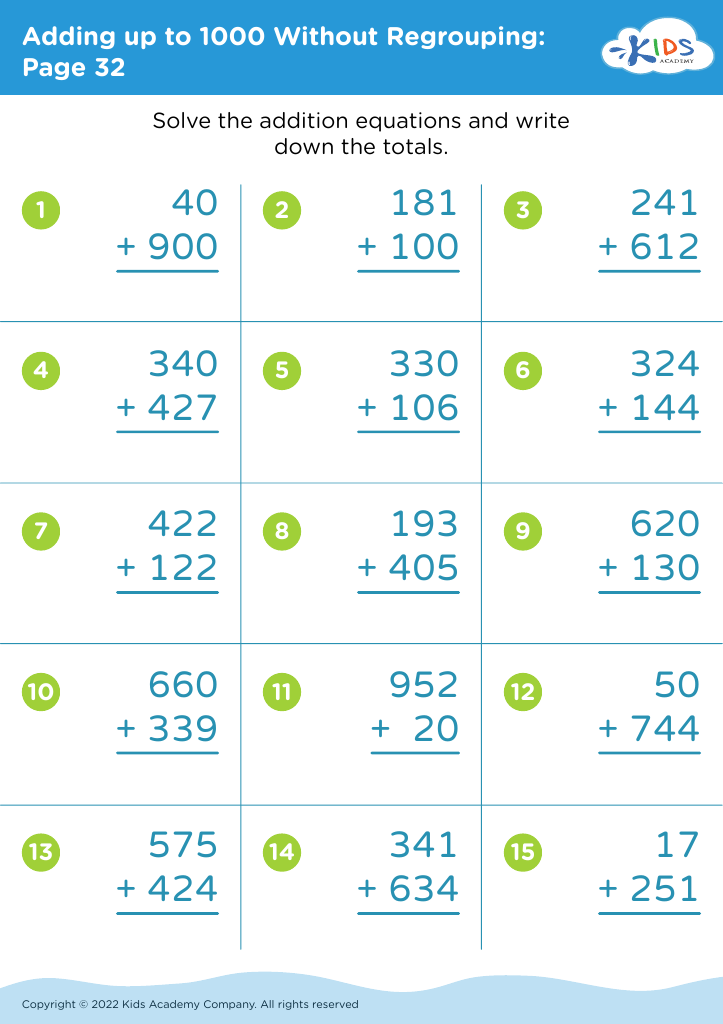
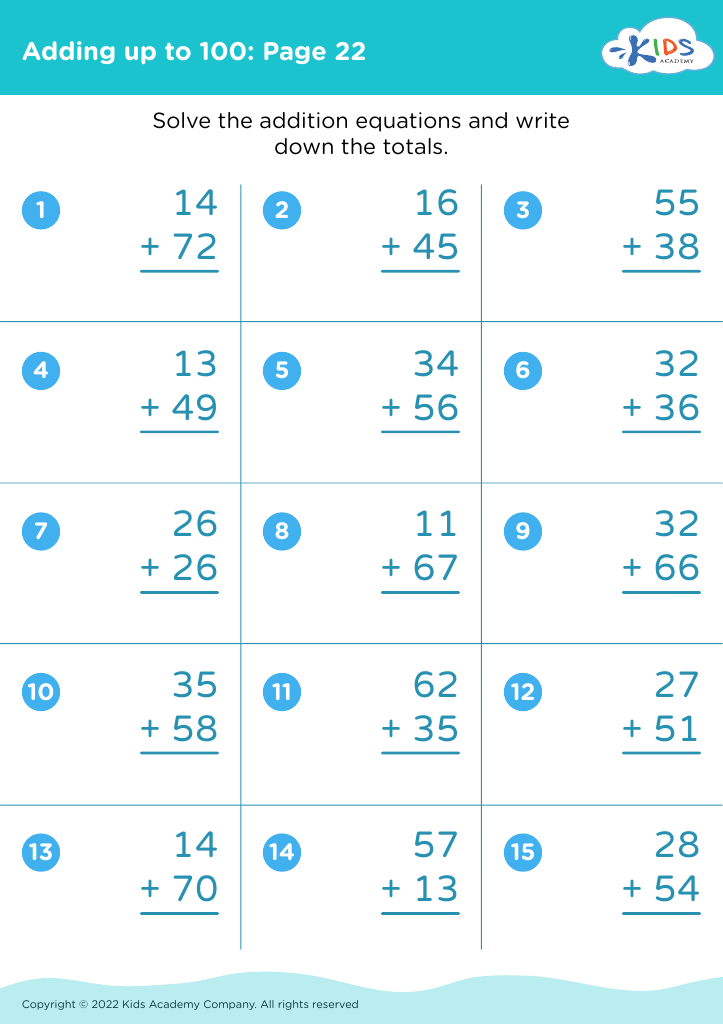
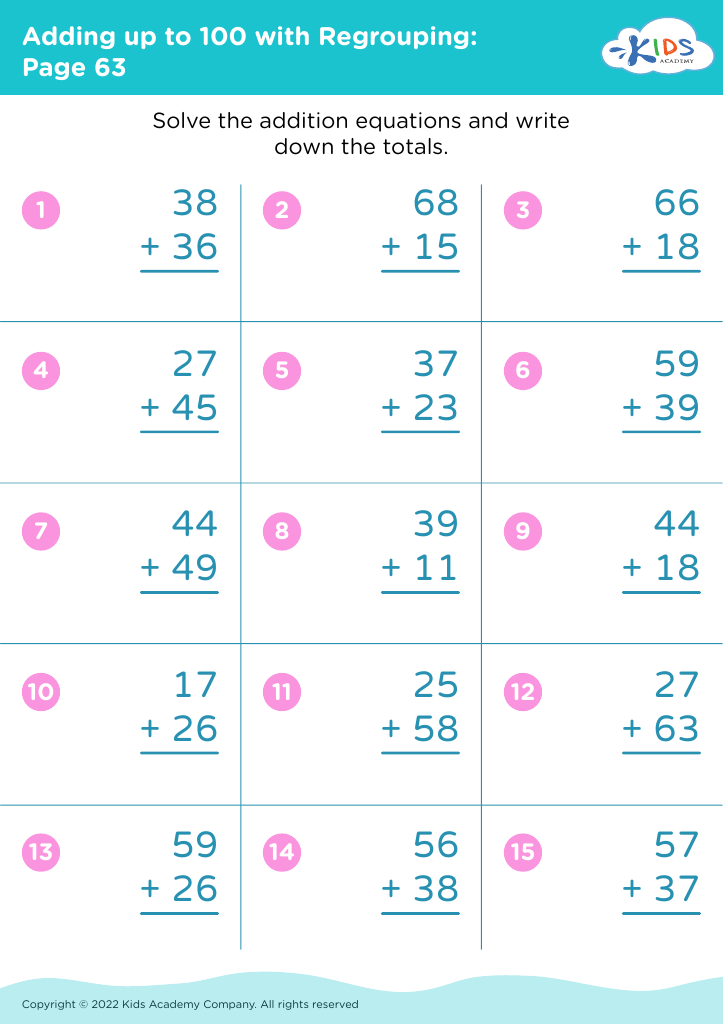
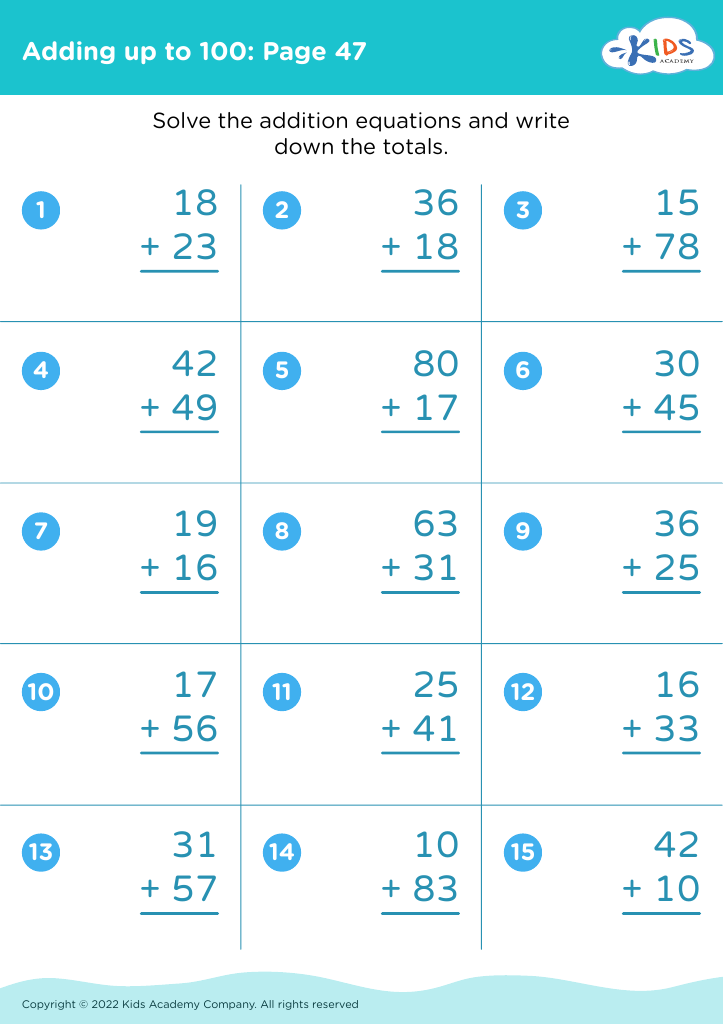
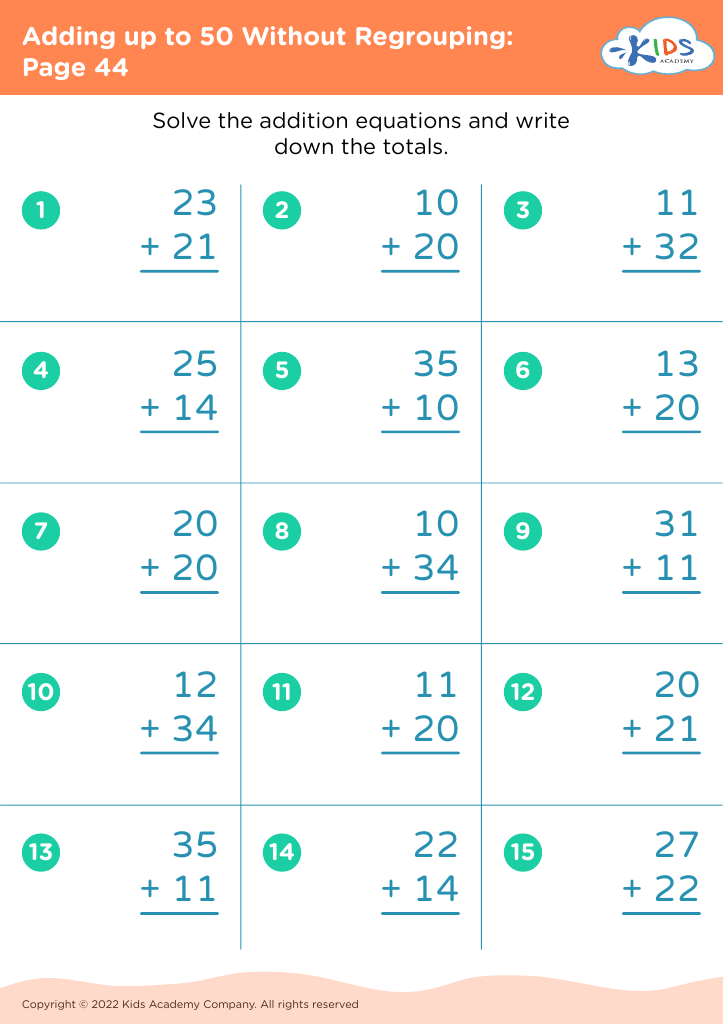
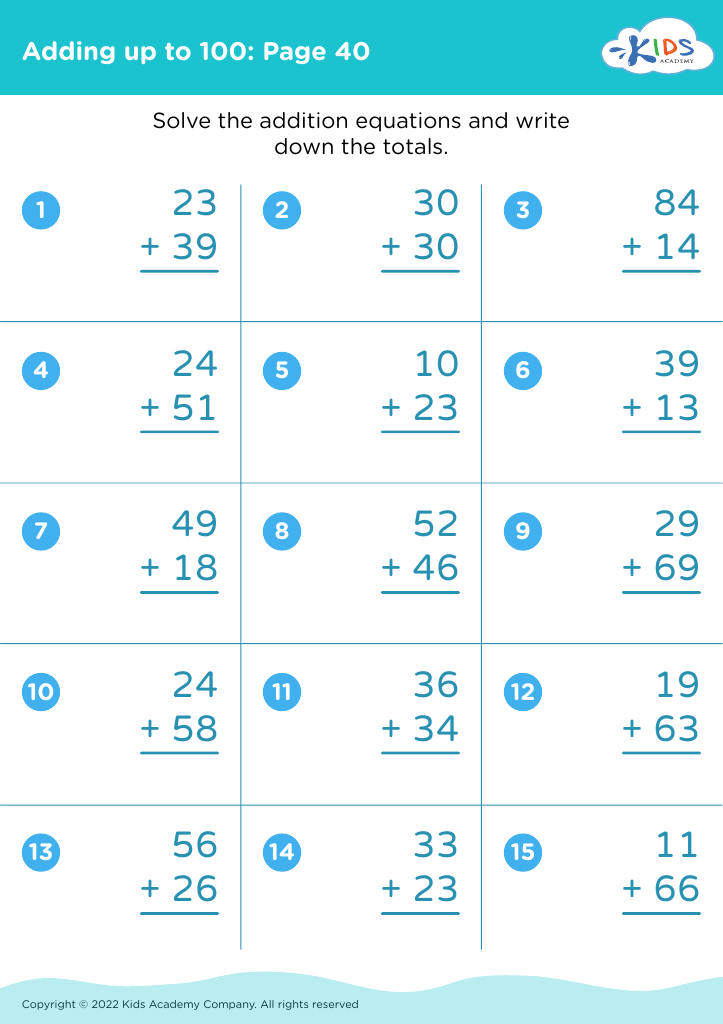
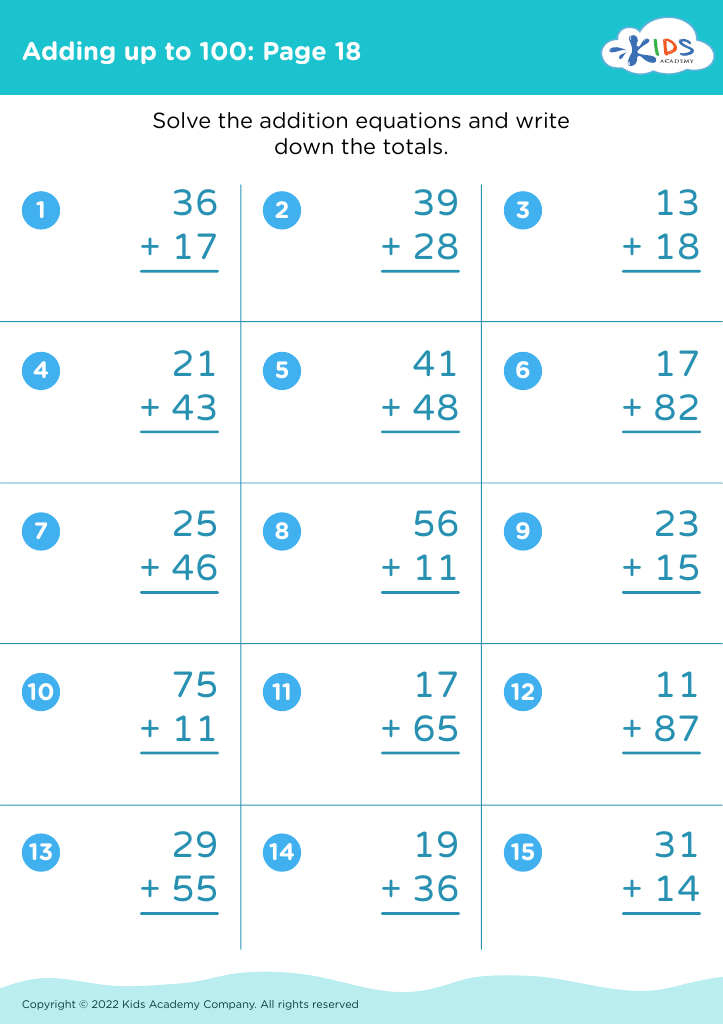
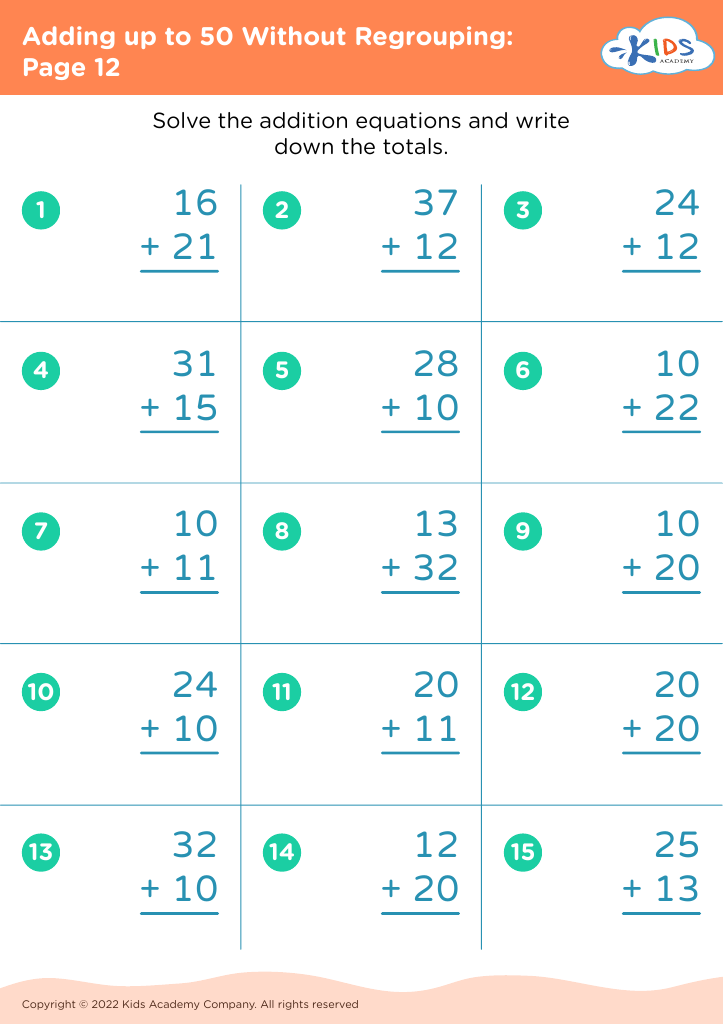
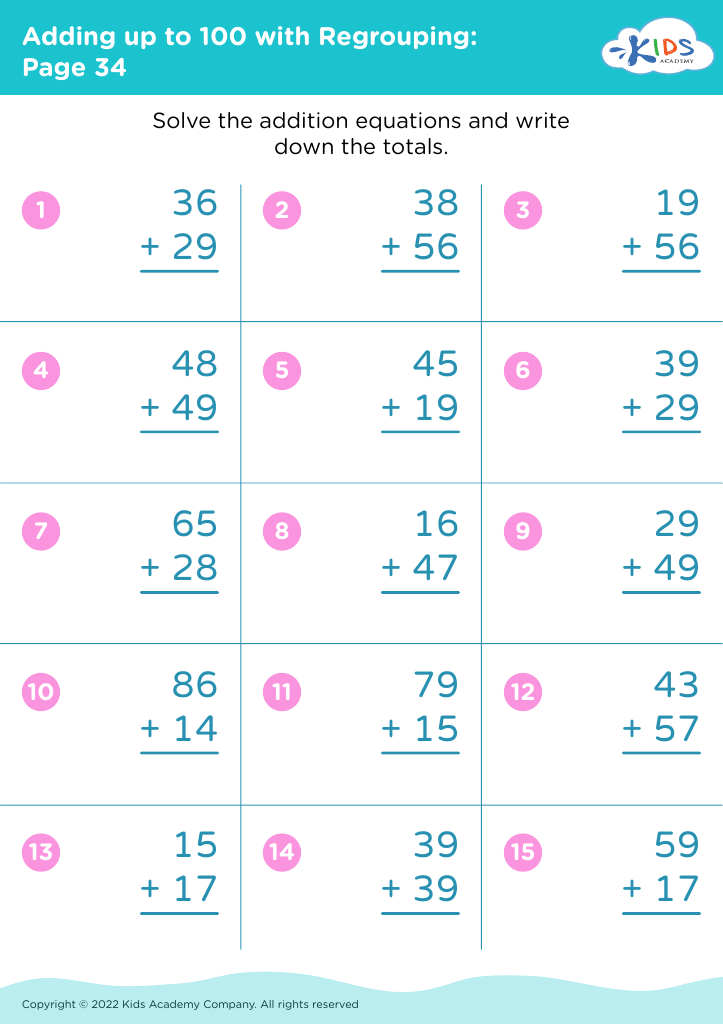
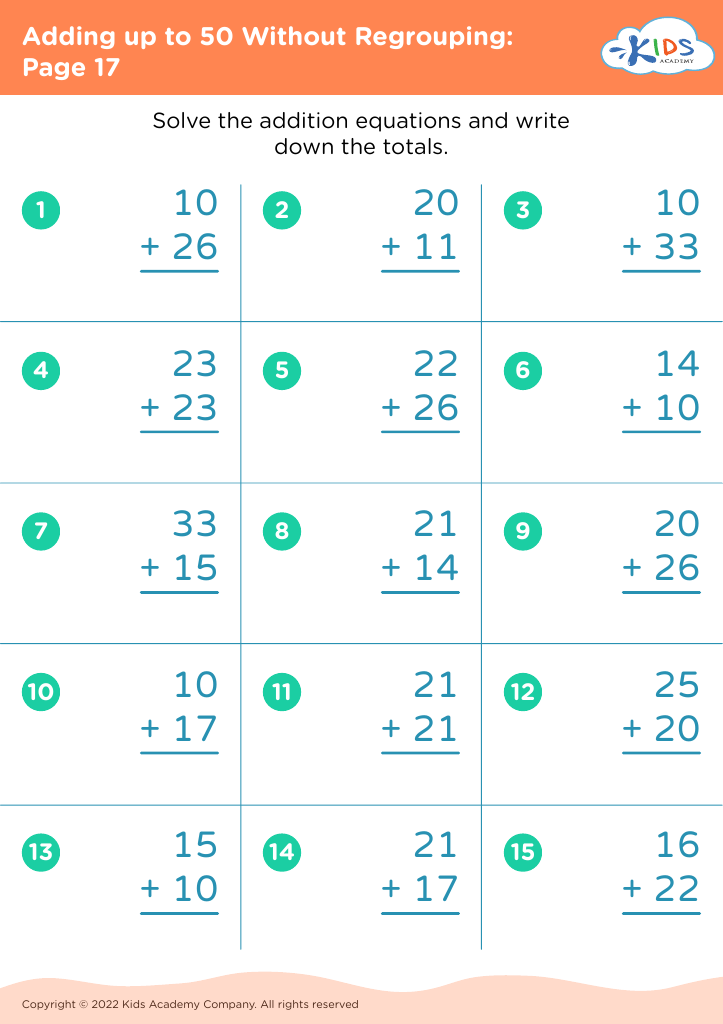
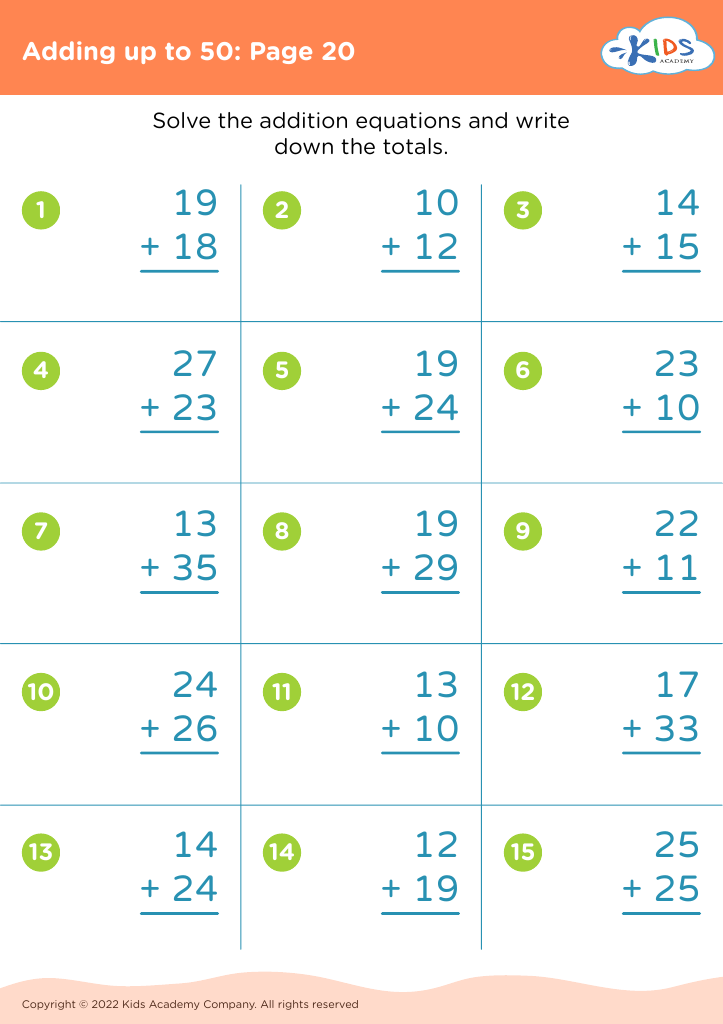
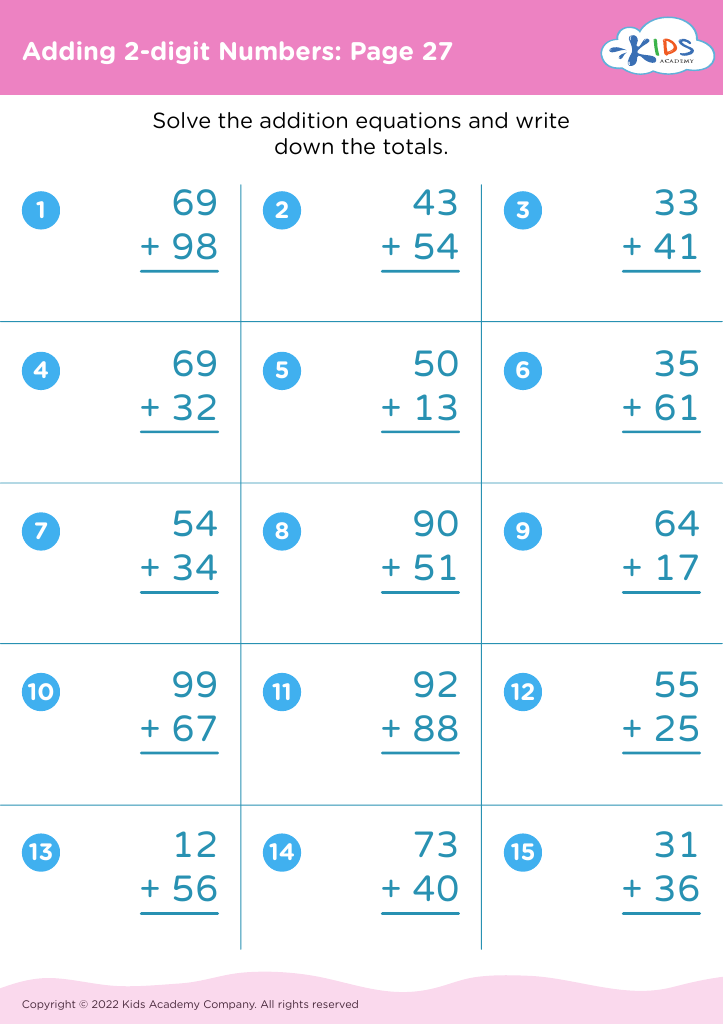








Enhancing number recognition and skills in addition for children aged 3-7 is crucial for several reasons:
Foundational Skills: Number recognition is a foundational skill that sets the stage for all future math learning. It is essential for understanding the basic concept of quantity and order of numbers.
Cognitive Development: During the age 3-7 period, children's brains are rapidly developing, and engaging in math activities can enhance their cognitive abilities, including problem-solving and logical thinking.
Confidence Building: Early success in understanding and using numbers helps build a child's confidence in their math abilities. This self-confidence can lead to a positive attitude toward learning, not just in math but in other academic areas as well.
Preparation for School: Mastery of number recognition and addition is often expected in kindergarten and early elementary school. Ensuring children have these skills helps them to keep pace with their peers and make a smooth transition into formal schooling.
Real-World Application: Basic math skills are used in everyday activities, from counting objects to simple real-life addition tasks like adding toys or snacks. Early competence with these concepts promotes practical understanding and usability in everyday tasks.
Parental and teacher involvement and encouragement in enhancing these skills can make a significant impact on a child’s educational journey and overall development.








