
Fine motor skills (drawing lines) Addition Worksheets for Ages 3-7
3 filtered results
Difficulty Level
Grade
Age
-
From - To
Subject
Activity
Standards
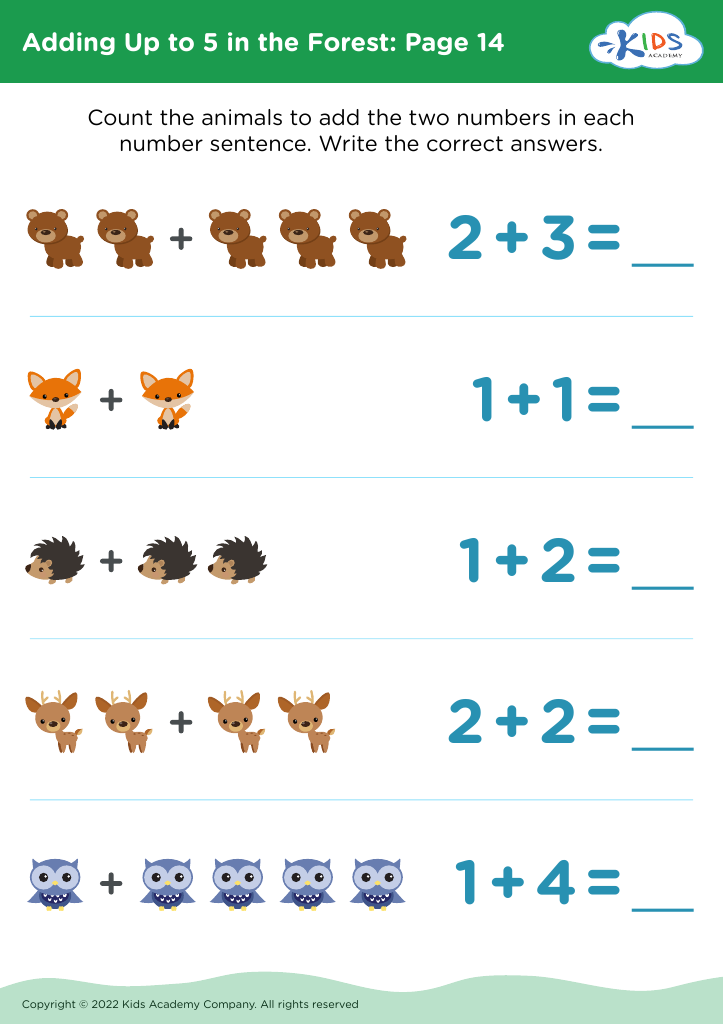
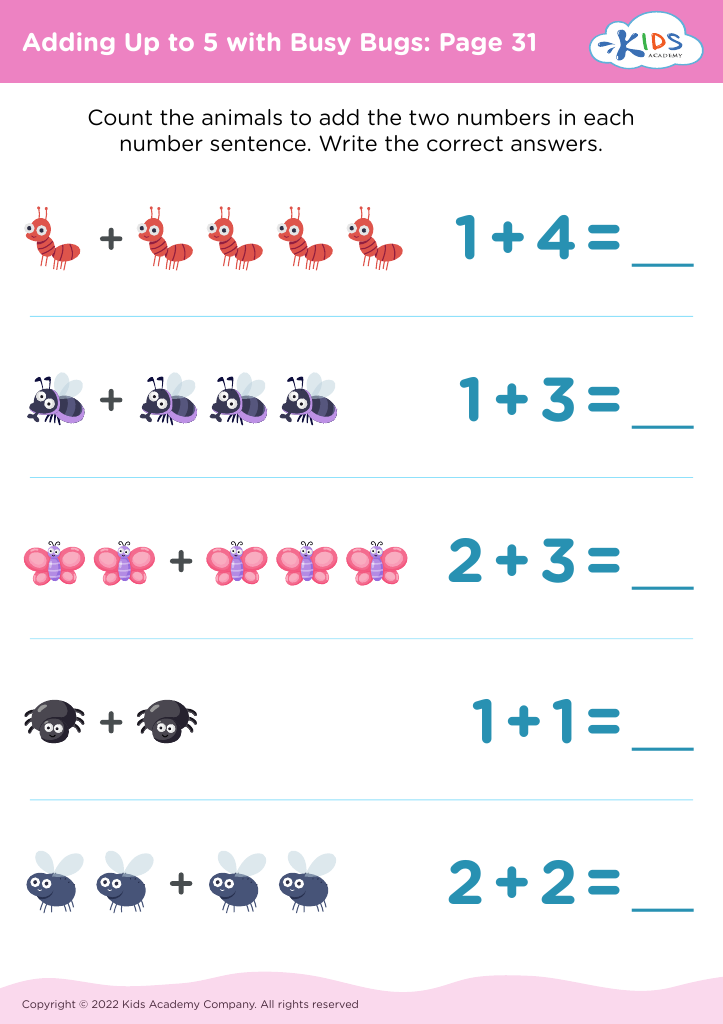
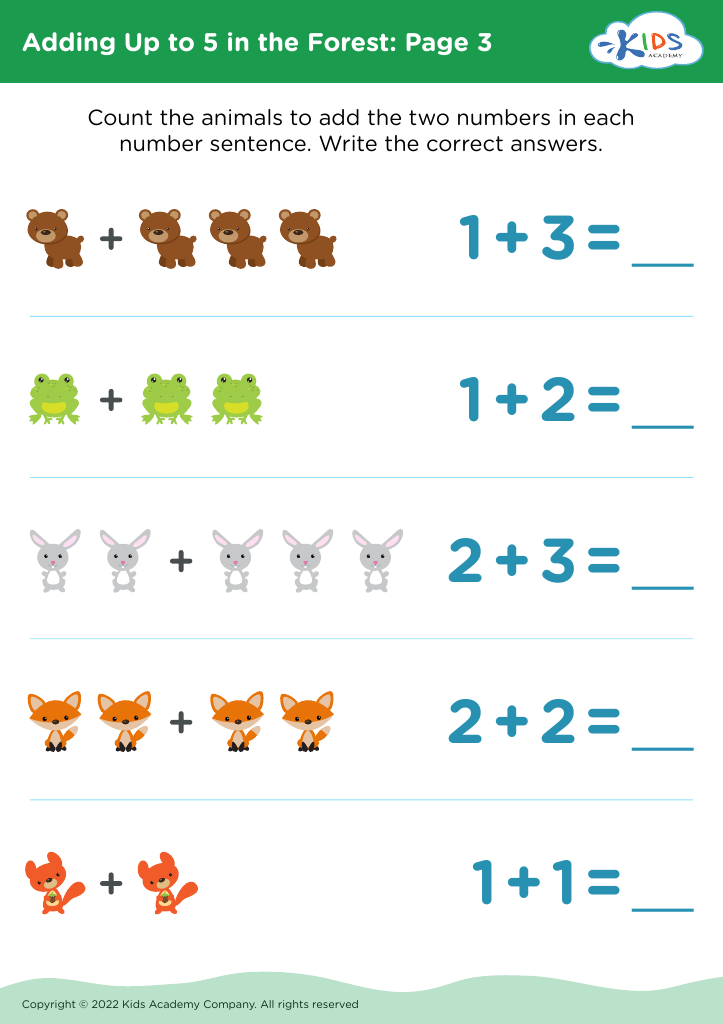
Enhance your child's fine motor skills with our engaging Addition Worksheets, designed for ages 3-7! These worksheets focus on drawing lines to help children build essential skills while mastering early addition concepts. By connecting dots and tracing lines, kids not only improve dexterity but also boost their confidence in math. Each worksheet combines fun illustrations with interactive activities, making learning enjoyable. Perfect for home or classroom use, our easy-to-follow formats cater to various learning styles. Give your child the advantage they need in foundational math while fostering their fine motor development. Explore our creative worksheets and watch them thrive!
Favorites
With answer key
Interactive
Join Kids Academy for Free
Who is primarily going to use this learning content?








Fine motor skills, essential for early childhood development, play a crucial role in a child's ability to perform everyday tasks, including writing and drawing. For children aged 3 to 7, activities that promote fine motor skills, like drawing lines, are foundational for subsequent academic success.
Developing fine motor skills enhances hand-eye coordination, dexterity, and control, which are vital for writing and creating art. These skills are closely linked to a child's ability to manipulate small objects, use scissors, and eventually hold a pencil correctly. Moreover, mastering drawing lines helps children develop spatial awareness and understand shapes, boosting their early math comprehension.
Teachers and parents should prioritize these activities because they contribute to school readiness. A child with proficient fine motor skills is more likely to engage in classroom activities effectively and express themselves artistically. Additionally, fostering these skills can build confidence and a sense of accomplishment, encouraging children to explore their creativity.
Engaging in fine motor activities with children can also strengthen the parent-child or teacher-student bond, making learning enjoyable and interactive. Recognizing the importance of these skills lays the groundwork for a child's future success, both academically and in life.








