Improving concentration Addition Worksheets for Ages 3-7
15 filtered results
-
From - To
Boost your child's focus with our "Improving Concentration Addition Worksheets for Ages 3-7". Specifically designed for young learners, these engaging worksheets combine fun addition exercises with valuable concentration techniques. Each activity encourages children to stay attentive, enhancing their ability to solve math problems effectively. With colorful illustrations and age-appropriate challenges, kids will enjoy learning while improving their mathematical skills. Our worksheets not only support academic growth but also develop crucial cognitive abilities, setting a solid foundation for future learning. Perfect for home or classroom use, these resources are a great way to make math enjoyable and effective for your little ones.
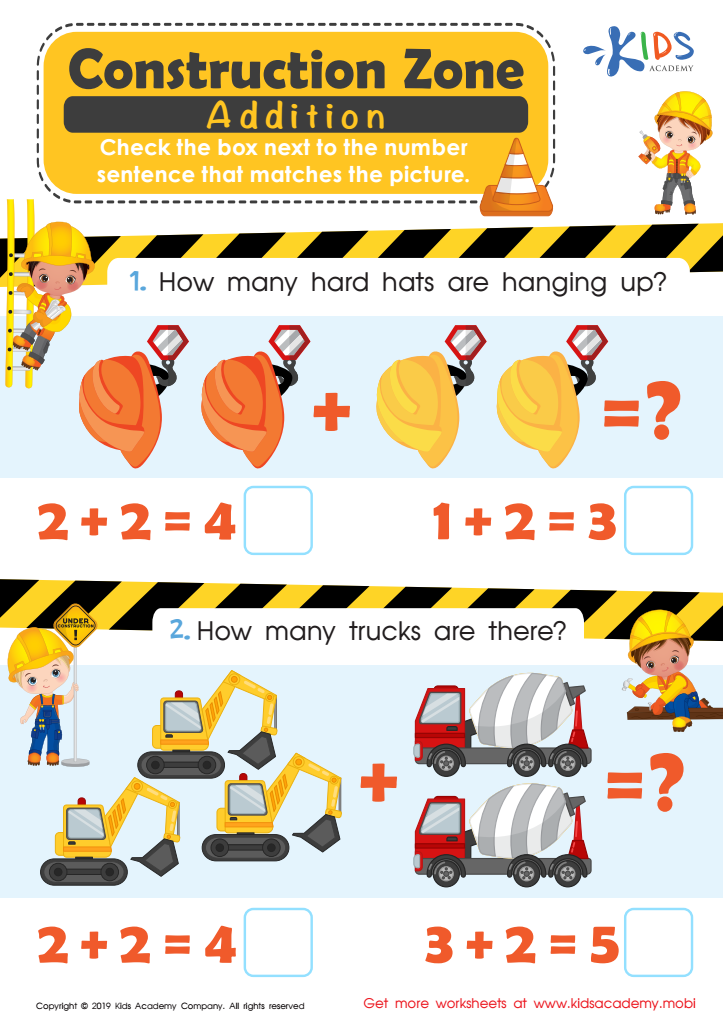
Construction Zone Addition Worksheet
 Assign to My Students
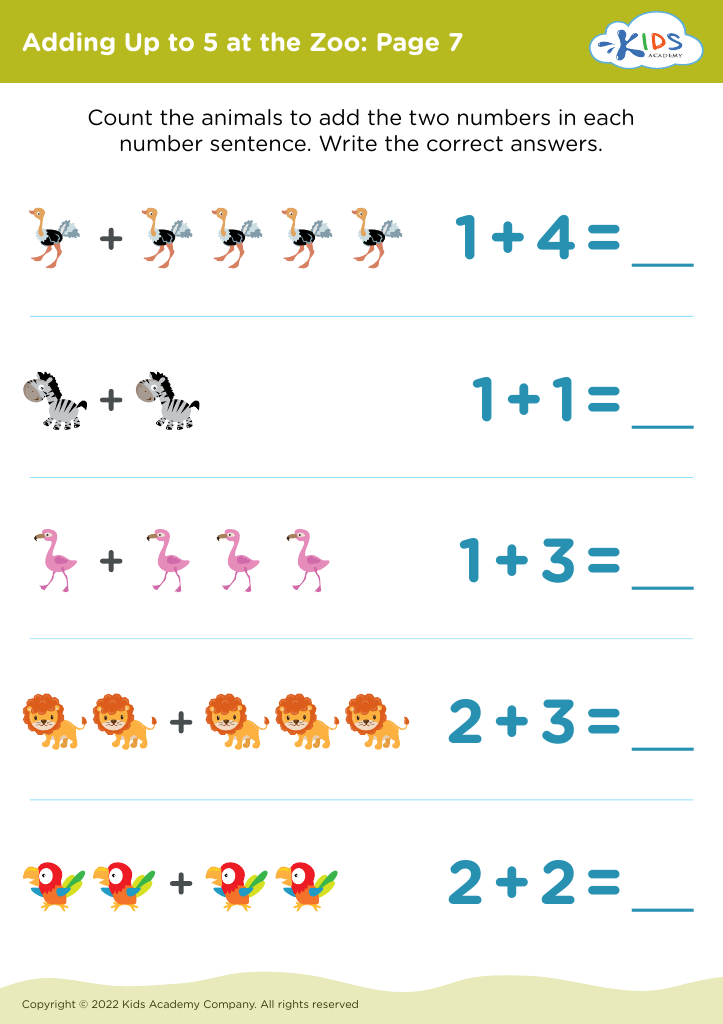
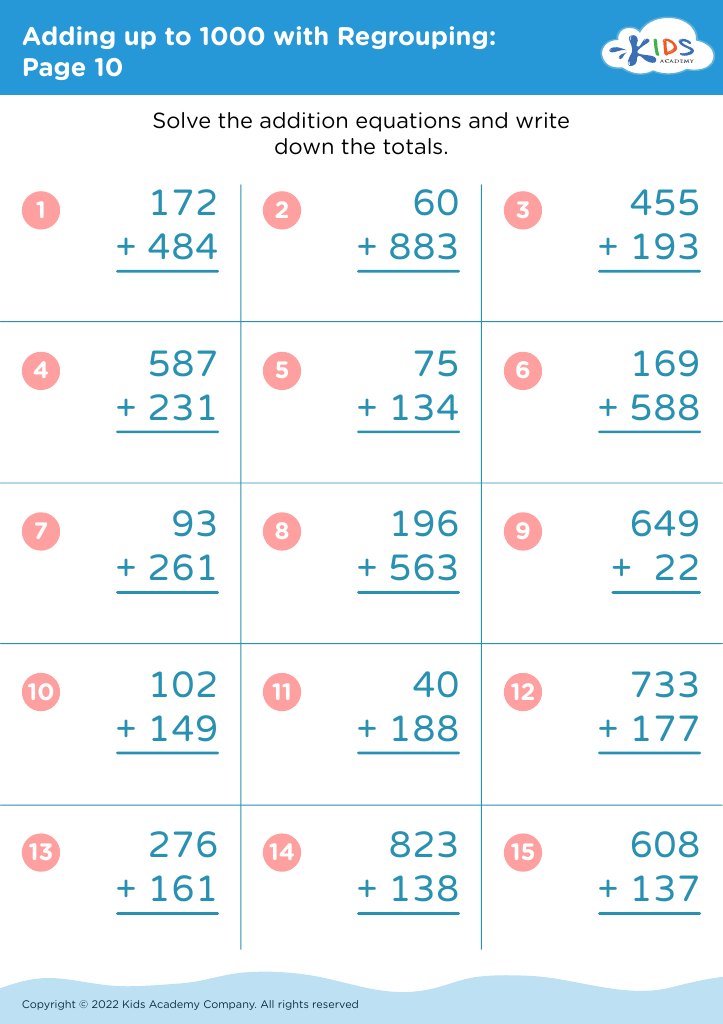
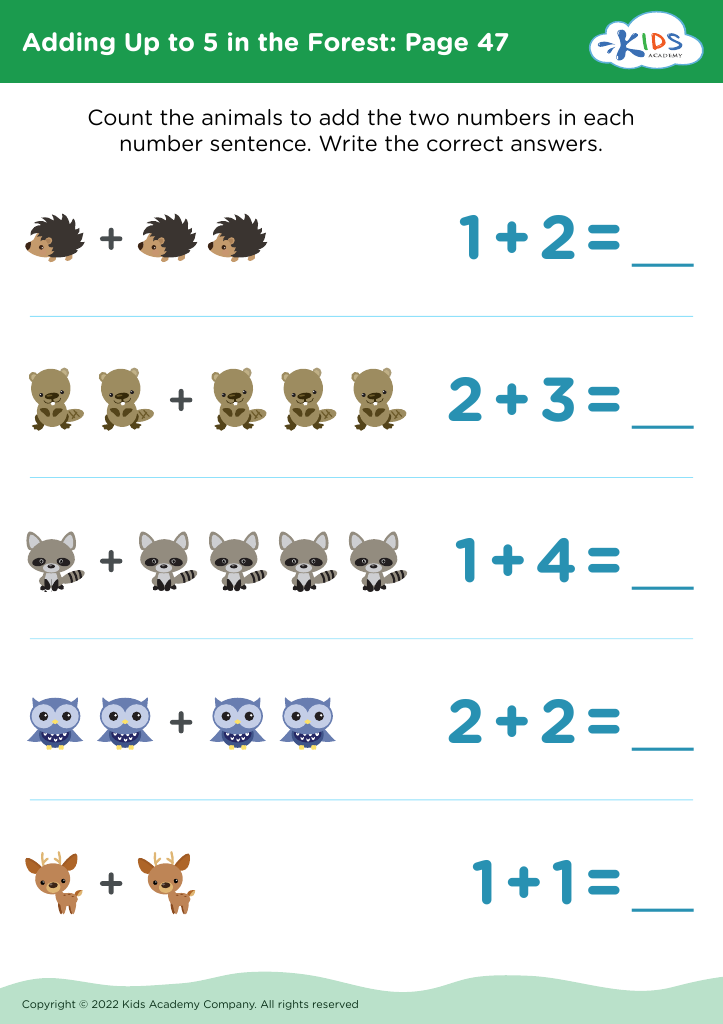
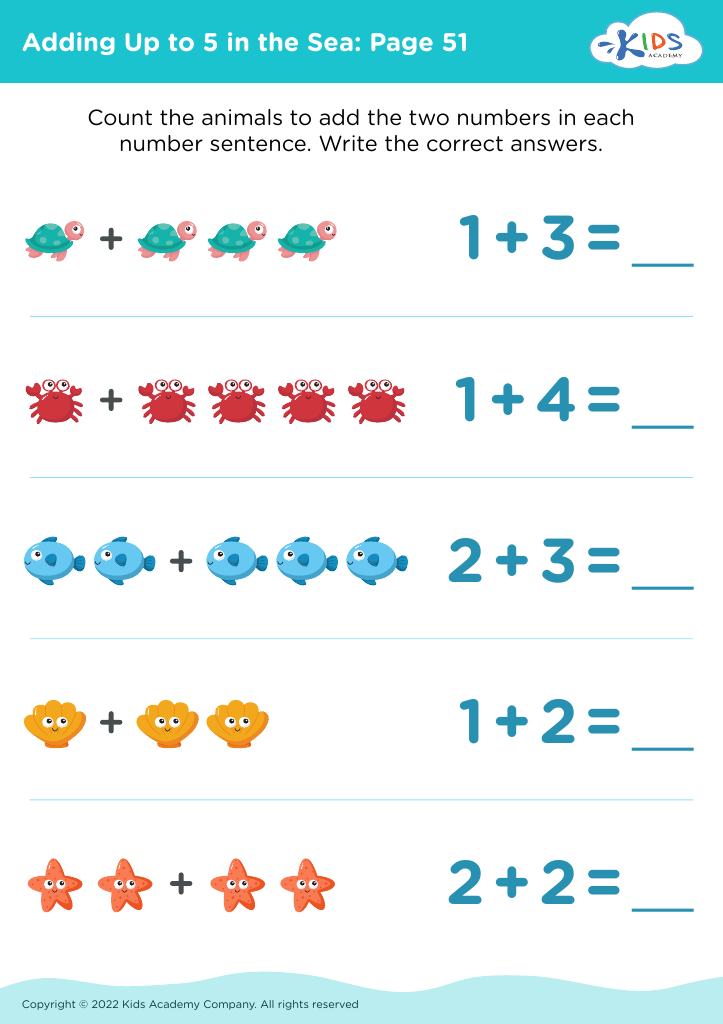
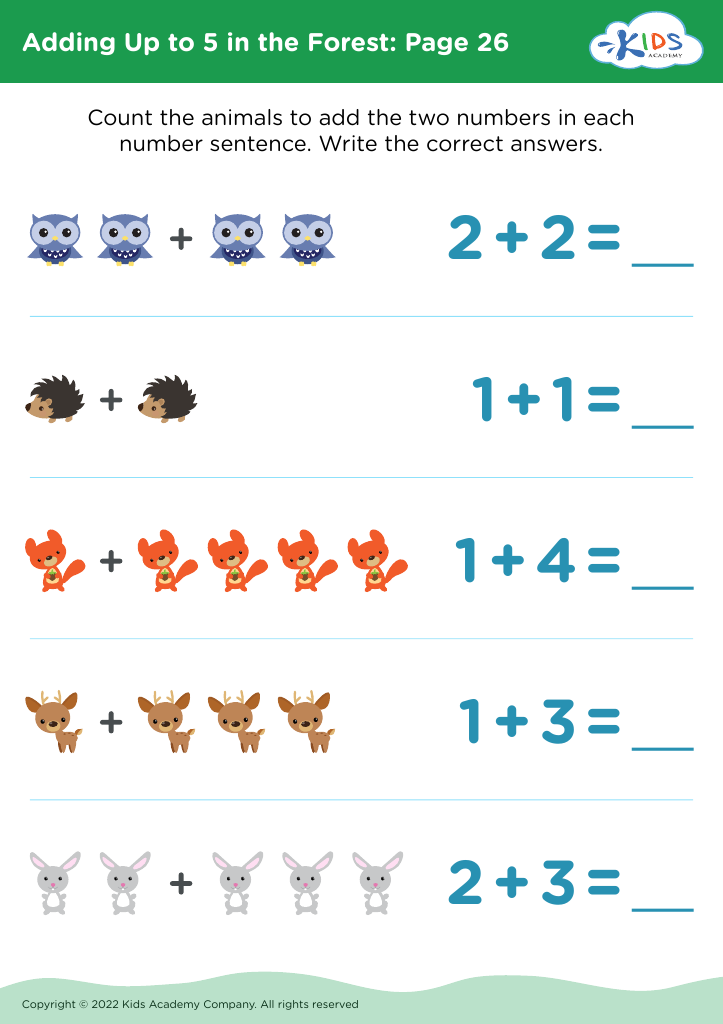
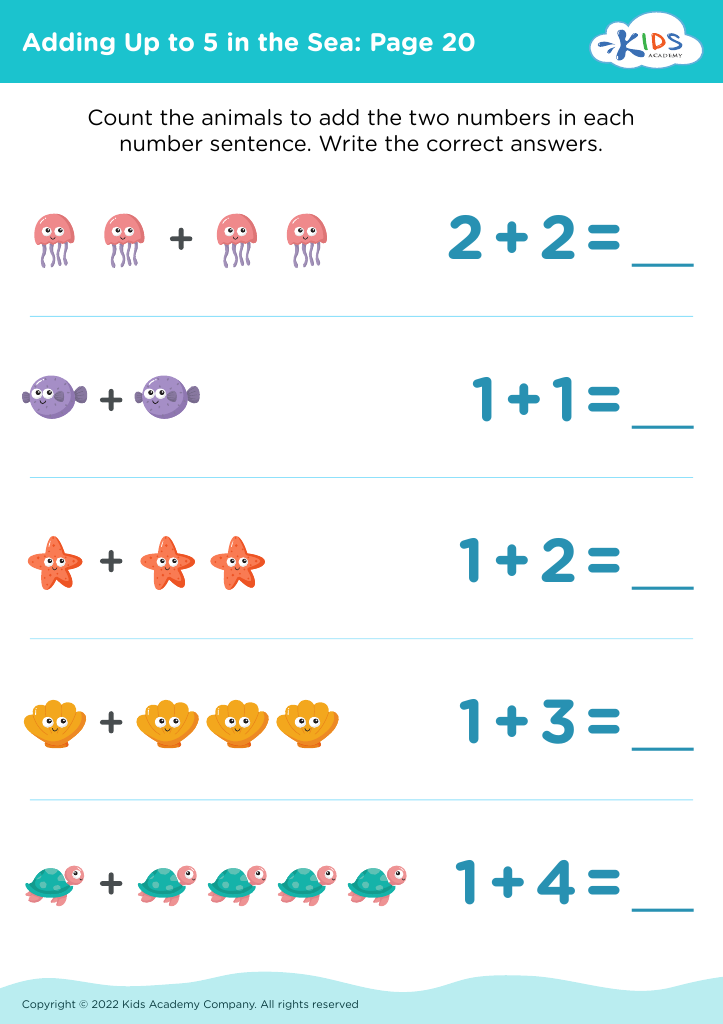
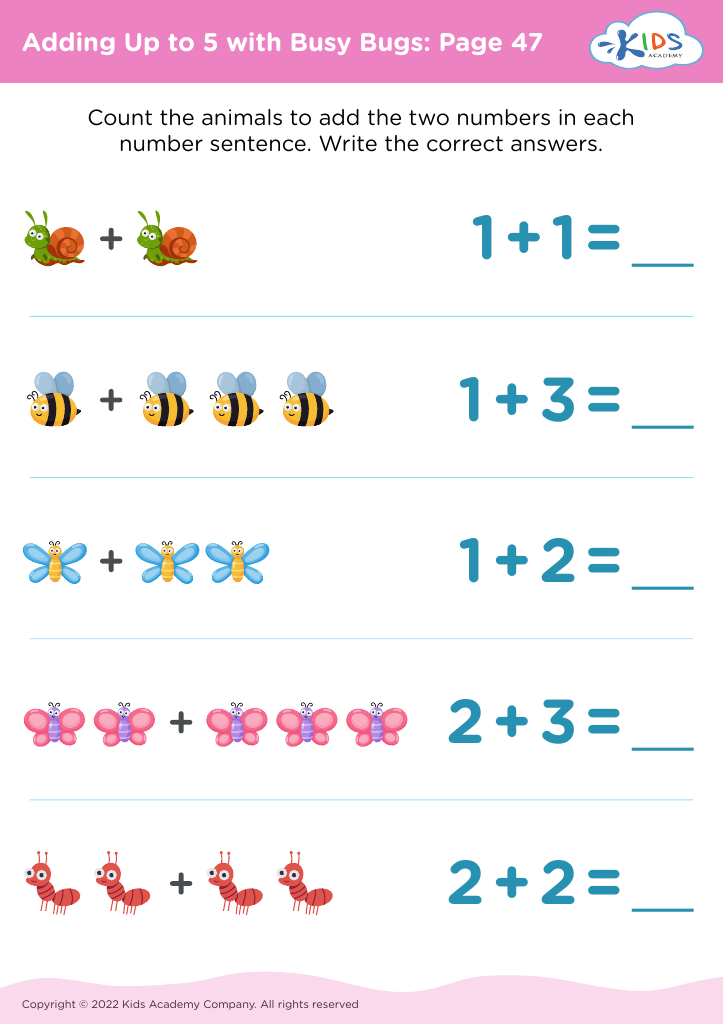
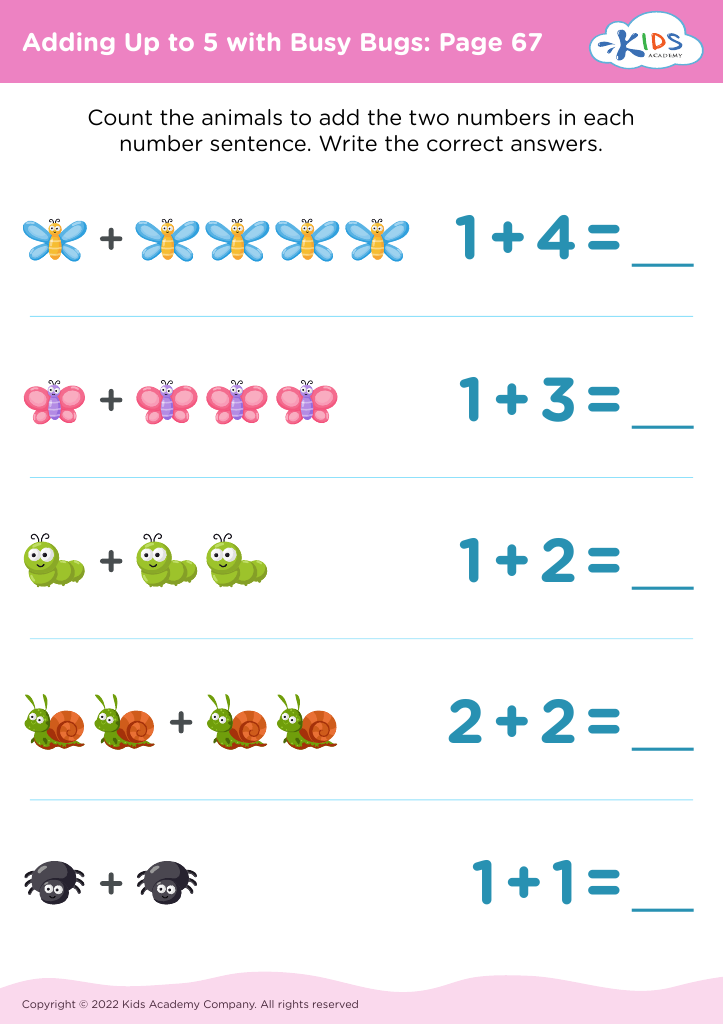
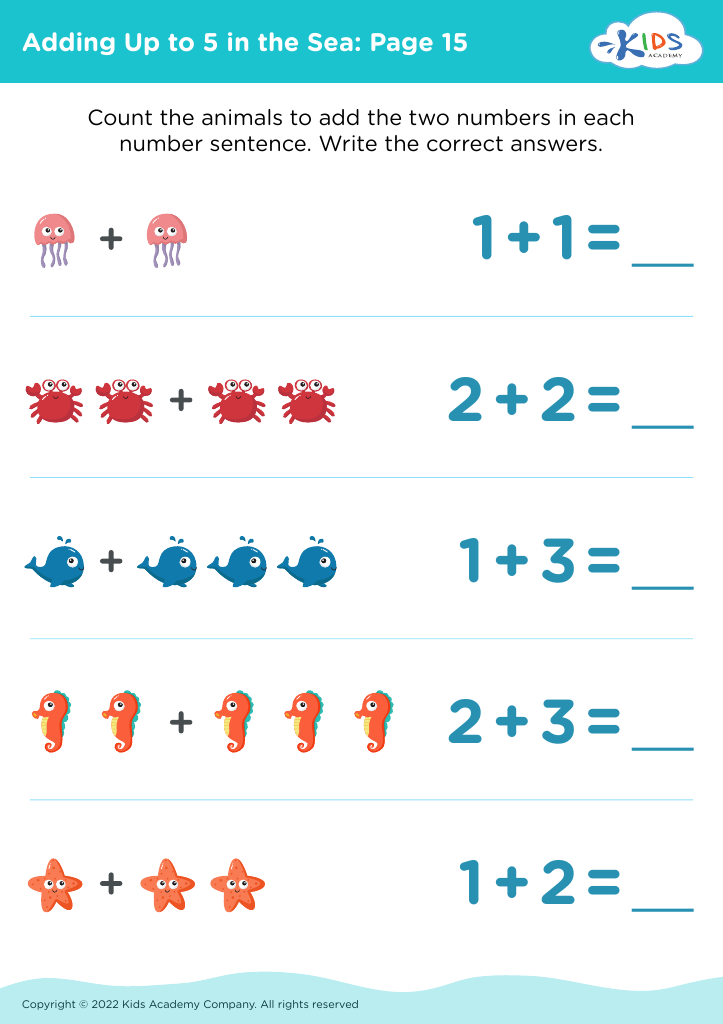
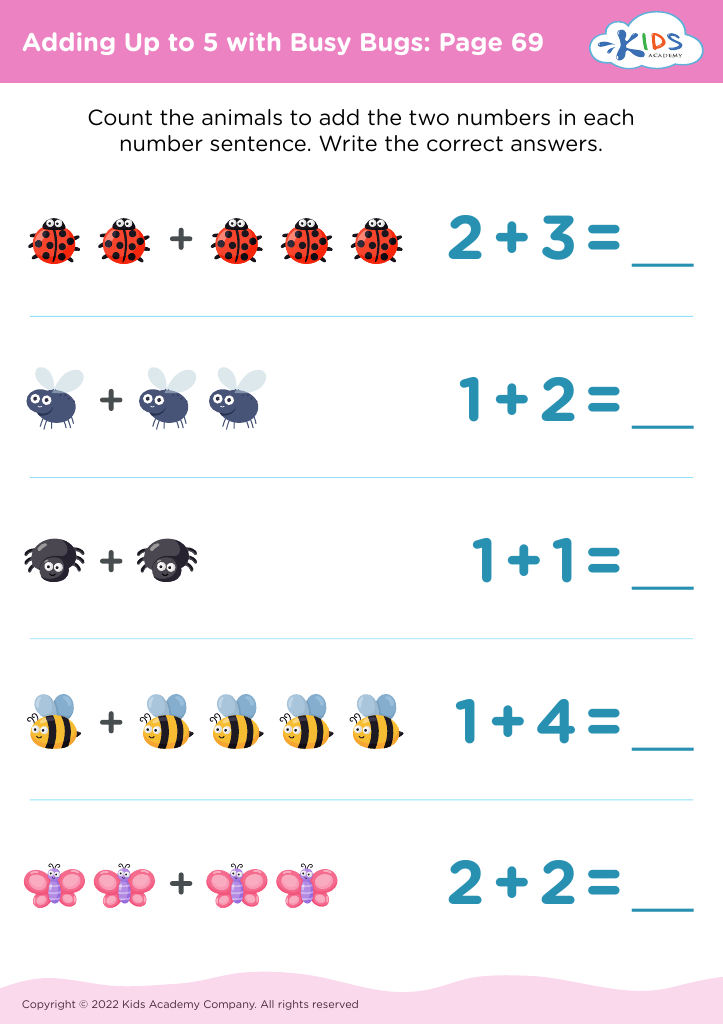
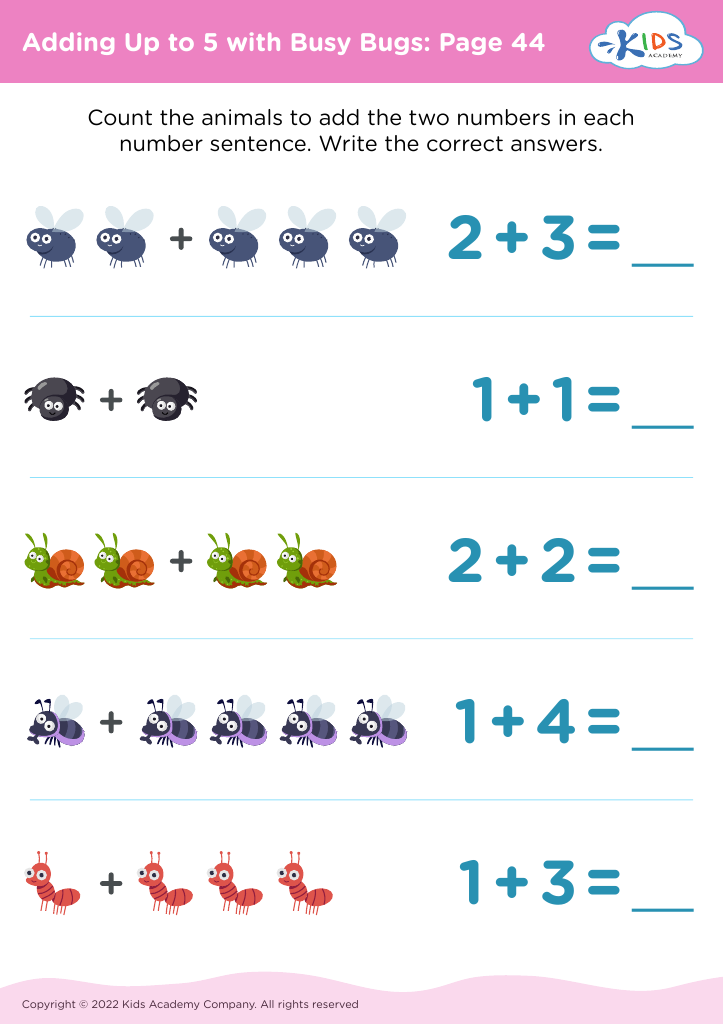








Improving concentration in young children, particularly through activities like addition, is crucial for their overall cognitive and academic development. At ages 3-7, kids' brains are highly malleable, meaning they can absorb new information and develop essential skills more quickly than at any other time in their lives. Fostering a focused attitude towards activities such as addition is important because it enables children to build a strong foundation in mathematics, which is a critical subject that impacts various aspects of daily life and future learning.
Moreover, concentration skills are not limited to academics—they are vital for social and emotional development as well. Good concentration helps children listen better, follow instructions, and complete tasks efficiently. This fosters a sense of achievement and self-confidence, making them more likely to participate actively in both classroom and social settings. Engaging children in addition activities sharpens their memory and problem-solving skills, enhancing their ability to tackle progressively harder tasks.
For parents and teachers, investing in activities that improve concentration prepares children for future academic challenges and nurtures lifelong learning habits. Providing a supportive environment with patience and creativity can substantially boost a child's concentration span and cognitive growth, setting them up for ongoing success and well-being.








