Improving reading skills Addition Worksheets for Ages 3-7
4 filtered results
-
From - To
Unlock your child's potential with our Improving Reading Skills Addition Worksheets for ages 3-7, available from Kids Academy! Our expertly designed activities seamlessly integrate foundational math and reading skills, fostering comprehensive learning. Children will delight in engaging exercises that bolster their addition capabilities while enhancing their reading proficiency. With colorful visuals and age-appropriate content, our worksheets not only make learning fun but also promote critical thinking, concentration, and confidence. Tailored to support young learners at various stages, these resources are perfect for reinforcing skills at home or in the classroom. Empower your child’s educational journey today with Kids Academy.
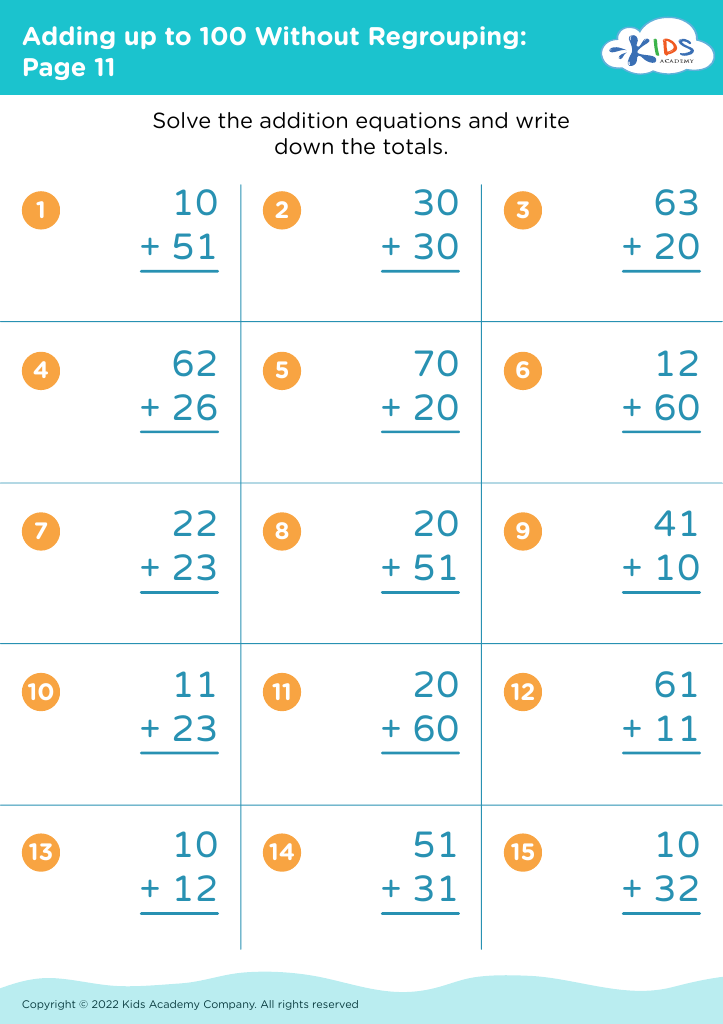
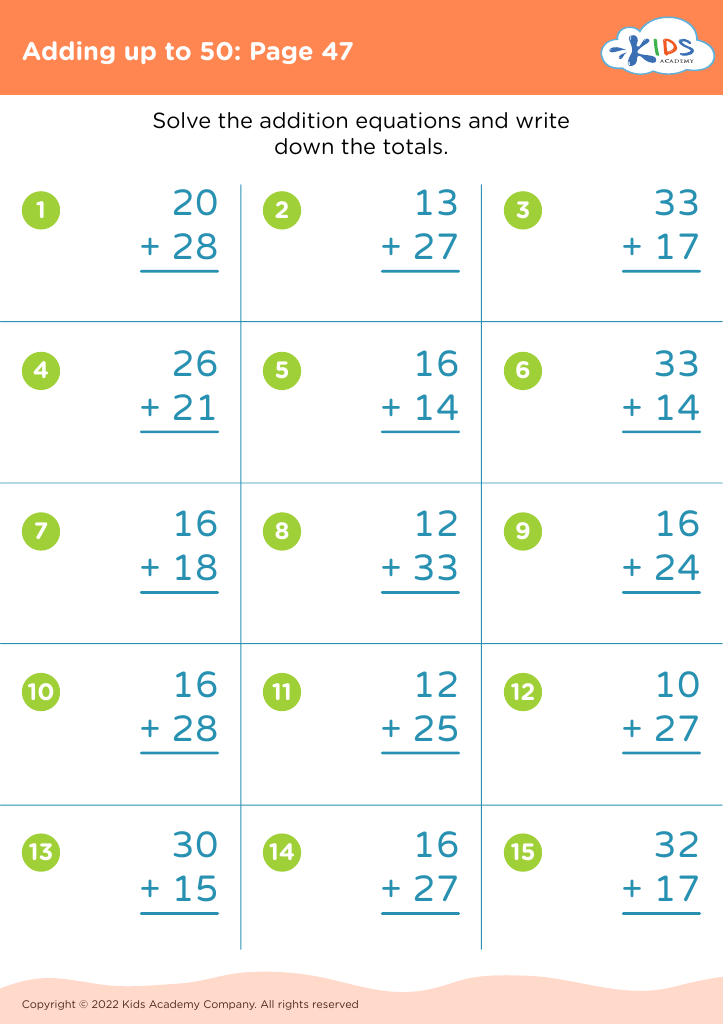
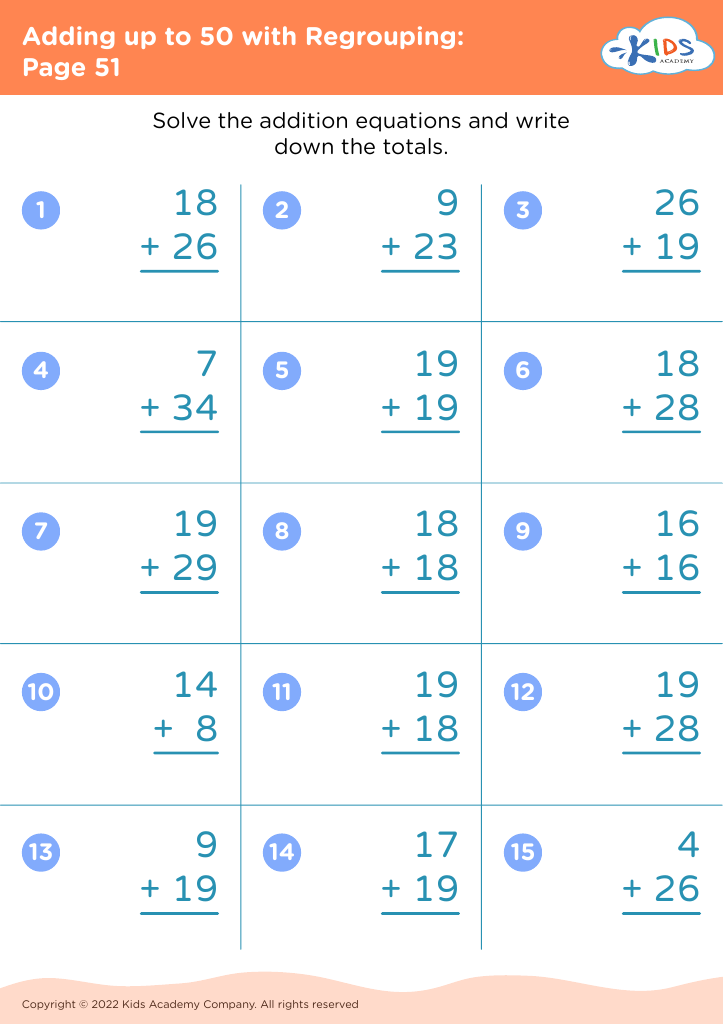
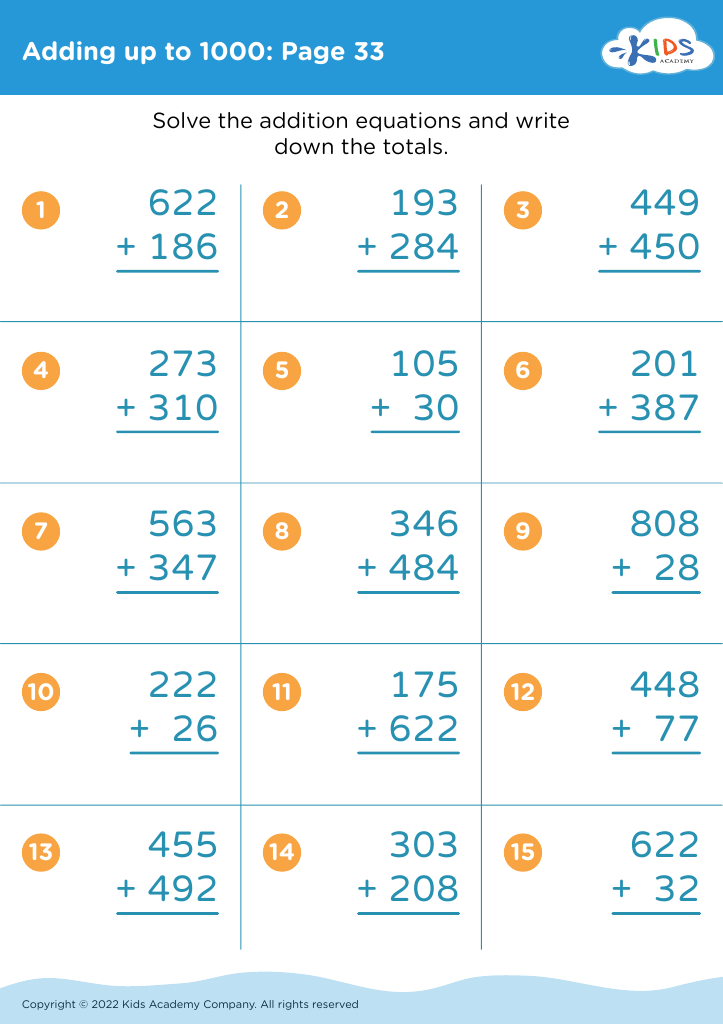


.jpg)





Improving reading skills in children aged 3-7 is crucial for their overall development and future success. At this early age, children's brains are remarkably receptive to learning, meaning that they can acquire foundational skills more efficiently than at later stages. During this period, mastering reading can enhance cognitive abilities, including comprehension, vocabulary, and critical thinking. These skills lay the groundwork for academic achievements across all subjects, as reading is integral to understanding math problems, following science experiments, and accessing historical texts.
For parents and teachers, fostering a love for reading early on also encourages lifelong learning. When children enjoy reading, they are more likely to seek out books and educational materials independently, bolstering their knowledge and curiosity. Moreover, reading itself can improve concentration, patience, and empathy, qualities that contribute to personal and social development.
In the broader scope, proficient reading skills can reduce future educational inequalities by ensuring that all children, regardless of background, have the opportunity to excel academically. By prioritizing reading, parents and teachers help set children on a path to success—academically, personally, and socially. Therefore, attention to developing reading skills during the formative years of ages 3-7 is a vital investment in a child's future.








