Math problem-solving Addition Worksheets for Ages 3-7
11 filtered results
-
From - To
Discover our Math Problem-Solving Addition Worksheets, designed for children ages 3-7! These engaging worksheets help young learners build a strong foundation in basic addition skills. Through fun and interactive exercises, kids develop critical thinking and problem-solving abilities. Our worksheets incorporate colorful visuals and relatable scenarios that keep children motivated and excited to learn. Ideal for both classroom and home use, they align with early education standards, ensuring your child is on the right track. Foster a love for math in your little one with Kids Academy’s expertly crafted addition worksheets! Visit our website to download and print today.
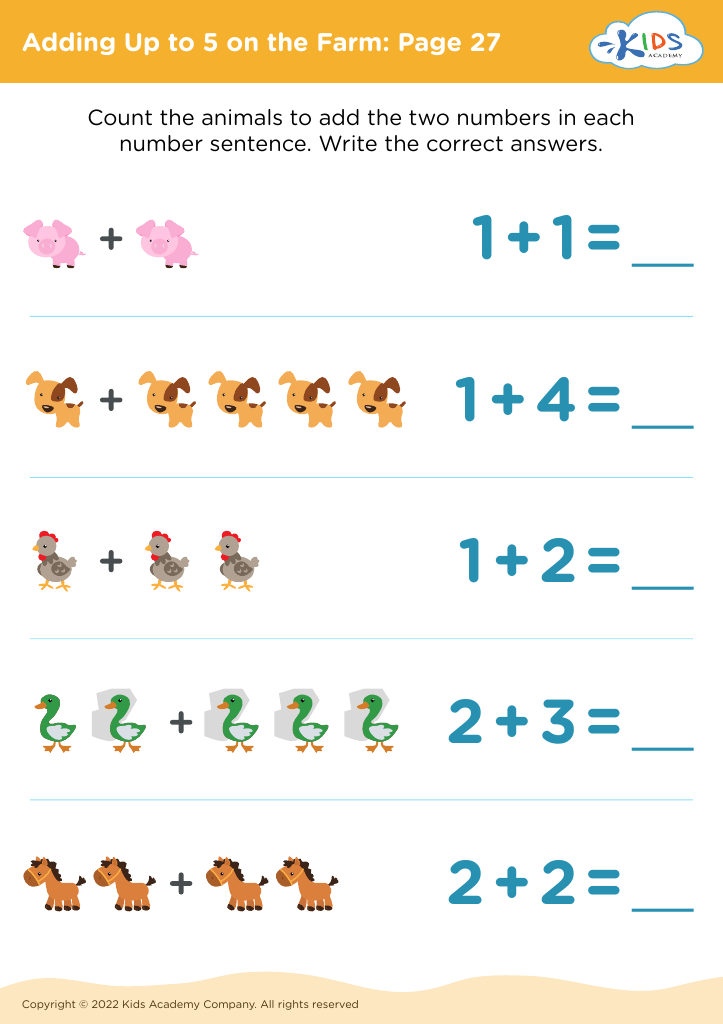
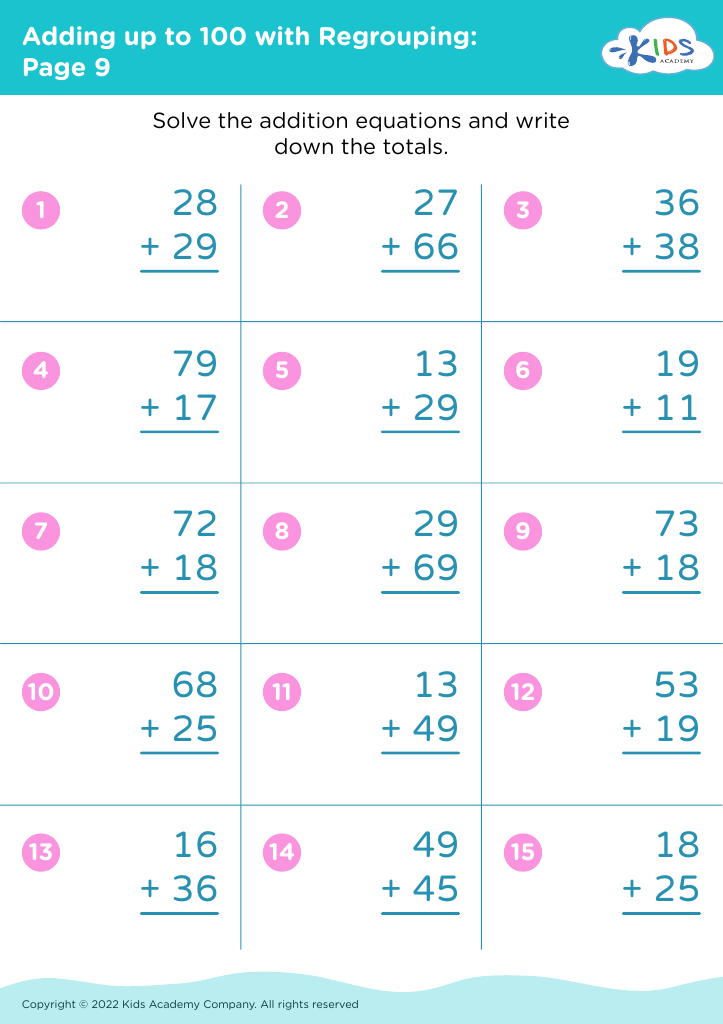
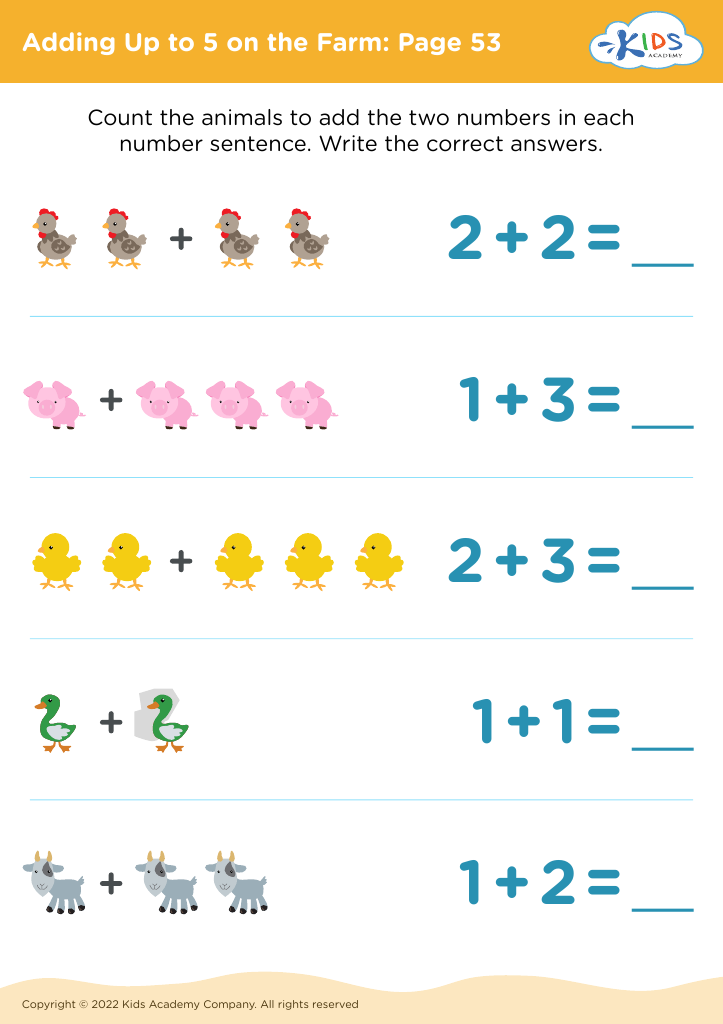
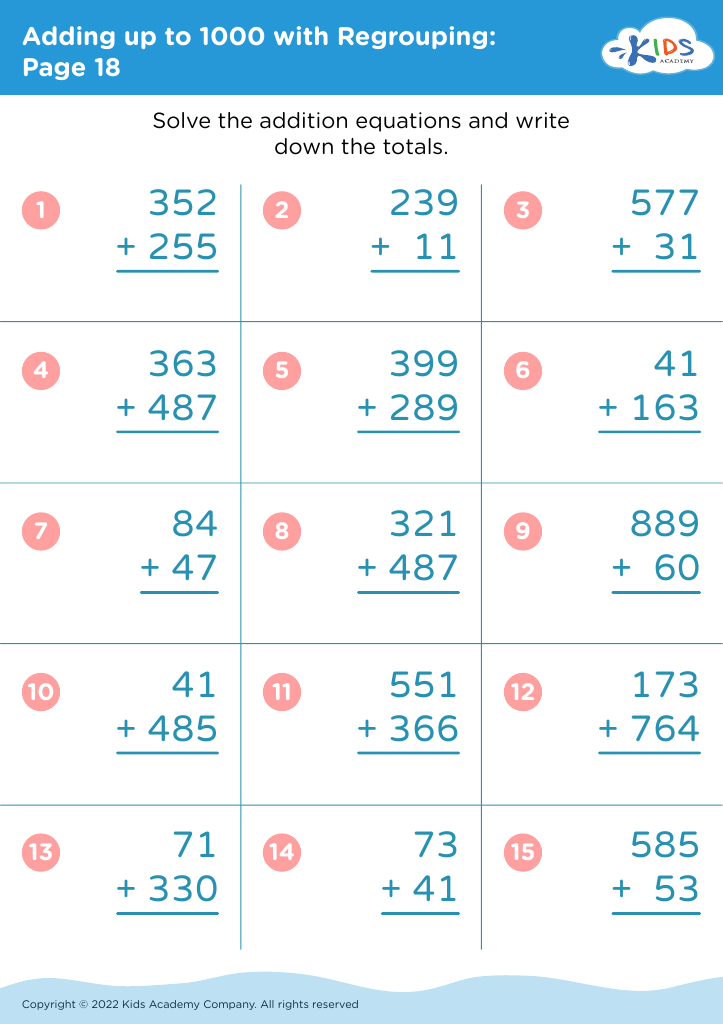
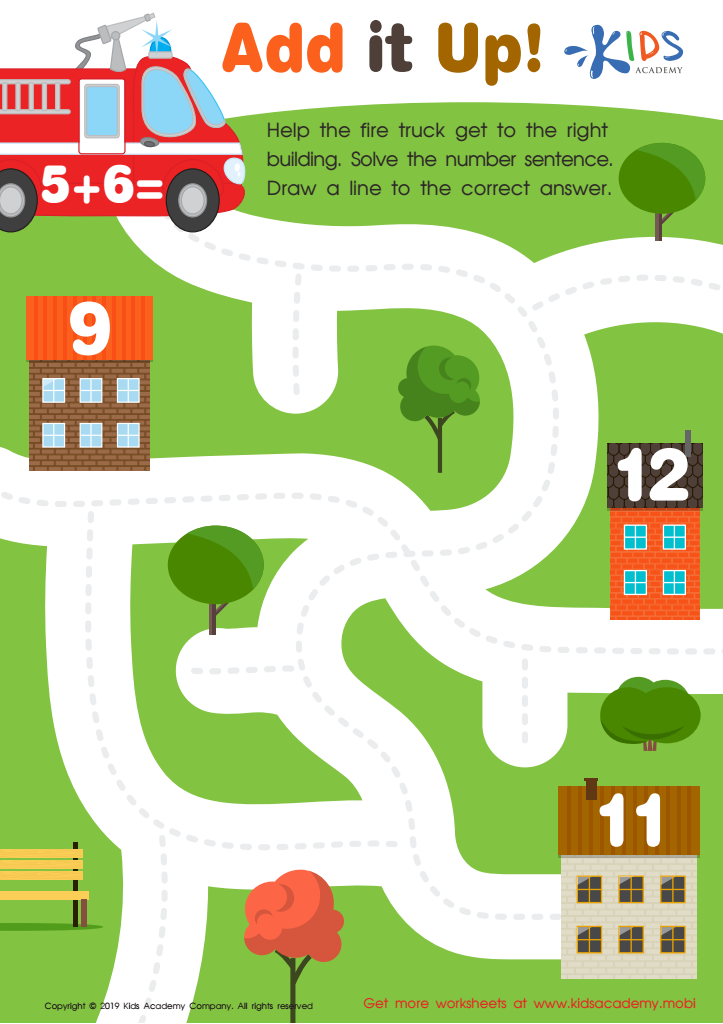
Add it Up Worksheet
 Assign to My Students
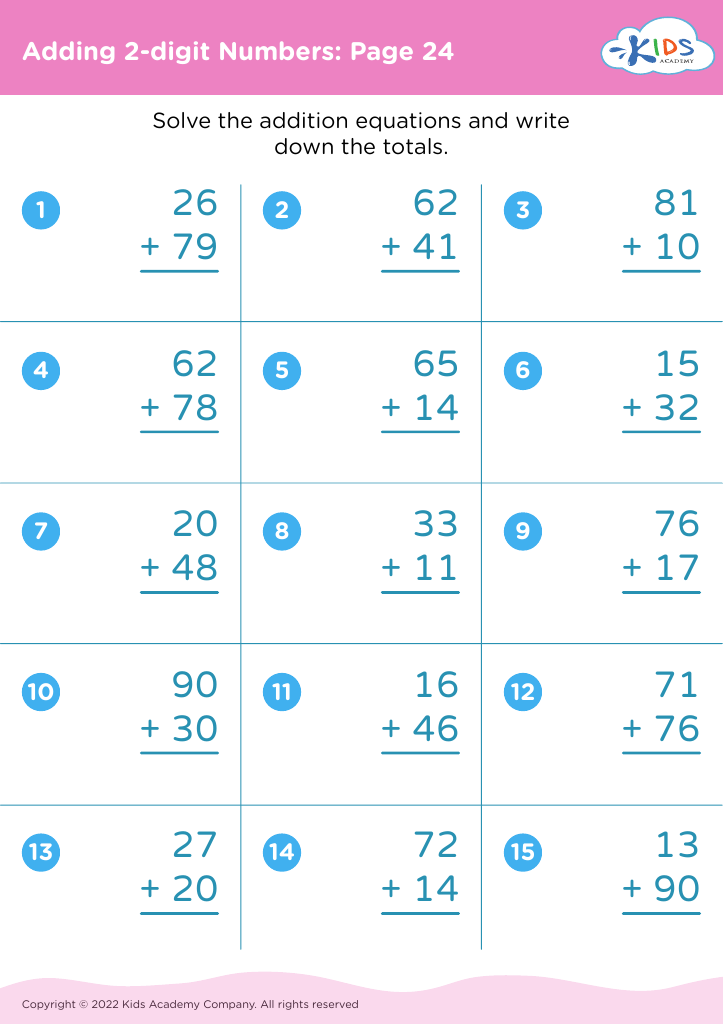
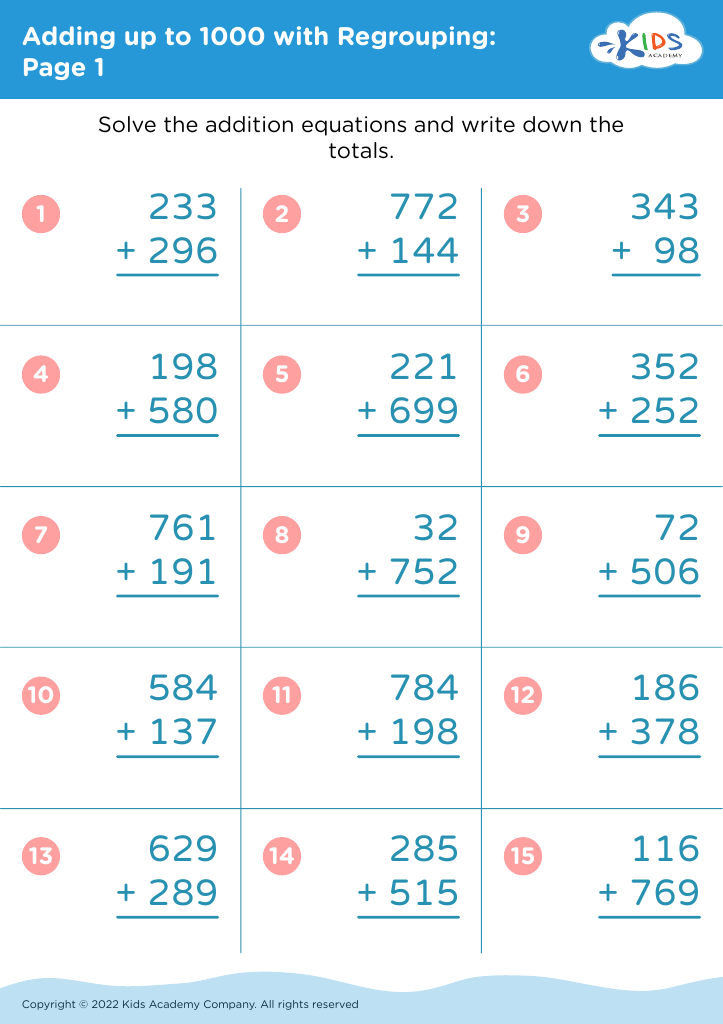
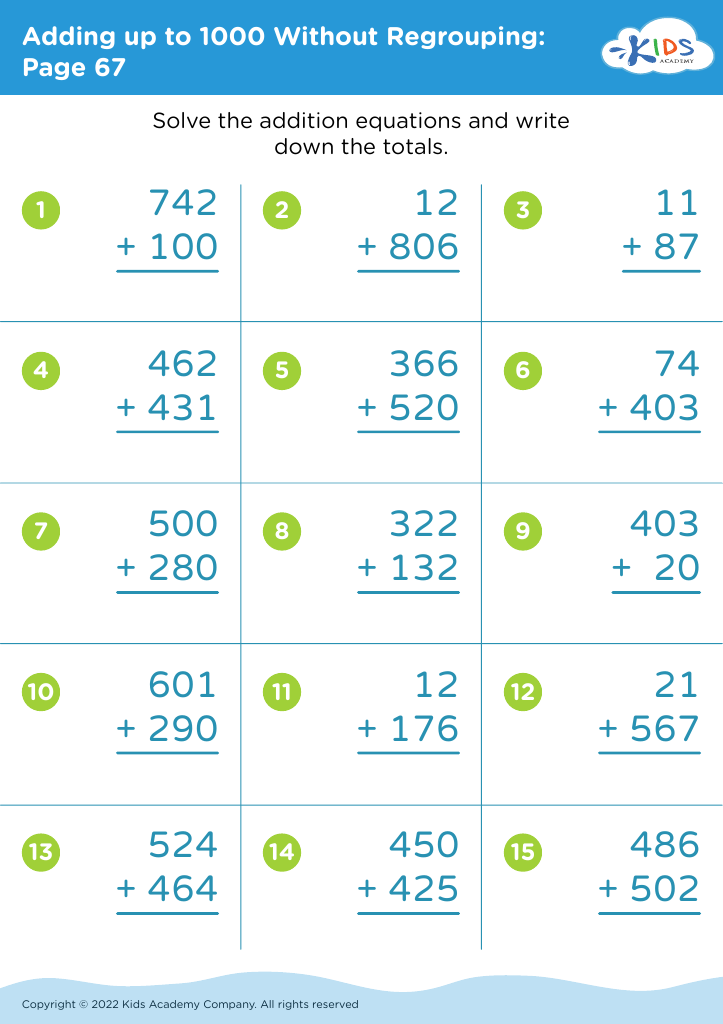
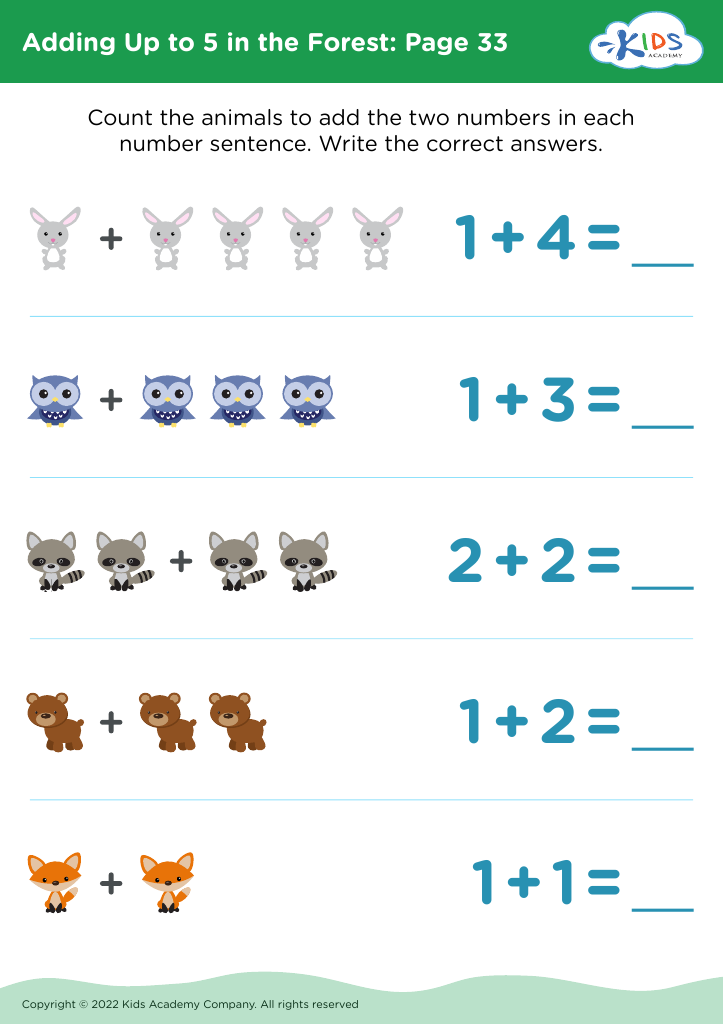
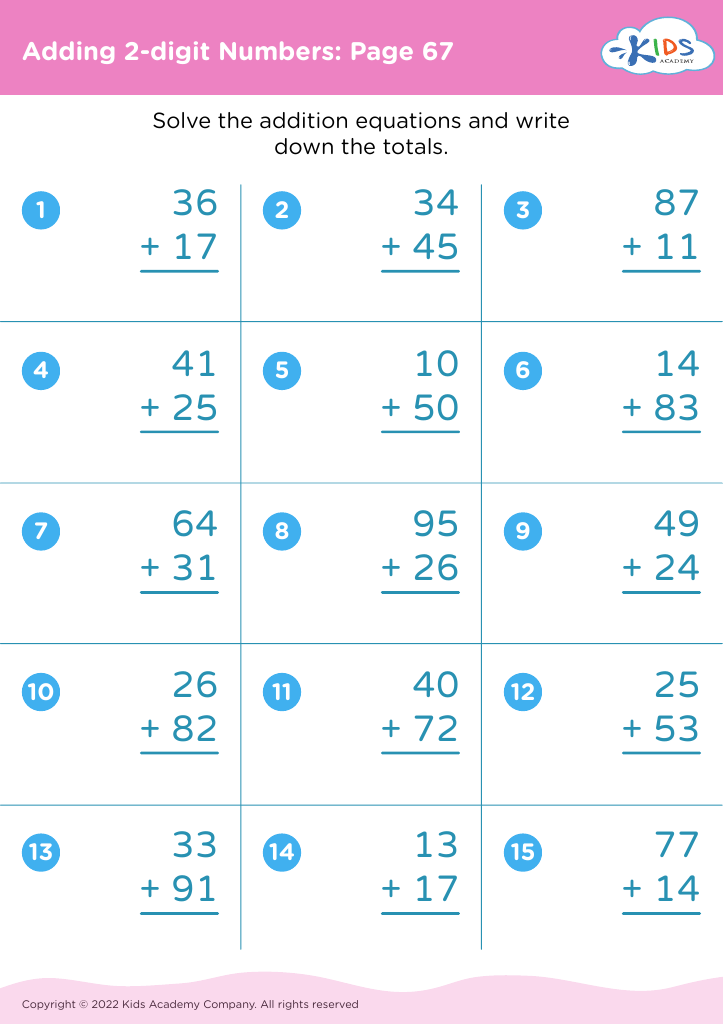
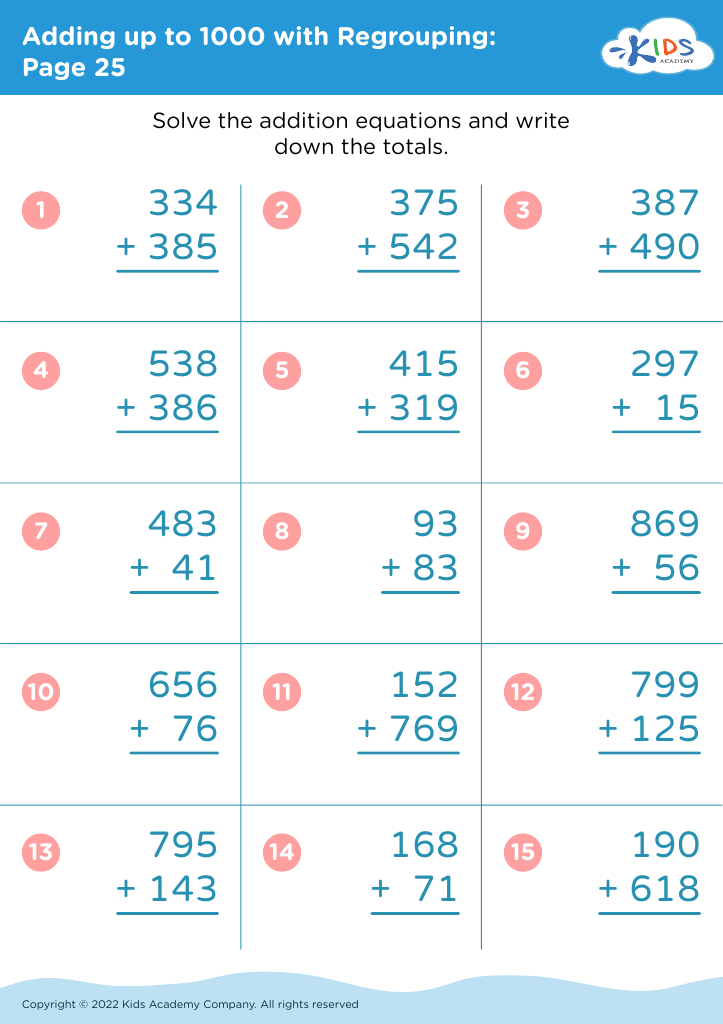








Introducing math problem-solving addition to children aged 3-7 is vital for several key reasons. Fundamental math skills form the building blocks for more complex concepts, and addition is a primary step in this journey. When children start learning addition early, it enhances their numerical literacy, enabling them to grasp quantities, count effectively, and understand the concept of 'more' or 'less'.
Early exposure to addition also develops cognitive skills. Parsing through simple addition problems boosts young minds' logical reasoning and critical thinking abilities. It allows them to make connections between numbers and everyday situations like sharing toys or distributing snacks, making learning both practical and relatable.
Furthermore, mastering addition builds confidence. Young learners who can successfully tackle math problems are more likely to approach larger academic challenges with a positive mindset. This sense of achievement encourages perseverance and resilience in problem-solving.
Teachers and parents play an influential role in this stage by creating a nurturing and engaging learning environment. They can use games, visual aids, and real-world scenarios to make addition a fun and meaningful activity. Investing time and effort in teaching addition not only promotes academic success but also empowers children with problem-solving abilities that are valuable throughout life.








