Mental math practice Addition Worksheets for Ages 3-7
8 filtered results
-
From - To
Enhance your child's arithmetic skills with our Mental Math Practice Addition Worksheets for ages 3-7. Designed to boost confidence and speed in solving addition problems, these engaging activities make learning fun and effective. Ideal for preschoolers and early graders, each worksheet progressively challenges young minds while promoting critical thinking and problem-solving abilities. Our brightly illustrated sheets capture kids' attention, transforming math practice into an enjoyable experience. Perfect for home or classroom use, these resources lay a solid foundation for future success in mathematics. Equip your child with the tools to excel in addition with Kids Academy's expertly crafted worksheets.
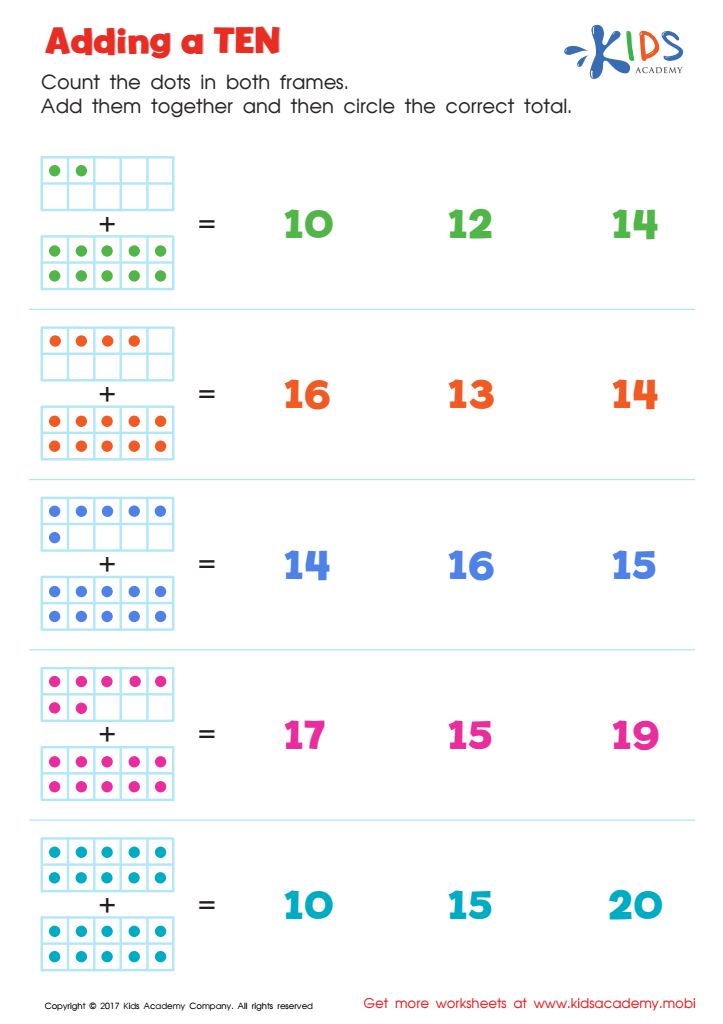
Adding a Ten Worksheet
 Assign to My Students
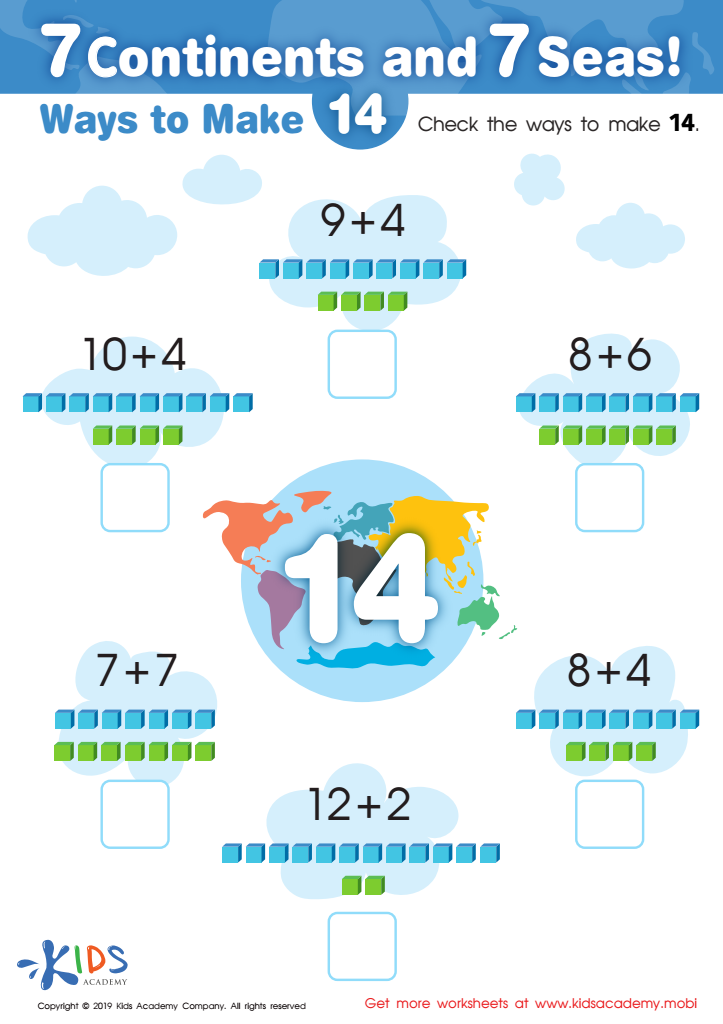
7 Continents and 7 Seas Worksheet
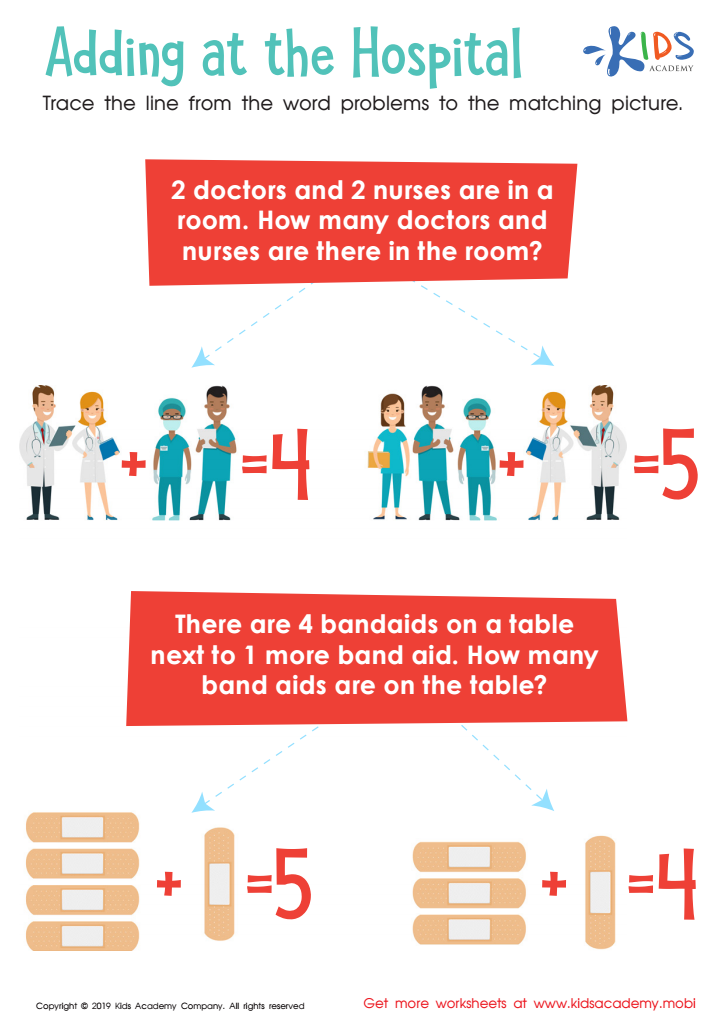
Adding at the Hospital Worksheet
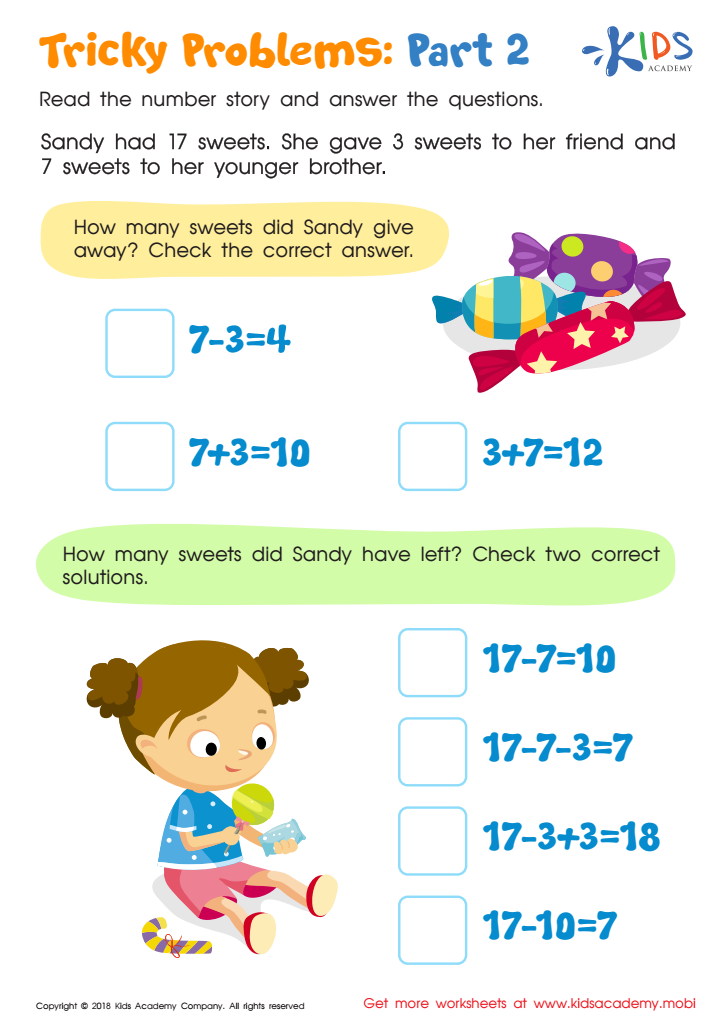
Tricky Problems Worksheet: Part 2
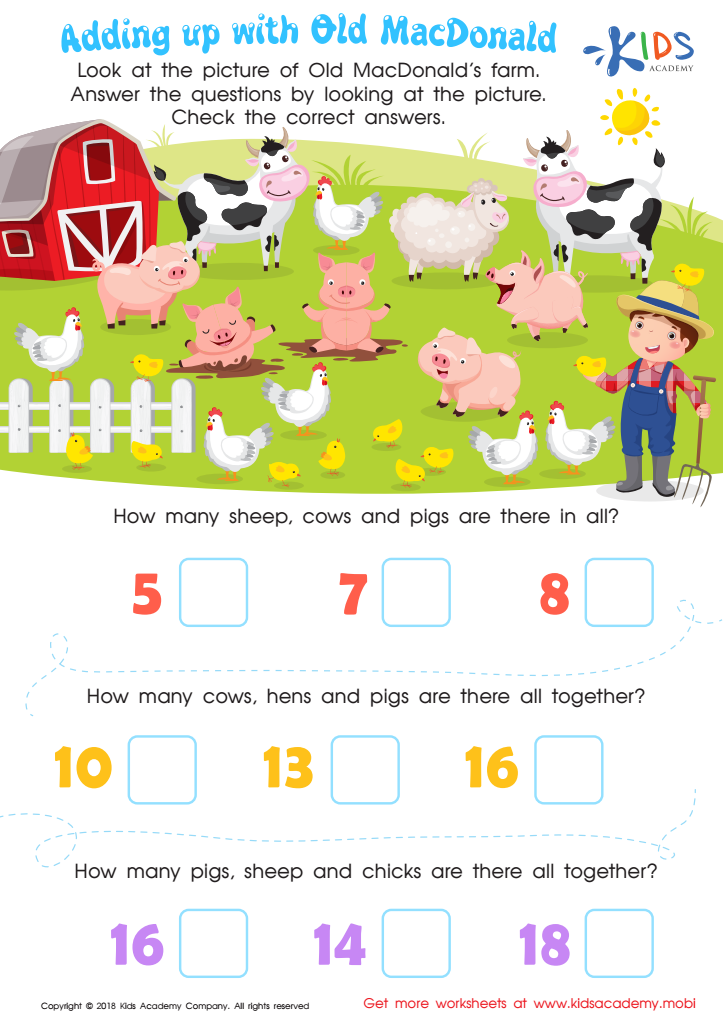
Adding Up with Old MacDonald Worksheet
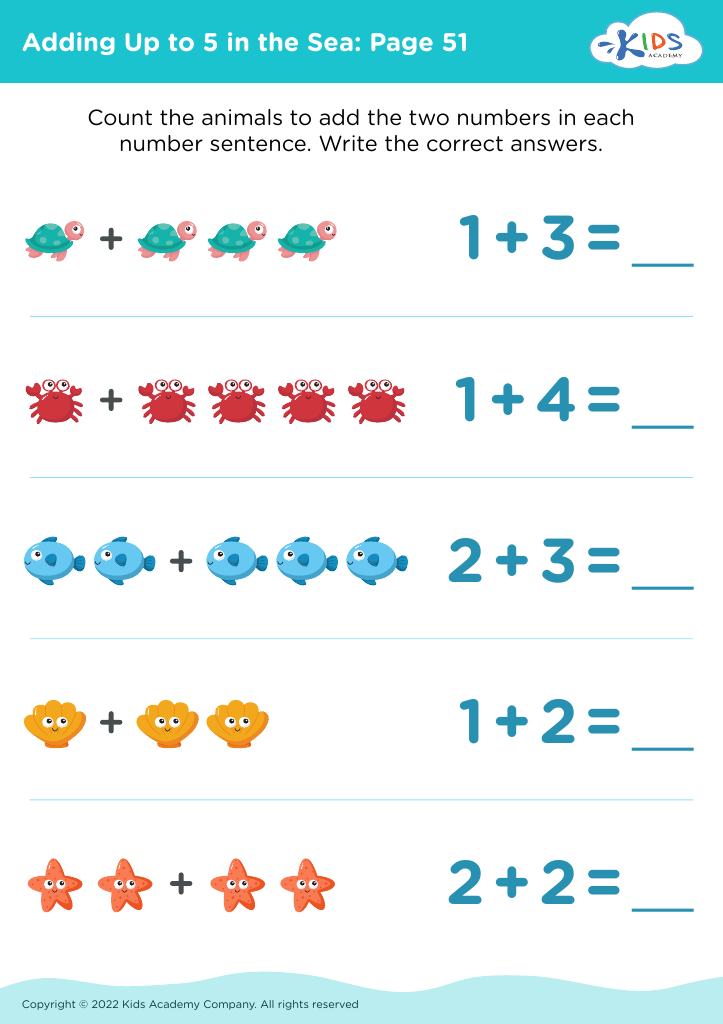
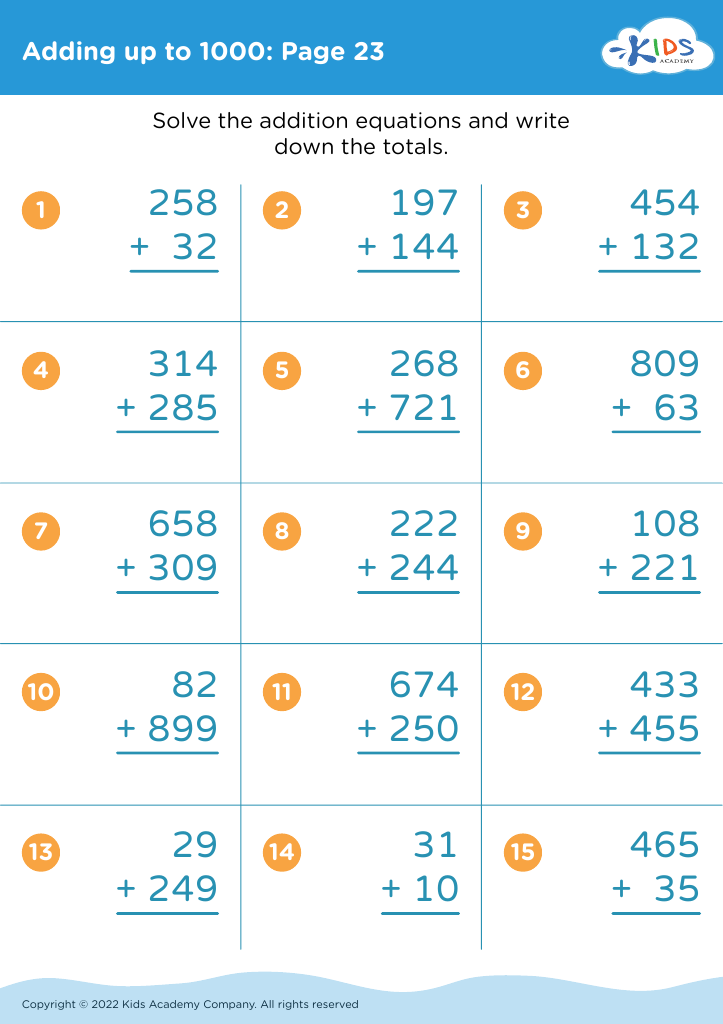
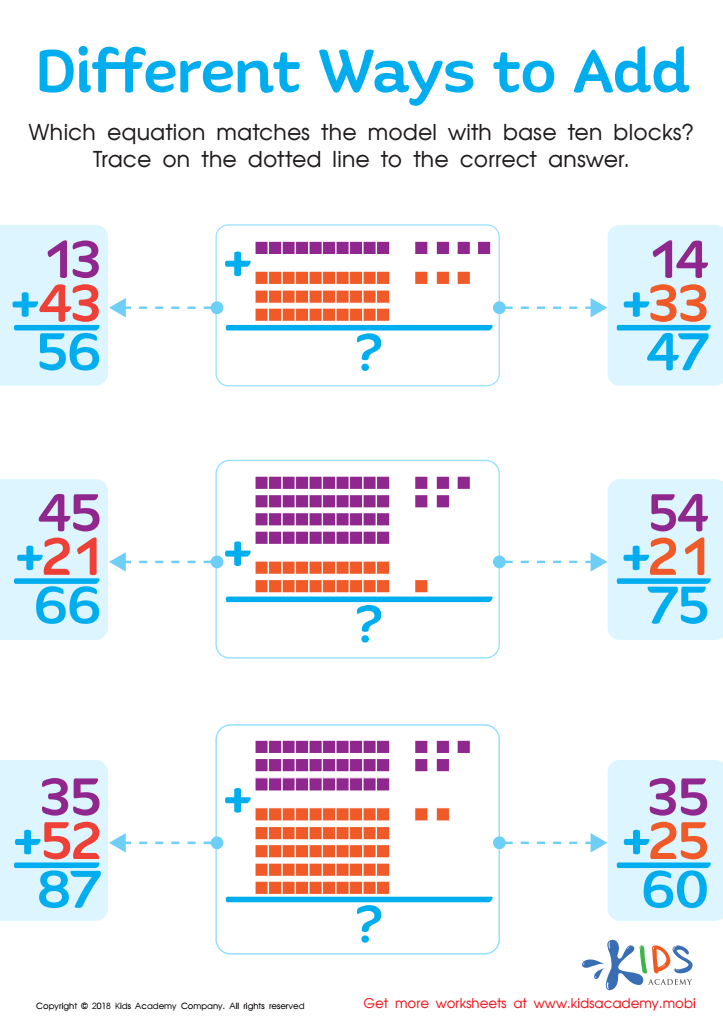
Different Ways to Add Worksheet








Mental math practice focusing on addition is crucial for children aged 3-7 because it establishes a strong mathematical foundation, enhances cognitive development, and builds problem-solving skills from an early age. Firstly, practicing mental addition helps young learners develop numerical fluency and enables them to perform calculations effortlessly. This early confidence in handling numbers can significantly boost their overall interest and engagement in mathematics as they grow.
Secondly, mental math exercises stimulate brain development by improving memory, concentration, and neural connections related to numerical understanding. Regular practice can enhance cognitive abilities, such as logical reasoning and sequential thought processing, which are essential for academic success in various subjects.
Moreover, early exposure to mental math fosters a positive attitude towards learning and builds resilience. When children solve problems mentally, they learn to approach challenges creatively and think critically, which empowers them with a sense of autonomy and self-efficacy.
Lastly, these skills are foundational for everyday life. Tasks such as counting change, measuring ingredients, or planning schedules all rely on basic addition skills. Ensuring that children develop these competencies early on sets them up for a lifetime of effective problem-solving and practical application of mathematics in real-world situations.
In conclusion, mental math practice for young children promotes foundational mathematical skills, cognitive development, and real-world problem-solving abilities, thus benefiting their academic and personal growth immensely.








