Practice addition Addition Worksheets for Ages 3-7
5 filtered results
-
From - To
Explore our engaging practice addition worksheets designed for children aged 3-7! These worksheets provide a fun and interactive way for young learners to master basic addition skills. With colorful illustrations and easy-to-understand instructions, kids can practice counting, adding small numbers, and enhancing their mathematical confidence. Our collection includes a variety of exercises suitable for different learning levels, ensuring that every child can enjoy meaningful practice. Perfect for both classroom use and at-home learning, these worksheets are a great resource for parents and educators looking to reinforce foundational math concepts. Start your child’s mathematical journey today!
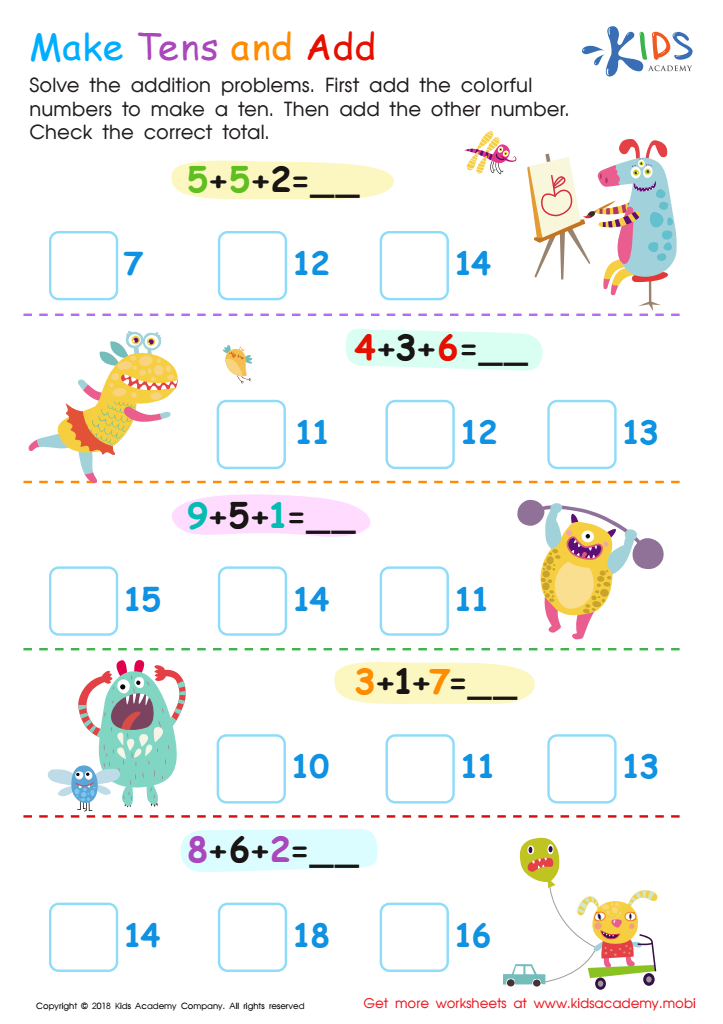
Make Tens and Add Worksheet
 Assign to My Students
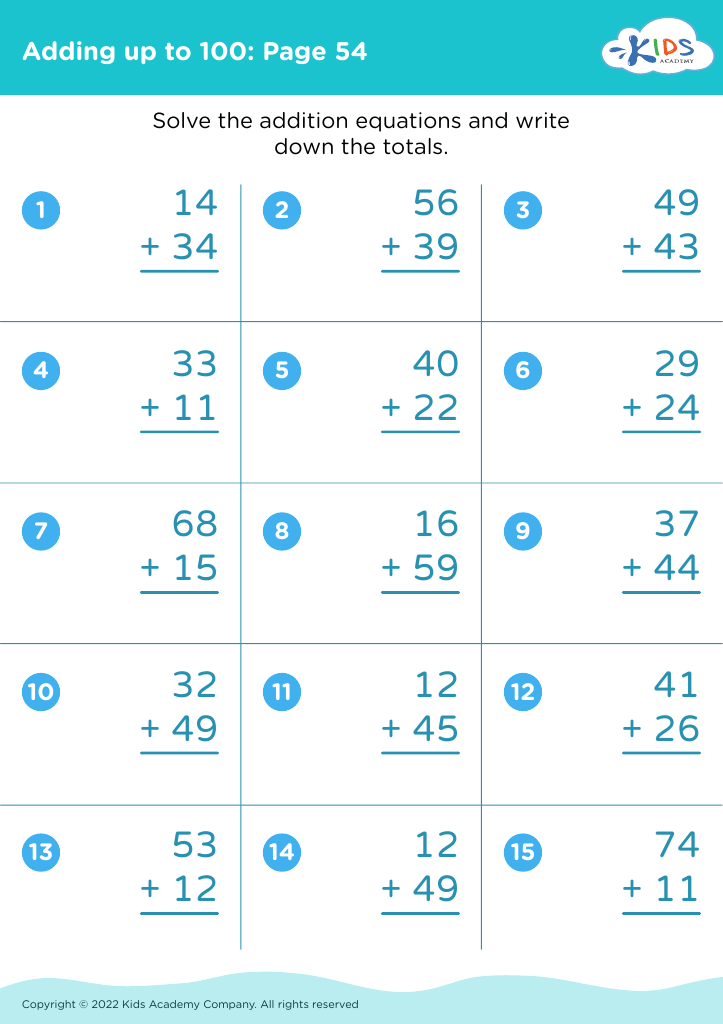
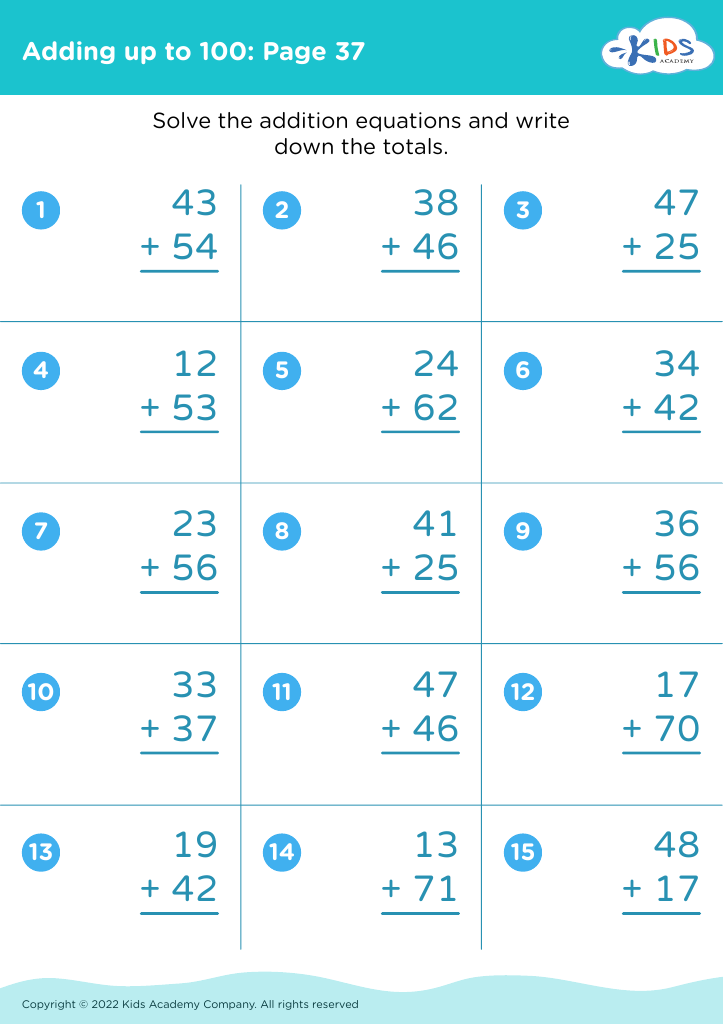
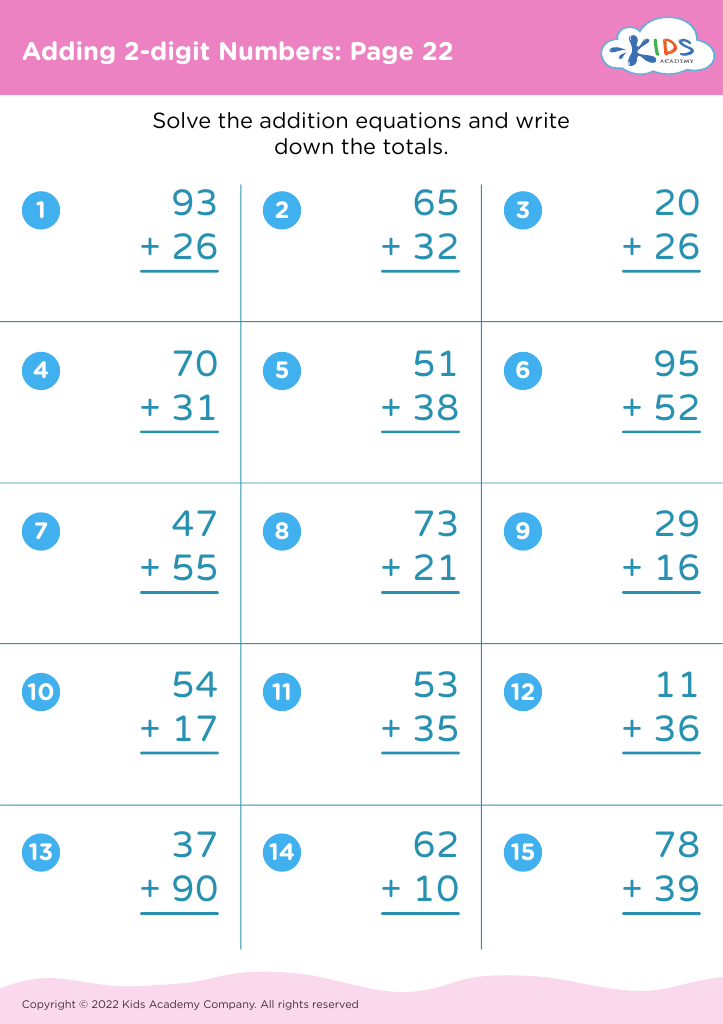
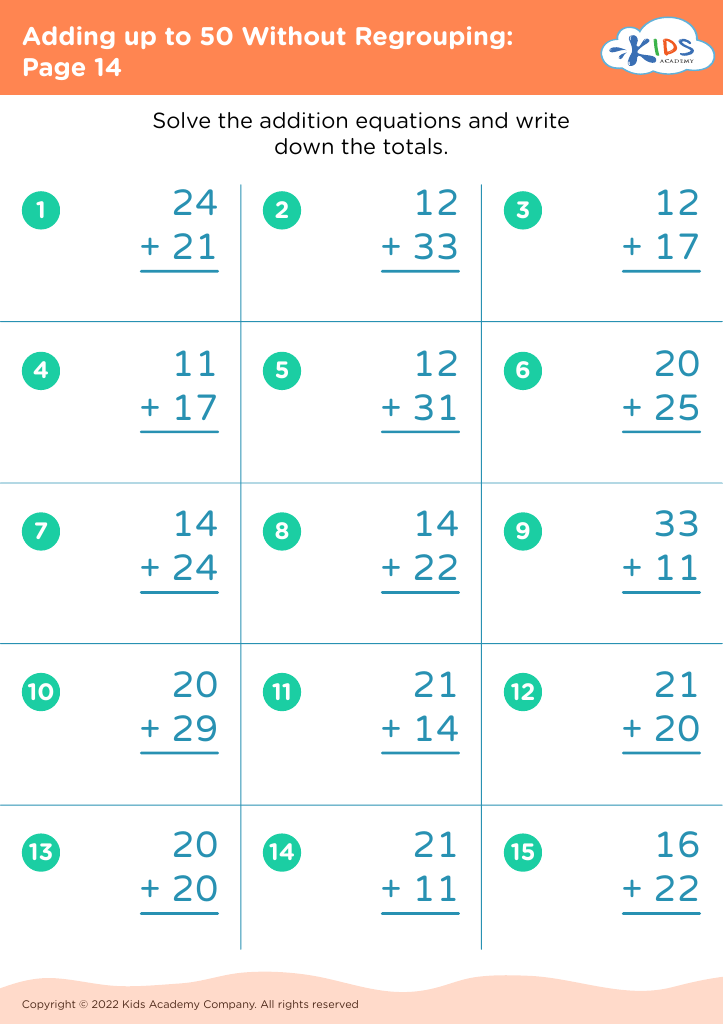








Practicing addition for children ages 3-7 is crucial for several reasons. Firstly, this foundational skill forms the building blocks for all future math concepts. Early exposure to addition helps young learners develop number sense, a vital cognitive ability that influences mathematical understanding later on.
Engaging in addition activities can also improve critical thinking and problem-solving skills. It encourages children to process information, make connections, and develop reasoning strategies. Furthermore, using fun and interactive methods, such as games and hands-on activities, can increase a child’s motivation and enjoyment of math, establishing a positive attitude toward the subject.
Moreover, practicing addition at an early age fosters literacy skills as children learn to understand mathematical language and symbols. This practice enables them to tackle more complex math concepts confidently as they progress in their education.
Lastly, parental involvement in supporting addition practice allows for valuable bonding time, reinforcing the idea that learning can be a collaborative and enjoyable experience. By prioritizing early addition skills, parents and teachers collectively contribute to a solid academic foundation that prepares children for not just math, but all subjects moving forward.








