Reading analog clocks Addition Worksheets for Ages 3-7
4 filtered results
-
From - To
Enhance your child's math and time-telling skills with our "Reading Analog Clocks Addition Worksheets," designed specifically for ages 3-7. These engaging worksheets combine the fun of learning addition with the essential skill of reading analog clocks. Young learners will practice adding numbers while interpreting clock faces, helping them develop both mathematical proficiency and a foundational understanding of time. With vibrant illustrations and interactive exercises, these worksheets make learning enjoyable and effective. Perfect for at-home practice or in-class activities, these resources support early education goals and foster a love for mathematics. Download them today and watch your child's confidence soar!
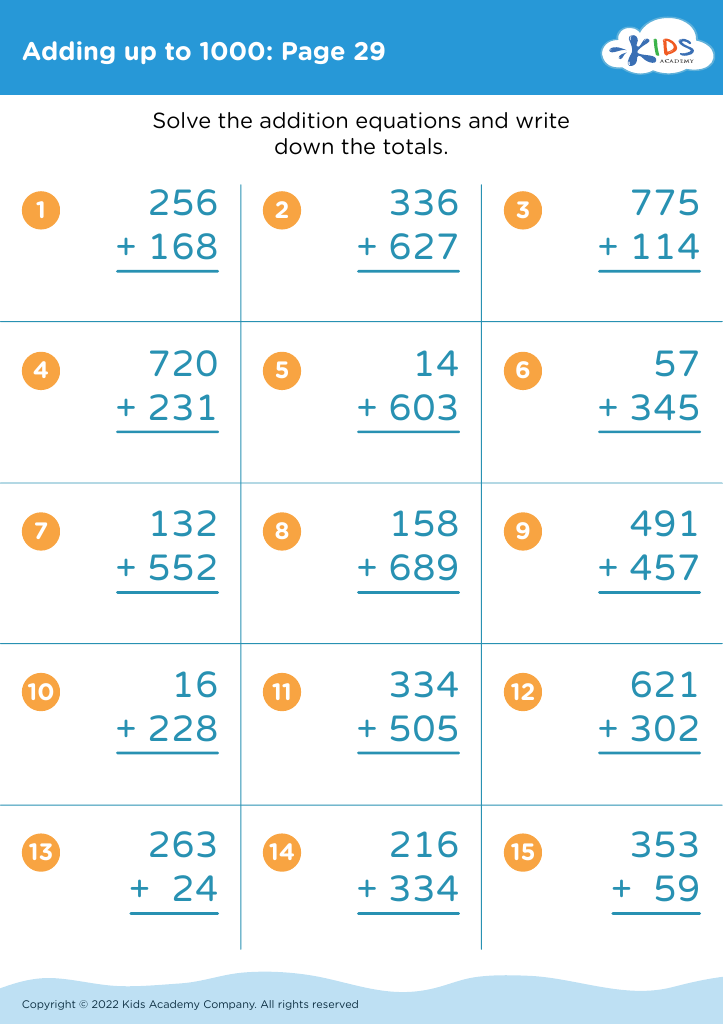
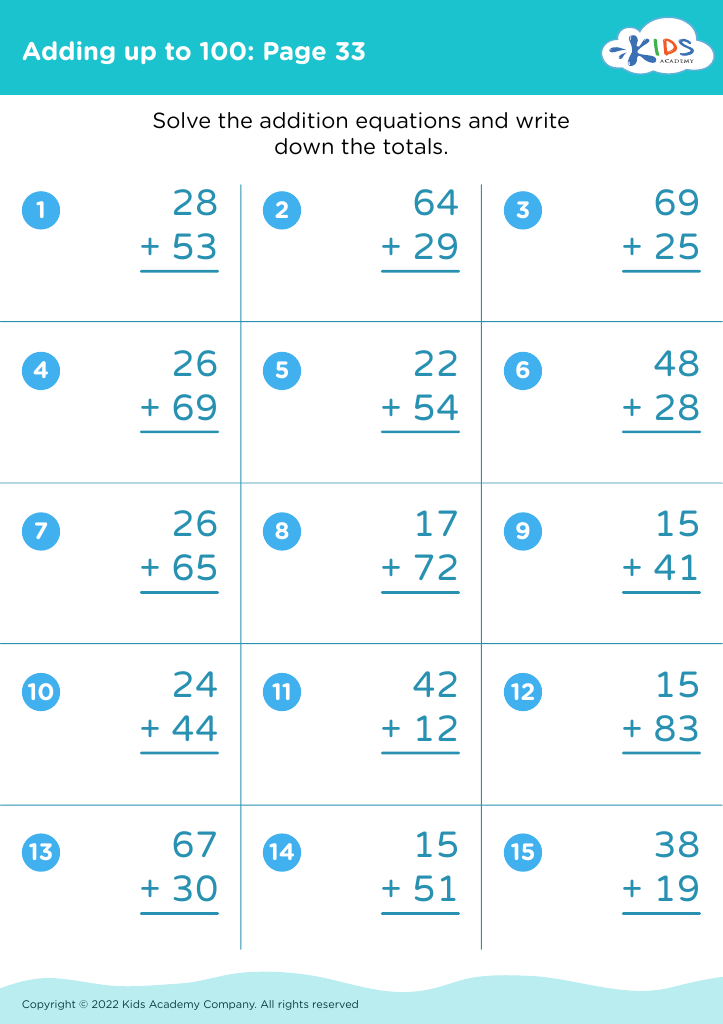
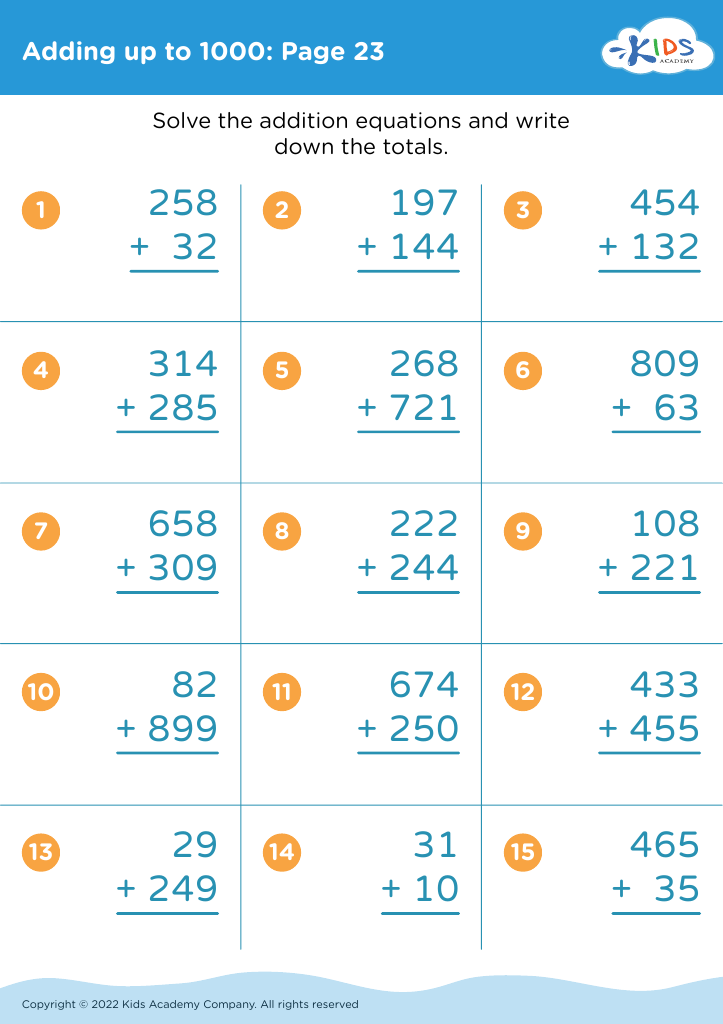
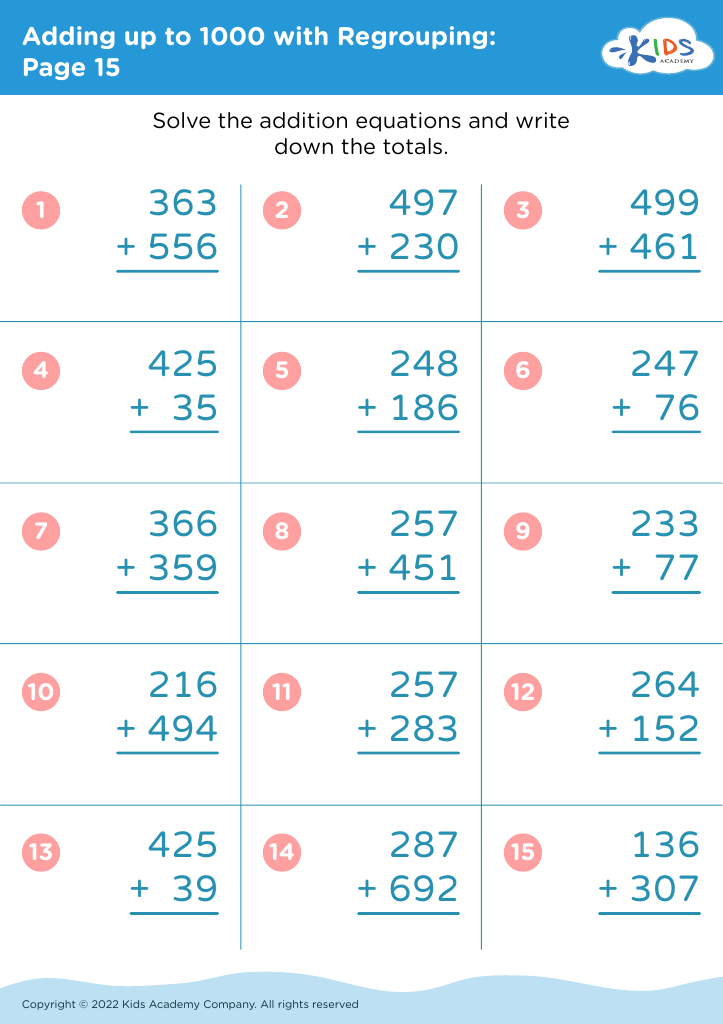








Teaching children to read analog clocks and perform addition are crucial skills that lay the foundation for their mathematical understanding and daily life management. For parents and teachers of children aged 3-7, fostering these skills creates awareness of time and enhances numerical literacy, both vital in their early development.
Understanding analog clocks helps children grasp the concept of time, promoting punctuality, organization, and a better understanding of daily routines. By learning to tell time on an analog clock, children develop critical thinking as they interpret the position of the hour and minute hands. It encourages observational skills and enhances their capacity for attention to detail.
Additionally, introducing addition alongside telling time supports cognitive growth through the integration of numerical concepts. Using time as a context for addition problems can make learning fun and relatable. For instance, "If the clock shows 2:00 and we add one hour, what time will it be?" connects real-life scenarios to math, making it tangible and relevant.
Ultimately, valuing these foundational skills sets children up for future academic success, fosters their independence, and nurtures a love for learning that extends beyond the classroom.








