Sea creatures identification Addition Worksheets for Ages 3-7
3 filtered results
-
From - To
Discover the fun of learning with our Sea Creatures Identification Addition Worksheets, specially designed for children ages 3 to 7. These engaging worksheets combine basic addition skills with exciting marine life themes, making math enjoyable and accessible. Kids will embark on a colorful underwater journey as they identify various sea creatures while practicing their addition skills. Each worksheet encourages playful learning through vibrant illustrations and simple math problems, helping to foster curiosity and a love for both math and marine biology. Perfect for enhancing early educational development, these resources make learning an adventure! Dive into a world of knowledge today!
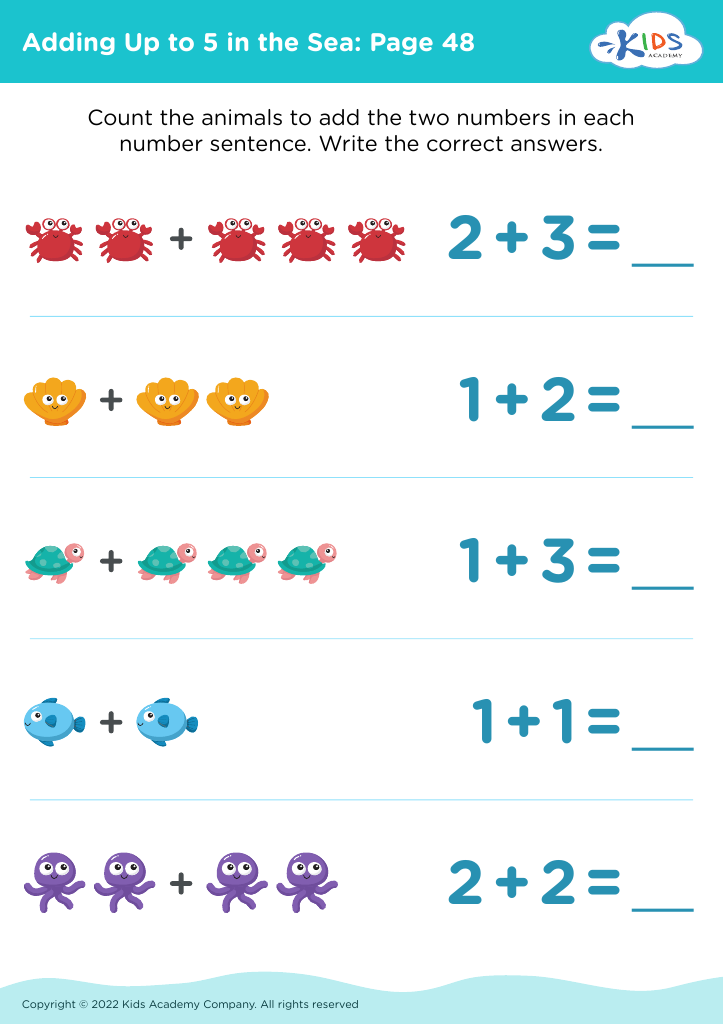
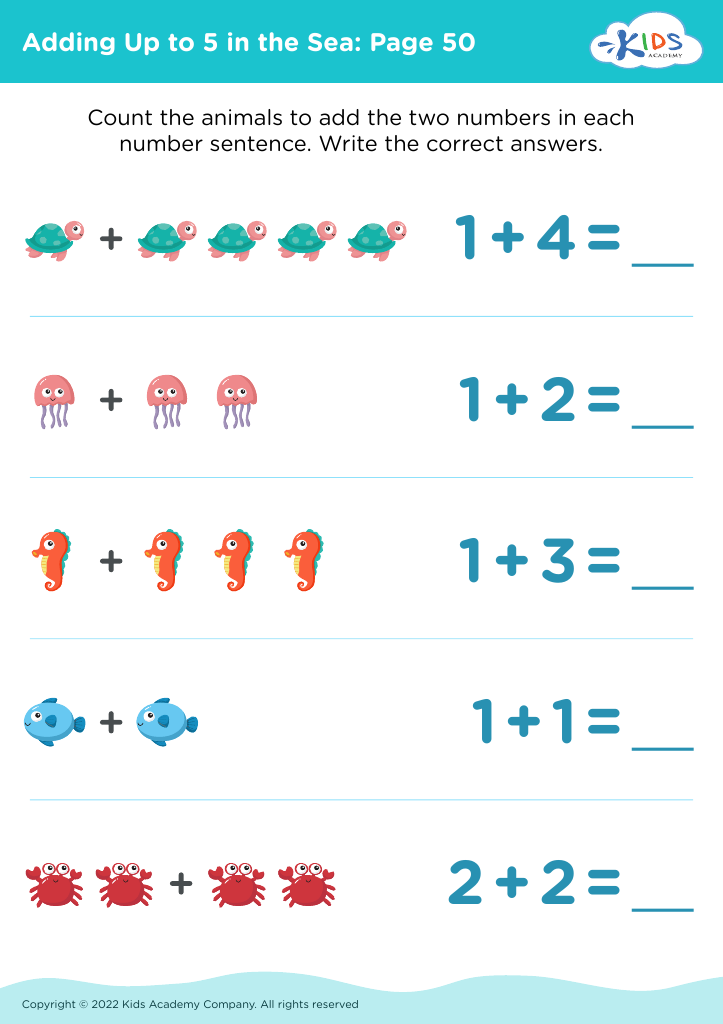
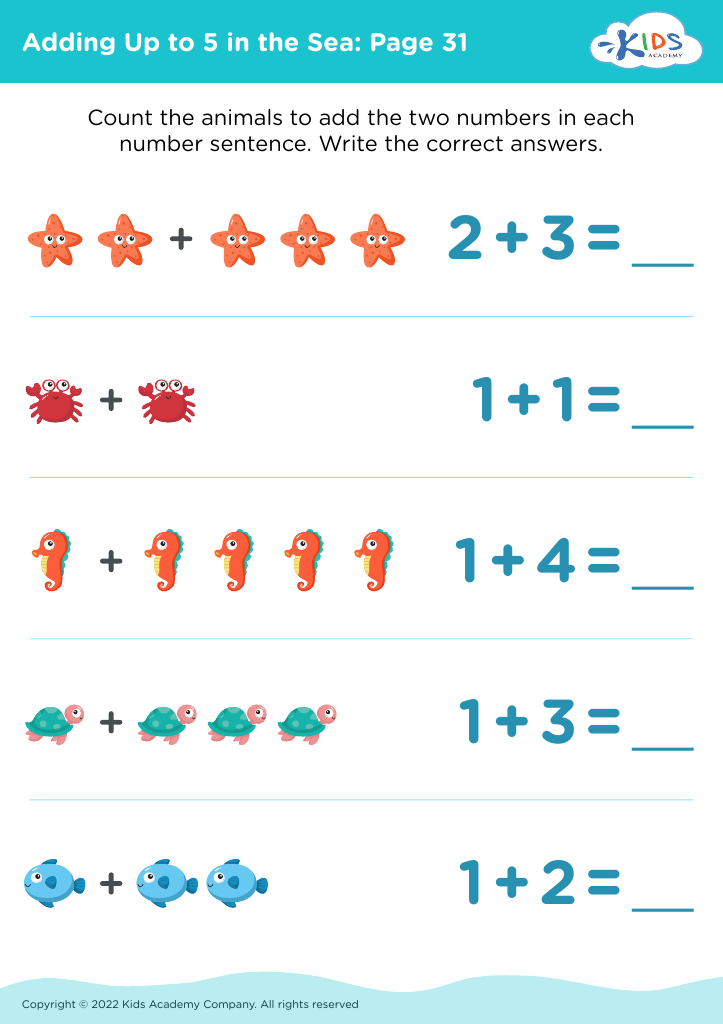








Parents and teachers should care about sea creature identification for children ages 3-7 for several compelling reasons. Early exposure to marine life fosters curiosity and a love for nature, laying the groundwork for a strong environmental awareness. This topic invites rich learning opportunities, blending science, art, and language, inspiring creative expression through drawings or storytelling related to ocean themes.
Furthermore, identifying sea creatures enhances children's observational skills. They learn to distinguish different species based on characteristics like color, shape, and habitat. This process promotes critical thinking and comprehension as they classify and categorize organisms.
Engaging with marine life helps instill a sense of responsibility for ocean conservation from a young age. By recognizing the roles these creatures play in maintaining ecological balance, children develop empathy towards all living beings and an understanding of the impact of human activity on their environments.
Additionally, sea creature identification activities can be fun and interactive, making learning enjoyable. Whether through visits to aquariums, beach explorations, or using educational toys and books, these experiences create lasting memories. In summary, sea creature identification enriches cognitive, emotional, and social development, making it an essential focus for caregiving adults advocating a well-rounded education.








