Understanding addition Addition Worksheets for Ages 3-7
7 filtered results
-
From - To
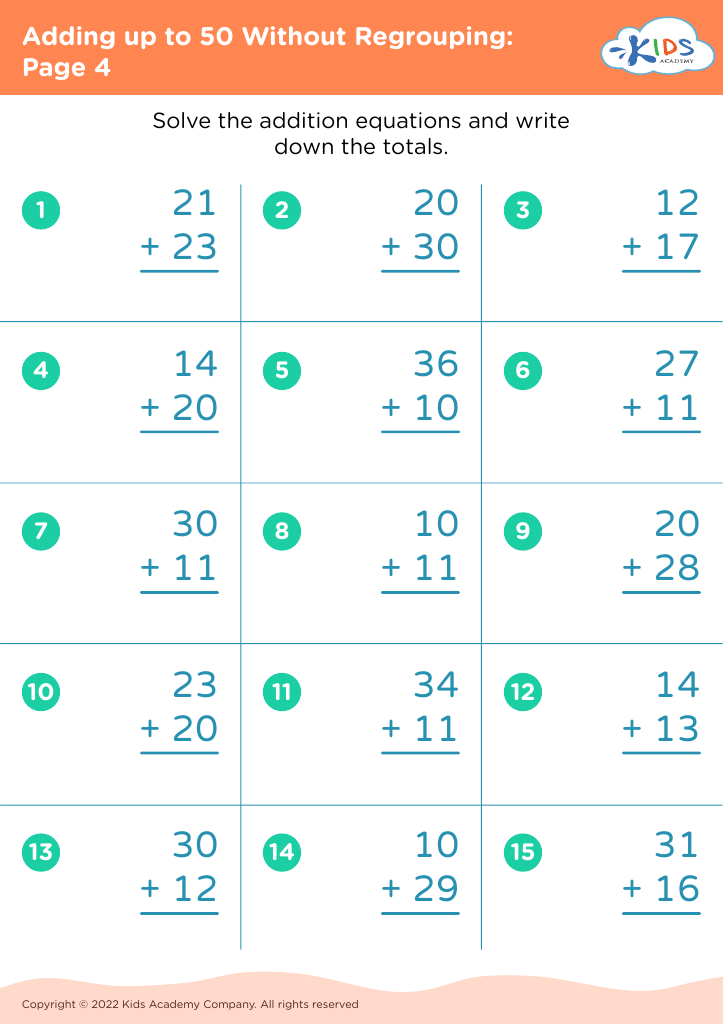
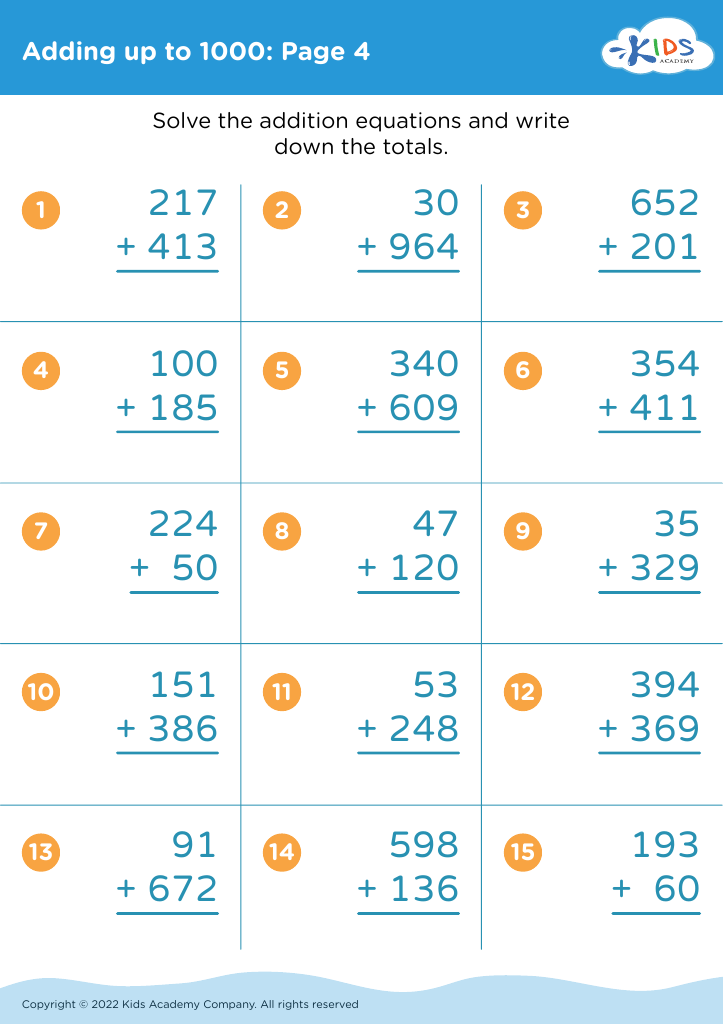
"Understanding Addition Worksheets for Ages 3-7" offer essential practice for children embarking on their mathematical journey. With vibrant visuals and engaging activities, Kids Academy provides expertly designed worksheets to build foundational addition skills. These resources help young learners grasp basic concepts through interactive exercises, making math fun and approachable. Perfect for classrooms or at-home practice, the worksheets encourage hands-on learning and critical thinking. Kids will develop strong numeracy skills, boost their confidence, and cultivate a love for learning. Capture your child's interest and support their educational growth with our comprehensive, age-appropriate addition worksheets tailored for young mathematicians.
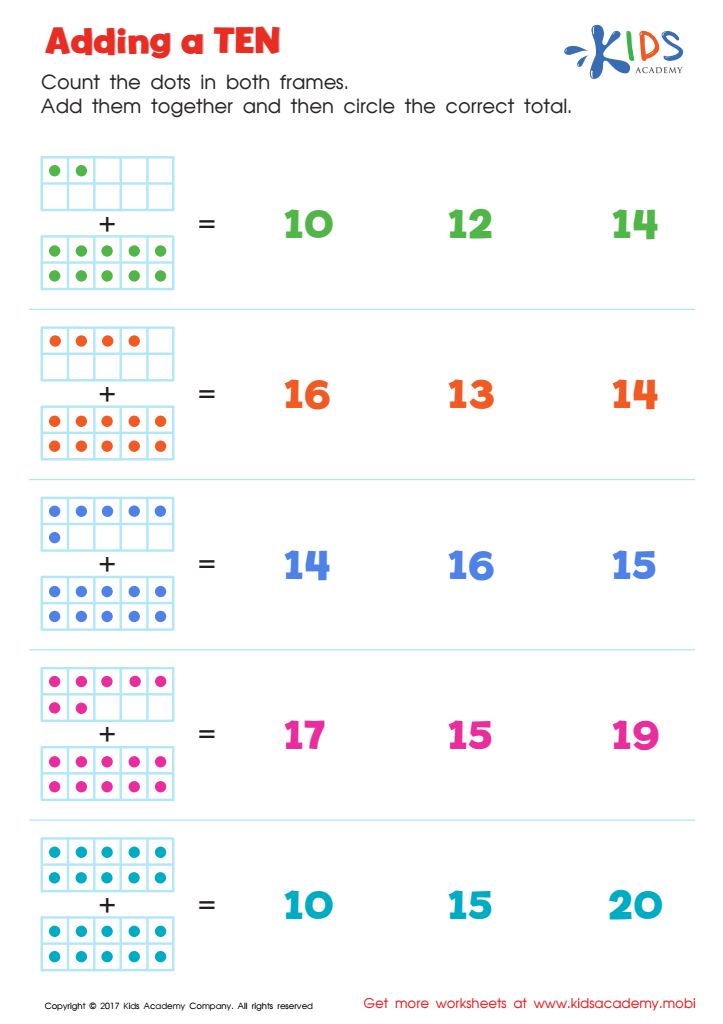
Adding a Ten Worksheet
 Assign to My Students
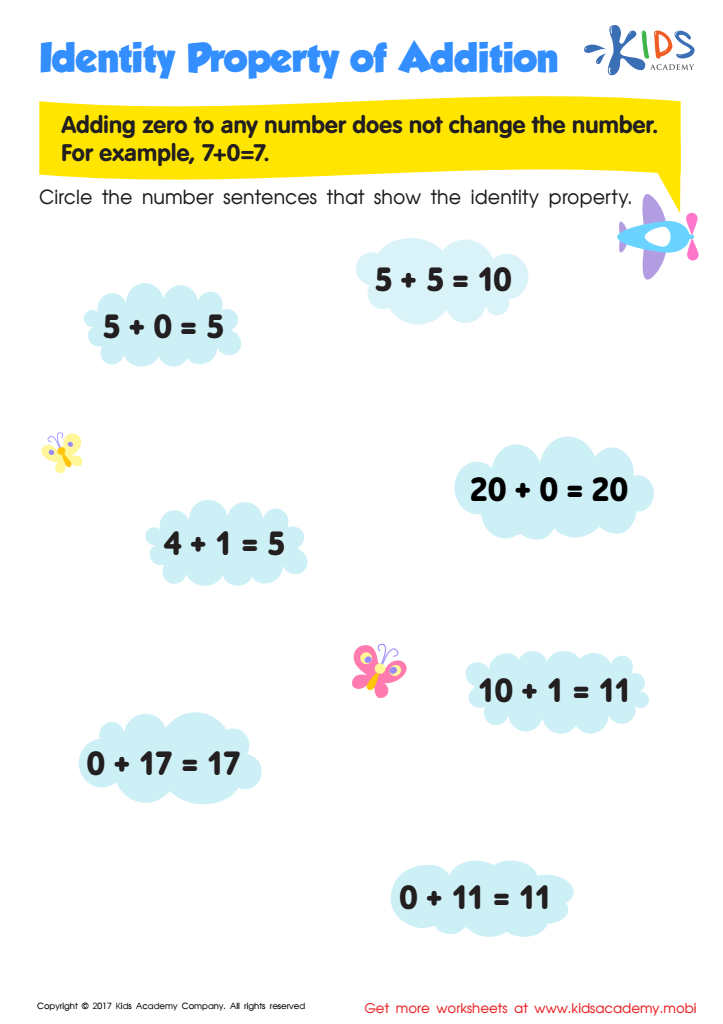
Identity Property of Addition Worksheet
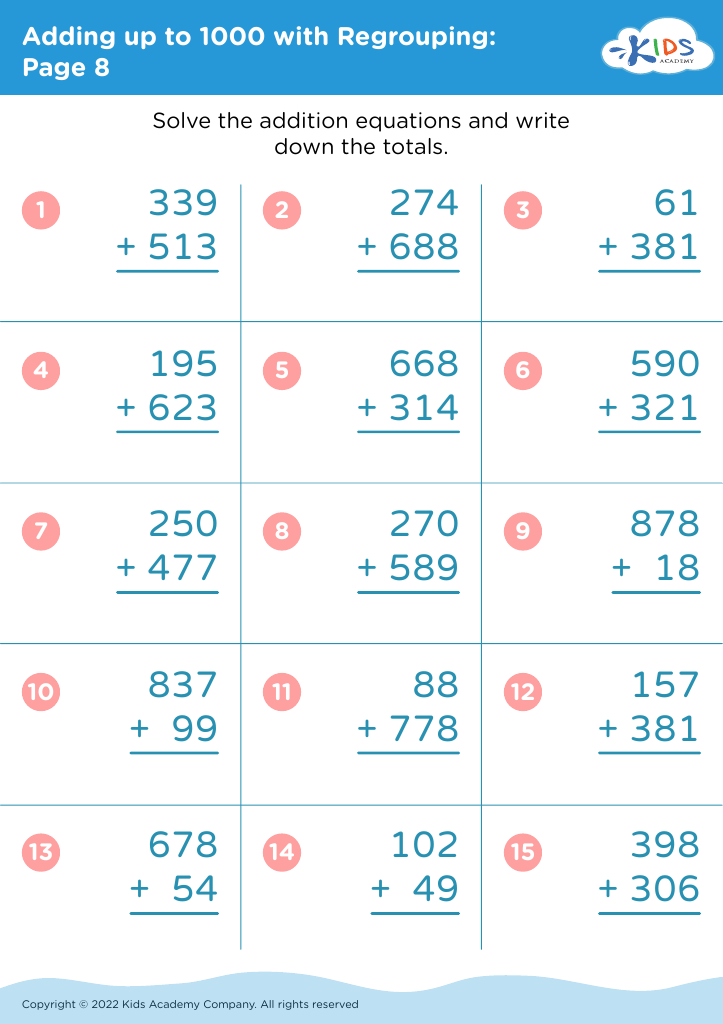
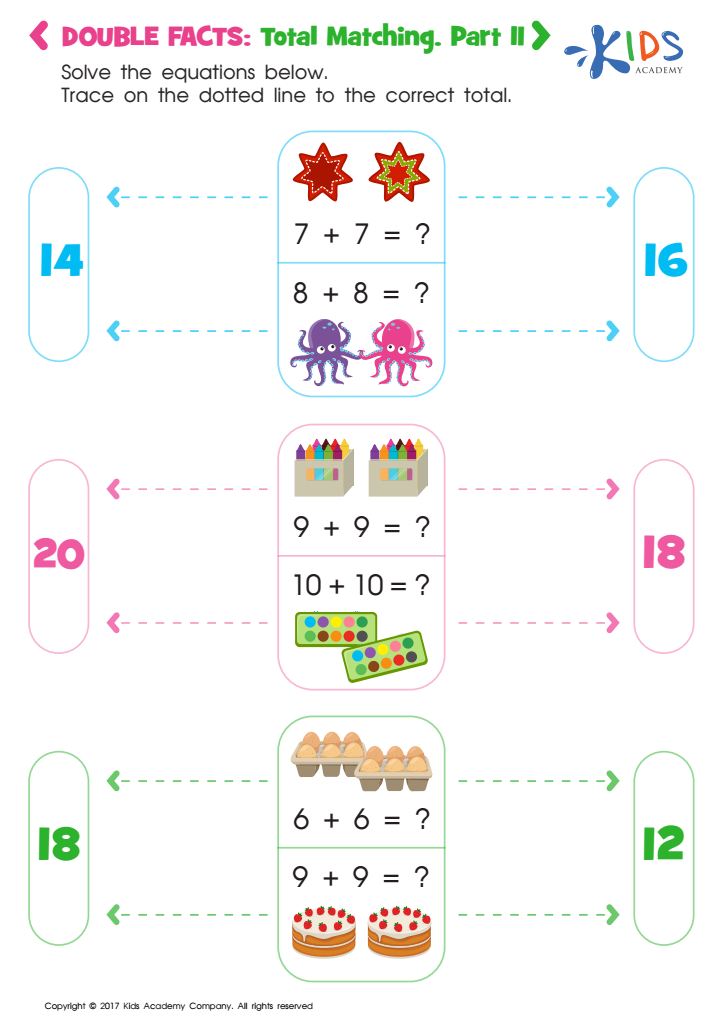
Double Facts: Total Matching 2 Worksheet
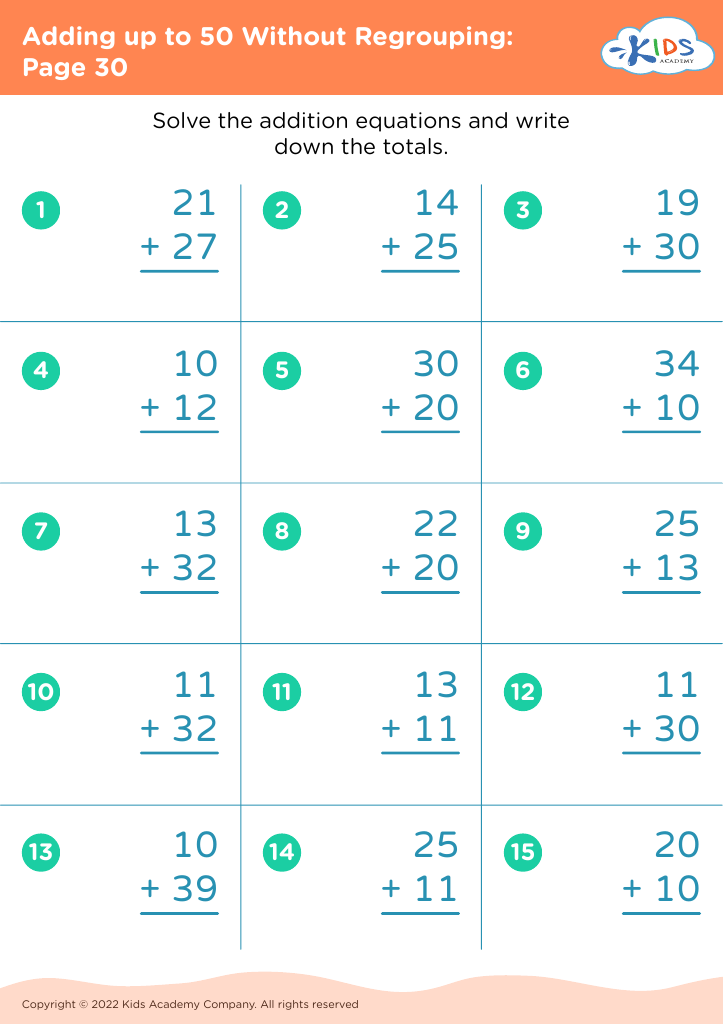








Understanding addition at an early age, particularly between the ages of 3-7, is crucial for several developmental reasons. For one, it lays the foundational stone for future mathematical learning. As children advance in school, they will encounter more complex mathematical problems, all of which build on basic addition skills.
Moreover, understanding addition can boost cognitive development in young children. It helps to enhance their problem-solving skills, logical thinking, and even their ability to follow instructions and rules. Engaging with mathematical concepts early can also improve attention span and the ability to focus on tasks.
From a real-world perspective, early familiarity with addition helps children make sense of their environment. They begin to see patterns, make predictions, and organize their thoughts quantitatively. Something as simple as understanding that 2 apples and 3 apples make 5 apples immediately makes abstract numerical concepts tangible.
Finally, becoming comfortable with early math concepts fosters a sense of achievement and self-efficacy in children. This confidence can extend to other areas of learning and personal development. By supporting this early skill, parents and teachers are essentially building a robust base for a child's educational journey and everyday life problem-solving abilities.








