Understanding equality Addition Worksheets for Ages 3-7
3 filtered results
-
From - To
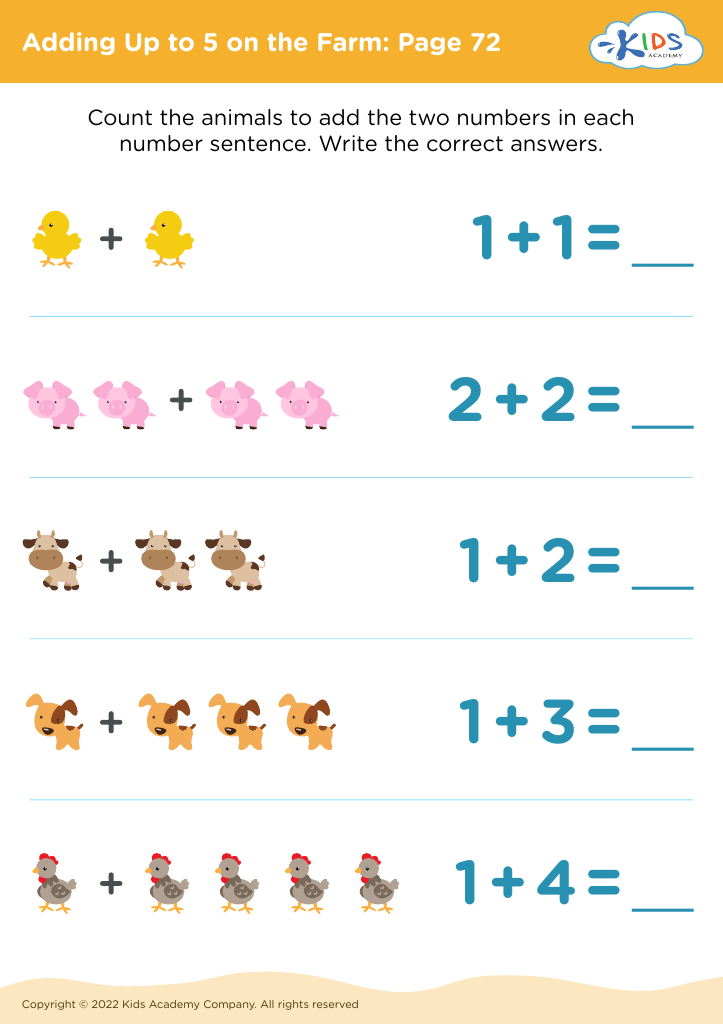
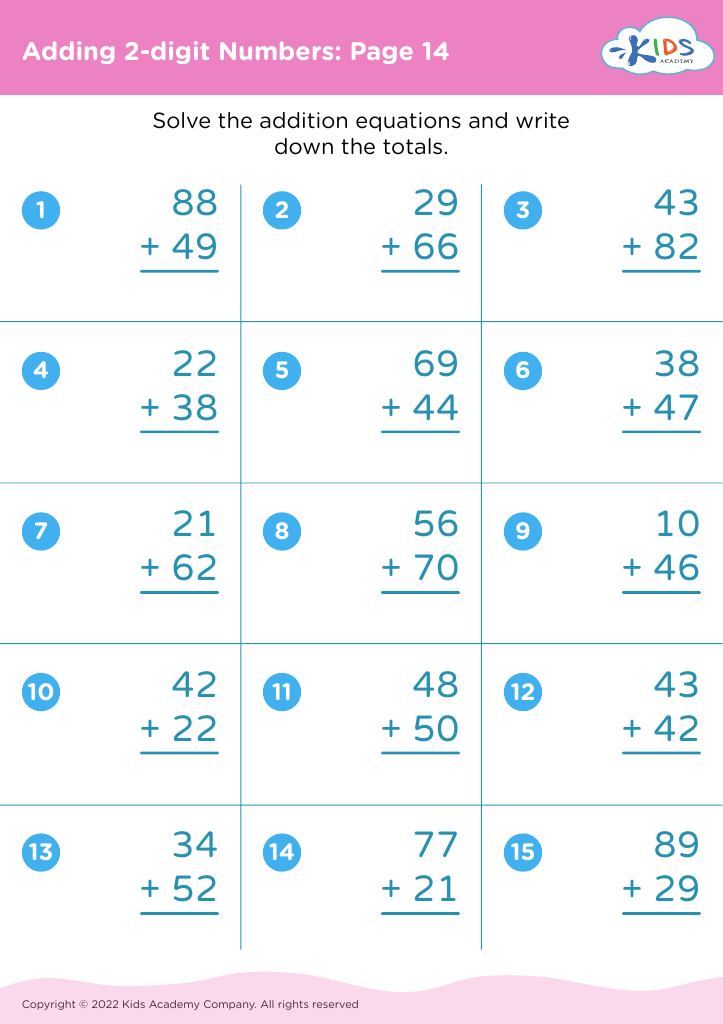
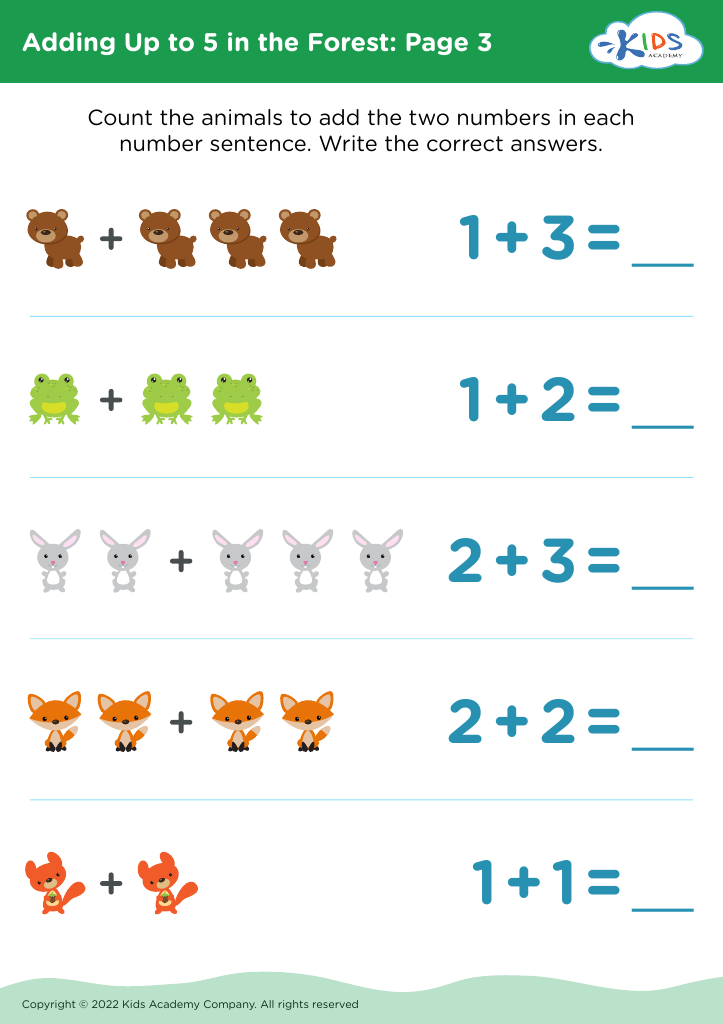
Our "Understanding Equality Addition Worksheets for Ages 3-7" are designed to make learning fun and interactive for young minds. These colorful and engaging worksheets help children grasp the basic concepts of addition and equality, fostering a solid mathematical foundation. With activities that encourage critical thinking and problem-solving, kids learn to recognize equal sums and understand how numbers balance. Developed to enhance learning skills, our worksheets align with key educational standards, ensuring your child is both entertained and educated. Ideal for preschoolers and early elementary students, these resources make learning addition a joyful experience.








Understanding equality and addition for children ages 3 to 7 establishes a critical foundation for mathematical thinking and problem-solving skills that will benefit them throughout their education. At this young age, children are very curious and are developing cognitive skills rapidly. Introducing concepts of equality and addition helps nurture their logical thinking and number sense.
When children understand equality, they grasp that quantities on either side of an equals sign must be the same, which is fundamental for all future math learning. It also paves the way for understanding more complex concepts like balance, fairness, and comparison in broader contexts. Fostering addition skills enhances a child's ability to combine groups of objects, which is a basis for operations and arithmetic. These skills are not only essential for mathematics but are also applicable in daily life situations, such as sharing toys or splitting treats.
Moreover, these early mathematical experiences build confidence and a positive attitude toward learning. When children feel successful early on with concrete, hands-on learning goals, they are more likely to develop a love for math and perseverance when faced with more challenging problems. Therefore, parents and teachers investing time in these basic concepts provide children with essential tools for academic success and practical life skills.








