Understanding numerical values Addition Worksheets for Ages 3-7
4 filtered results
-
From - To
Explore our engaging "Understanding Numerical Values Addition Worksheets" designed for children aged 3-7! These worksheets focus on building foundational math skills by helping young learners grasp the concept of numerical values through fun and interactive activities. With vibrant visuals and age-appropriate exercises, students will enjoy practicing addition while developing a strong number sense. Our resources foster confidence in math, making learning enjoyable and effective. Whether at home or in the classroom, these worksheets provide essential practice to support early mathematical understanding. Start your child’s journey to becoming a math-savvy learner with our comprehensive and enjoyable addition worksheets today!
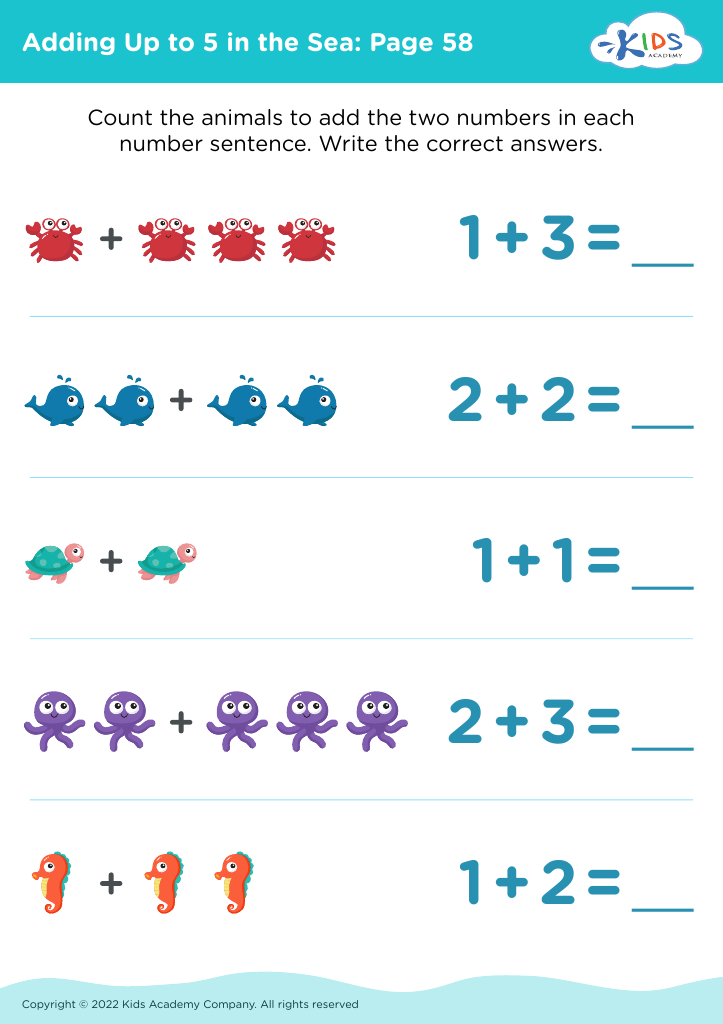
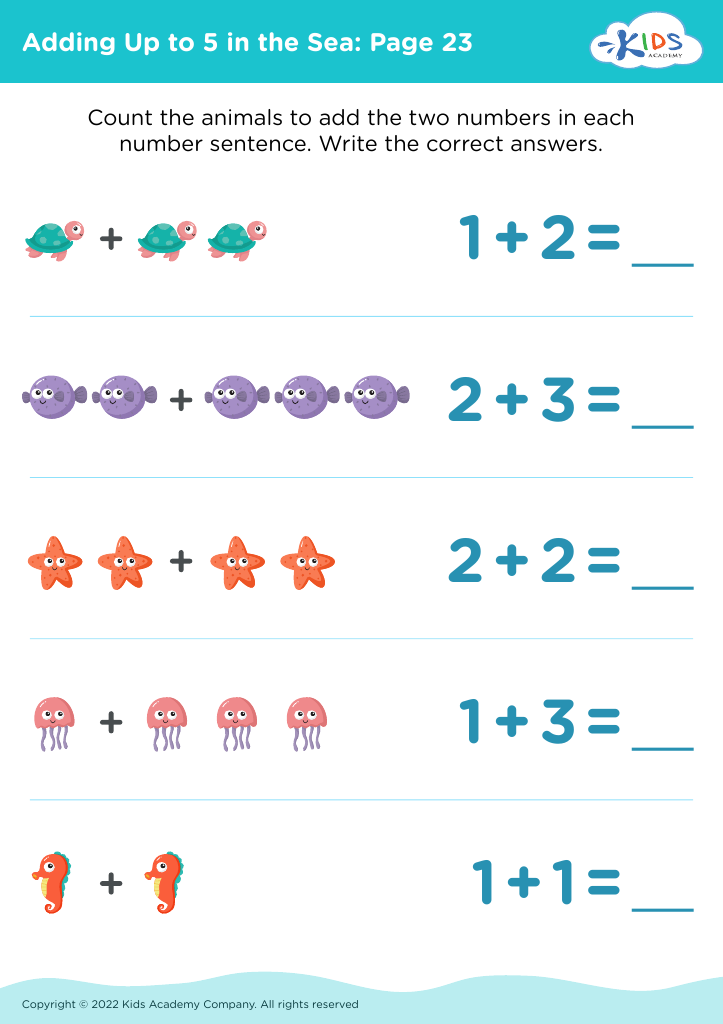
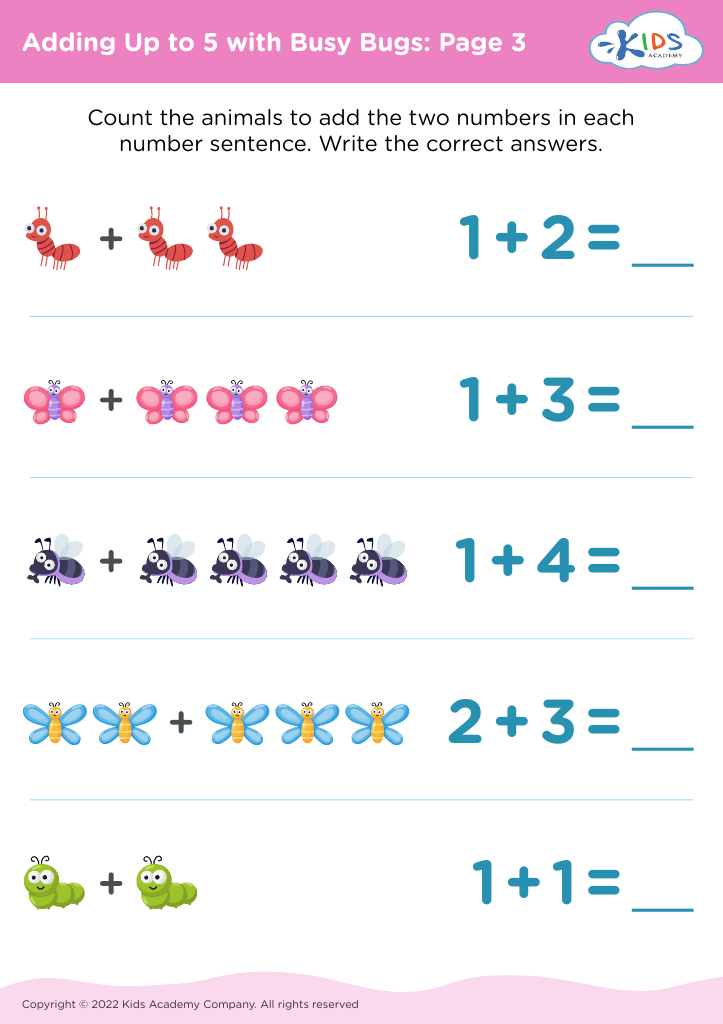
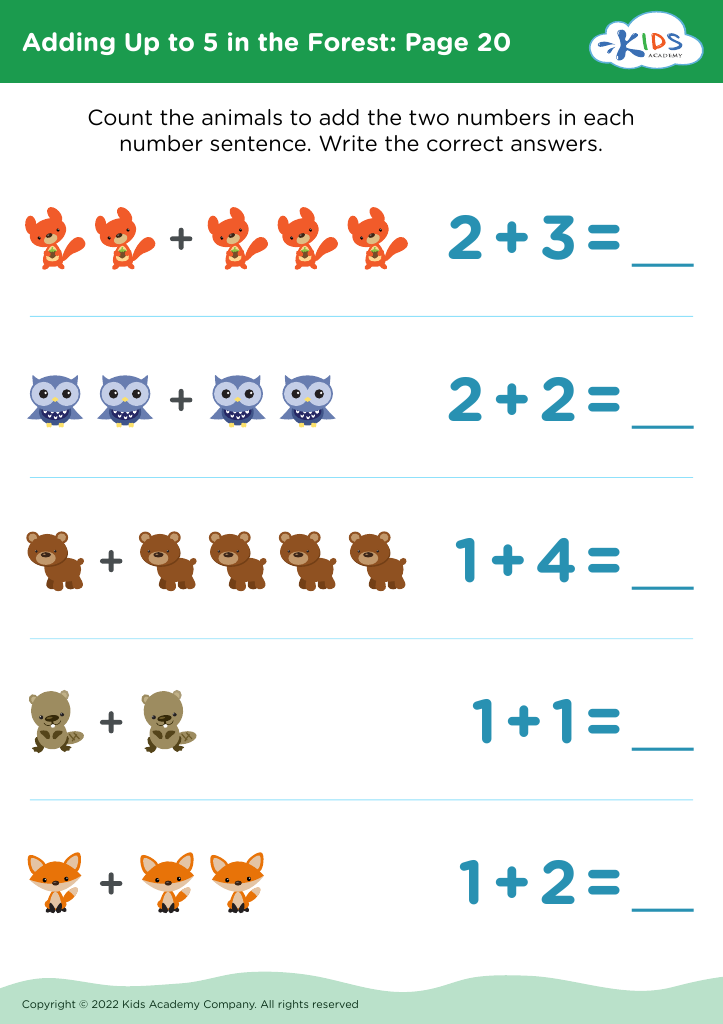








Understanding numerical values and addition is essential for children aged 3-7, forming a crucial building block for their mathematical understanding and overall cognitive development. At this developmental stage, children begin to explore numbers through play, daily activities, and structured learning, making it a prime opportunity for parents and teachers to foster a positive relationship with math.
By teaching children to comprehend numerical values, we empower them to grasp the concept of quantity, which lays the groundwork for addition. This understanding aids in problem-solving, critical thinking, and logical reasoning, skills that are vital not just in math but across all subjects. Engaging children with hands-on activities, such as counting objects, using visual aids, or incorporating simple games, allows them to experience math in a fun, relatable context, reinforcing their learning.
Moreover, early proficiency in addition enhances confidence, alleviating math anxiety as children progress through school. Parents and teachers can further support this journey by recognizing each child's unique learning pace, helping them to achieve a solid math foundation. Thus, investing time and attention to understanding numerical values and addition is essential for nurturing competent learners equipped for future challenges.








