Understanding sequencing Addition Worksheets for Ages 3-7
7 filtered results
-
From - To
Discover our engaging "Understanding Sequencing Addition Worksheets" designed specifically for children ages 3 to 7. These interactive resources help young learners grasp the foundational concepts of addition while honing their sequencing skills. By integrating colorful visuals and relatable scenarios, these worksheets make math enjoyable and accessible. Children will practice arranging numbers in order, solving simple addition problems, and developing critical thinking. Our worksheets are perfect for teachers and parents seeking to foster early math literacy in a fun, friendly way. Explore our collection today and empower your child with the essential skills needed for future academic success!
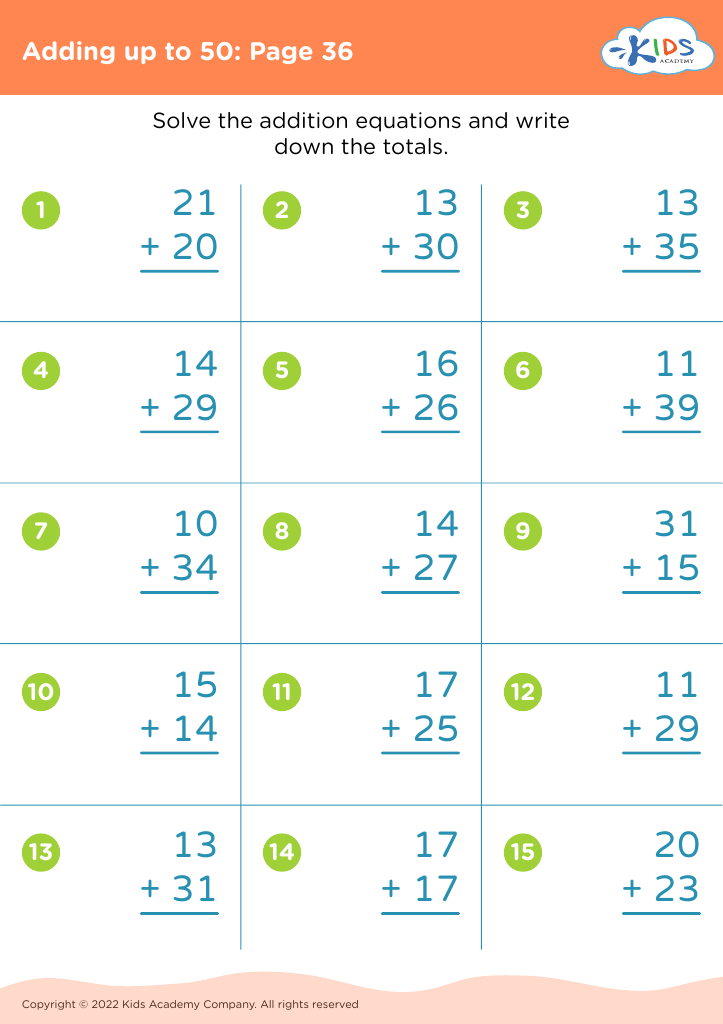
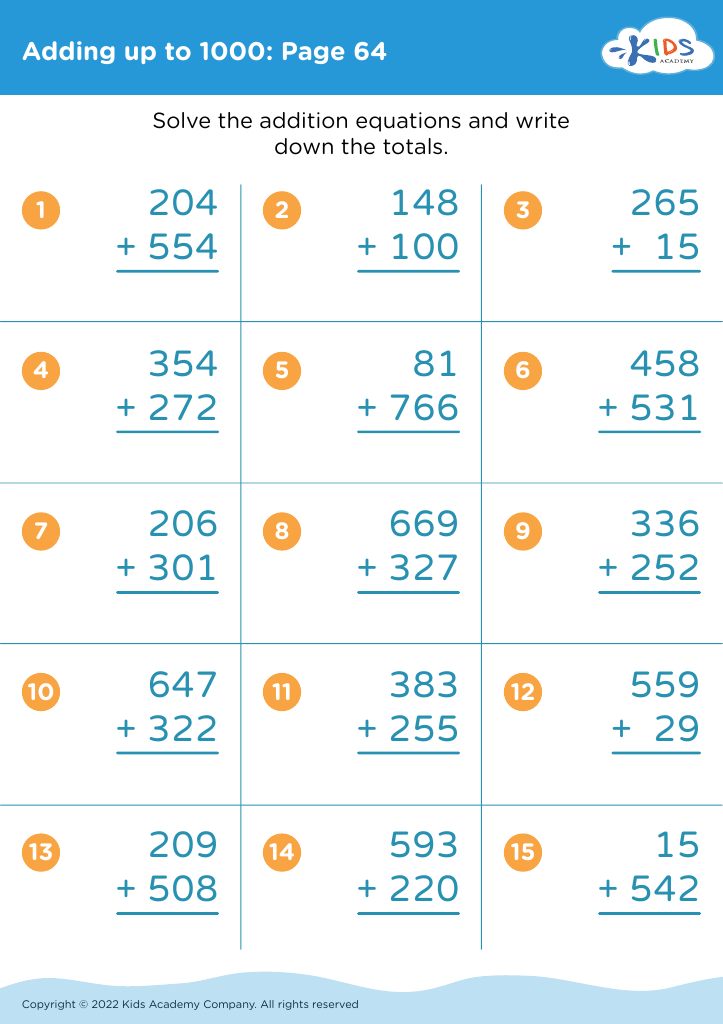
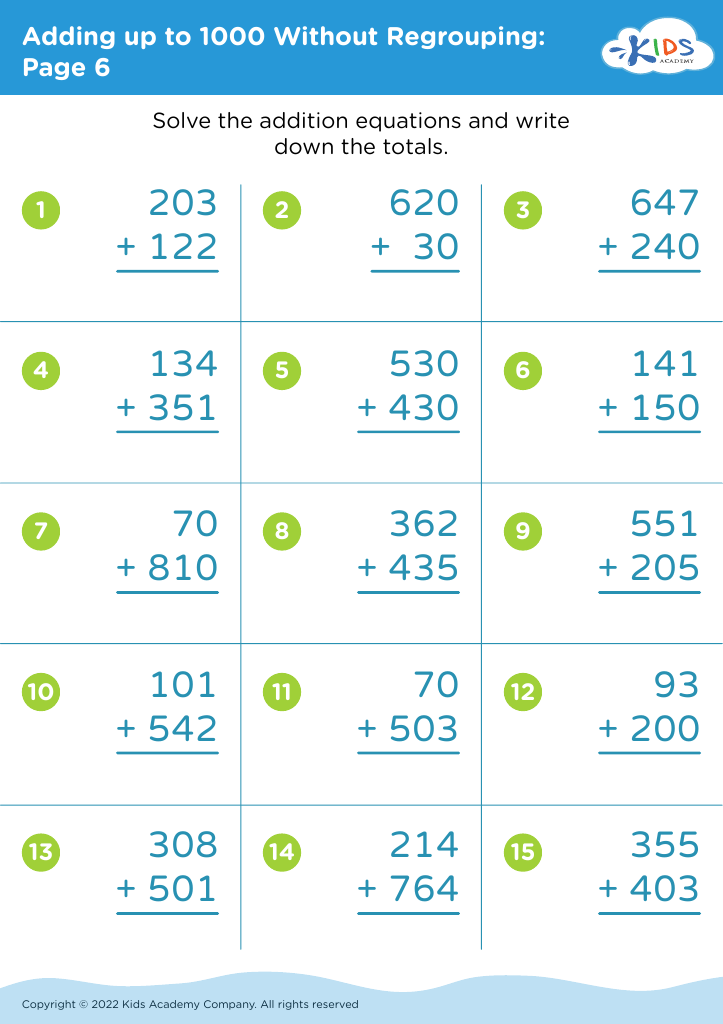
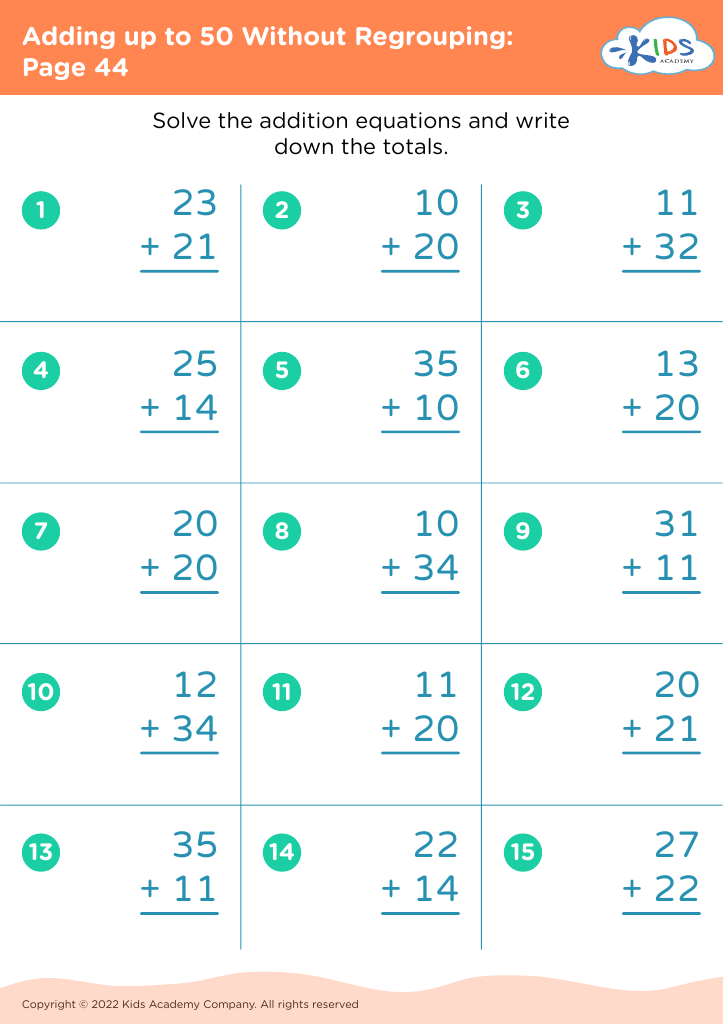
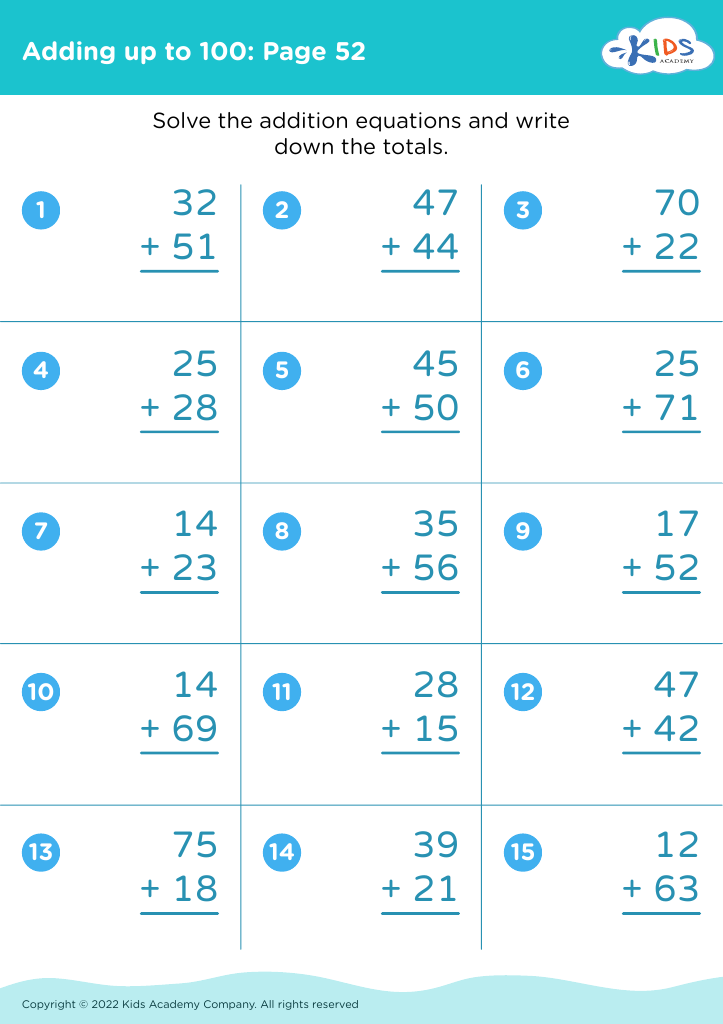
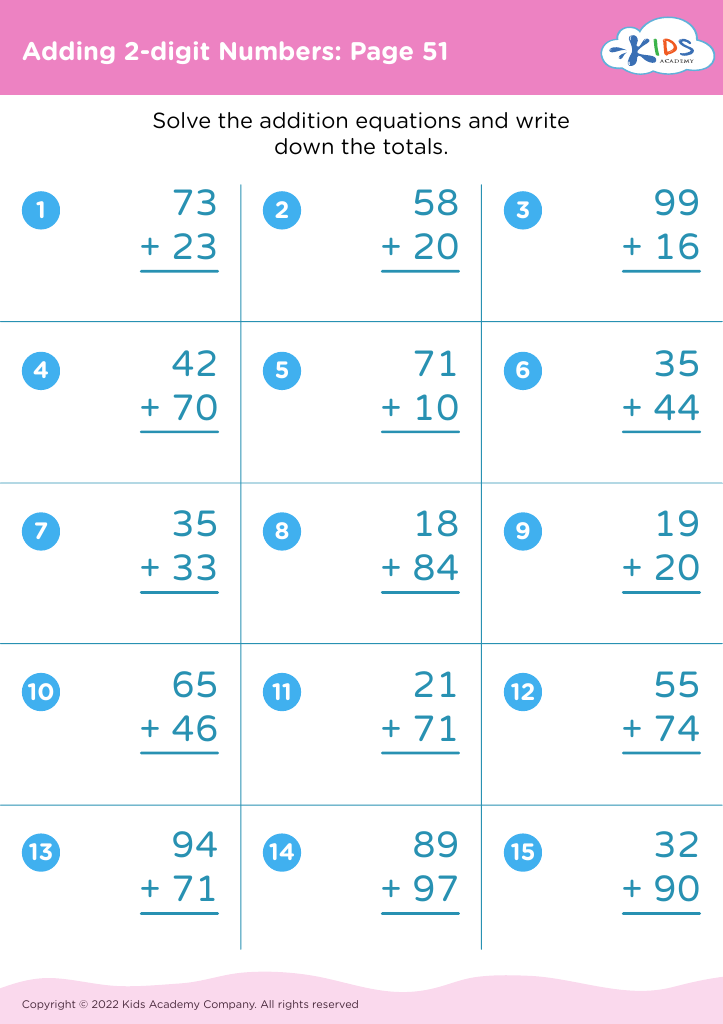
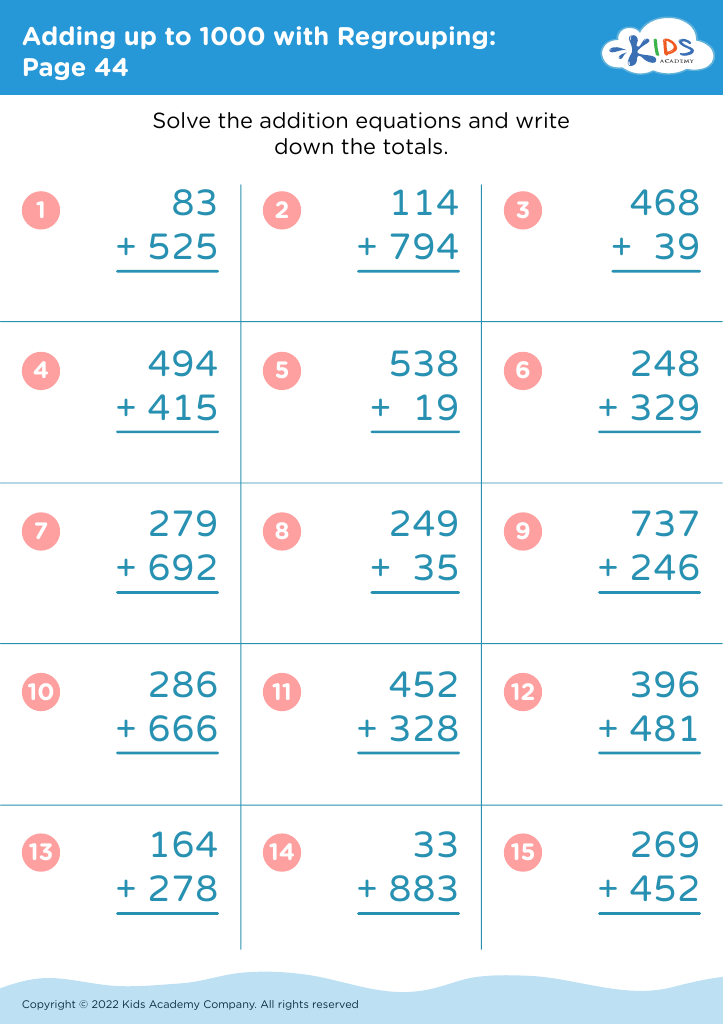







Understanding sequencing addition is vital for children aged 3-7, as it serves as a foundational skill for their mathematical development. From a young age, children learn to recognize patterns and relate numbers in a logical order. Sequencing addition helps them grasp how numbers relate to each other, forming the basis for more complex operations like subtraction and multiplication later on.
For parents and teachers, fostering this understanding encourages cognitive development and critical thinking. Children who can sequence addition effectively begin to see math not just as a series of isolated facts, but as an interconnected system. This integration enhances their confidence and enjoyment in learning, which can lead to a positive attitude toward math as they progress through their educational journey.
Moreover, early experiences with sequencing directly influence a child's problem-solving skills and ability to follow instructions—essential skills for both academic success and daily life. It lays the groundwork for higher-order thinking skills, critical for future learning across all subjects. By supporting children's understanding of sequencing addition, parents and teachers are not just teaching numbers; they are nurturing a generation of thinkers who can tackle increasingly complex concepts with ease.








