Understanding subtraction Addition Worksheets for Ages 3-7
7 filtered results
-
From - To
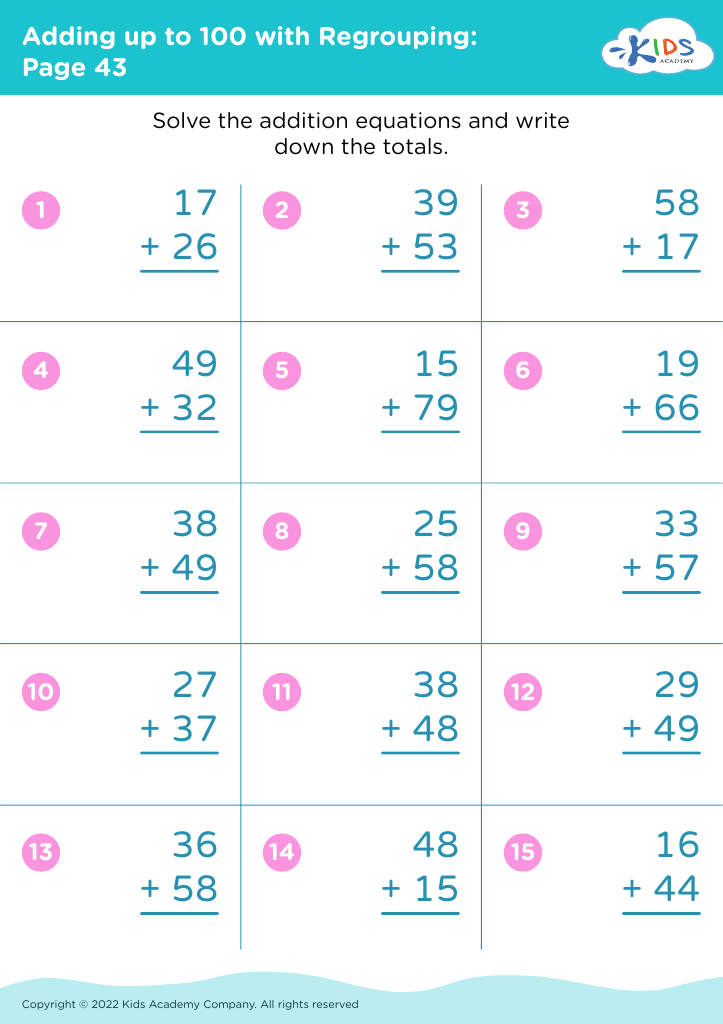
Discover our "Understanding Subtraction Addition Worksheets for Ages 3-7" designed to make math fun and engaging for young learners. These printable worksheets provide a variety of activities to help children grasp essential addition and subtraction concepts. With colorful graphics and simple problems, kids enhance their problem-solving skills while building a strong mathematical foundation. Perfect for preschoolers and early grade students, these worksheets support academic growth, build confidence, and make learning an enjoyable adventure. Start your child’s math journey today with our expertly crafted resources at Kids Academy!
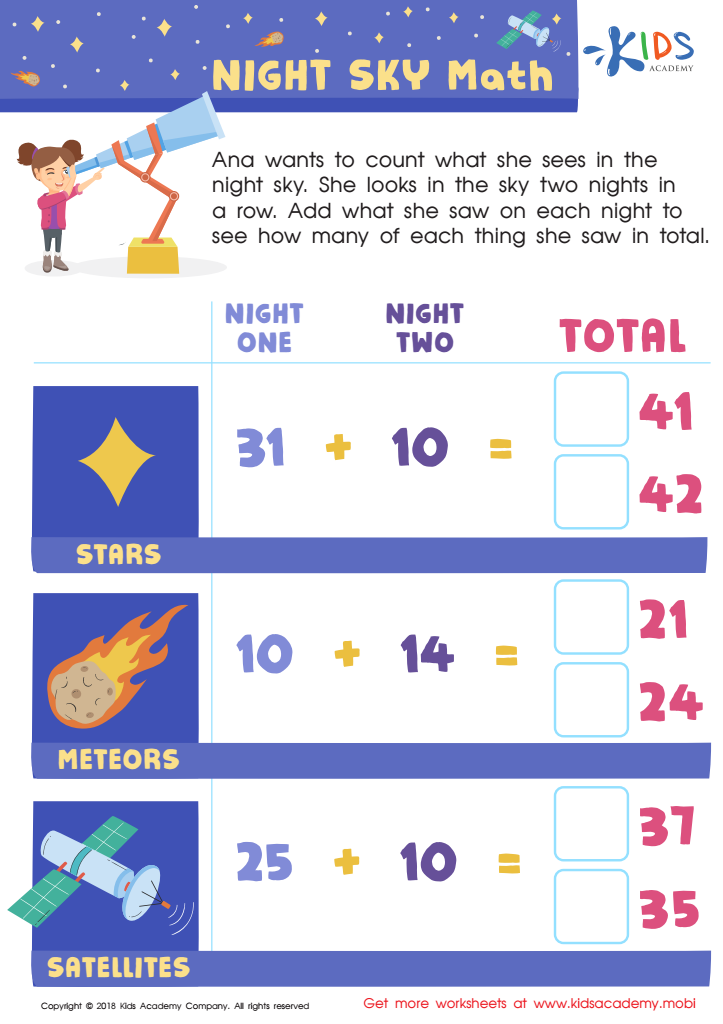
Night Sky Math Worksheet
 Assign to My Students
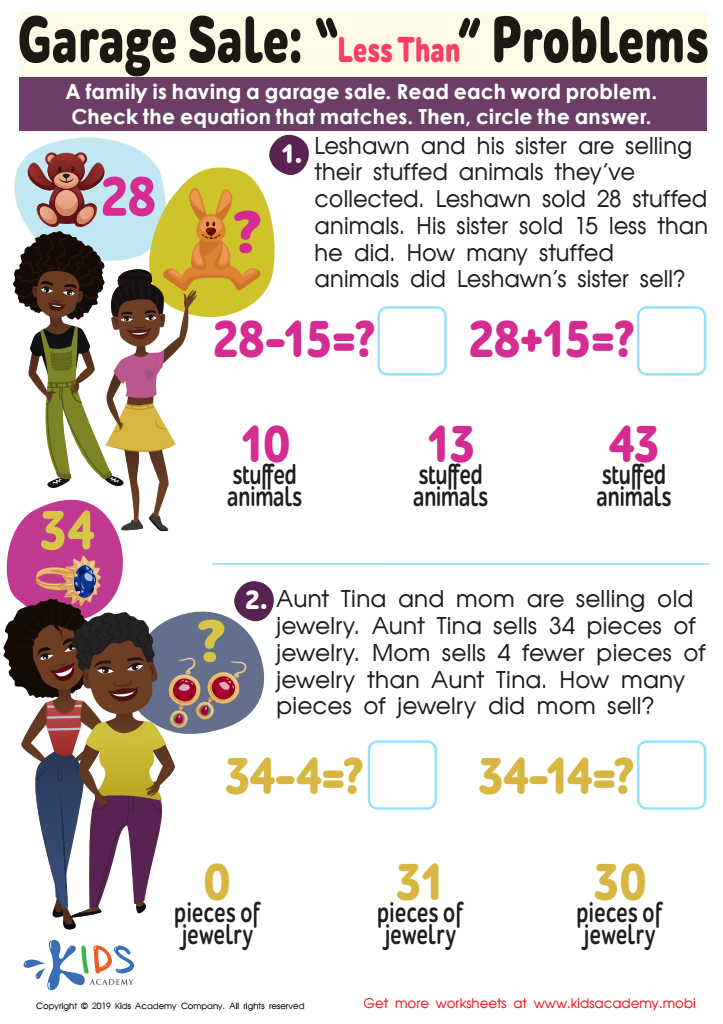
Garage Sale Less Than Worksheet
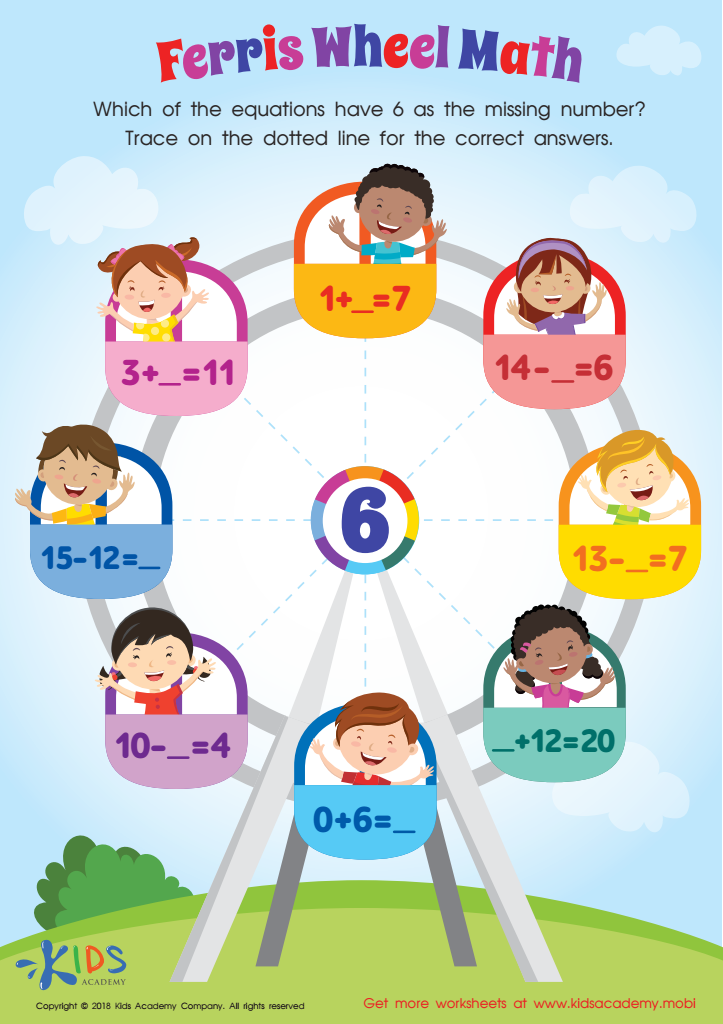
Missing Number: Ferris Wheel Math Worksheet
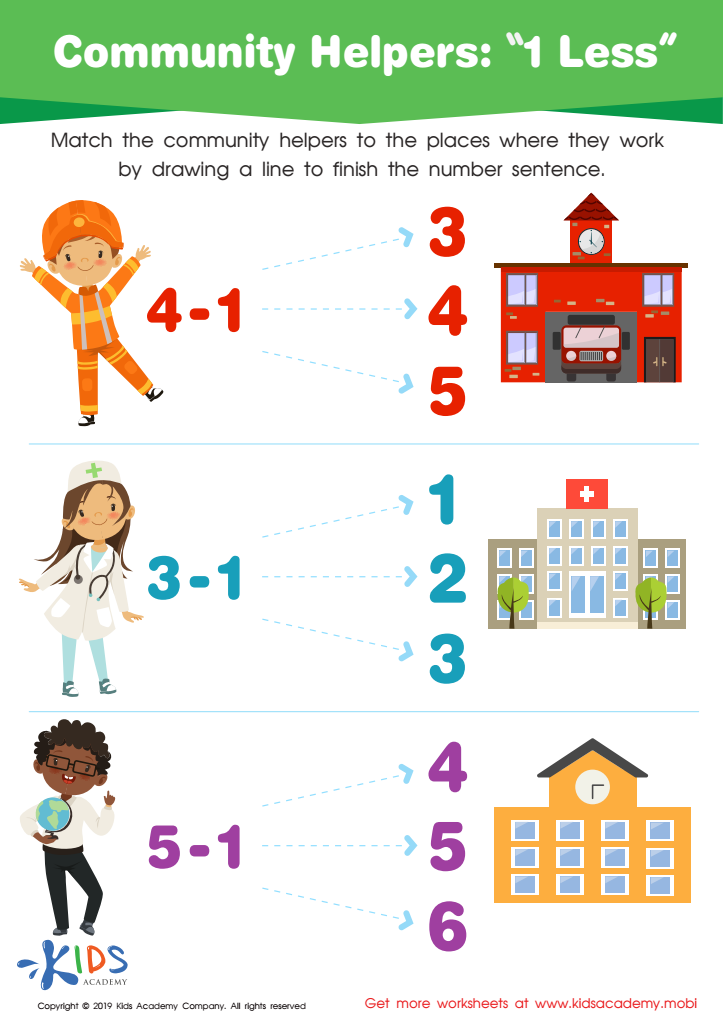
Community Helpers: 1 less Worksheet








Understanding subtraction and addition is crucial for young children aged 3-7 as it forms the foundation for all future mathematical learning and problem-solving abilities. During these formative years, children's brains are highly receptive to learning new concepts, and introducing basic arithmetic helps develop their cognitive skills, including logical thinking, reasoning, and memory.
First, addition and subtraction are not just mathematical operations; they represent ways of understanding and interacting with the world. Children use these skills in everyday activities, such as sharing toys, splitting snacks, or understanding time. When they grasp these concepts early on, they develop a better sense of quantity and number relationships, which are essential for more advanced math topics.
Second, early math skills have been linked to academic success beyond just mathematics. Studies show that proficiency in early arithmetic correlates with higher reading and overall academic achievement. This is because the skills developed—such as pattern recognition, sequencing, and following multi-step instructions—are transferable to other subjects.
Finally, confidence in math at a young age fosters a positive attitude towards learning and intellectual curiosity. When parents and teachers emphasize understanding and make learning fun and engaging through games and practical activities, children are more likely to develop a lifelong love for math, setting them up for success in their educational journey and beyond.








