Visual learning reinforcement Addition Worksheets for Ages 3-7
6 filtered results
-
From - To
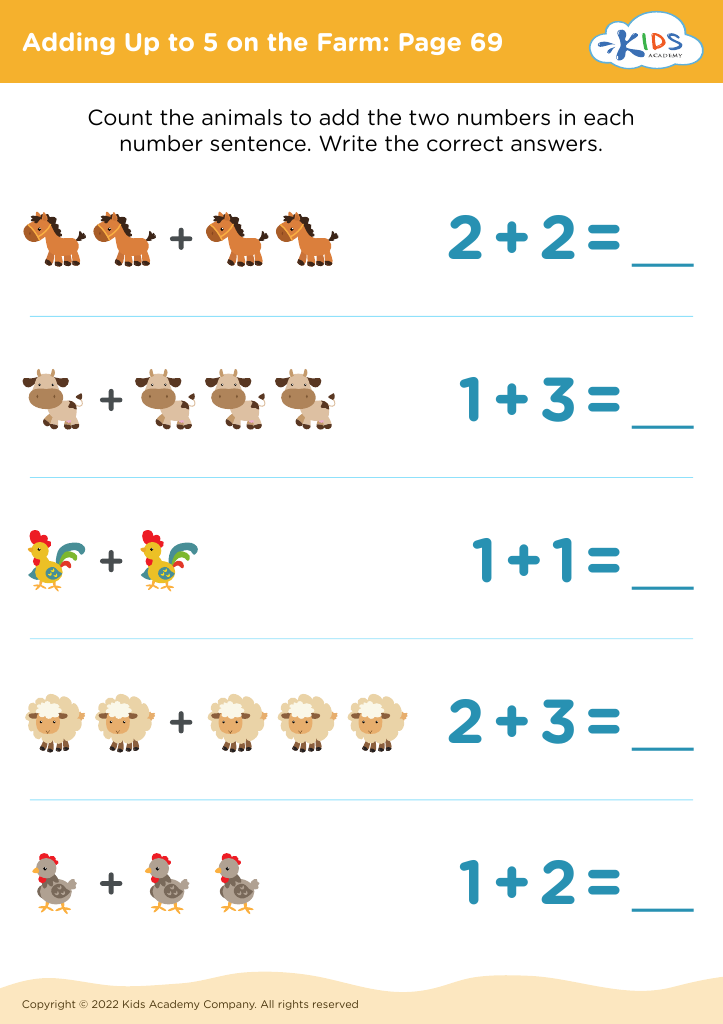
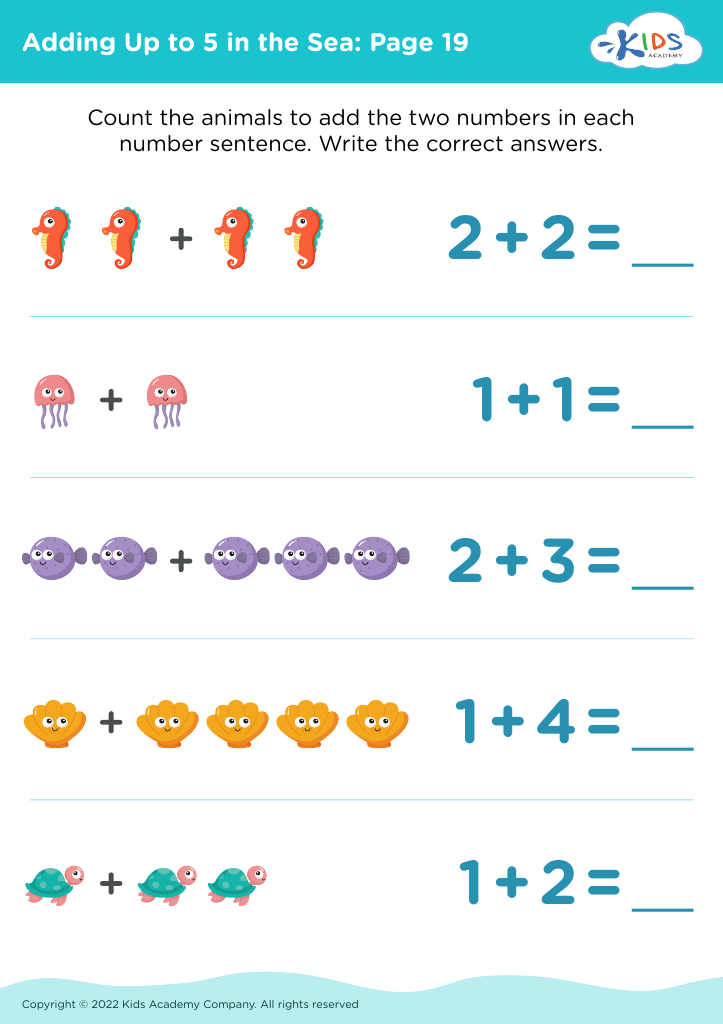
Boost your child’s math skills with our Visual Learning Reinforcement Addition Worksheets for ages 3-7. These engaging and colorful worksheets are designed to capture young learners' attention while solidifying essential addition concepts. Through the use of visual aids and interactive exercises, children will gain confidence in recognizing numbers, counting, and basic addition. Perfect for both classroom and home settings, these worksheets provide a fun, hands-on approach to learning that supports varied learning styles. Help your child master early math skills with ease and enthusiasm, and set a strong foundation for future educational success.
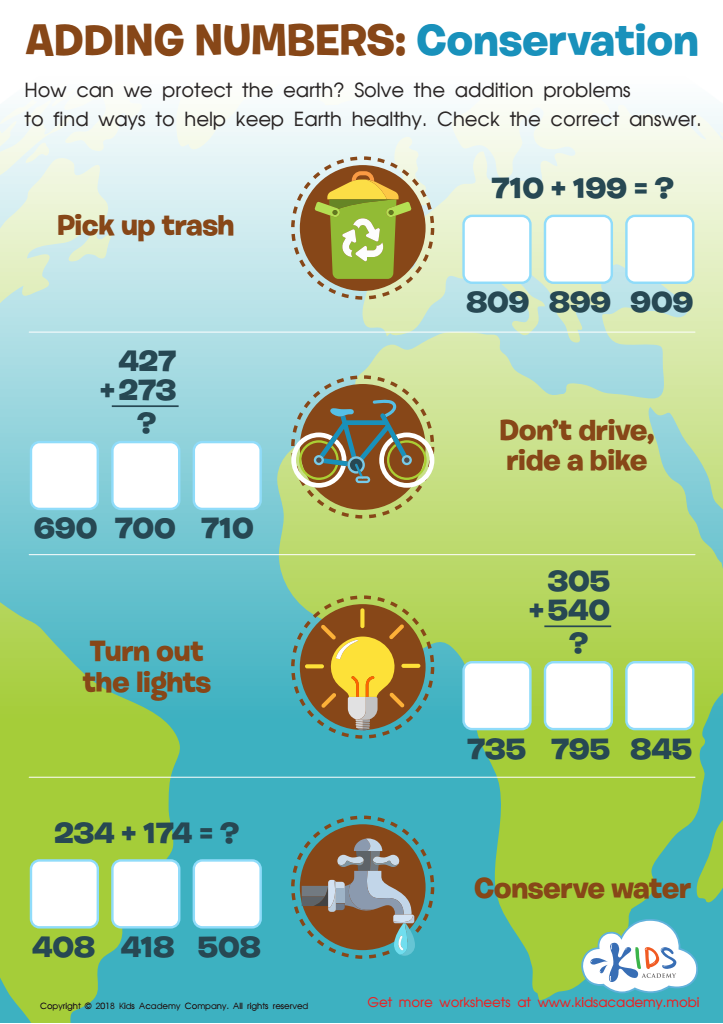
Adding Numbers: Conservation Worksheet
 Assign to My Students
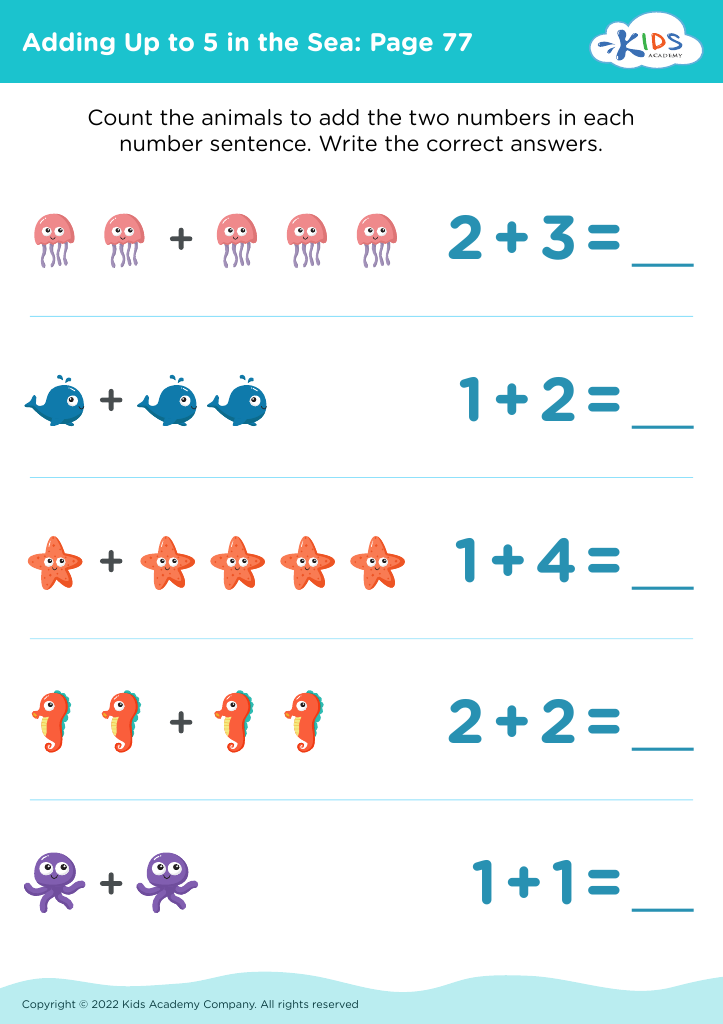
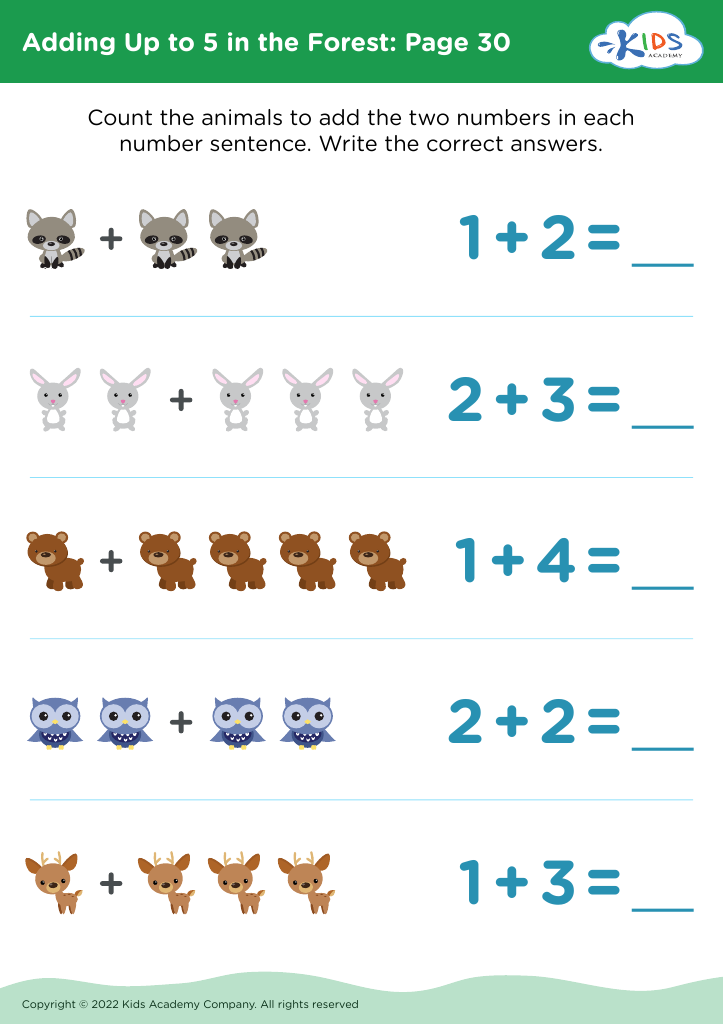
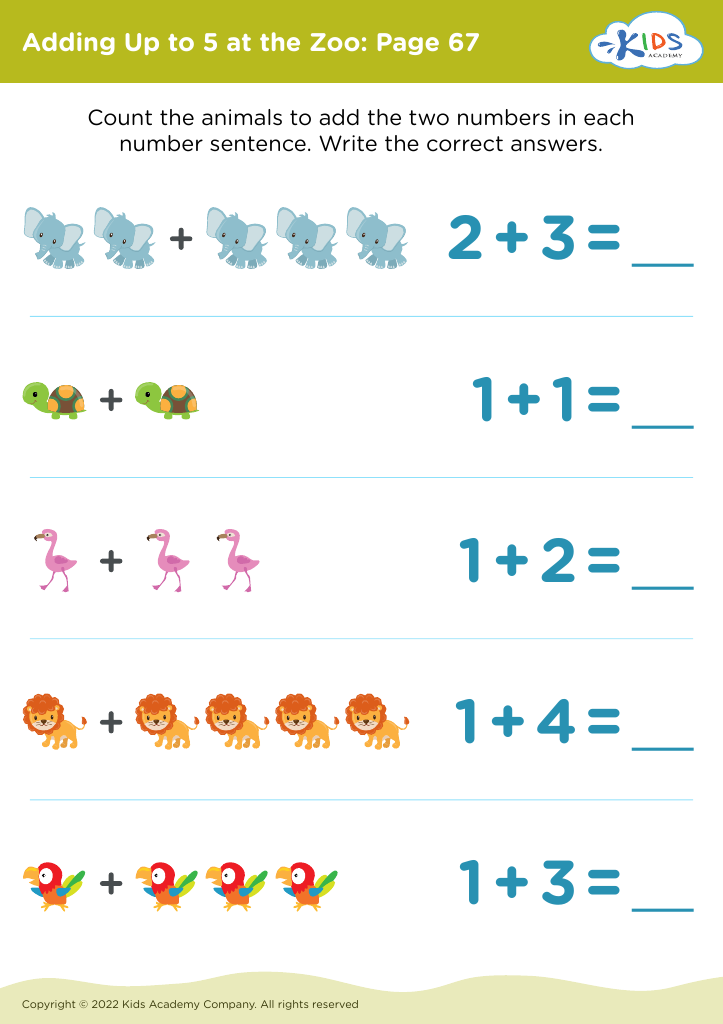








Visual learning reinforcement is essential for children aged 3-7, especially when it comes to teaching foundational skills such as addition. At this age, children are at a crucial developmental stage where their brains are highly receptive to absorbing new information. Visual aids like pictures, diagrams, and colorful manipulatives help make abstract concepts more concrete.
For young learners, addition can initially be an abstract and challenging concept to grasp. Visual learning tools allow children to "see" the math, making it easier for them to understand how numbers combine to create a sum. For example, using objects like counting blocks or illustrated stories with characters adds a relatable narrative that engages their interest and imagination.
Additionally, visual reinforcement caters to various learning styles. Not all children learn effectively through auditory or reading-based methods alone; many are visual learners. By incorporating images and physical objects, teachers and parents can ensure they are meeting the needs of diverse learners.
Moreover, engaging visual tools can increase a child's motivation and enjoyment during learning. Engaged learners are generally more successful. In summary, visual learning reinforcement makes addition more accessible, understandable, and enjoyable for young children, thus setting a strong foundation for their future mathematical learning.








