Visual-motor skills Addition Worksheets for Ages 3-7
4 filtered results
-
From - To
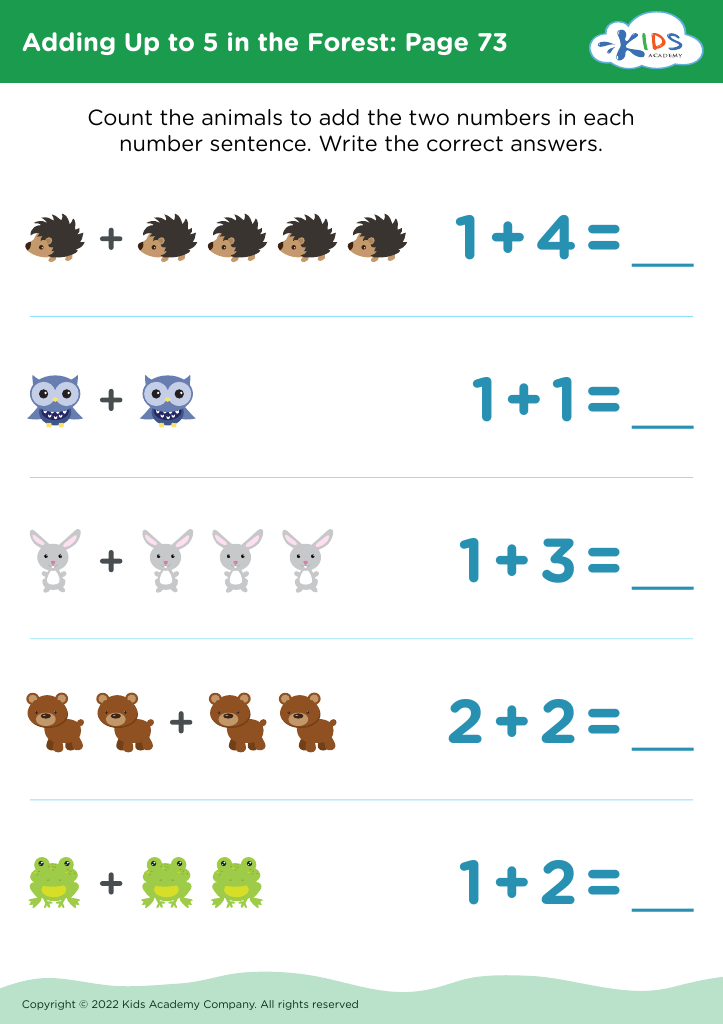
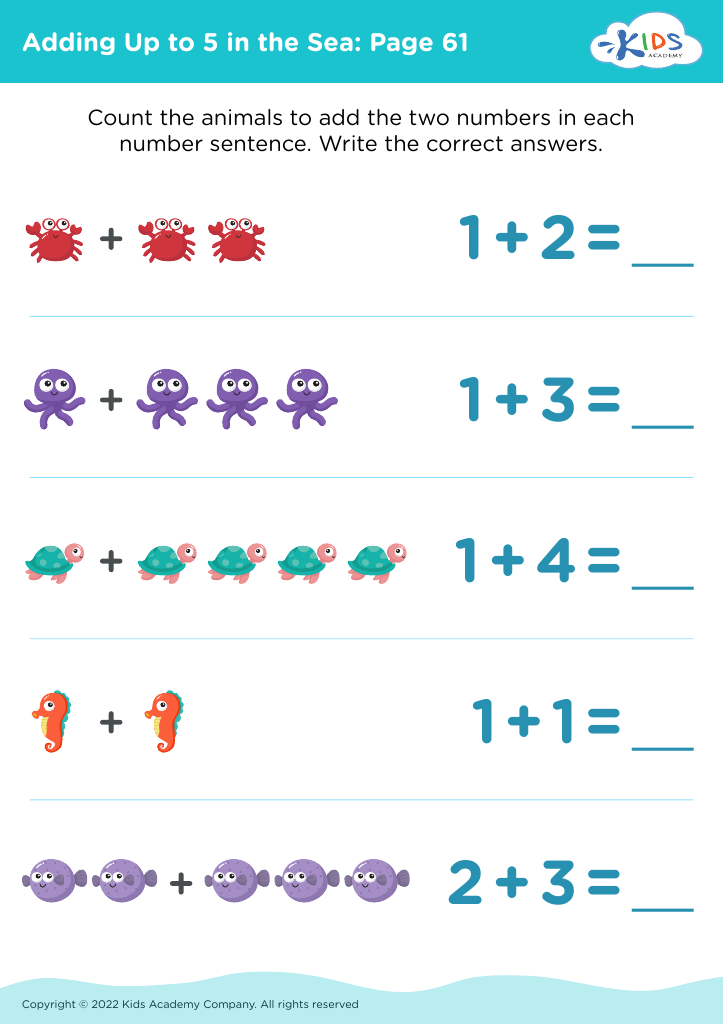
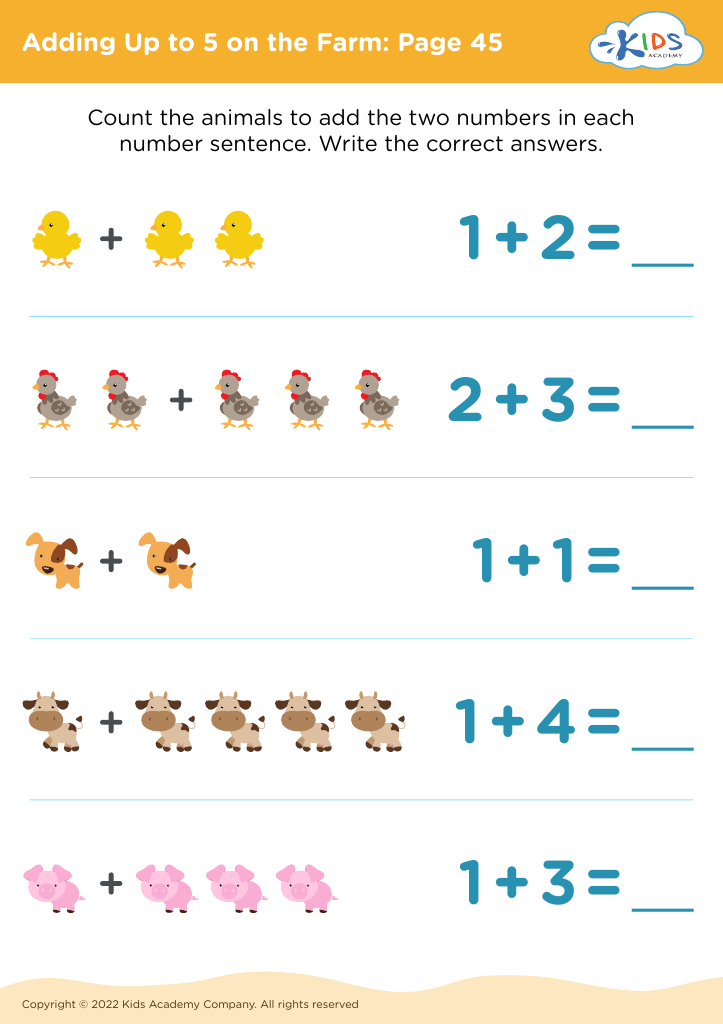
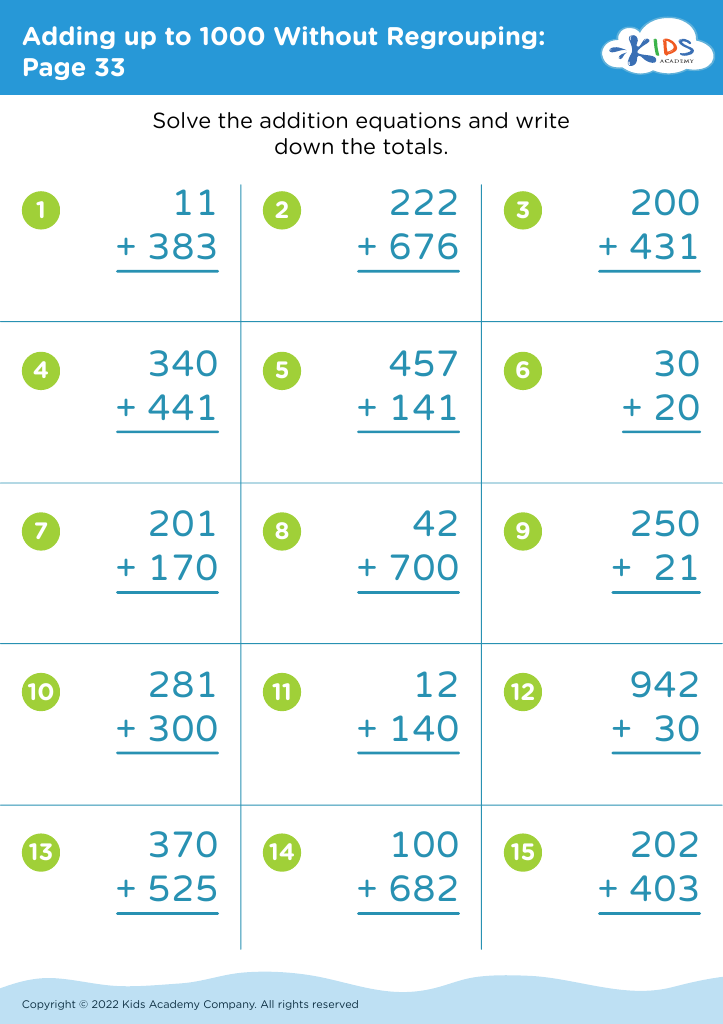
Enhance your child's mathematical journey with our Visual-Motor Skills Addition Worksheets designed specifically for ages 3-7. These worksheets combine fun and learning to strengthen essential visual-motor skills while introducing basic addition concepts. Engaging exercises feature colorful illustrations that captivate young minds, making math practice enjoyable and effective. Through tracing, drawing, and matching activities, children improve hand-eye coordination and fine motor abilities crucial for academic success. Whether at home or in the classroom, our worksheets provide a solid foundation for confident, future-ready learners. Boost your child’s confidence and competence in math with our expertly crafted resources.








Visual-motor skills involve the coordination of visual perception and motor control, which are essential for young children's overall development, particularly between the ages of 3-7. For parents and teachers, fostering visual-motor skills during these formative years is crucial as it lays the foundation for several fundamental abilities.
Firstly, strong visual-motor skills are critical for academic readiness. They underpin a child's ability to perform tasks such as writing, drawing, and cutting with scissors—skills necessary for classroom success. For example, copying shapes, letters, or numbers from a board to a notebook integrates visual tracking with hand movements, directly impacting literacy and numeracy development.
Secondly, these skills enhance fine motor control and hand-eye coordination, promoting independence in daily activities like dressing, eating, and self-care. Effective visual-motor integration enables children to manipulate small objects with precision, supporting practical life skills.
Additionally, visual-motor skills contribute to cognitive and physical development. They involve problem-solving, planning, and spatial relations, strengthening neural pathways that are fundamental for more complex tasks. Improved visual-motor integration can also help with physical activities and sports, fostering a healthy and active lifestyle.
Hence, nurturing visual-motor skills between ages 3-7 equips children with the necessary tools for both academic and functional success, enabling them to navigate their environment confidently and effectively.








