Fine Motor Skills Fractions of Shapes Worksheets for Ages 3-7
7 filtered results
-
From - To
Enhance your child's fine motor skills while introducing them to the concept of fractions with our engaging "Fractions of Shapes" worksheets designed for ages 3-7. These thoughtfully crafted activities not only promote an understanding of shapes and fractions but also improve hand-eye coordination and dexterity. Through fun exercises like tracing, coloring, and cutting, children will develop essential skills that lay the foundation for future learning. Our colorful and interactive worksheets make math enjoyable, ensuring that your little ones are excited about exploring the world of fractions. Perfect for home or classroom use, they provide a seamless blend of education and play.
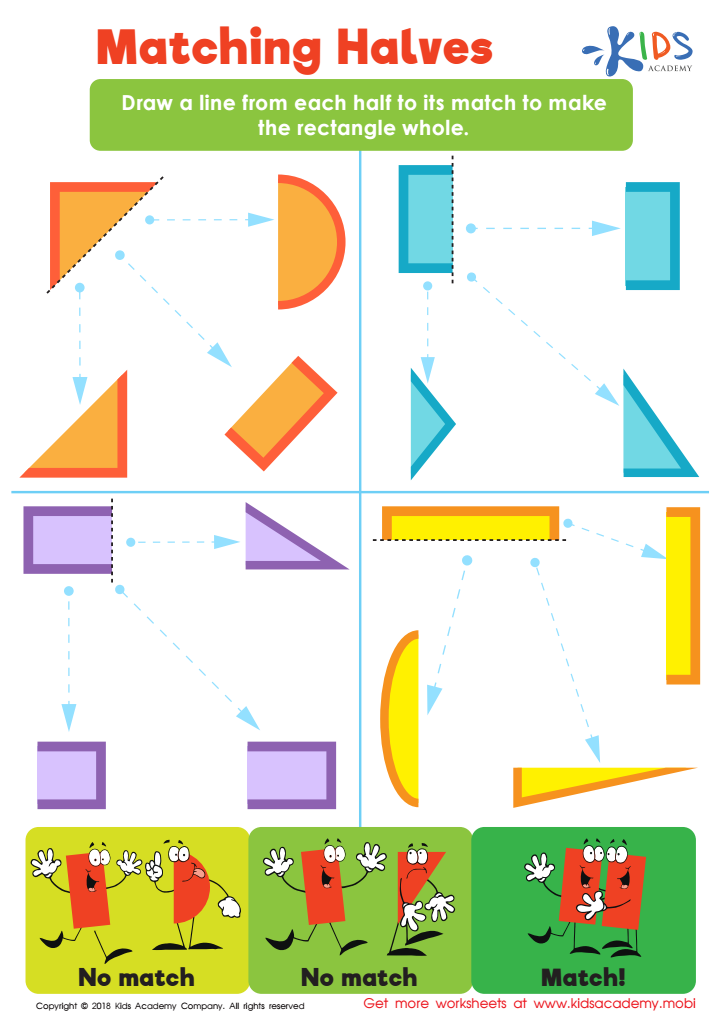
Matching Halves Worksheet
 Assign to My Students
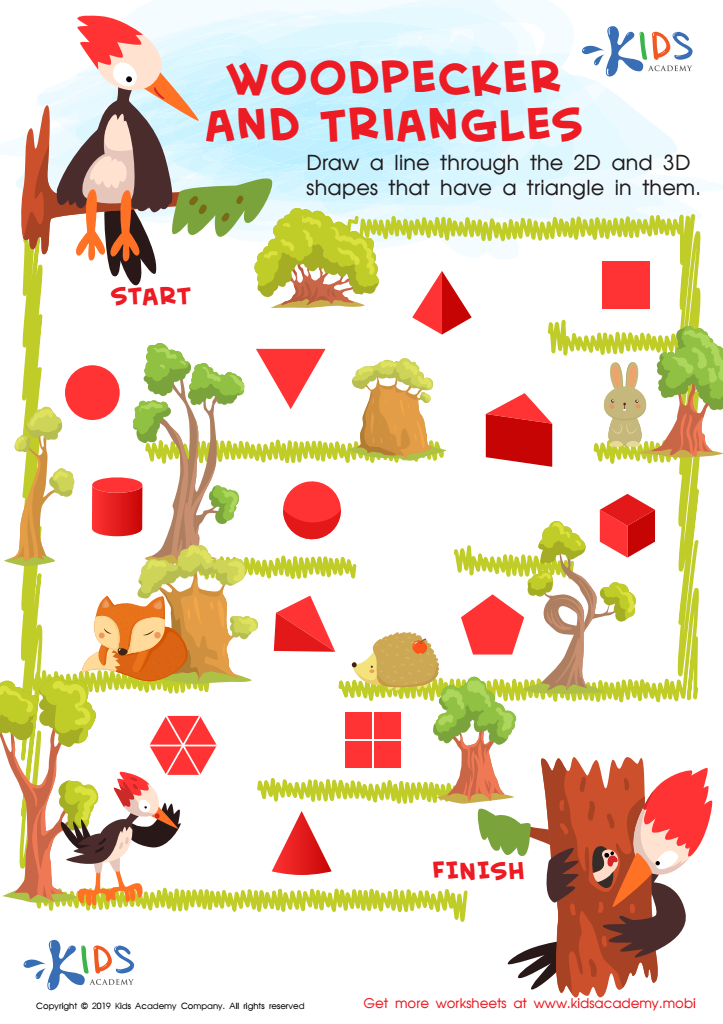
Woodpecker and Triangles Worksheet
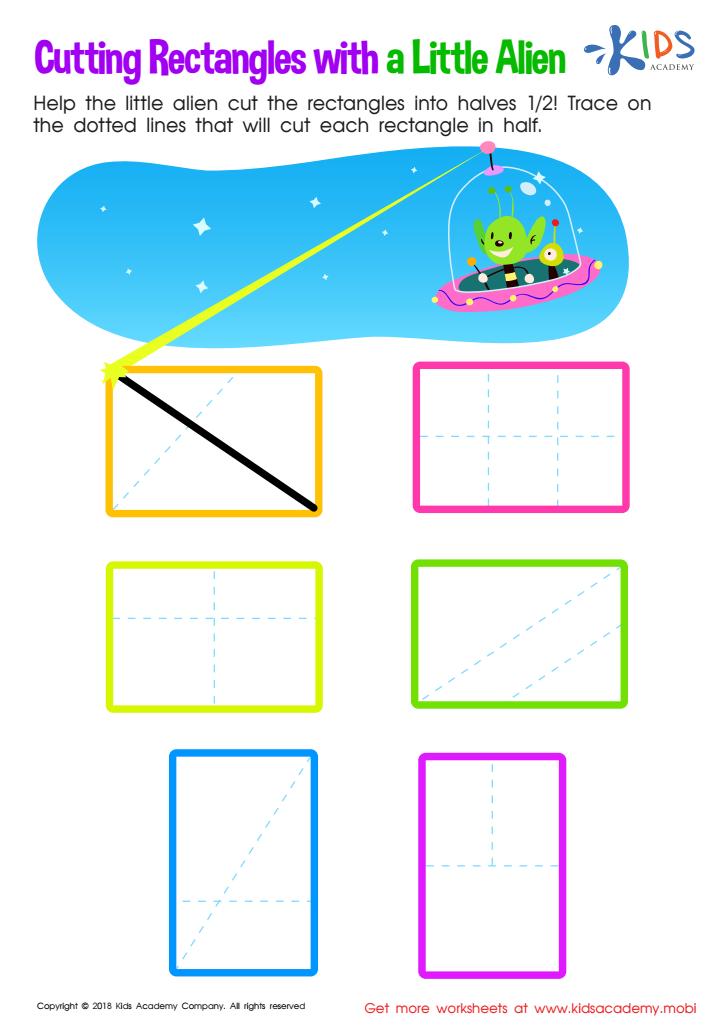
Cutting Rectangles with Alien Worksheet
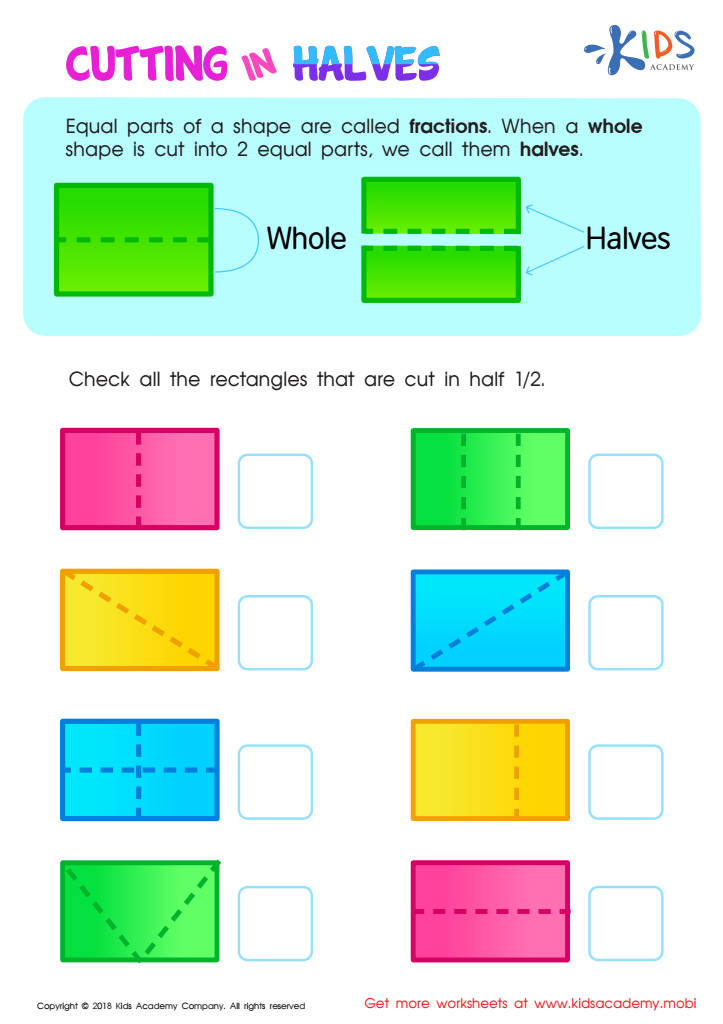
Cutting in Halves Worksheet
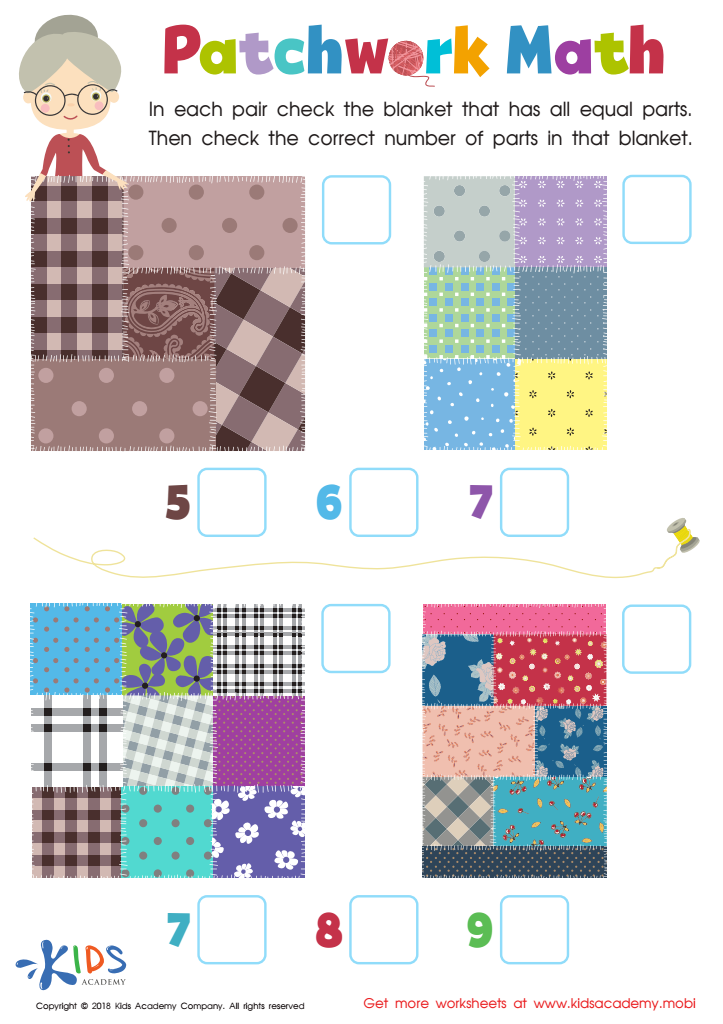
Patchwork Math Worksheet
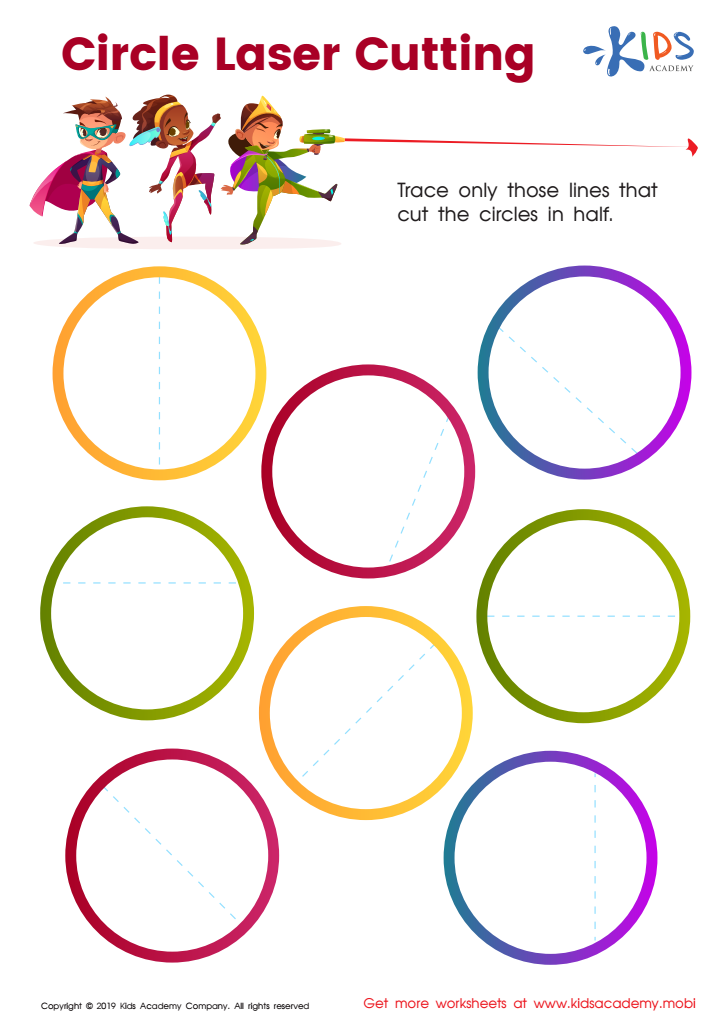
Circle Laser Cutting Worksheet
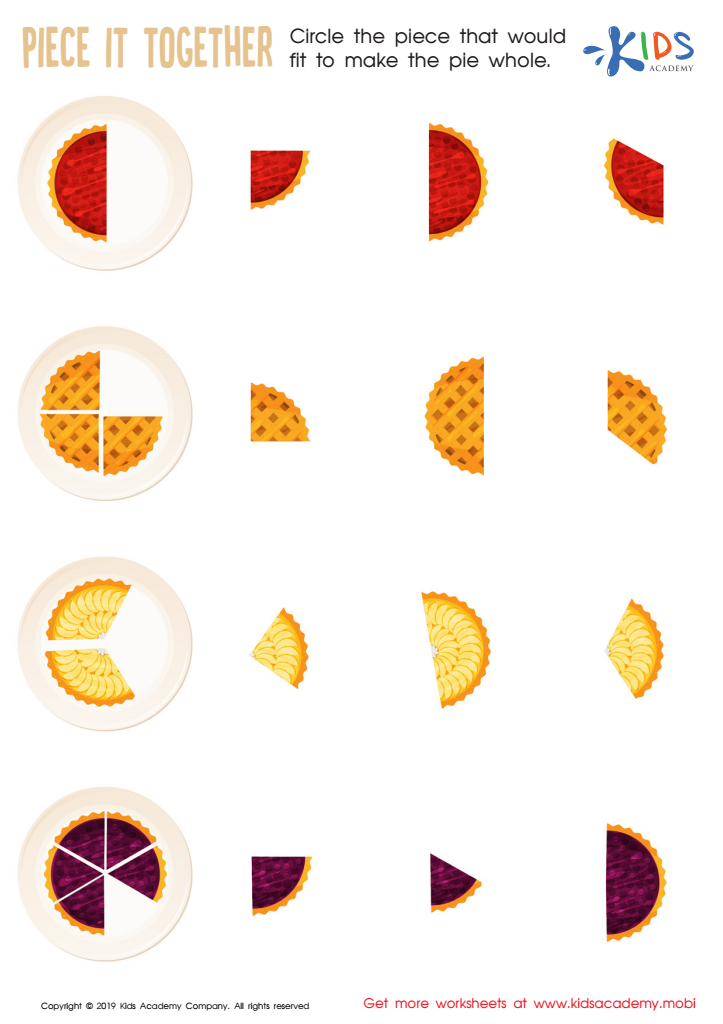
Piece it together Worksheet








Fine motor skills are crucial for young children's overall development, particularly when it comes to their ability to engage with and understand concepts in mathematics, like fractions of shapes. For children aged 3-7, developing these skills lays the foundation for more complex tasks, from writing and drawing to constructing and problem-solving.
When children manipulate shapes, whether through cutting, folding, or assembling, they enhance their fine motor coordination. This physical engagement helps to reinforce abstract mathematical concepts, such as understanding fractions. For instance, when a child divides a circle into halves or quarters using scissors, they not only practice their cutting skills but also gain a tangible grasp of fractions. This hands-on exposure makes difficult concepts more relatable and easier to comprehend.
Additionally, these skills promote independence and confidence in problem-solving. Parents and teachers play a vital role in facilitating activities that encourage fine motor development through interactive and playful learning experiences. When children gain proficiency in managing small movements, they are better equipped to tackle challenges across various disciplines, fostering a lifelong love for learning and a solid foundation in mathematics. Encouraging fine motor skills, therefore, is essential for nurturing well-rounded, capable learners.