Shape Recognition Fractions of Shapes Worksheets for Ages 3-7
9 filtered results
-
From - To
Discover our Shape Recognition Fractions of Shapes Worksheets designed for ages 3-7 at Kids Academy. These worksheets provide an engaging way to introduce young learners to the concept of fractions through shape recognition. Each activity helps children identify different shapes and understand how they can be divided into fractions. Our colorful and well-structured exercises are tailored to develop critical thinking and math skills, making learning both effective and enjoyable. Perfect for early graders, these worksheets support foundational geometry knowledge and fraction basics, setting the stage for future mathematical success. Explore and download now!
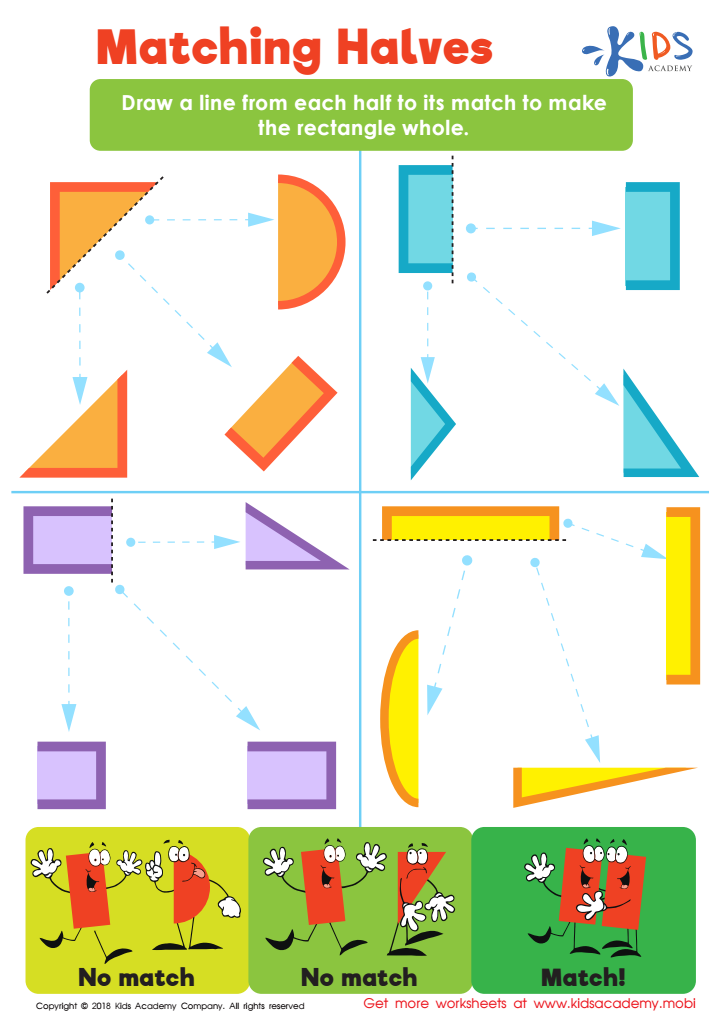
Matching Halves Worksheet
 Assign to My Students
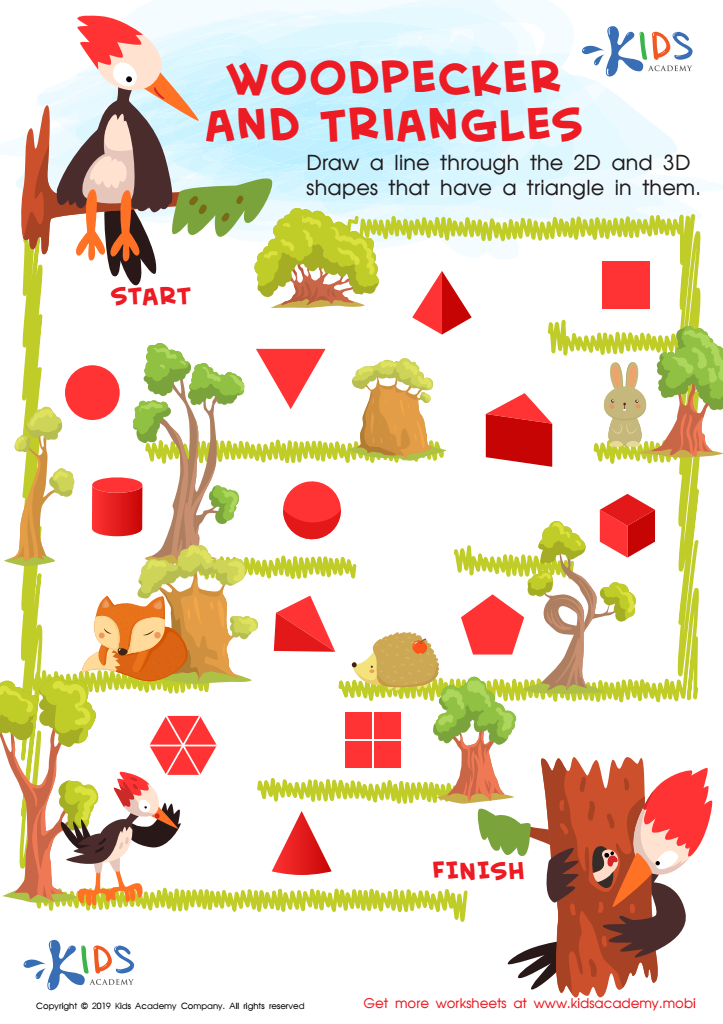
Woodpecker and Triangles Worksheet
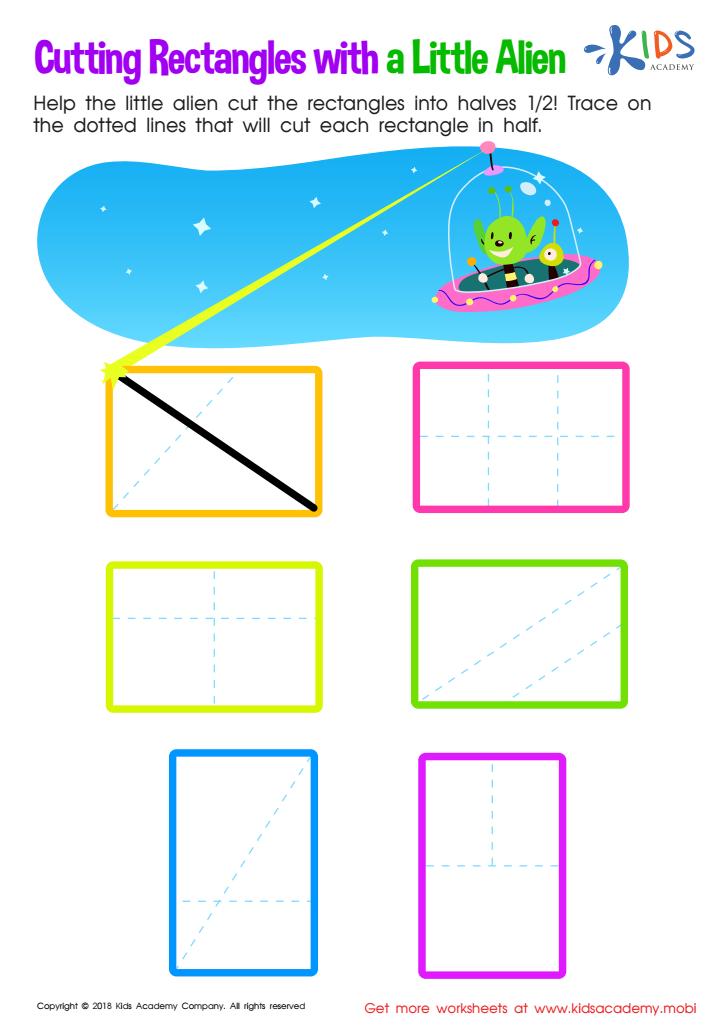
Cutting Rectangles with Alien Worksheet
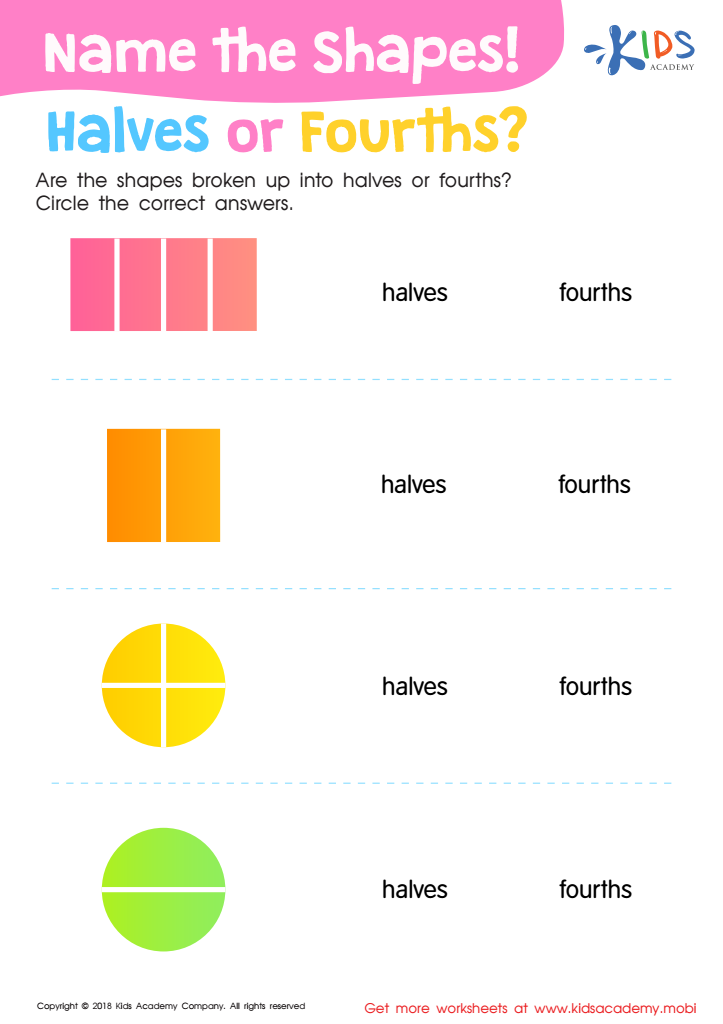
Name the Shapes Halves or Fourths? Worksheet
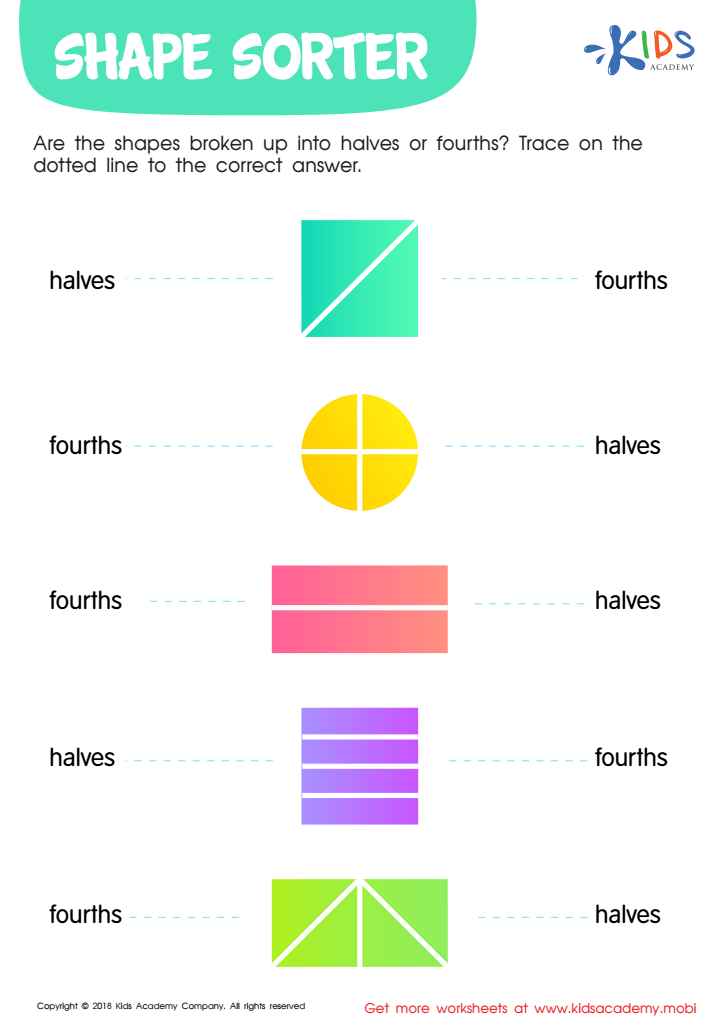
Shape Sorter Worksheet
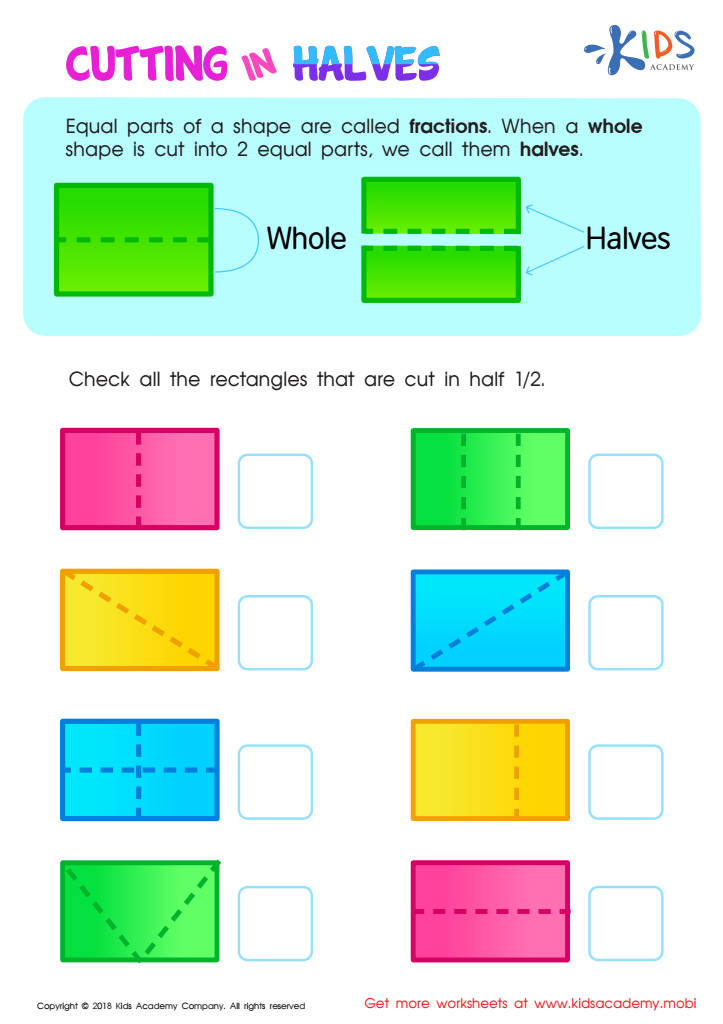
Cutting in Halves Worksheet
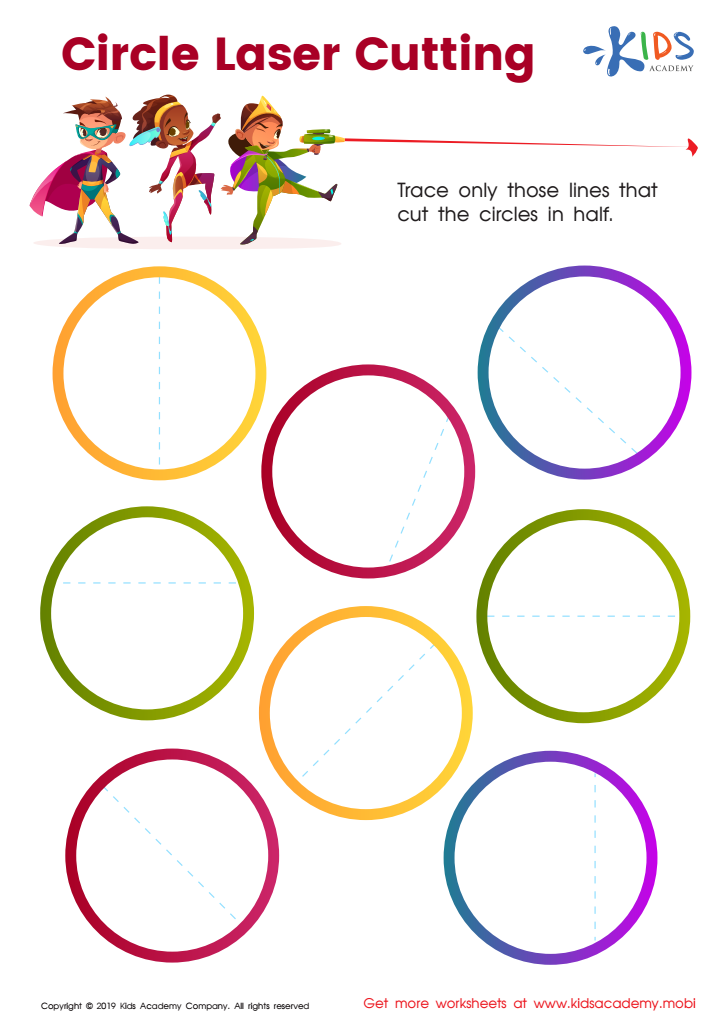
Circle Laser Cutting Worksheet
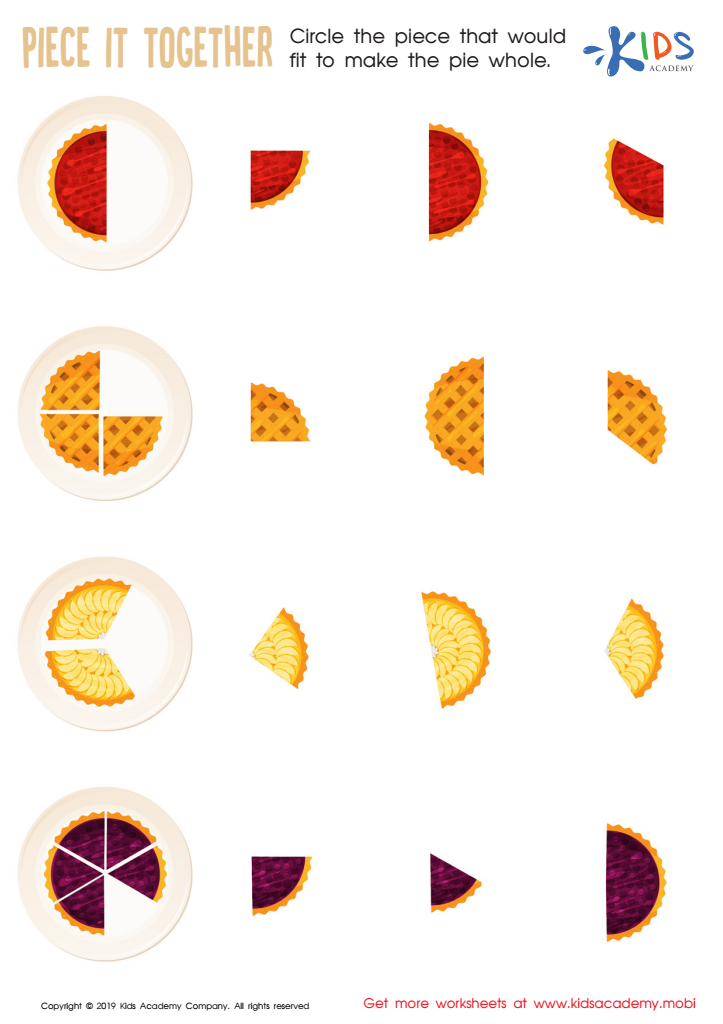
Piece it together Worksheet
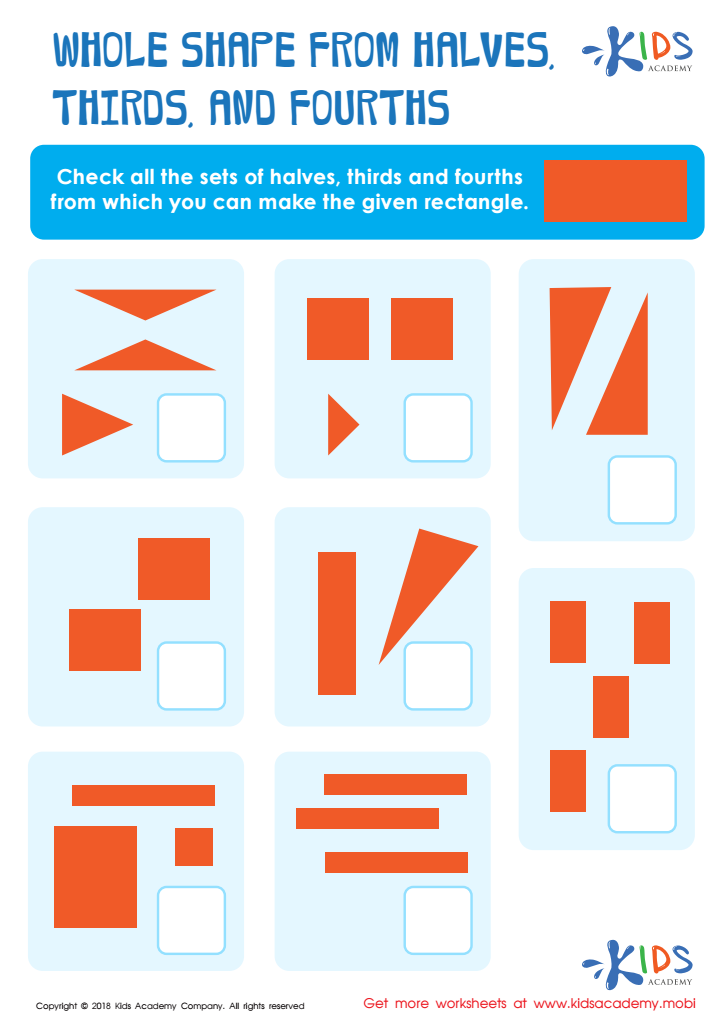
Whole Shape from Halves, Thirds and Fourths Worksheet








Introducing shape recognition and fractions of shapes to children aged 3-7 lays a foundational block for their cognitive and mathematical development. At this age, young minds are incredibly receptive to learning through playful interaction and visual stimulants. Teaching them to recognize shapes helps in understanding geometry, an essential math skill that underpins more complex concepts they will encounter later in school.
Shape recognition enhances children's spatial awareness. They begin to notice andcategorize the world around them, improving their observational skills and attention to detail. This doesn't just aid in math but also in reading and writing, as recognizing different letters and combinations is inherently a shape recognition exercise.
Fractions of shapes, even in simple forms, introduce the concept of part-whole relationships. For young children, this can be as basic as dividing a shape into halves or quarters. Such exercises make the abstract concept of fractions tangible and understandable. Early exposure to these ideas fosters a positive attitude toward math, reducing anxiety and building confidence as they progress academically.
When parents and teachers invest time in activities involving shape recognition and fractions, they are not only nurturing mathematical skills but also critical thinking, problem-solving, and fine motor coordination. These skills collectively provide a well-rounded intellectual growth pathway, preparing children for the structured learning environment ahead.