Spatial reasoning Geometry Worksheets for Ages 3-7
4 filtered results
-
From - To
Discover our engaging Spatial Reasoning Geometry Worksheets designed for children ages 3-7! These worksheets aim to enhance young learners' understanding of shapes, patterns, and spatial relationships through fun activities. Featuring colorful illustrations and engaging exercises, children will explore geometric concepts while developing critical thinking skills. Our resources are carefully crafted to foster creativity and confidence in early learners as they manipulate and visualize spaces. Perfect for both home and classroom use, these worksheets will help kindle a love for math and geometry in young minds, ensuring foundational knowledge for future learning. Join us in making spatial reasoning an enjoyable experience!
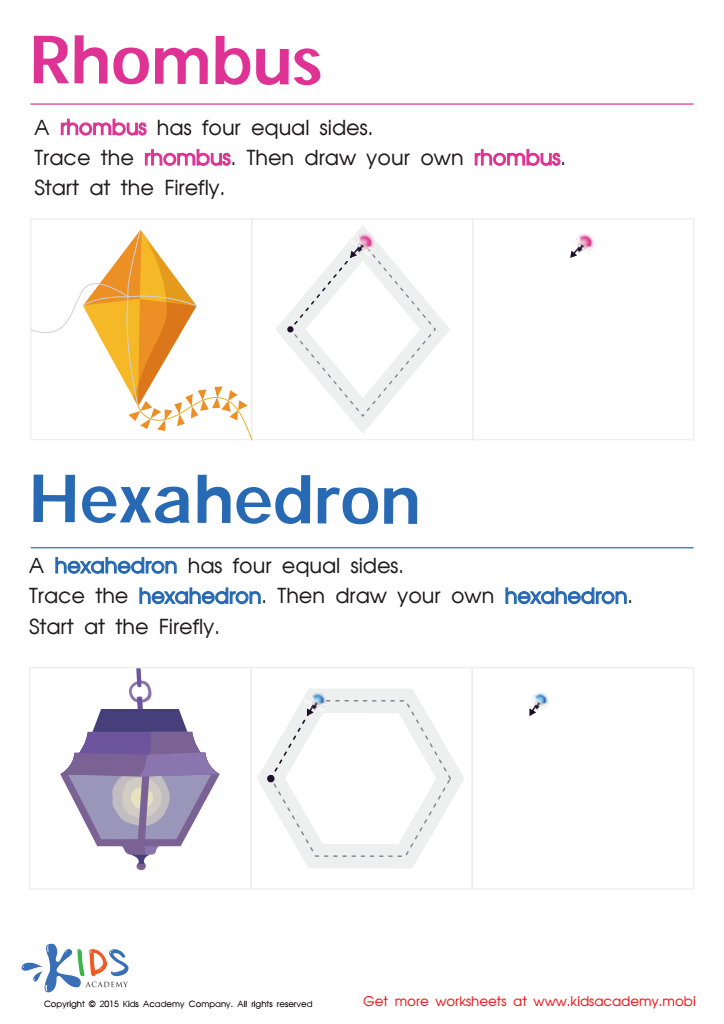
Draw a Rhombus And a Hexahedron Printable
 Assign to My Students











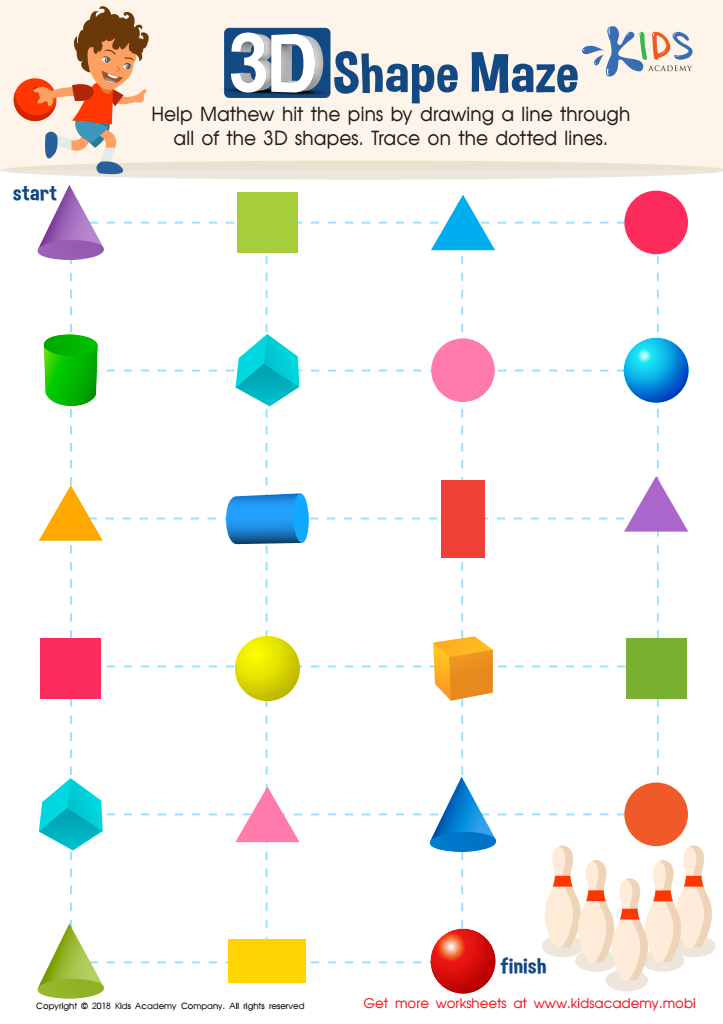
Shapes Maze Geometry Worksheet
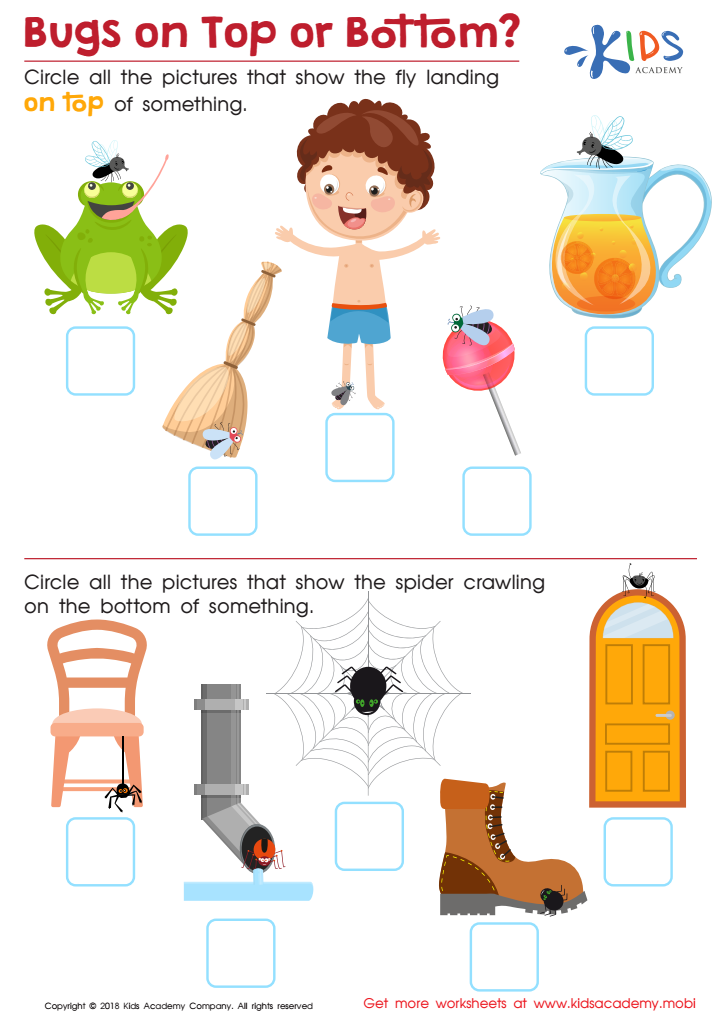
Bugs on Top or Bottom? Worksheet
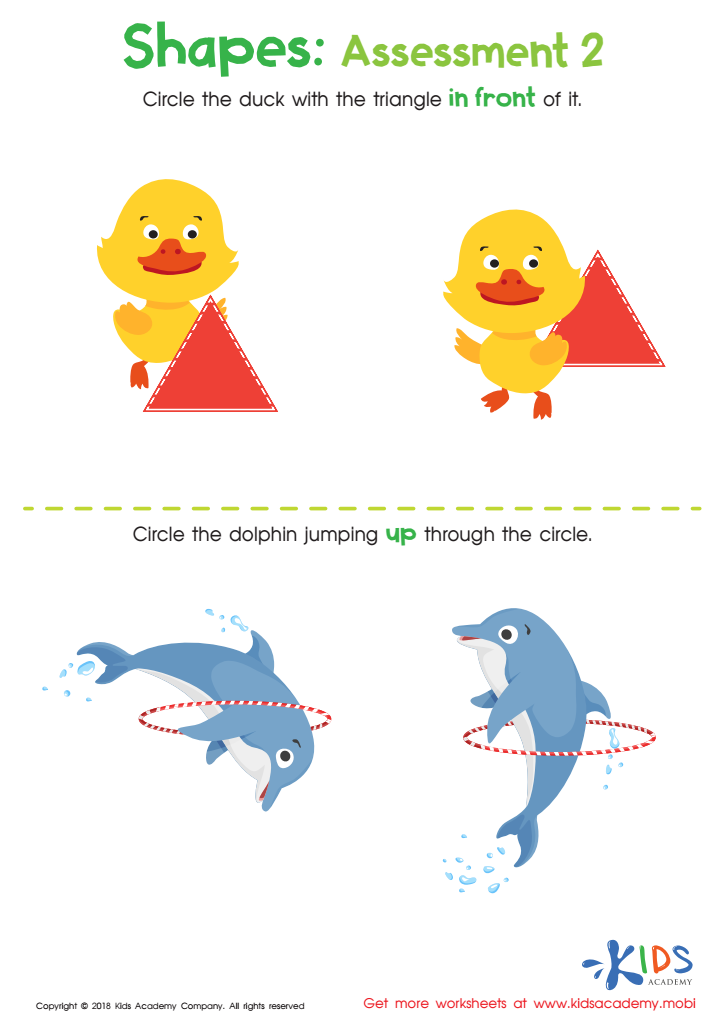
Geometry – Assessment 2 Worksheet








Spatial reasoning and geometry play a crucial role in the cognitive and physical development of children aged 3 to 7. During these formative years, children's ability to perceive and manipulate shapes and spaces underpins many learning areas, including mathematics, science, and critical thinking skills.
Fostering strong spatial reasoning skills enhances problem-solving abilities, as it allows children to visualize, analyze, and logically navigate their surroundings. Engaging in geometrical concepts helps them to understand the world better, from recognizing patterns to comprehending the relationships between objects. This foundational knowledge supports not only early math skills but also aids in literacy, as spatial understanding assists with following instructions, understanding maps, and even interpreting stories.
Moreover, engaging parents and teachers in this aspect of development creates enriching learning environments. Incorporating spatial reasoning activities in daily routines—like building blocks, puzzles, or even art projects—makes learning enjoyable and effective. By prioritizing these skills, adults contribute to a child's overall cognitive growth, laying a strong foundation for future academic success. Thus, recognizing the value of spatial reasoning in geometry helps parents and teachers encourage inquisitiveness and enhances lifelong learning.








