Filters

31 filtered results

Clear all filters
Favorites
With answer key
Interactive

31 filtered results

Difficulty Level

Grade


Check out this FREE Trial Lesson on Numbers for age 3-7!

Add using Place Value

Favorites
With answer key
Interactive
  • 3-7
  • Addition Practice
  • Numbers
Place Value: Chapter 2 Worksheet

Place Value: Chapter 2 Worksheet

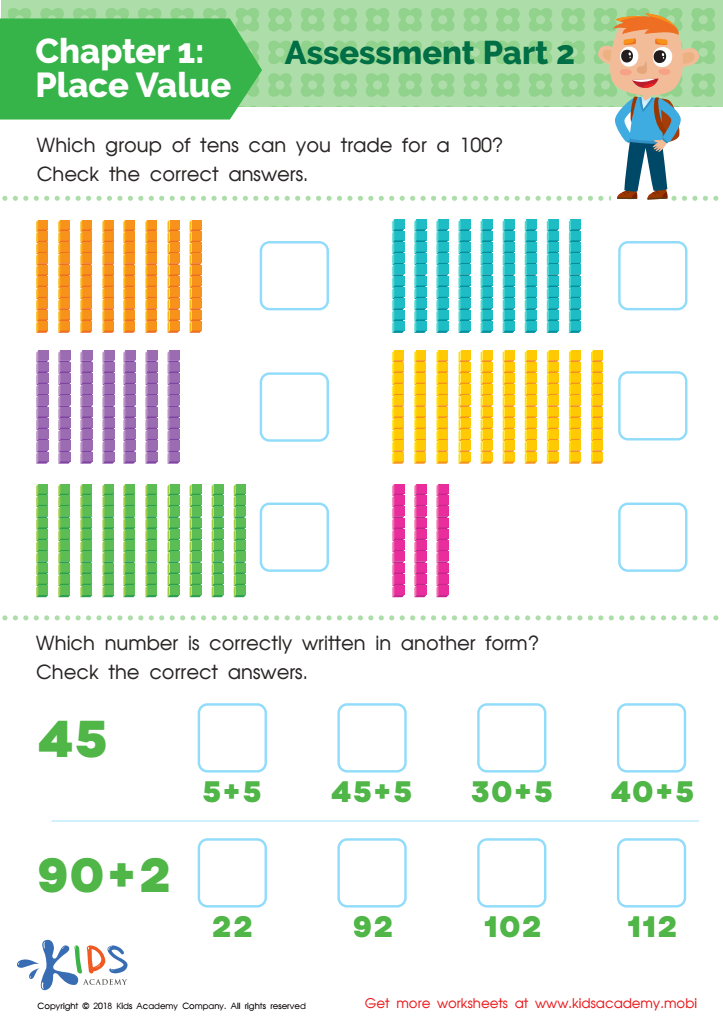
Place value is a key math topic. If your child needs more practice, use this worksheet. It challenges them to figure out which group of tens equals a 100, then check the answer and move to the next question.
Place Value: Chapter 2 Worksheet
Worksheet
Dino Addition Worksheet

Dino Addition Worksheet

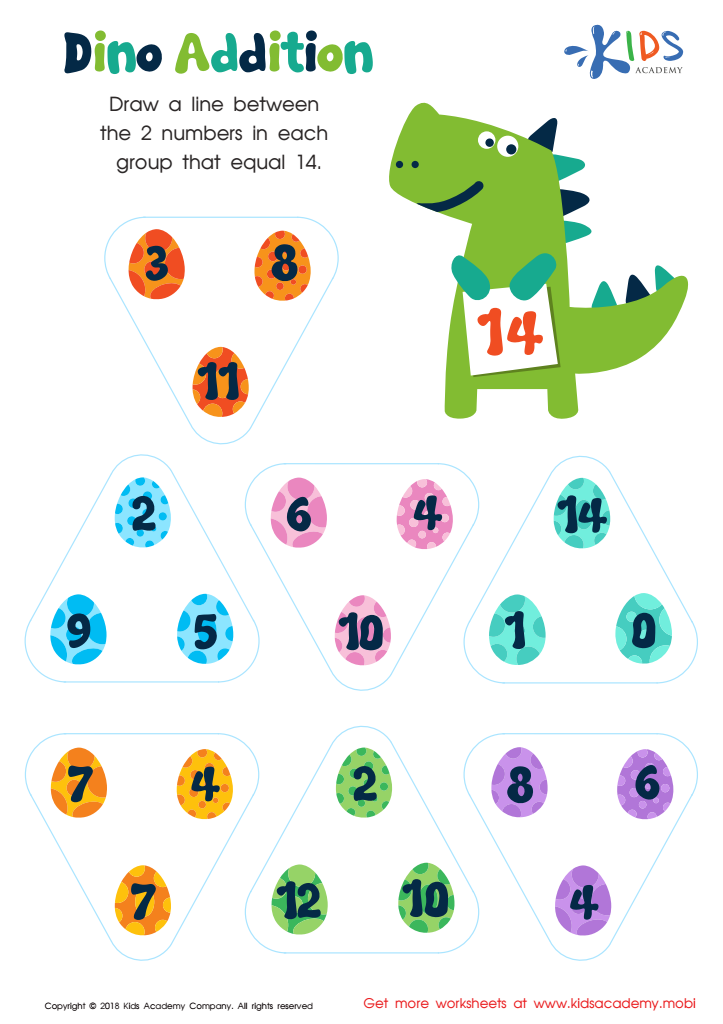
Kids can have fun with math with this cute PDF worksheet! Each triangle contains three eggs; by adding pairs of eggs together, kids can find the right combination that equals 14 and draw a line linking them. The goal is to help our playful dinosaur find the right eggs to make 14! It's a great way to practice addition and have a motivating purpose.
Dino Addition Worksheet
Worksheet
Addition and Subtraction Within 1: Assessment 2 Worksheet

Addition and Subtraction Within 1: Assessment 2 Worksheet

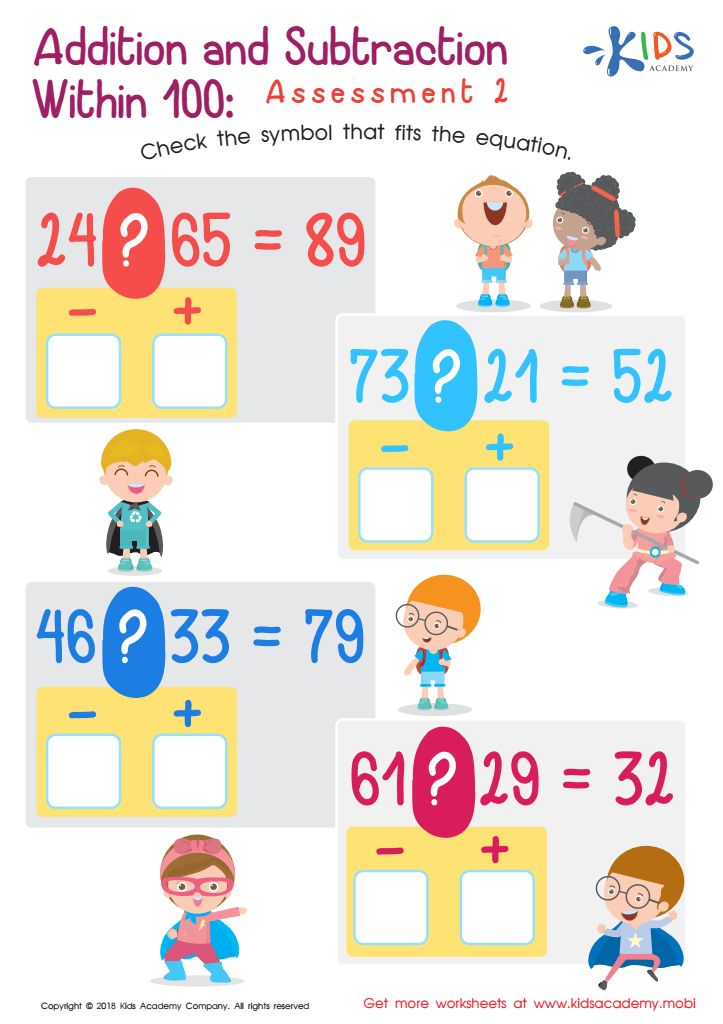
This worksheet is a great tool to help your students learn addition and subtraction. It contains four equations in a printable pdf. Ask your students to review the equation and determine if the symbol between them is a '+' or '-'. Guide them in selecting the correct symbols for each equation.
Addition and Subtraction Within 1: Assessment 2 Worksheet
Worksheet
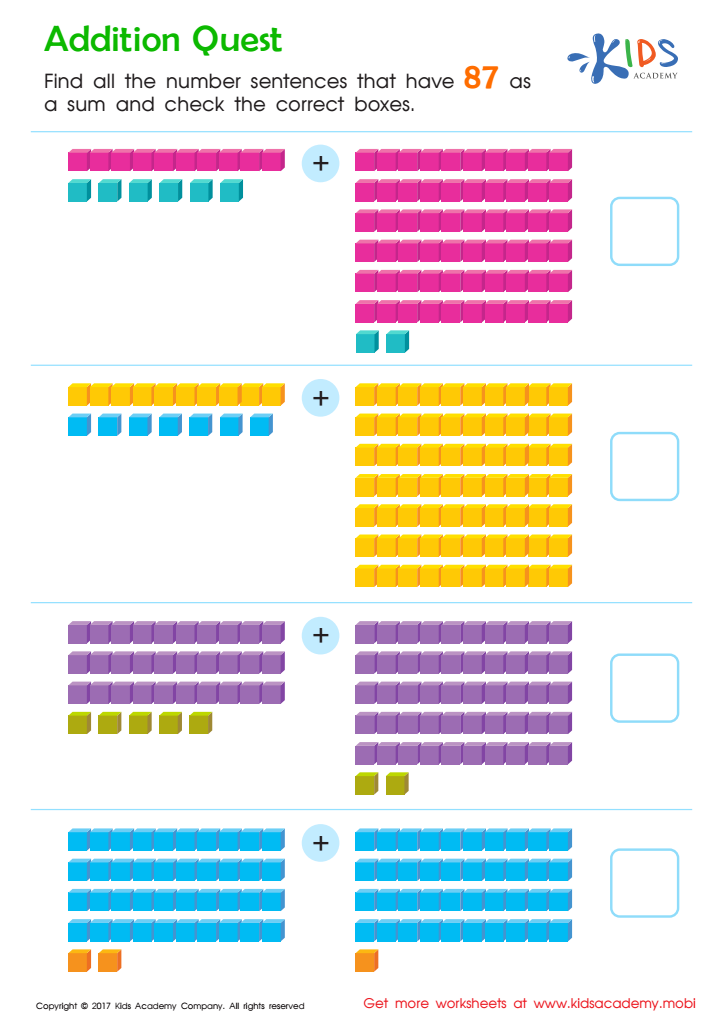
Addition Quest Worksheet: Part 1

Addition Quest Worksheet: Part 1

Send your child on a mission to find the equations that equal 87 with base ten blocks! Download the worksheet to help them add each grouping of blocks and check the correct boxes for the answers. Fun and educational!
Addition Quest Worksheet: Part 1
Worksheet
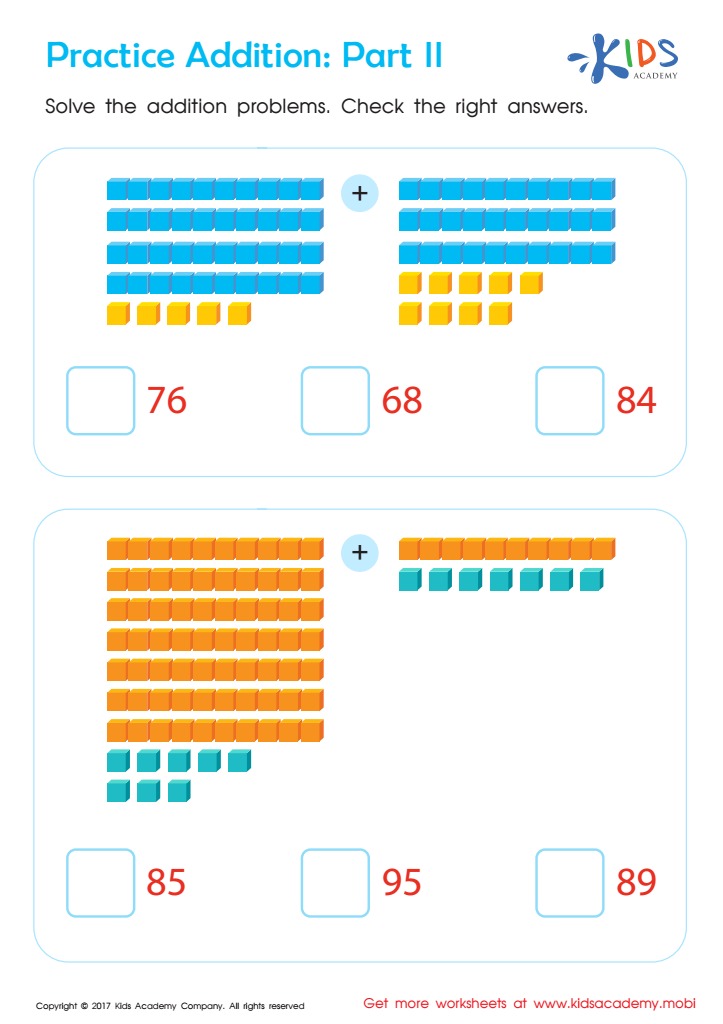
Practice Addition: Part 2 Worksheet

Practice Addition: Part 2 Worksheet

Try this printable worksheet to practice addition! It contains longer, tougher addition equations for 1st graders. Colorful blocks give kids the opportunity to visualize how big numbers are combined. Multiple choice answers help kids gain confidence in problem solving.
Practice Addition: Part 2 Worksheet
Worksheet
Falling Leaves Worksheet

Falling Leaves Worksheet

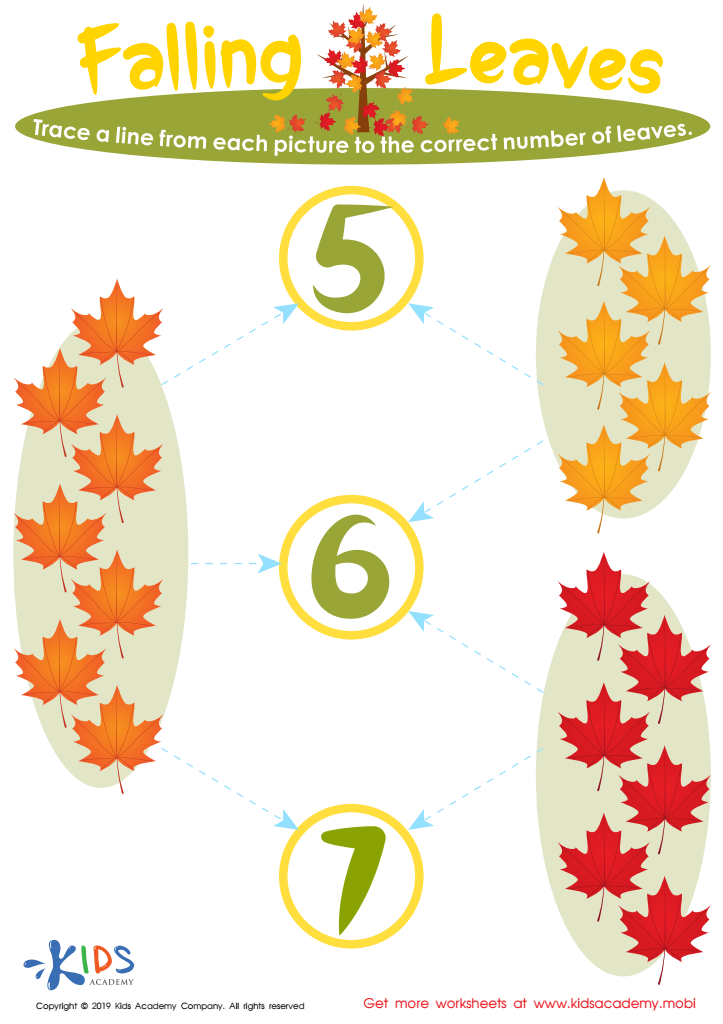
Do your kids know the seasons? Ask them to name each one, then test their counting skills with a fun worksheet. Have them count from 1 to 10, then trace a line from each picture to the corresponding number of leaves. It's a great way to check their counting ability!
Falling Leaves Worksheet
Worksheet
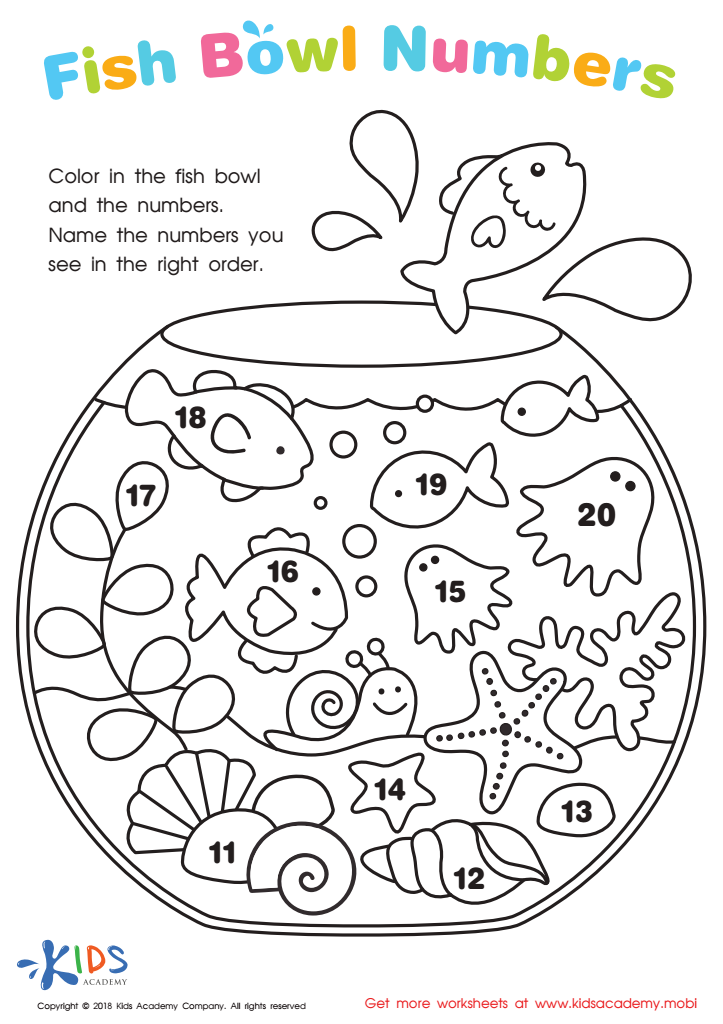
Fish Bowl Numbers Worksheet

Fish Bowl Numbers Worksheet

Let your kids count and color with this fun exercise! Ask them to read out the numbers in the fish bowl in order, then help them pick out colors for the fish bowl and numbers. An easy-peasy activity for kids who can count - they'll have lots of fun!
Download (PDF)
Assign to My Students
Fish Bowl Numbers Worksheet
Worksheet


Parents and teachers should care about addition practice for children aged 3-7 because it lays a critical foundation for future mathematical understanding and overall cognitive development. Early exposure to numbers and basic math concepts fosters a child’s numerical sense, which is essential for everyday problem-solving tasks, such as counting objects, making change, or understanding time.

At this age, children’s minds are particularly receptive to learning, making it an ideal time to introduce mathematical concepts in a playful and engaging manner. Addition practice enhances not only mathematical skills but also encourages critical thinking and logical reasoning. When children engage with interactive addition activities, they develop perseverance and motivation, which can translate to success across various subjects.

Moreover, practicing addition supports fine motor skills through hands-on activities, contributing to physical development alongside cognitive growth. Positive experiences with numbers can build a child’s confidence, reducing math anxiety as they progress through school. By integrating addition practice into daily routines, whether through games, stories, or hands-on activities, parents and teachers foster a nurturing environment that champions learning and discovery, ultimately preparing children for more complex mathematics in the future.