Basic Arithmetic Numbers Worksheets for Ages 3-7
6 filtered results
-
From - To
Discover our engaging Basic Arithmetic Numbers Worksheets designed specifically for children ages 3-7! These fun and interactive worksheets introduce young learners to essential math concepts such as addition and subtraction, fostering essential skills in a playful, approachable way. Each worksheet features colorful illustrations and easy-to-follow instructions, making learning both enjoyable and effective. Perfect for homeschooling parents and educators, our resources encourage children to explore numbers through practice exercises that enhance their understanding. Start your child’s mathematical journey today with our curated collection of basic arithmetic worksheets that will build confidence and excitement in early numeracy skills!
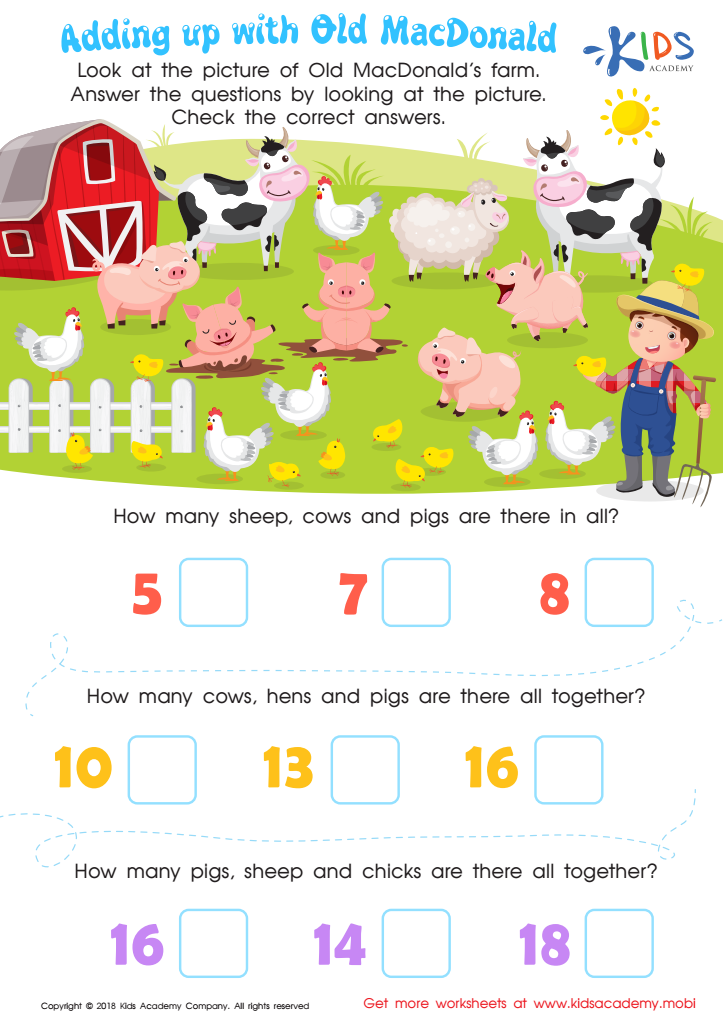
Adding Up with Old MacDonald Worksheet
 Assign to My Students
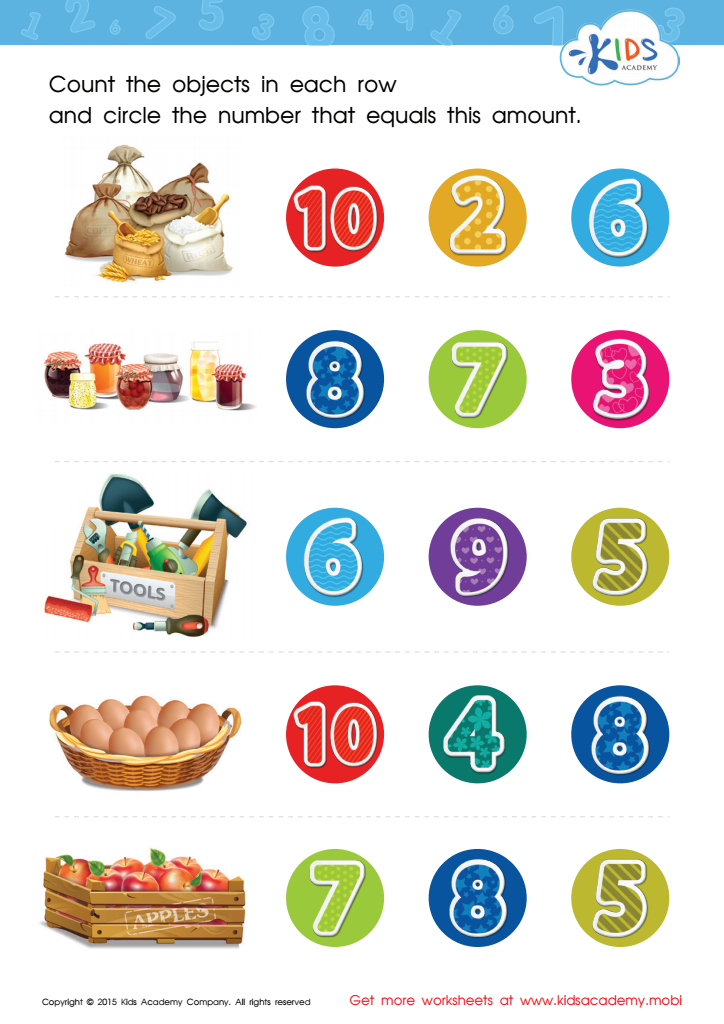
Count and Match 6 – 10 Math Worksheet
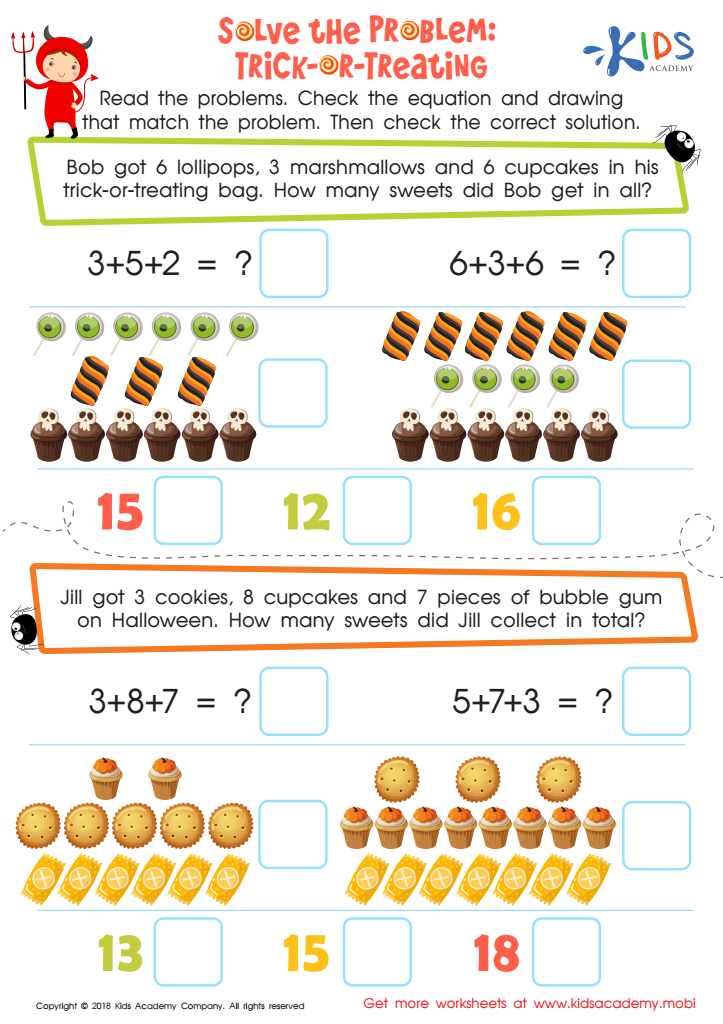
Solve the Problem: Trick–or–treating Worksheet
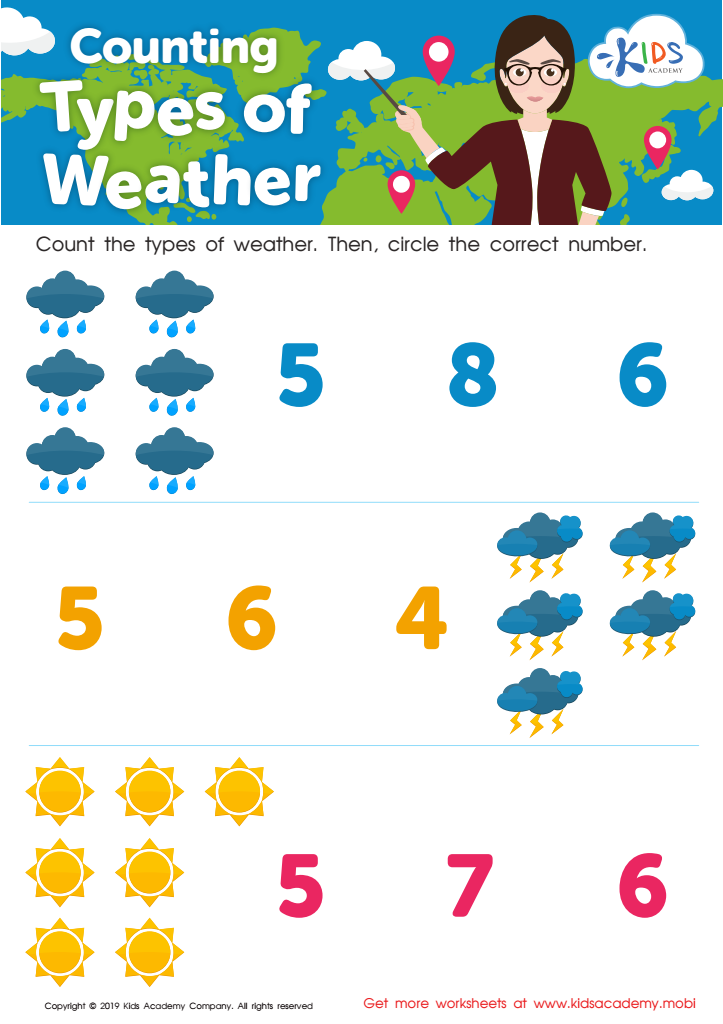
Counting Types of Weather Worksheet
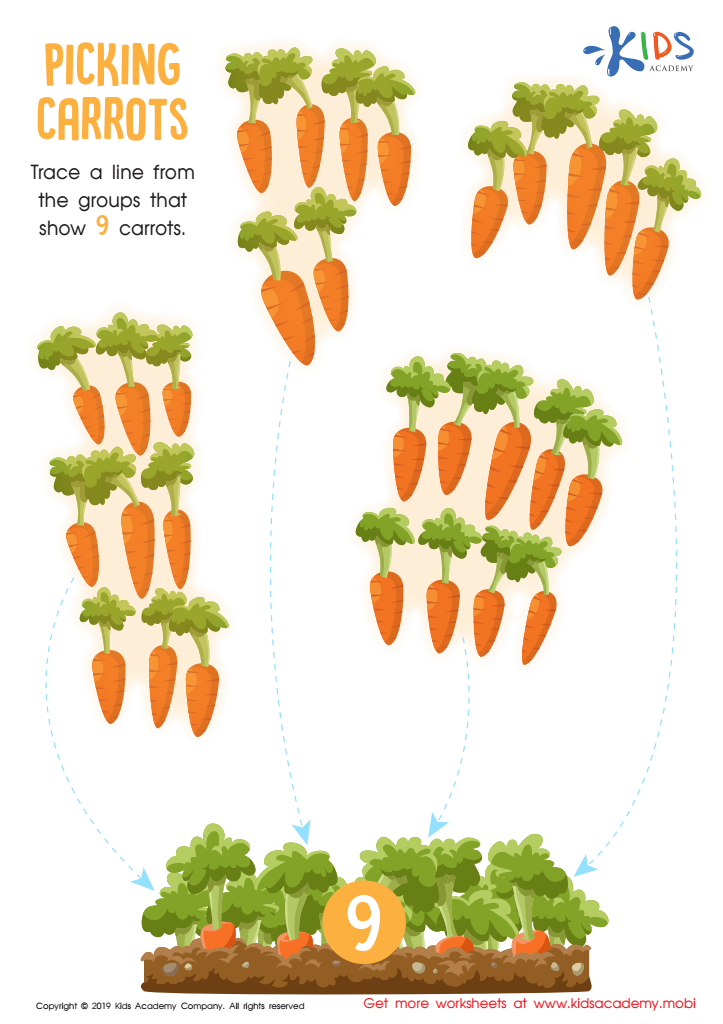
Picking Carrots Worksheet
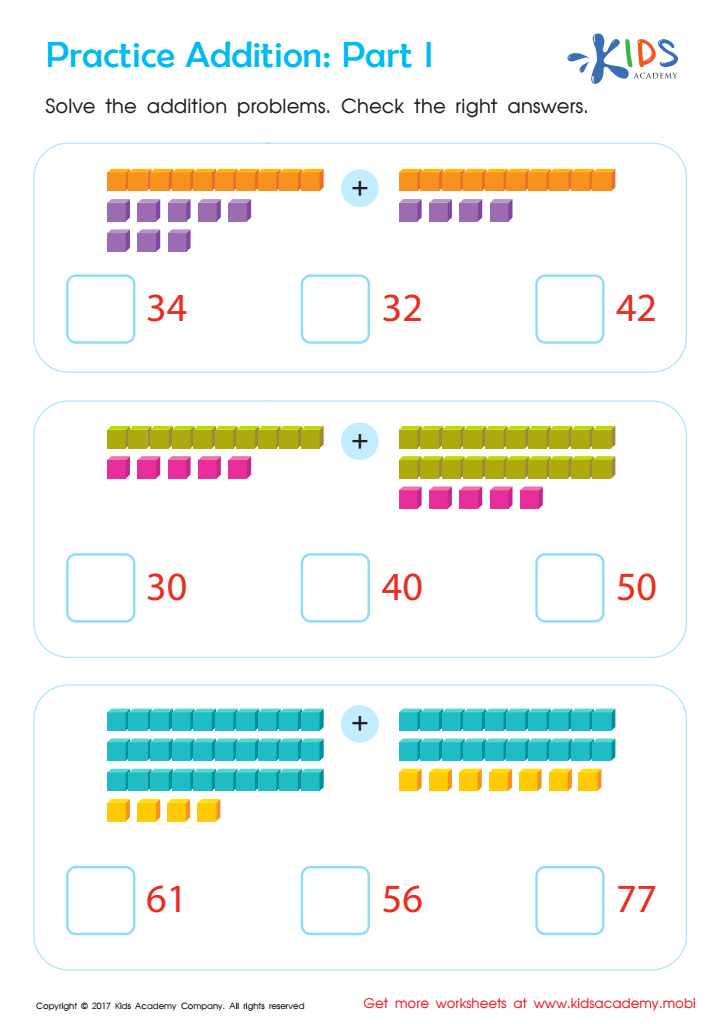
Practice Addition: Part 1 Worksheet








Basic arithmetic concepts are crucial for children aged 3-7 as they lay the foundation for future mathematical understanding and problem-solving skills. At this formative age, children are highly receptive to new information, and engaging them with numbers helps develop their cognitive skills, reasoning abilities, and critical thinking.
Learning basic arithmetic, such as addition and subtraction, involves more than just numbers; it fosters essential skills like pattern recognition, spatial reasoning, and the ability to categorize objects, all of which are pivotal in both mathematical and everyday contexts. Furthermore, integrating arithmetic into everyday activities—like counting inventory during shopping or measuring ingredients for cooking—makes learning relevant and exciting.
Additionally, early exposure to numbers enhances language development. Children learn numerical vocabulary, which supports their overall communication skills. It prepares them for more complex math concepts down the line, thereby reducing anxiety and building confidence in their abilities.
Overall, parents and teachers should prioritize basic arithmetic not only for academic growth but also for nurturing a love for learning, encouraging curiosity, and fostering a positive attitude towards challenges—all vital traits for personal and educational success.








