Learning addition Numbers Worksheets for Ages 3-7
4 filtered results
-
From - To
Discover our engaging "Learning Addition Numbers Worksheets" tailored for kids aged 3-7! Perfect for young learners, these worksheets introduce basic addition through fun and interactive activities. With colorful illustrations and simple exercises, children can easily grasp counting and basic math concepts, building a strong foundation for future learning. Ideal for home or classroom use, our worksheets support skill development in a playful and educational manner, making math enjoyable and accessible for young minds. Download now to foster your child's love for numbers and enhance their early math skills!
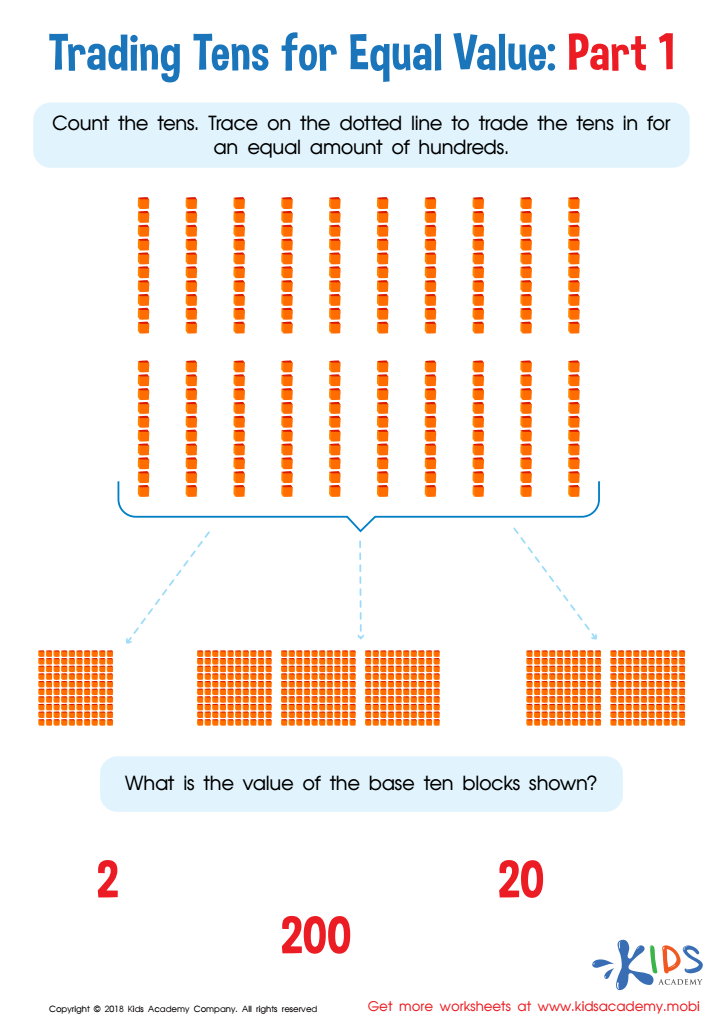
Trading Tens for Equal Value Worksheet: Part 1
 Assign to My Students
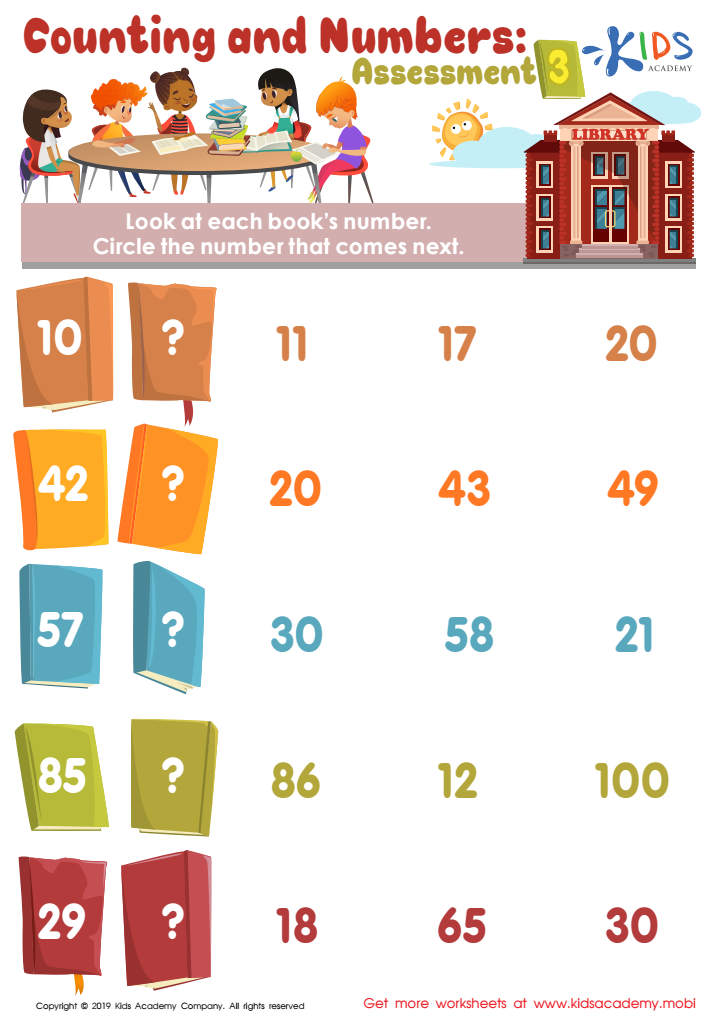
Counting and Numbers: Assessment Worksheet
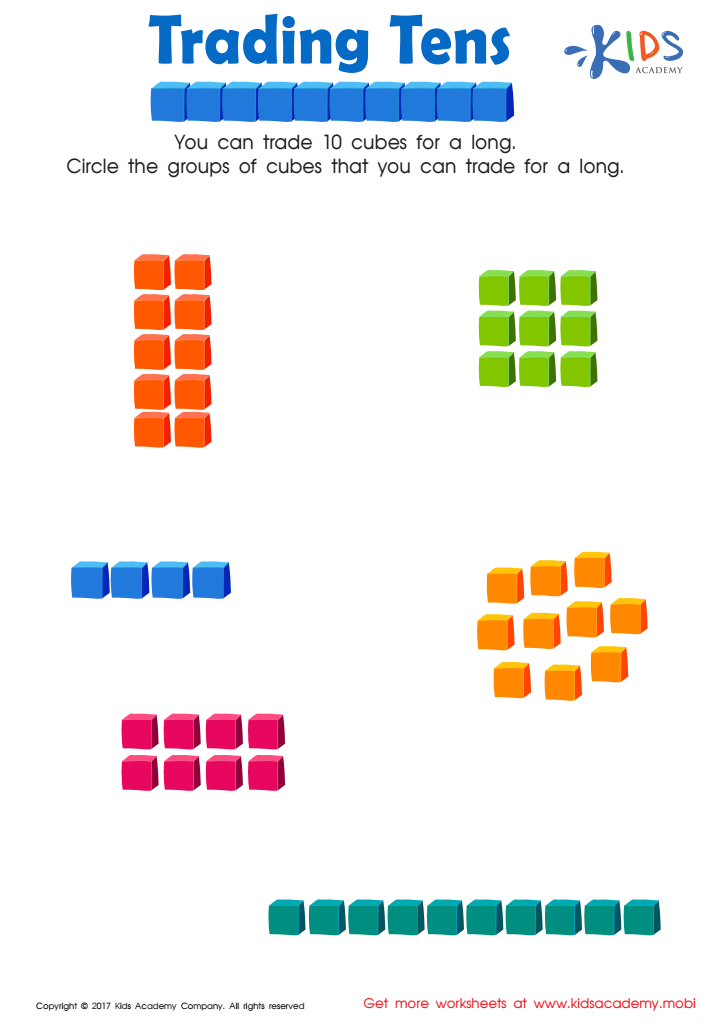
Trading Tens Worksheet
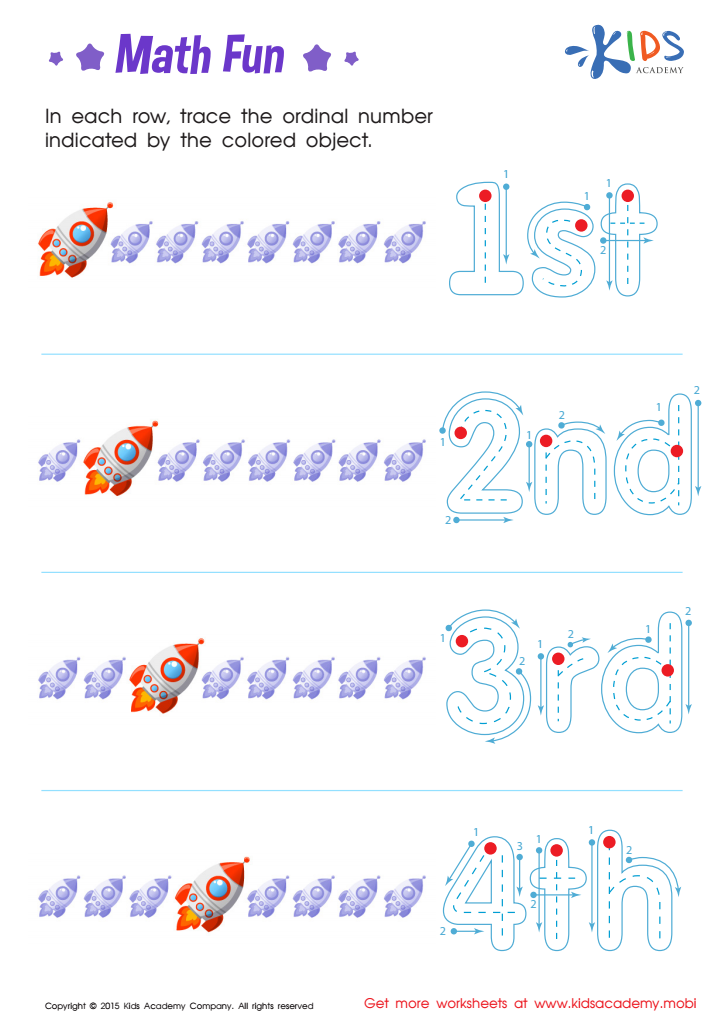
Ordinal Numbers: Math Fun Worksheet






Understanding addition at an early age is foundational for a child's overall mathematical development and cognitive growth. For children aged 3-7, learning addition introduces them to basic arithmetic, which is crucial for everyday problem-solving and higher-level math skills they'll encounter later in school.
First, grasping addition helps build a child's number sense—their intuitive understanding of numbers and their relationships. This early mathematical education fosters logical thinking and enhances a child's ability to make connections between numbers, which is essential for more-complex operations like subtraction, multiplication, and division.
Second, early exposure to addition increases a child's confidence and interest in math. When children see themselves as capable mathematicians, they are more likely to enjoy and excel in the subject. This positive attitude towards math can reduce anxiety and encourage a lifelong interest in mathematics and related fields.
Moreover, addition practice supports the development of key skills like concentration, memory, and fine motor abilities, as children often use tools like counting fingers, blocks, or number lines. These cognitive and physical skills are transferable to other areas of learning and daily activities.
Parents and teachers play a pivotal role in guiding and nurturing a child's mathematical journey. By making addition enjoyable and accessible, they lay a strong educational foundation that benefits the child throughout their academic career and beyond.








