Money recognition Numbers Worksheets for Ages 3-7
3 filtered results
-
From - To
Enhance your child's financial literacy with our engaging Money Recognition Numbers Worksheets, specially designed for ages 3-7. These worksheets offer colorful, age-appropriate activities that help young learners identify coins and bills, fostering essential counting and money management skills. Through fun exercises and practical examples, children will explore the basics of money, including names, values, and simple transactions. Whether used at home or in the classroom, these worksheets provide a solid foundation for early math and real-life skills. Introduce your child to the world of money recognition while keeping them entertained and motivated to learn! Download today and spark their interest in learning!
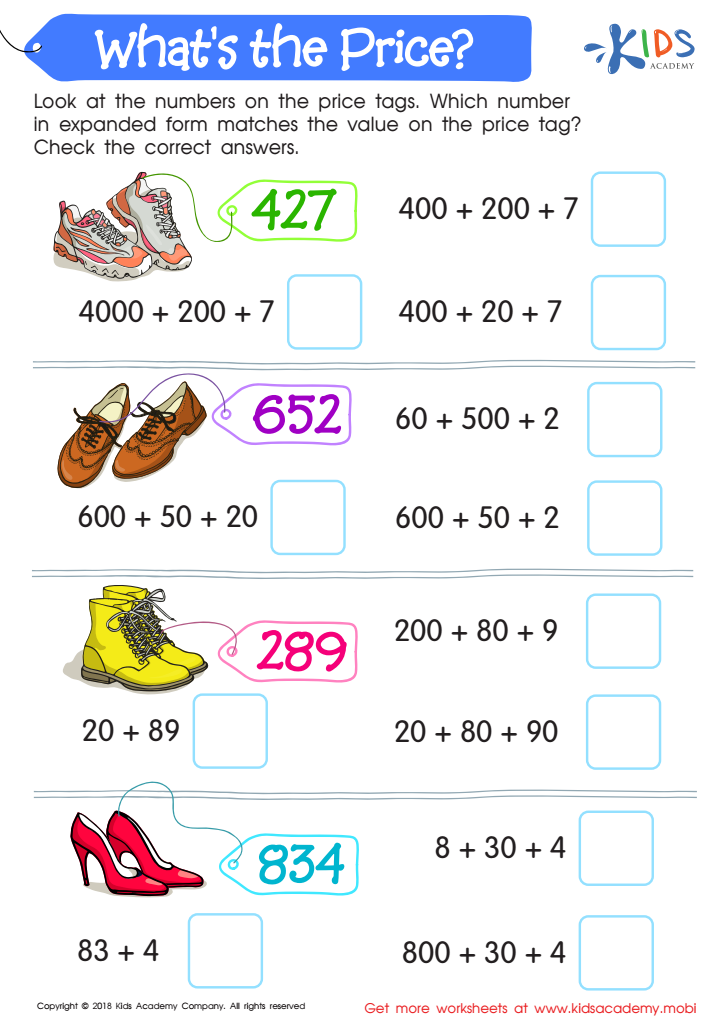
What's the Price? Worksheet
 Assign to My Students
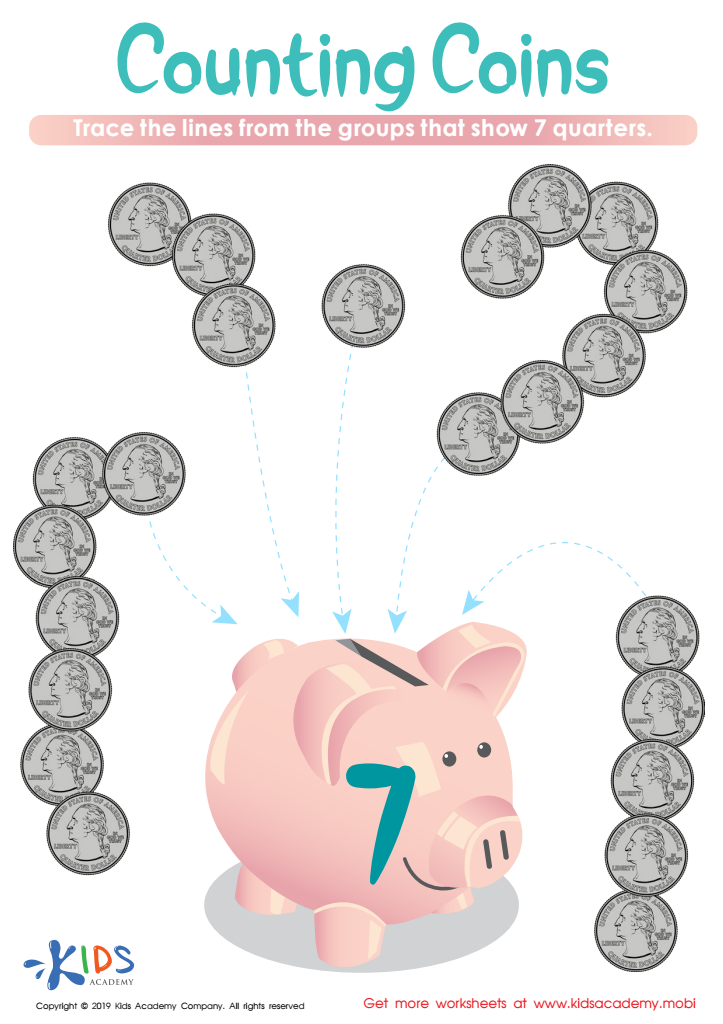
Counting Coins Worksheet
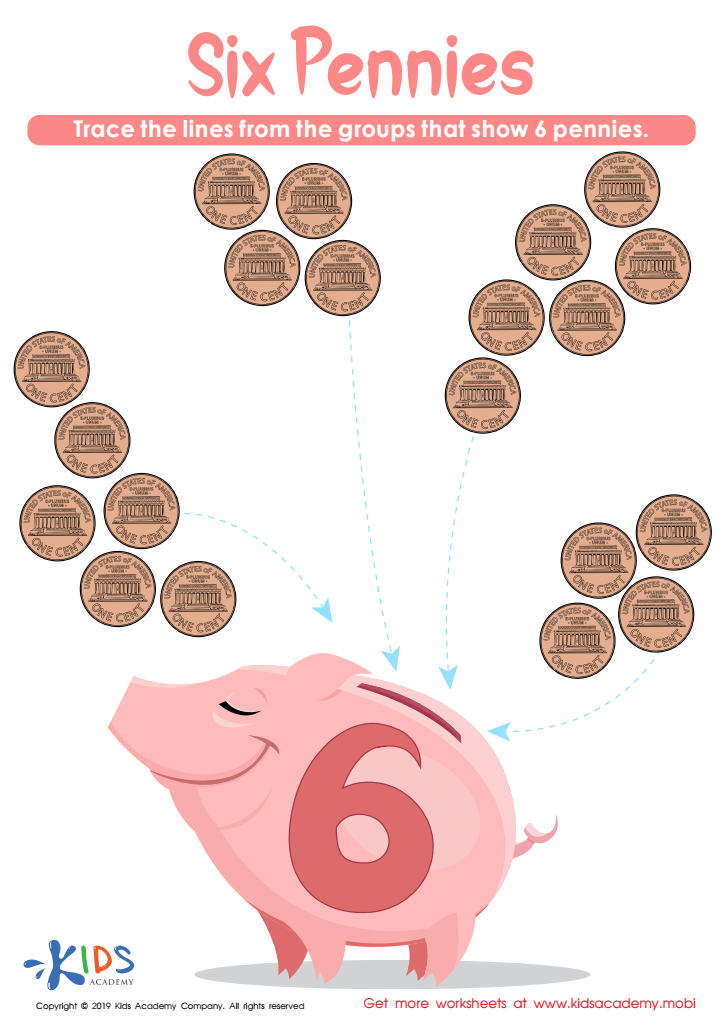
Six Pennies Worksheet








Money recognition and understanding numbers are essential skills for children aged 3-7. During this developmental stage, children's cognitive abilities are rapidly evolving, making it an ideal time to introduce concepts related to money. Recognizing money not only helps in developing numerical understanding but also nurtures critical life skills.
Firstly, familiarizing young children with money lays the groundwork for financial literacy. This early exposure helps them understand the value of money and its role in everyday life. By learning to recognize coins and bills, children grasp the concept of saving, spending, and making choices, leading to responsible financial habits in the future.
Additionally, integrating money recognition with numbers strengthens math skills. Counting coins, understanding value differences, and making simple transactions enhance numeracy, which is crucial for academic success in later grades.
Furthermore, engaging in activities that involve money can promote social skills when they practice these concepts in real-world settings, such as shopping or managing allowances.
Ultimately, recognizing money and comprehending numbers empower children, equipping them with important tools for financial independence and social interaction as they grow. Parenting and teaching initiatives aimed at this area can make a significant positive impact on a child's development.








