Multiplication practice Numbers Worksheets for Ages 3-7
5 filtered results
-
From - To
Discover engaging multiplication practice number worksheets designed specifically for ages 3-7 on Kids Academy! Our colorful and interactive activities help young learners build a strong foundation in basic math skills. Each worksheet is crafted to make learning multiplication fun and effective through hands-on exercises that promote critical thinking. Perfect for preschool to early elementary graders, these printables support skill development in a playful and educational environment. Encourage your child's love for numbers with our expertly designed resources, fostering confidence and mastery in multiplication. Spark enthusiasm for math with Kids Academy today! Start practicing and watch your child succeed.
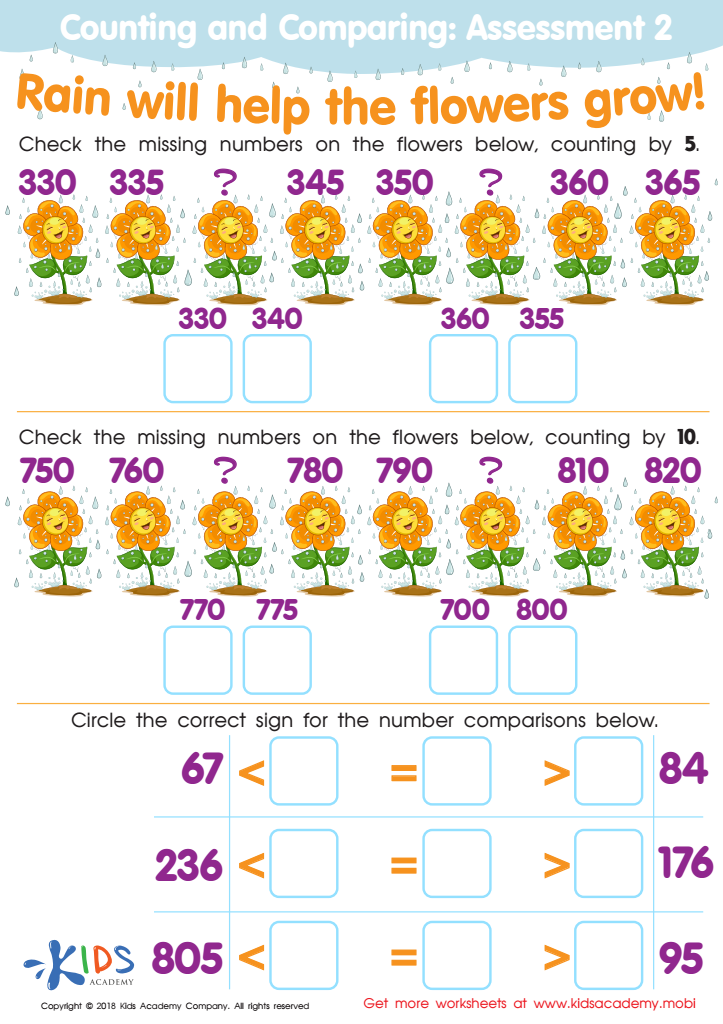
Counting and Comparing: Assessment 2 Worksheet
 Assign to My Students
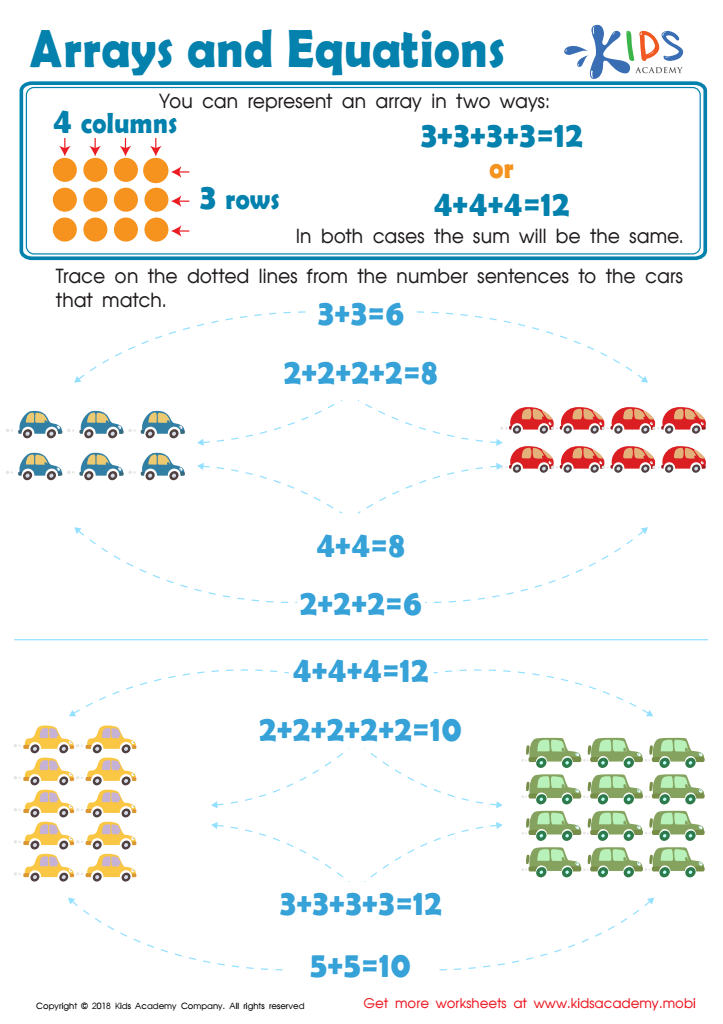
Arrays and Equations Worksheet
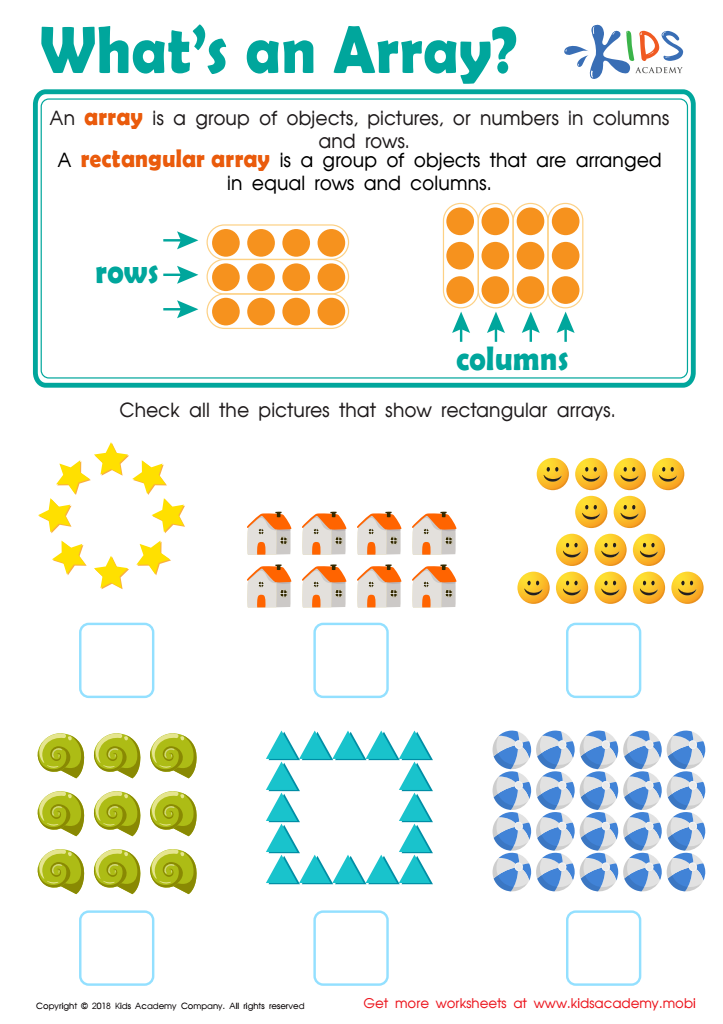
What's an Array? Worksheet
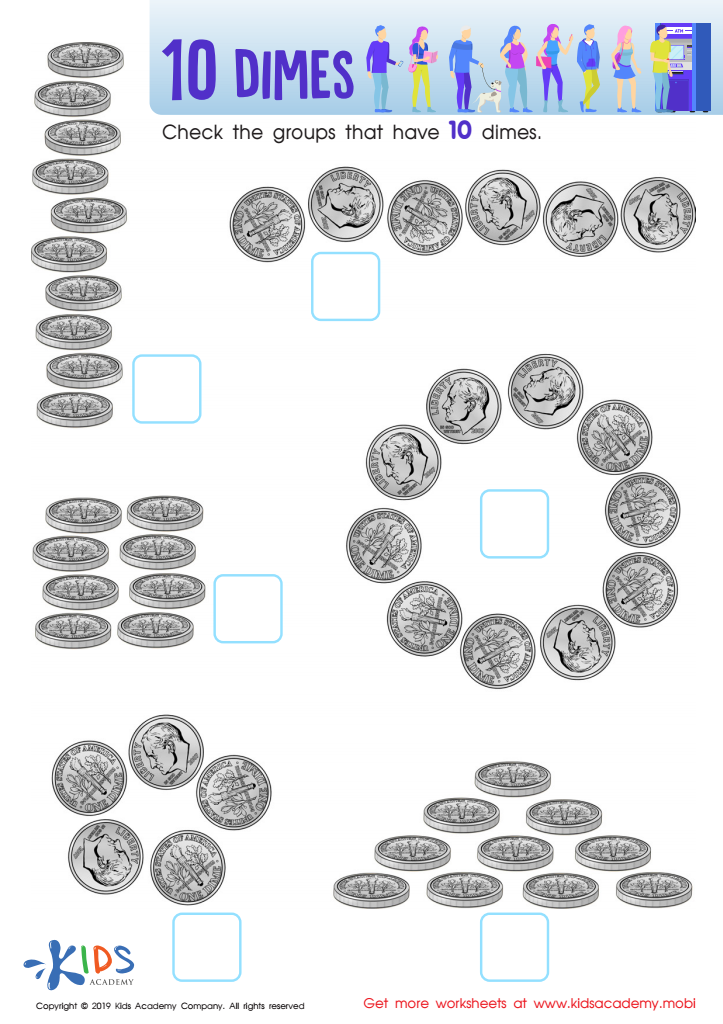
10 Dimes Worksheet
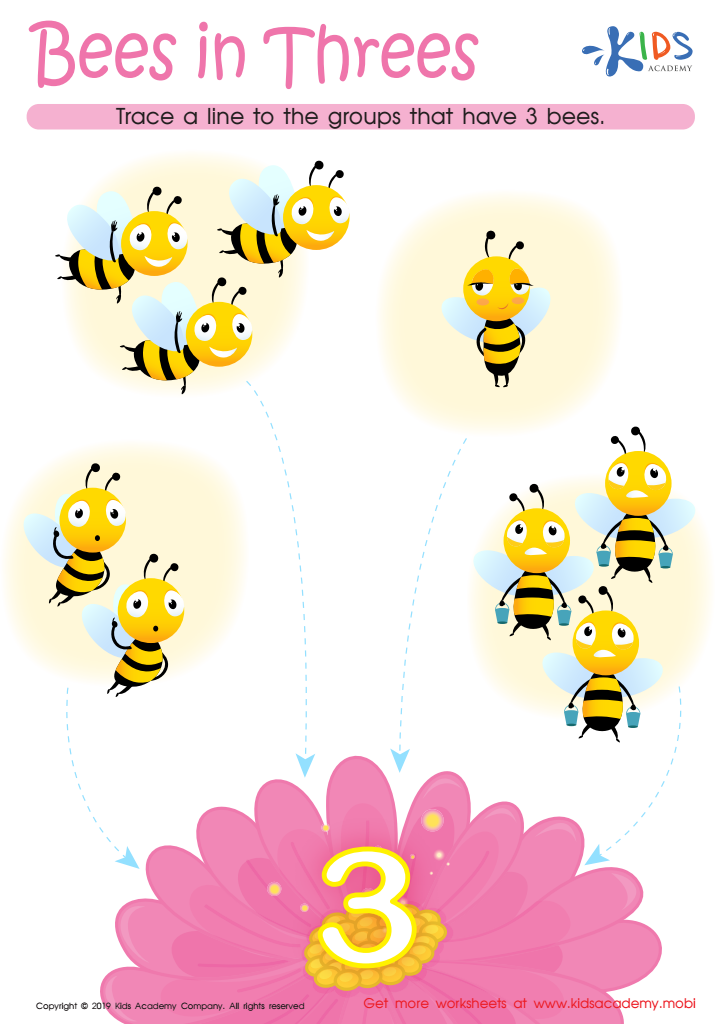
Bees in Threes Worksheet






%20(1).jpg)

Multiplication practice for children ages 3-7 lays down a fundamental foundation for their future mathematical development. While these early years primarily focus on basic numerical understanding and simple arithmetic, introducing the concept of multiplication, even in an elementary form, boosts cognitive development and helps children engage with more complex mathematical concepts later on.
Multiplication introduces children to the idea of grouping and repeated addition, which are crucial for developing problem-solving skills. These skills foster logical thinking and reasoning, assets that carry over to other subjects and everyday situations.
For parents and teachers, emphasizing multiplication practice also stimulates early interest in mathematics and reduces any potential anxiety associated with the subject as the child progresses academically. Engaging activities like counting objects in groups or playing simple math games can make learning multiplication fun and interactive, enhancing retention and understanding.
Moreover, consistent practice with multiplication helps identify learning styles, enabling adults to tailor educational approaches to individual needs. This personalized attention aids in overcoming challenges earlier, promoting a more confident and capable learner.
Ultimately, early exposure to multiplication enriches a child’s number sense, supporting their academic journey and equipping them with essential life skills.








