
Number identification Numbers Worksheets for Ages 3-7
6 filtered results
Difficulty Level
Grade
Age
-
From - To
Subject
Activity
Standards
Welcome to our Number Identification Worksheets designed specifically for children aged 3-7! Our engaging and colorful worksheets make learning numbers fun and interactive. With a variety of exercises tailored to different skill levels, young learners will enhance their number recognition, counting, and early math skills. Activities include tracing, matching, and visually identifying numbers, ensuring kids stay motivated while mastering essential concepts. Perfect for home or classroom use, these worksheets are printable and easy to use. Support your child's early math journey and help them build a strong foundation for future learning. Explore our collection and watch them succeed in number identification!
Favorites
With answer key
Interactive
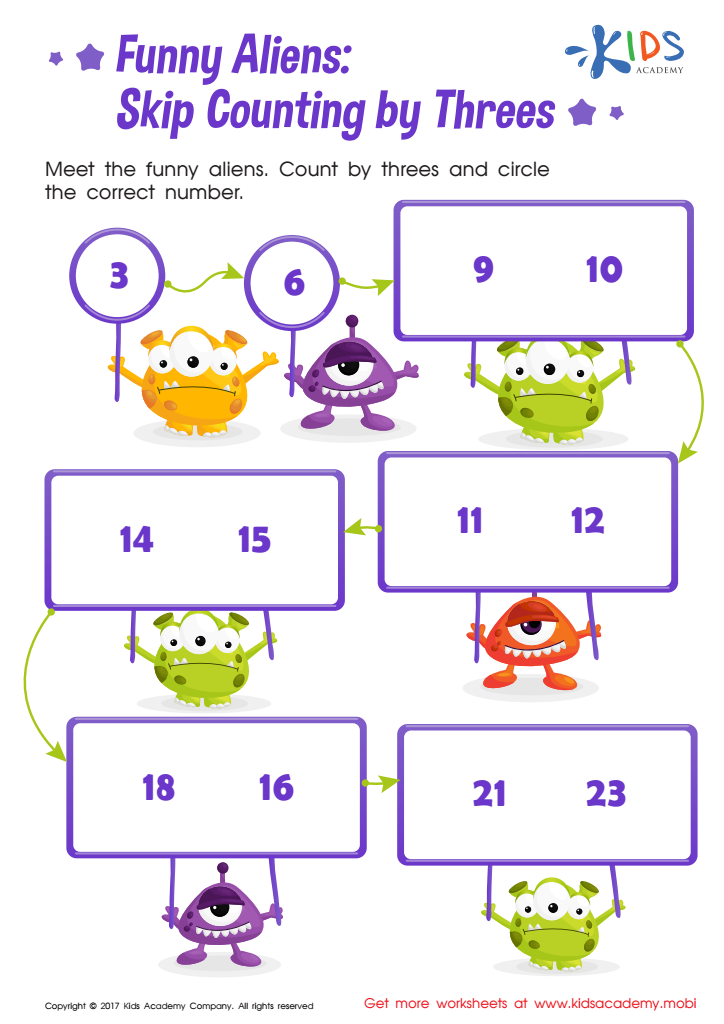
Skip Counting by 3s: Funny Aliens Printable
Blast off to outer space learning fun with this skip counting by 3 worksheet!
 Assign to My Students
Skip Counting by 3s: Funny Aliens Printable
Worksheet
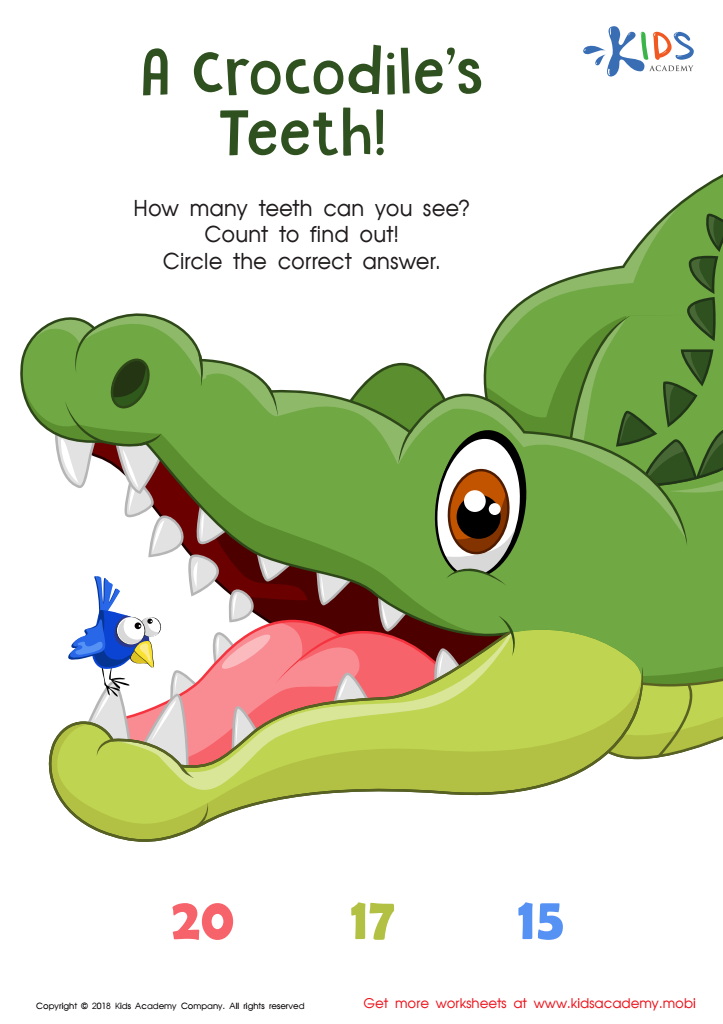
A Crocodile's Teeth Worksheet
Show your child the animal image and ask them to identify it. If they watch animal shows, they'll likely be interested. Count the teeth together, then look at the options and help them circle the right one.
A Crocodile's Teeth Worksheet
Worksheet
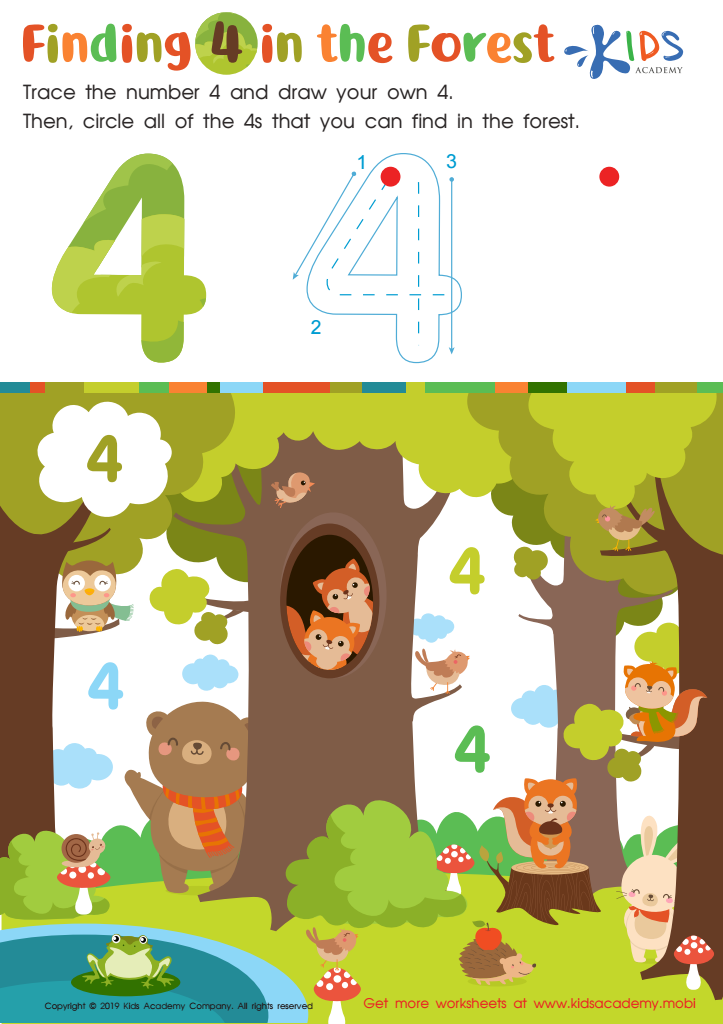
Finding 4 in the Forest Worksheet
Before starting, have your kids count as high as they can. Ask them to identify the setting and point out the 4s. Trace 4 and draw your own. Help your kids circle all the 4s they can find in the forest. How far can they count? How well did they find the hidden 4s?
Finding 4 in the Forest Worksheet
Worksheet
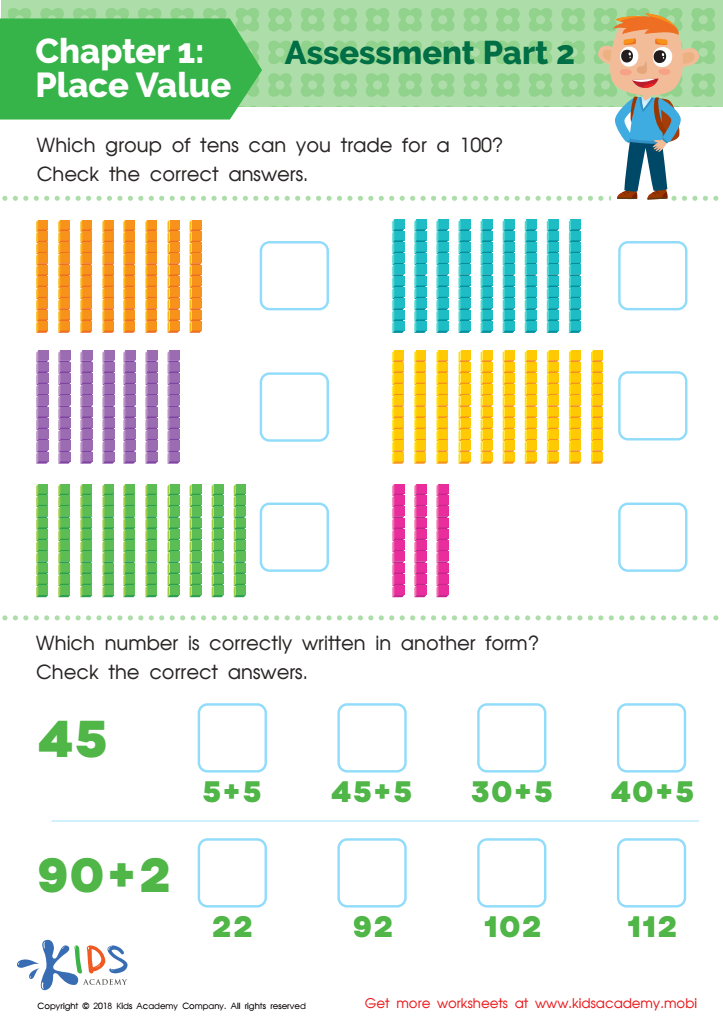
Place Value: Chapter 2 Worksheet
Place value is a key math topic. If your child needs more practice, use this worksheet. It challenges them to figure out which group of tens equals a 100, then check the answer and move to the next question.
Place Value: Chapter 2 Worksheet
Worksheet
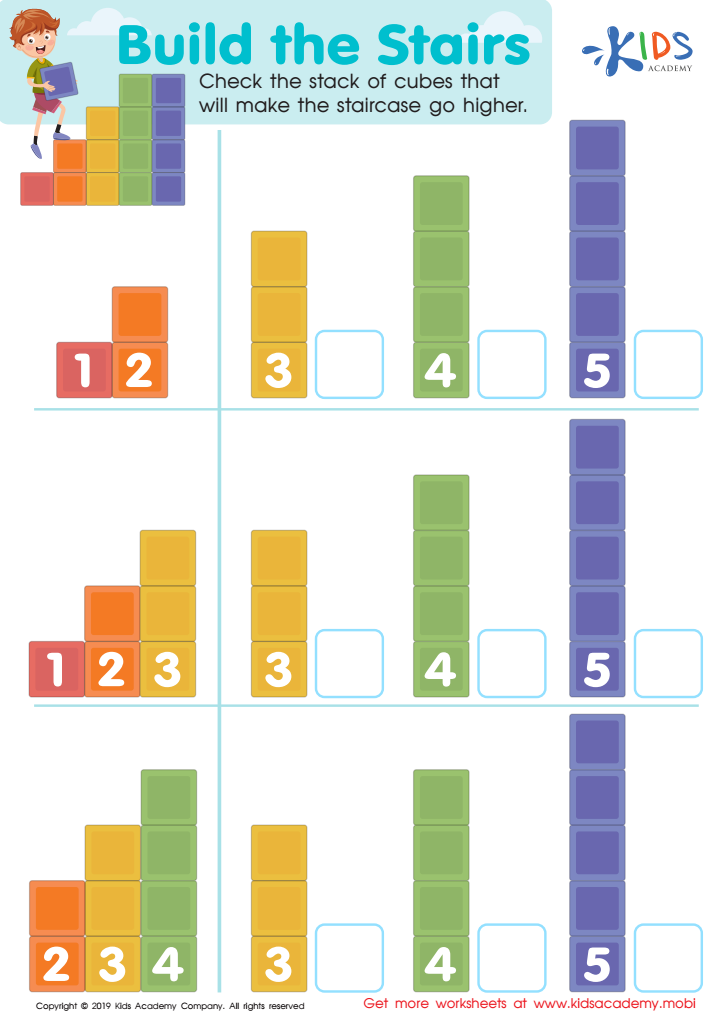
Build the Stairs Worksheet
Does your kid need help counting numbers? Make it fun with a staircase math worksheet! This printable PDF uses stairs to help your preschooler practice counting. Let them build the staircase by picking the next highest number as they go up! It's an interactive way to teach counting and sure to please your little one.
Build the Stairs Worksheet
Worksheet
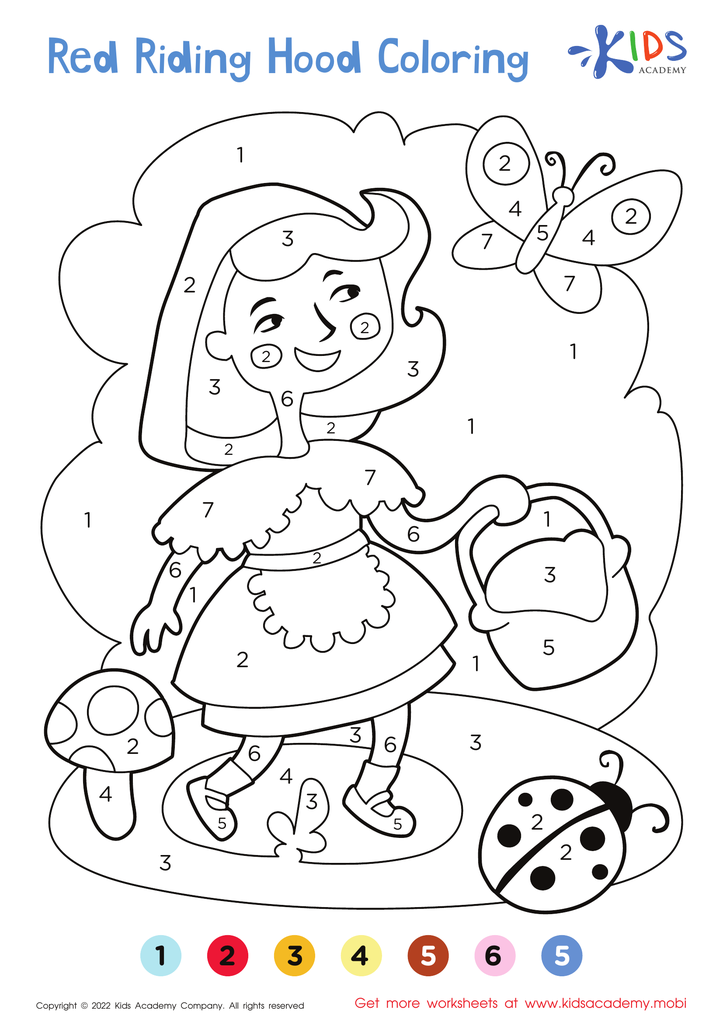
Little Red Riding Hood – Coloring by Numbers
Download this free PDF page and enjoy coloring Little Red Riding Hood. It's an easy and fun activity that everyone can do - just follow the numbers! Get your colored pencils ready and have a blast. 80 words.
Little Red Riding Hood – Coloring by Numbers
Worksheet
Join Kids Academy for Free
Who is primarily going to use this learning content?








Number identification is a crucial developmental milestone for children ages 3-7, laying the foundation for their mathematical understanding. Parents and teachers should prioritize this skill, as it enhances children's cognitive development, critical thinking, and problem-solving abilities. Recognizing numbers helps children make sense of the world around them, promoting independent exploration and boosting their confidence in engaging with mathematical concepts.
Moreover, number identification is linked to early literacy skills; understanding numbers aids in recognizing patterns and shapes, which are essential for reading and writing. It also fosters skills like counting, comparing, and quantifying, vital for later mathematical operations.
Young children are naturally curious, making early exposure to number recognition both engaging and enjoyable. Utilizing games, songs, and hands-on activities can make the learning process interactive and entertaining. This encourages positive attitudes towards math, making children more likely to pursue further learning in this field.
Finally, number identification prepares children for future academic success. It ensures they enter school with the necessary skills to tackle more complex math concepts, contributing to lifelong learning. Therefore, by investing time in number identification, parents and teachers not only support immediate education but also equip children with essential skills for a successful future.








