Understanding number relationships Numbers Worksheets for Ages 3-7
3 filtered results
-
From - To
Introduce young learners to the fascinating world of numbers with our "Understanding Number Relationships" worksheets, designed specifically for ages 3-7. These engaging and educational resources help children grasp foundational math skills, such as comparing, combining, and sequencing numbers. Through colorful illustrations and playful exercises, kids will develop a deeper comprehension of how numbers interact and relate to one another. Perfect for both classroom settings and at-home learning, our worksheets offer a mix of fun activities to build confidence and proficiency in early math concepts. Unlock the potential of young minds with our expertly crafted number relationships worksheets today!
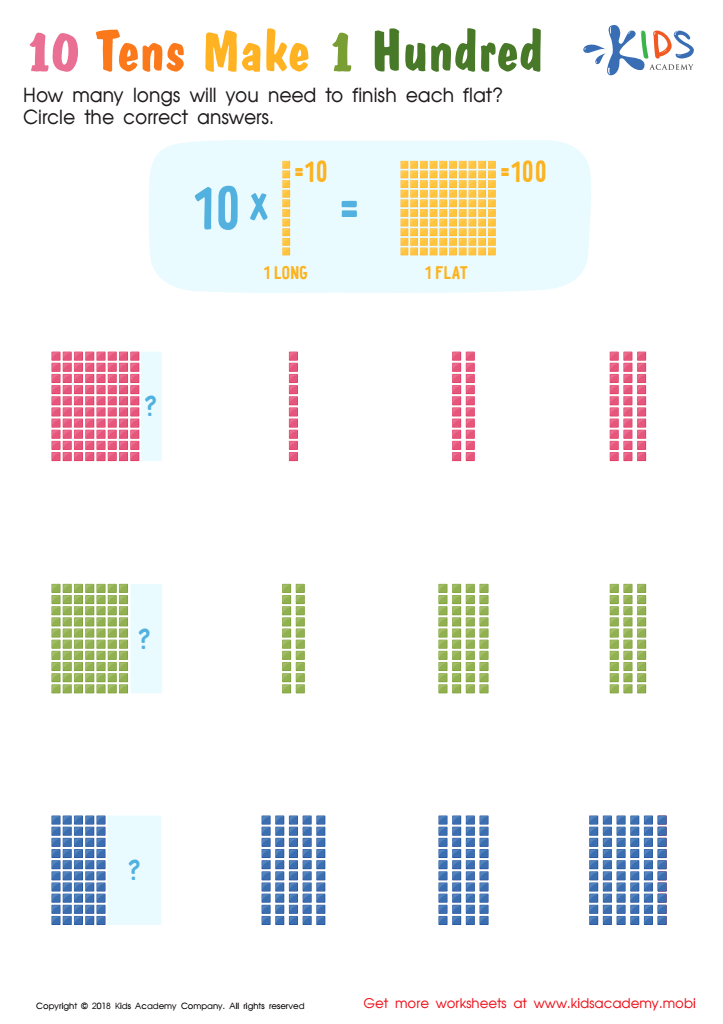
10 Tens Make 1 Hundred Worksheet
 Assign to My Students
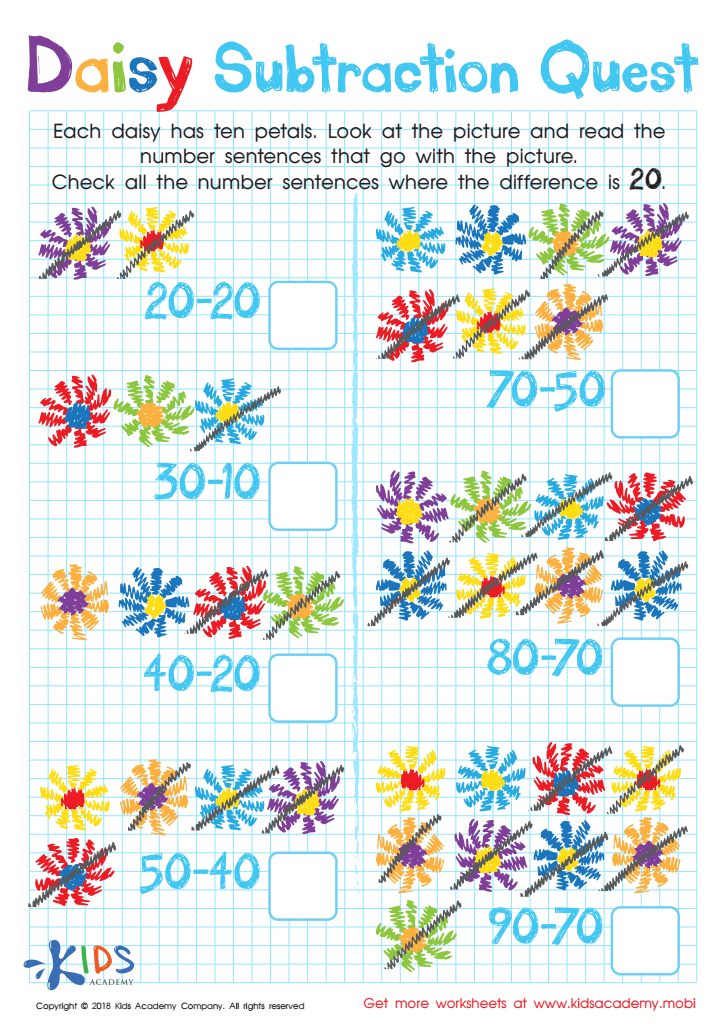
Daisy Subtraction Quest Worksheet
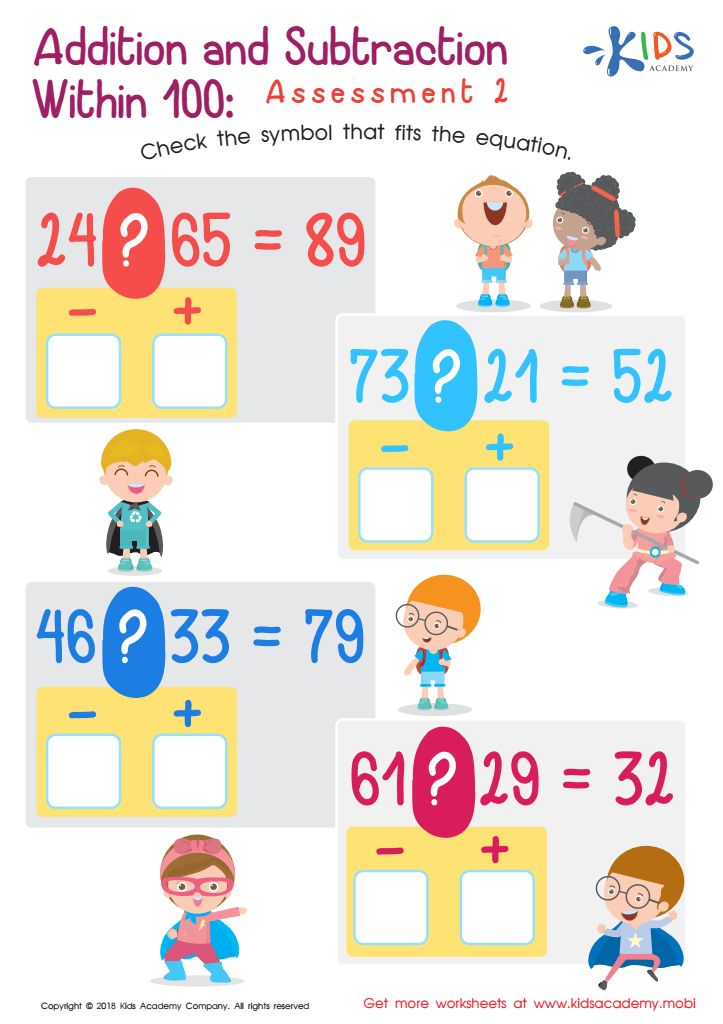
Addition and Subtraction Within 1: Assessment 2 Worksheet




%20(1).jpg)



Understanding number relationships at an early age (ages 3-7) is essential as it forms the foundation for mathematical competence and cognitive development. During these formative years, children are developing the ability to recognize patterns, arrange numbers systematically, and grasp the concepts of addition and subtraction. If parents and teachers focus on nurturing these skills, children can develop critical thinking and problem-solving abilities that will benefit them throughout their education and everyday life.
Introducing young children to number relationships helps them understand comparative concepts such as "more than," "less than," and "equal to," which are crucial for early arithmetic. This understanding boosts their confidence when interacting with numbers and enhances their capability to engage meaningfully in math-related tasks. It encourages logical thinking and improves their ability to predict outcomes, which is extensively applicable across various disciplines, including science and technology.
Additionally, early mathematical skills are strongly linked to future academic success. Research suggests that children who grasp number concepts early tend to perform better not only in math but also in reading and other subjects. When parents and teachers proactively engage children with numbers through play, stories, and everyday activities, they make learning enjoyable and relevant, fostering a positive attitude toward mathematics that can last a lifetime.








