Addition Practice Math Worksheets for Ages 3-7 - Page 3
180 filtered results
-
From - To
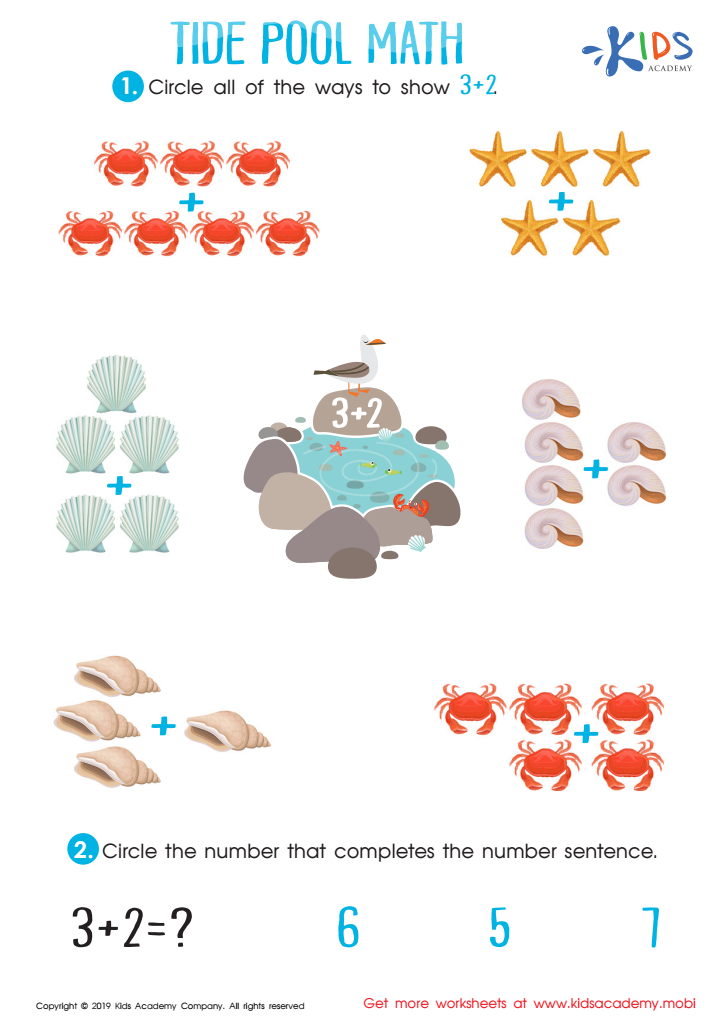
Tide Pool Math Worksheet
 Assign to My Students
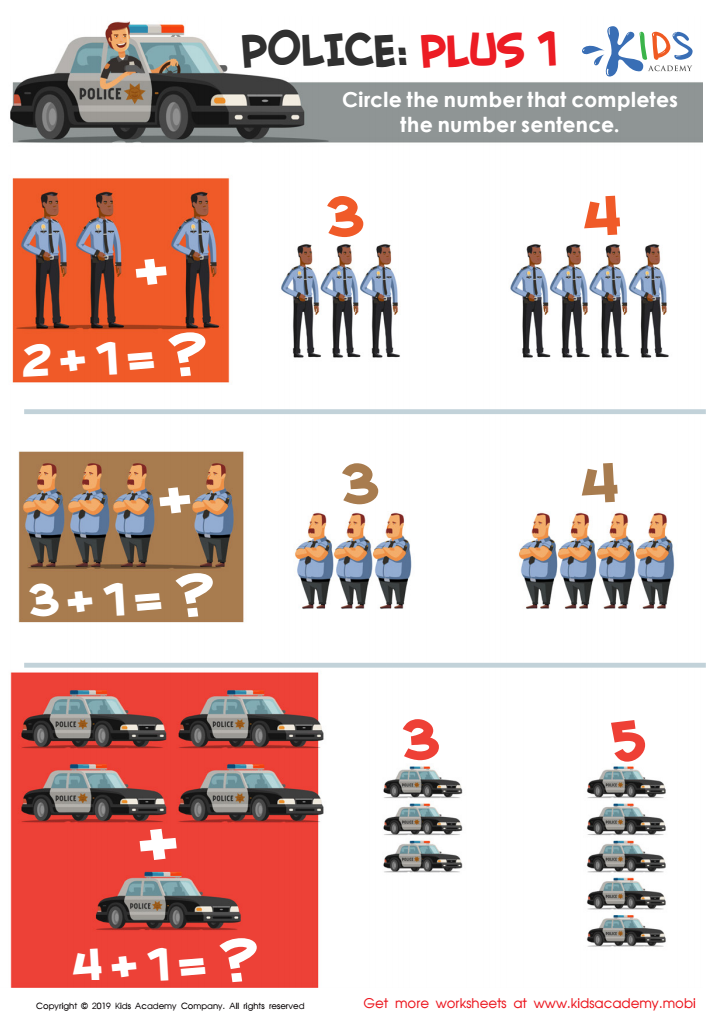
Police: Plus 1 Worksheet
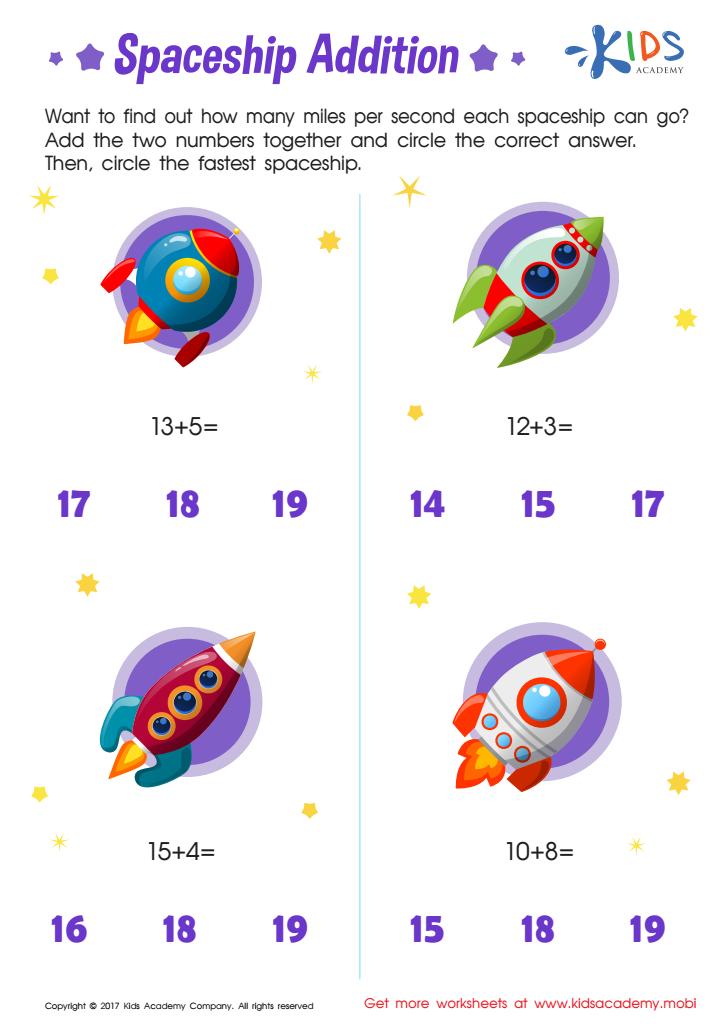
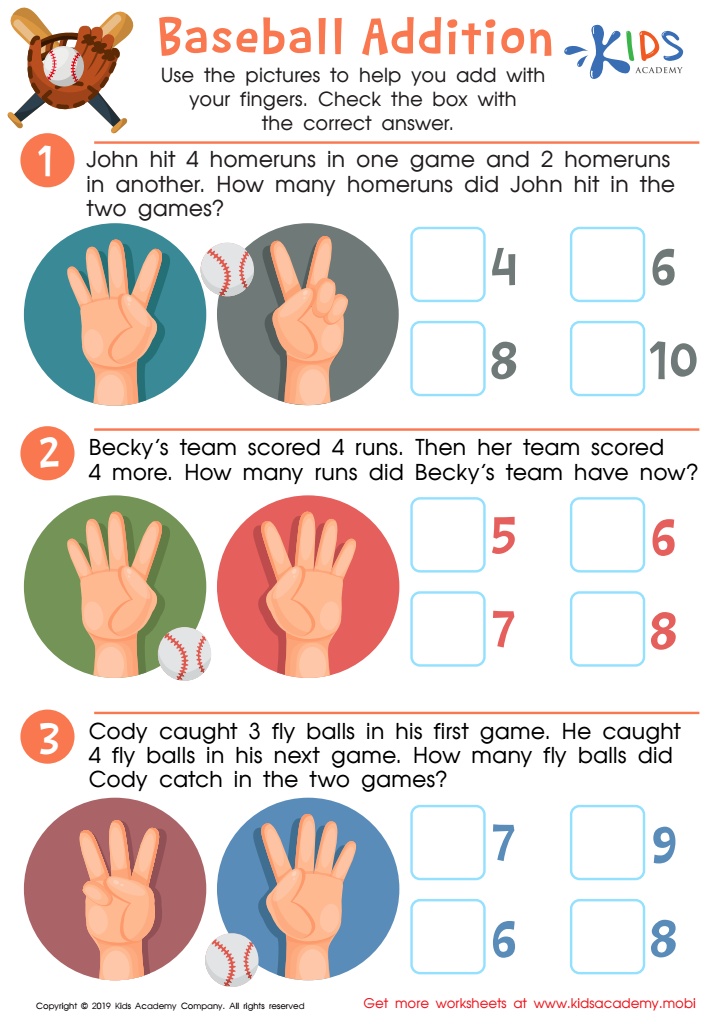
Baseball Addition Worksheet
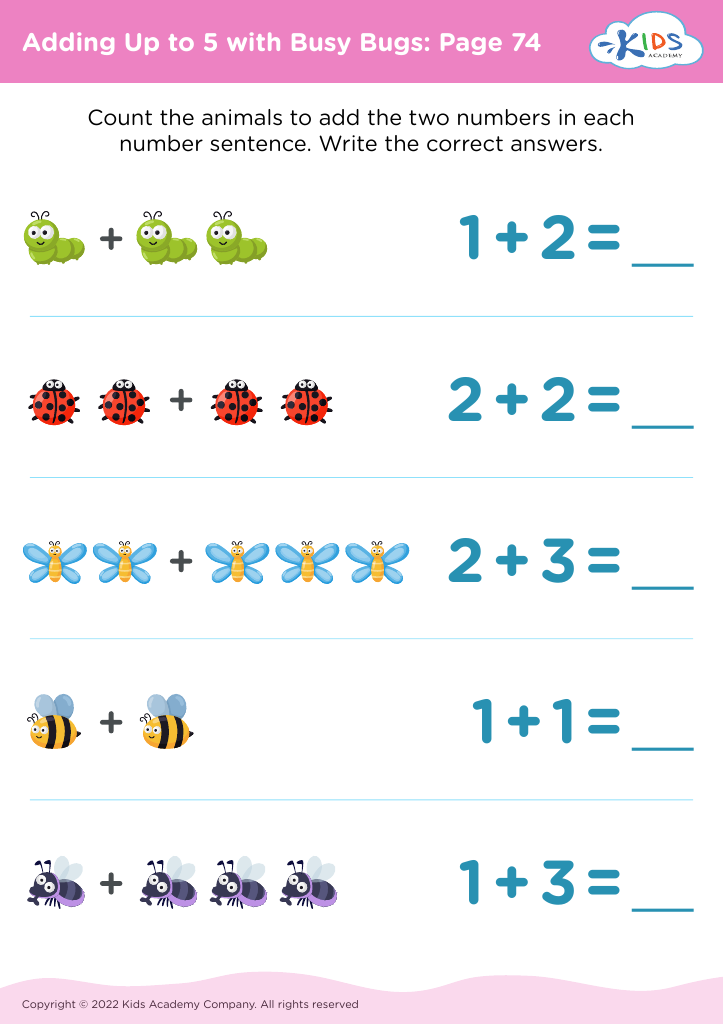
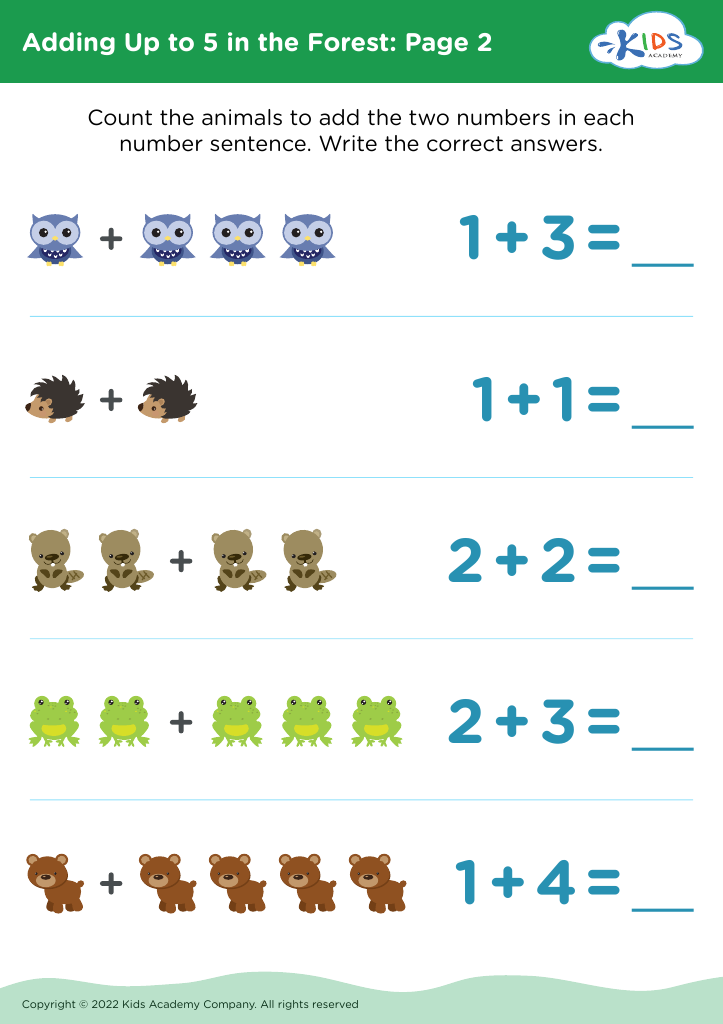
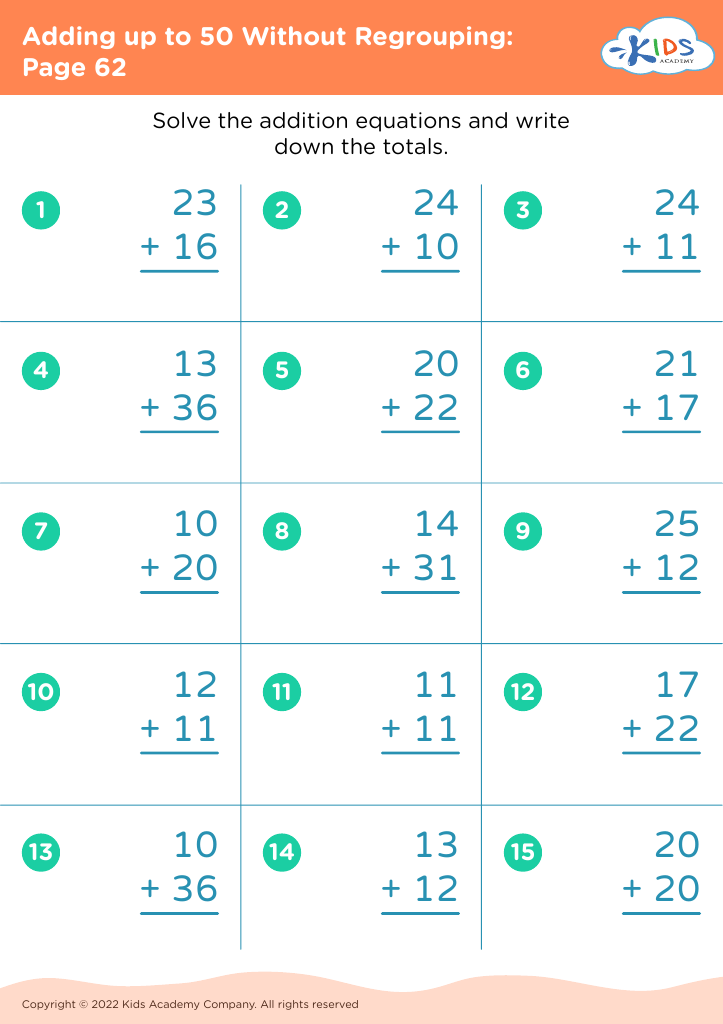
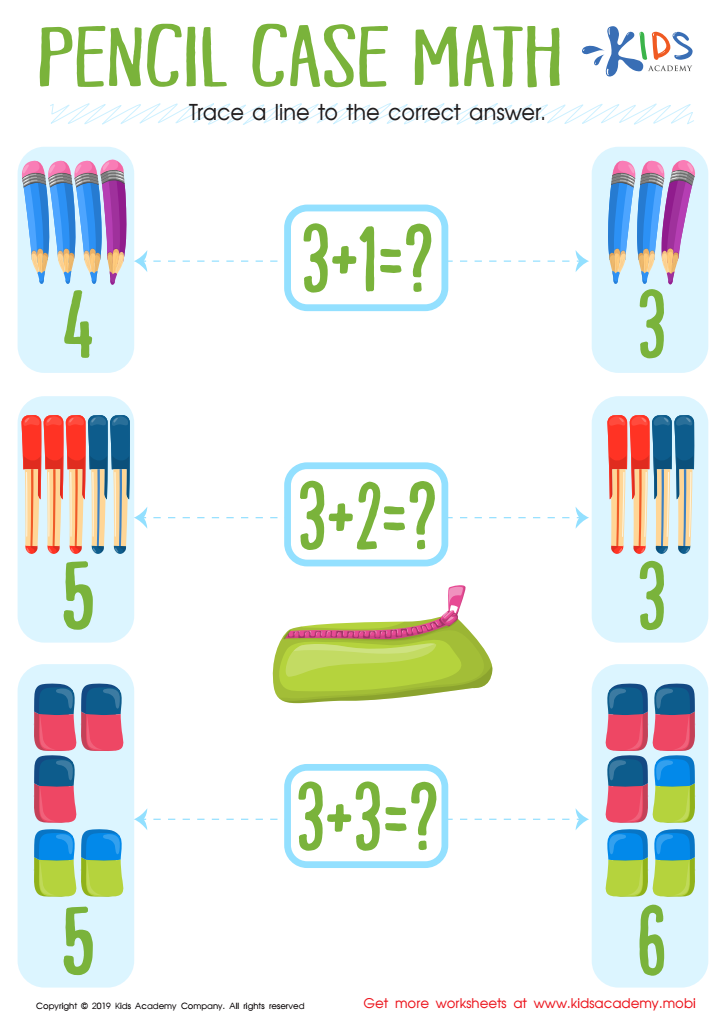
Pencil Case Math Worksheet
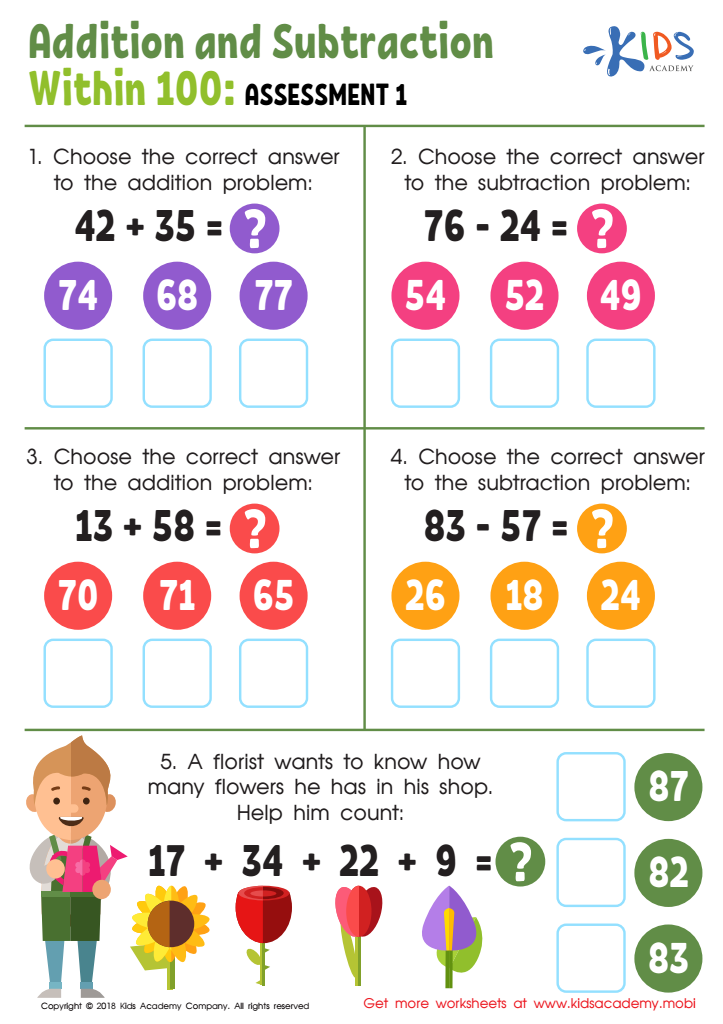
Addition and Subtraction Within 100 Worksheet
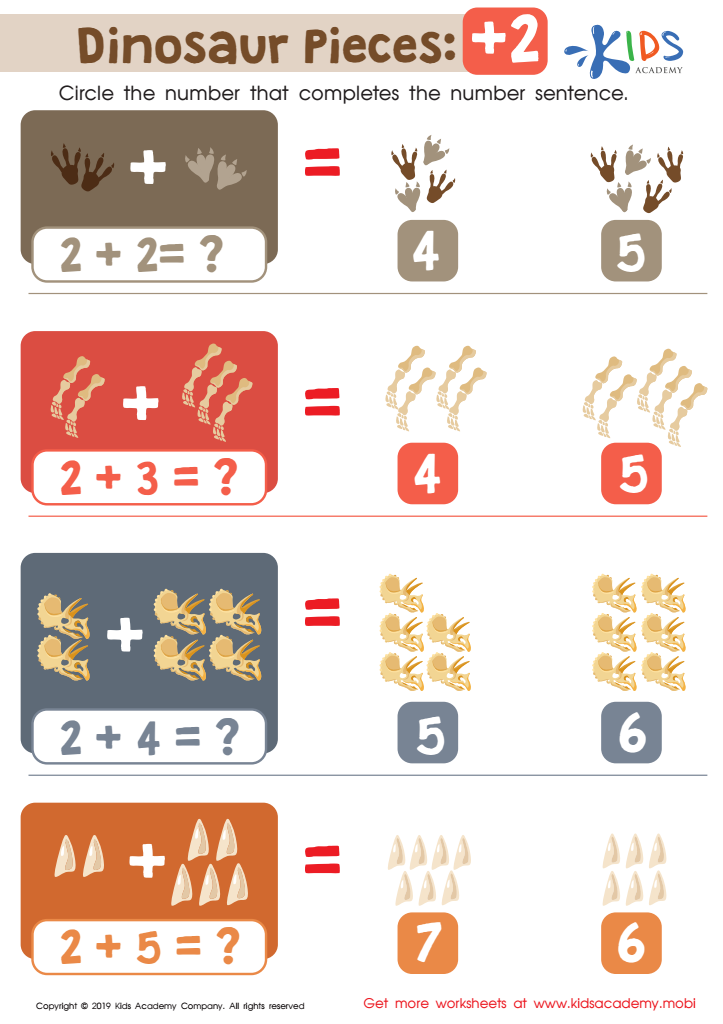
Dinosaur Pieces: +2 Worksheet
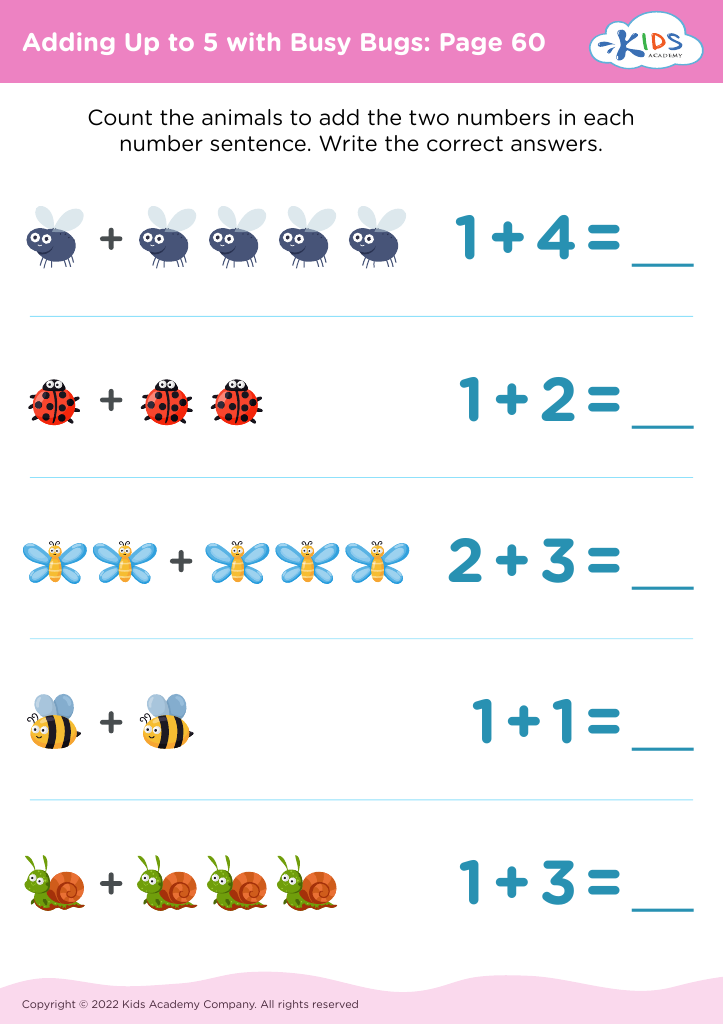
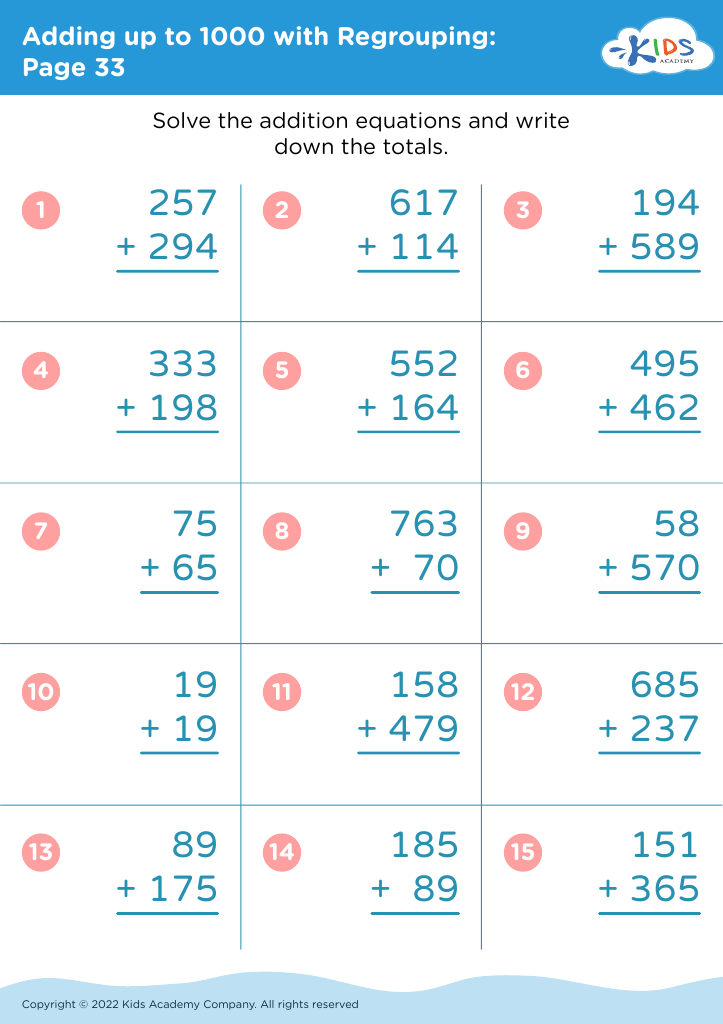
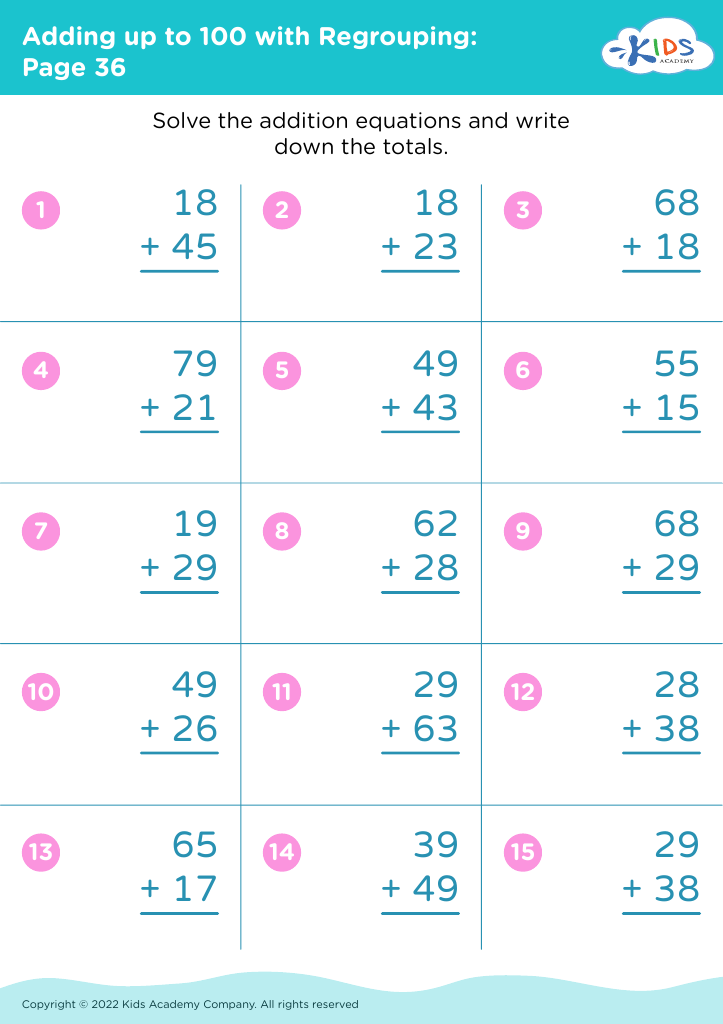
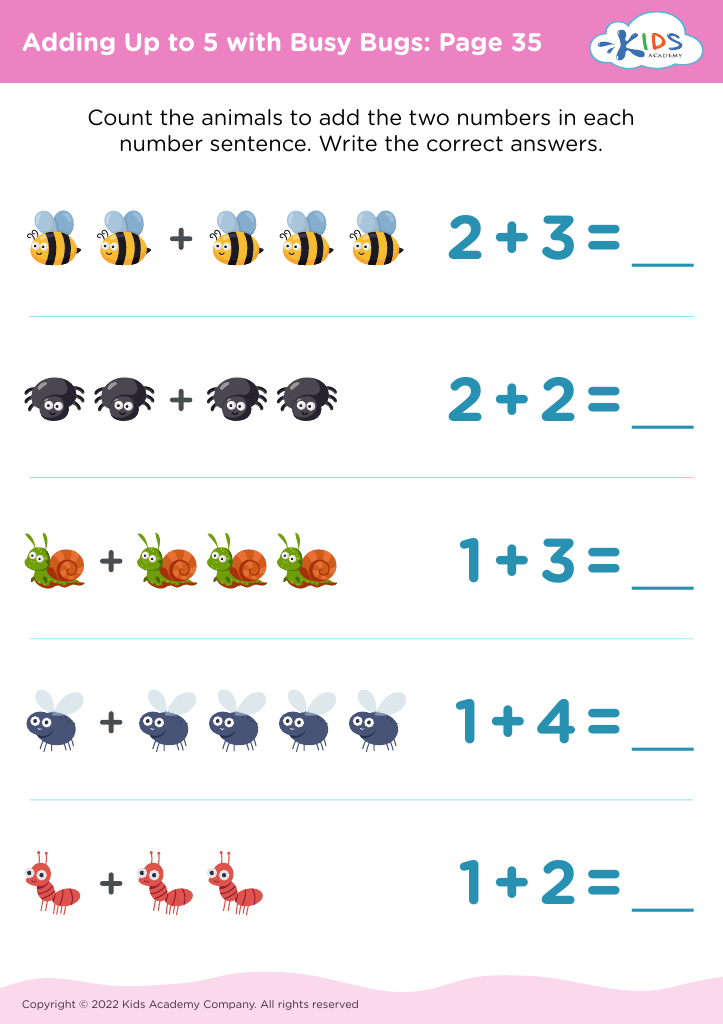
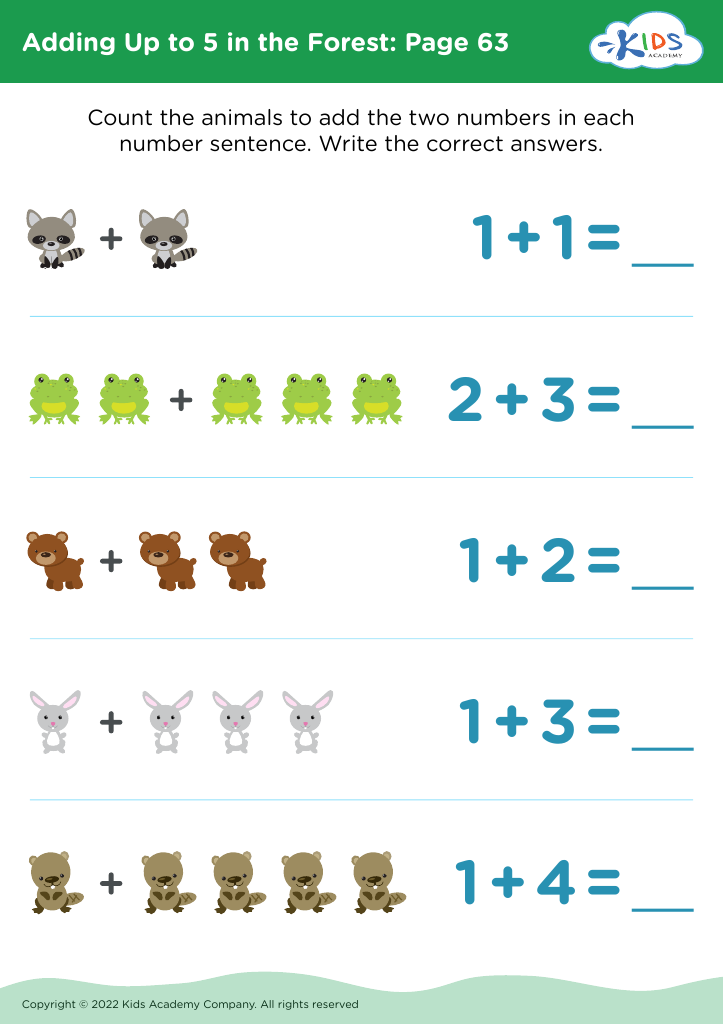
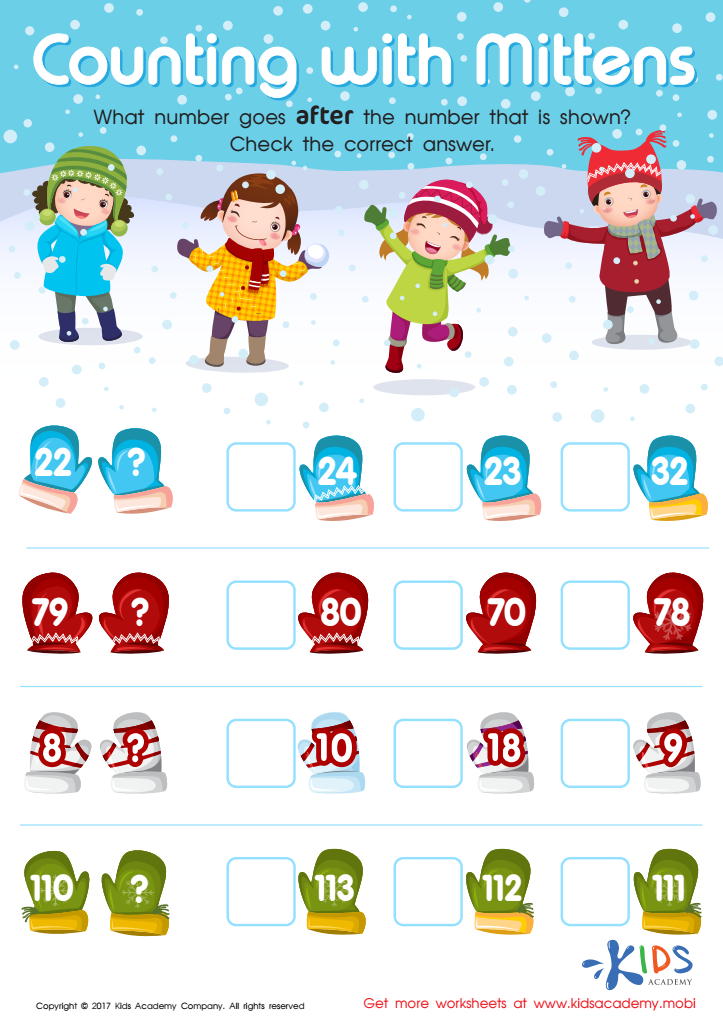
Counting with Mittens Worksheet
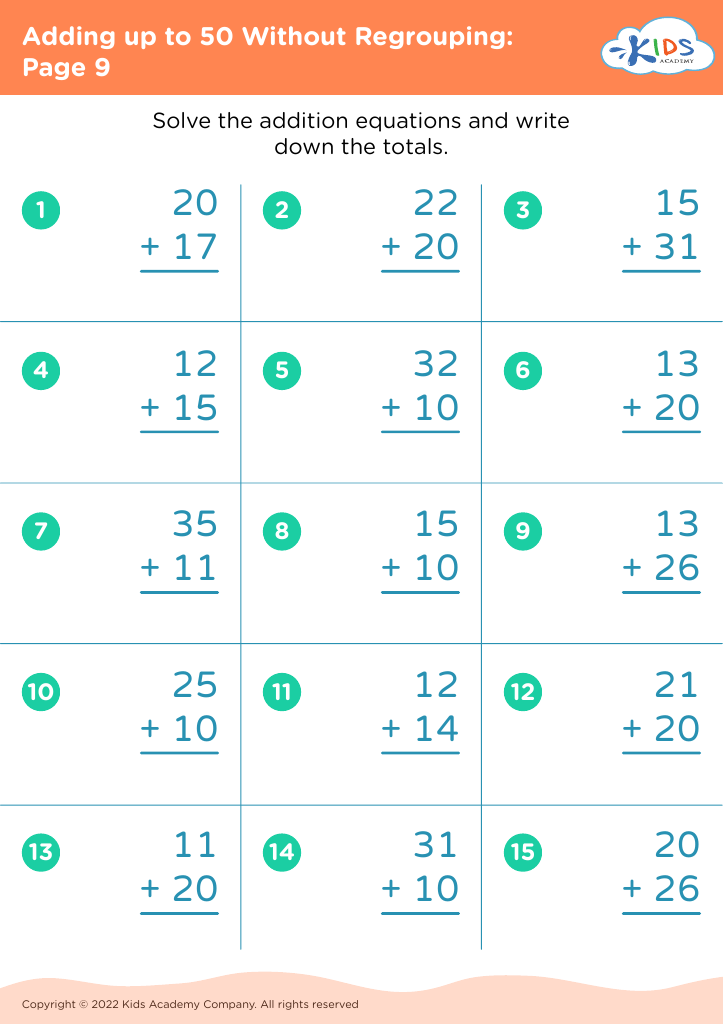







Fostering an understanding of addition in children aged 3-7 is crucial for several reasons. First and foremost, addition serves as the foundational building block for more advanced mathematical concepts. Early exposure and consistent practice help solidify this fundamental skill, ensuring a smoother transition to more complex operations like subtraction, multiplication, and division. By instilling these basics early, we set the stage for lifelong numeracy skills.
Moreover, engaging in addition practice enhances cognitive development. Children at this age have incredibly absorbent minds that benefit greatly from repeated exposure to numerical exercises. This practice also sharpens their problem-solving abilities and critical thinking skills, which are vital across all areas of learning and daily life.
Additionally, practicing addition can boost a child's confidence and academic self-esteem. When children experience success in learning basic math, they are more likely to feel confident tackling other subjects, thereby contributing to a positive attitude towards school and learning in general.
Parents and teachers play a critical role in motivating children and making learning enjoyable. Interactive and fun addition exercises, such as games or hands-on activities, make the learning experience more engaging. By prioritizing addition practice, we nurture a child's continuous intellectual growth and love for learning.








