Check out this FREE Trial Lesson on Math for age 3-7!

A

Favorites
With answer key
Interactive
  • 3-7
  • Basic Addition Skills
  • Math
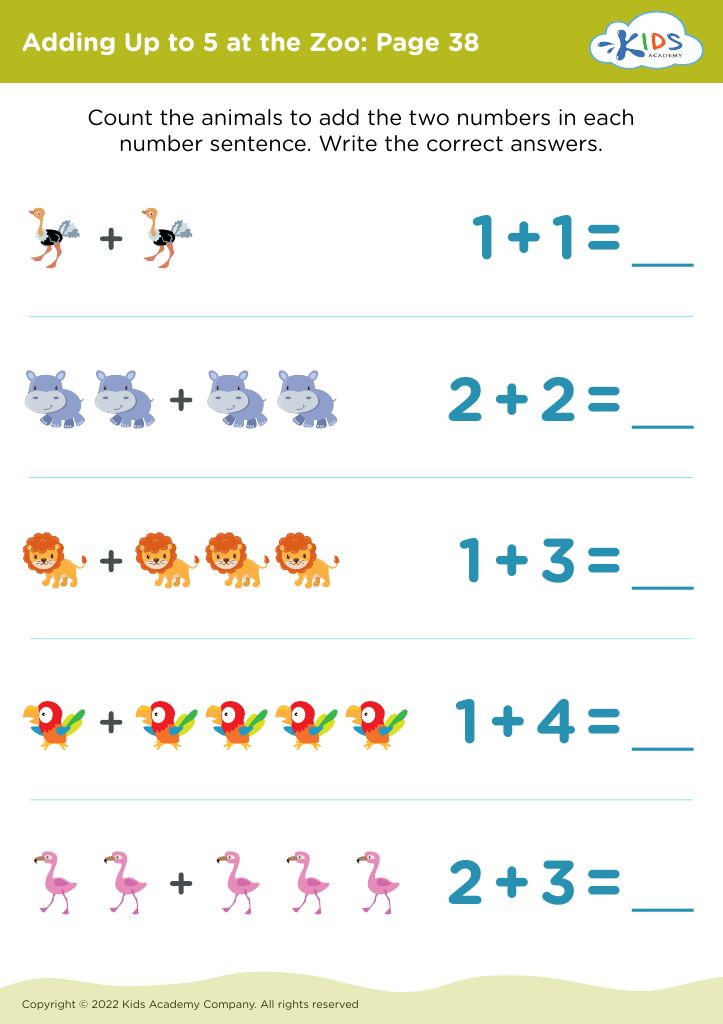
Adding Up to 5 at the Zoo: Page 38
Worksheet
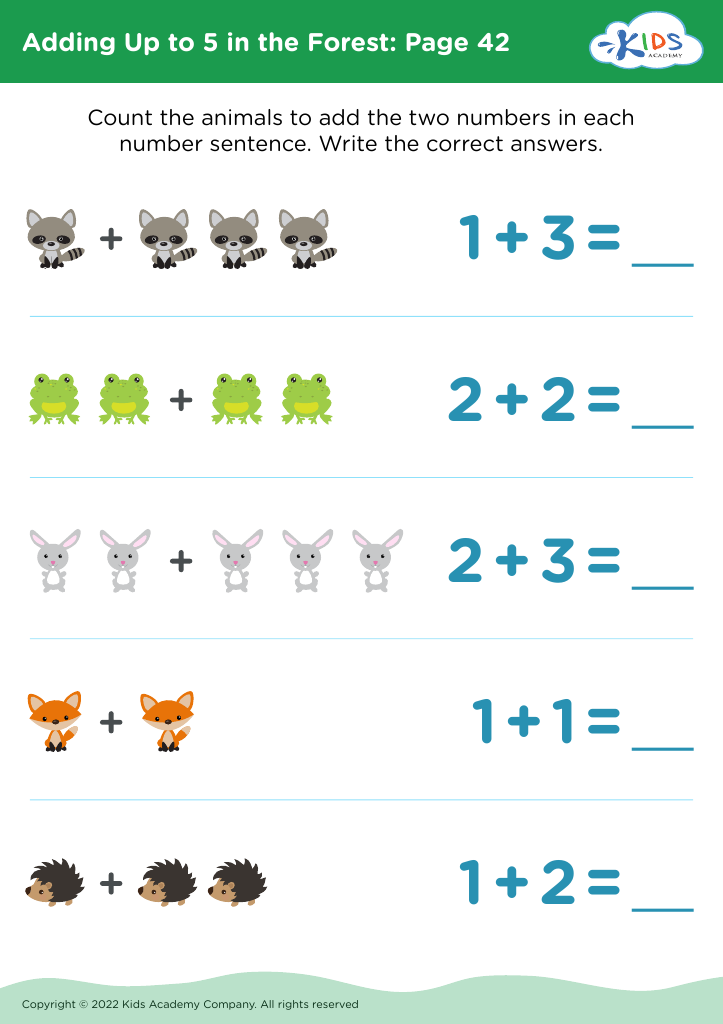
Adding Up to 5 in the Forest: Page 42
Worksheet
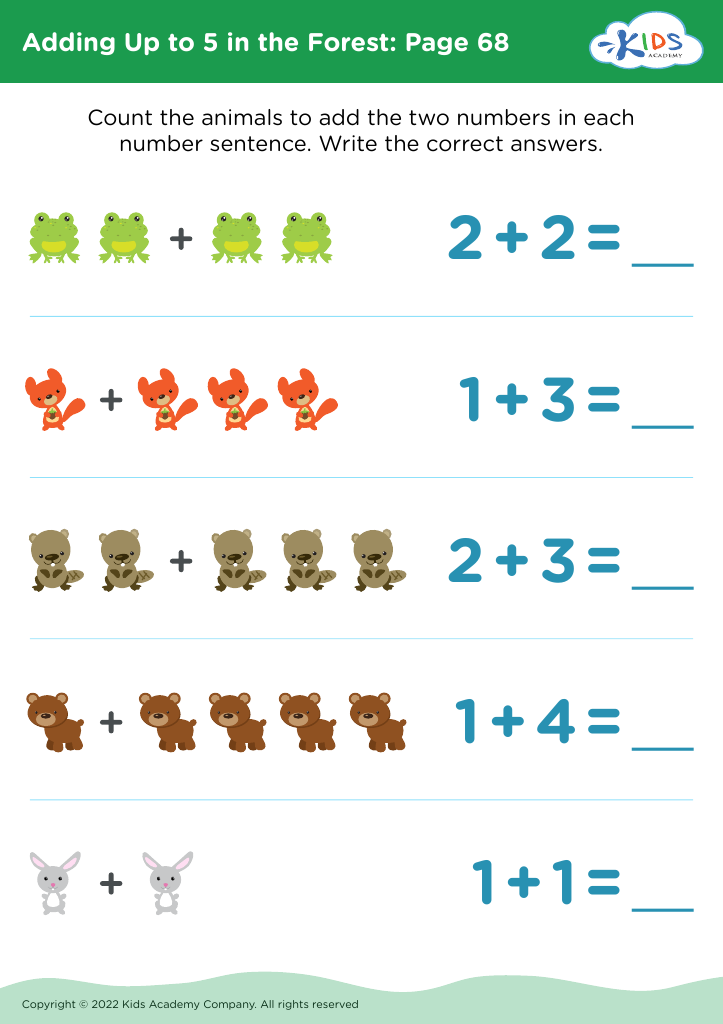
Adding Up to 5 in the Forest: Page 68
Worksheet
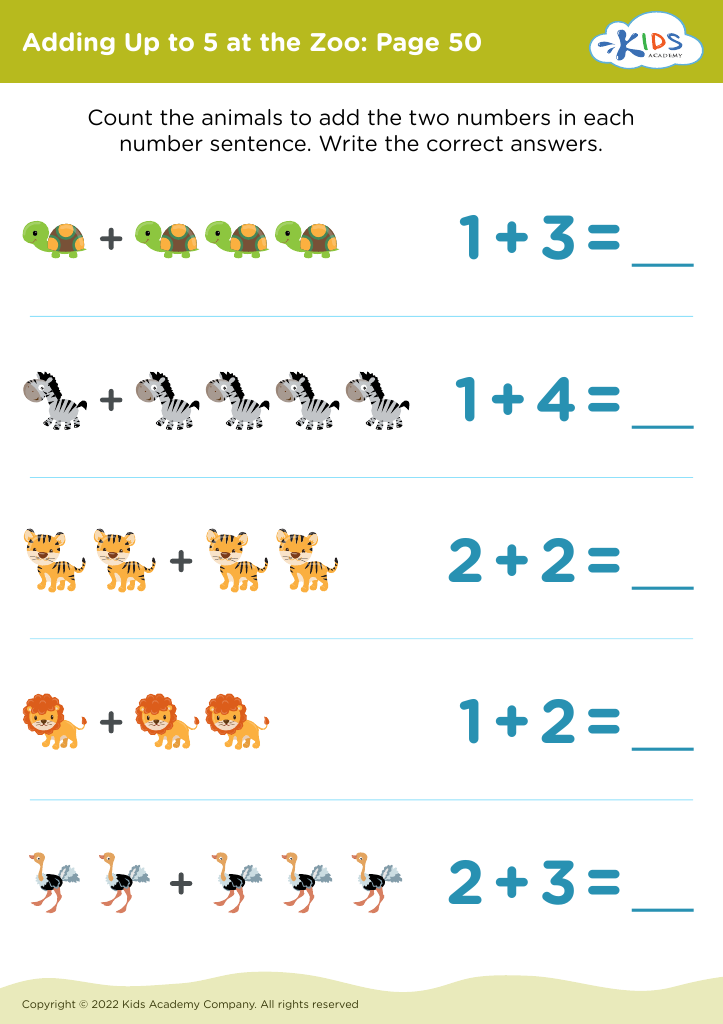
Adding Up to 5 at the Zoo: Page 50
Worksheet
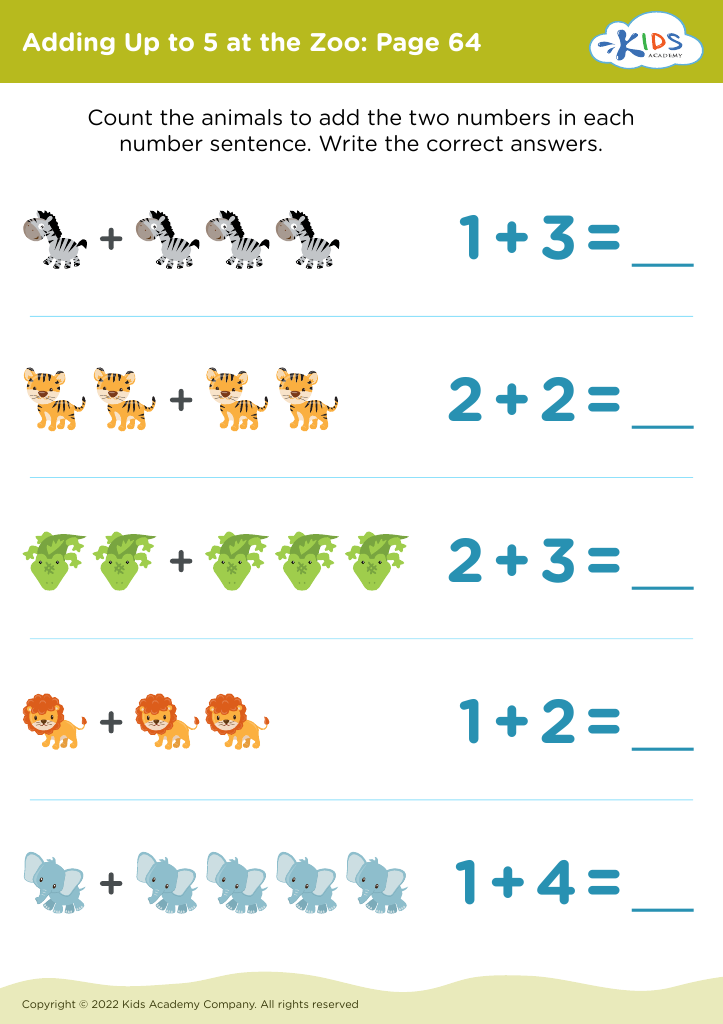
Adding Up to 5 at the Zoo: Page 64
Worksheet
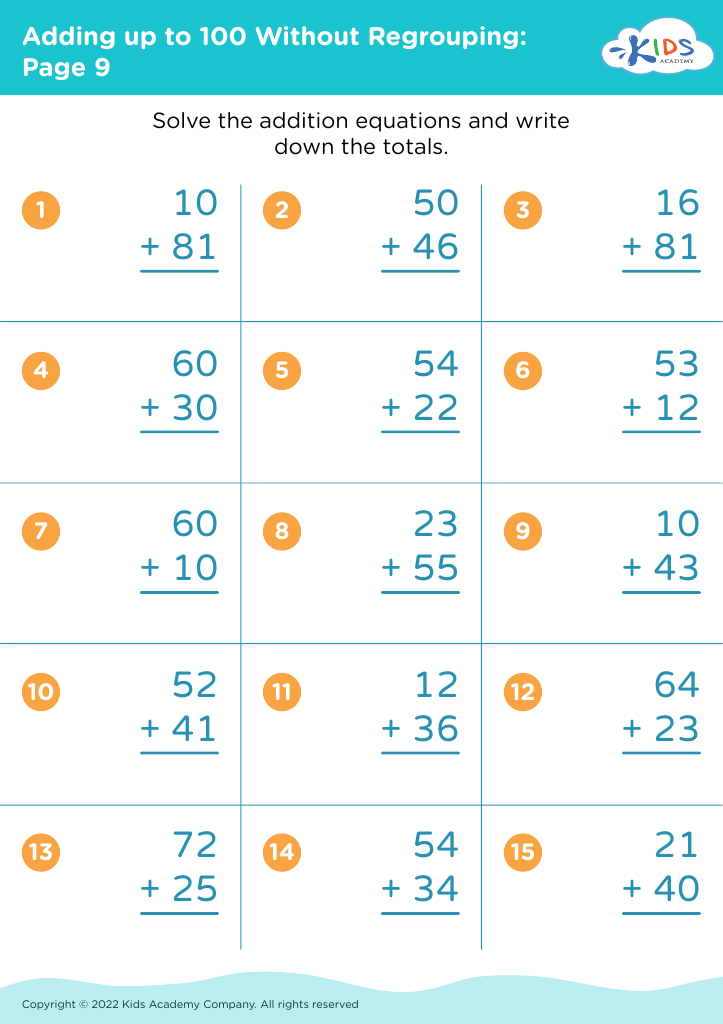
Adding up to 100 Without Regrouping: Page 9
Worksheet
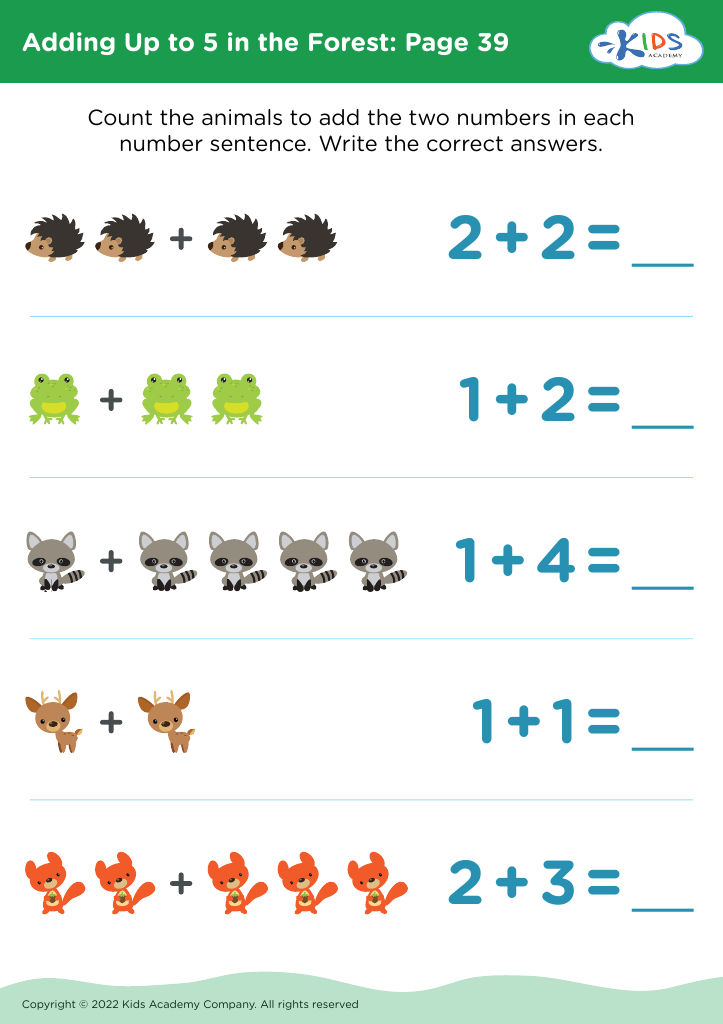
Adding Up to 5 in the Forest: Page 39
Worksheet
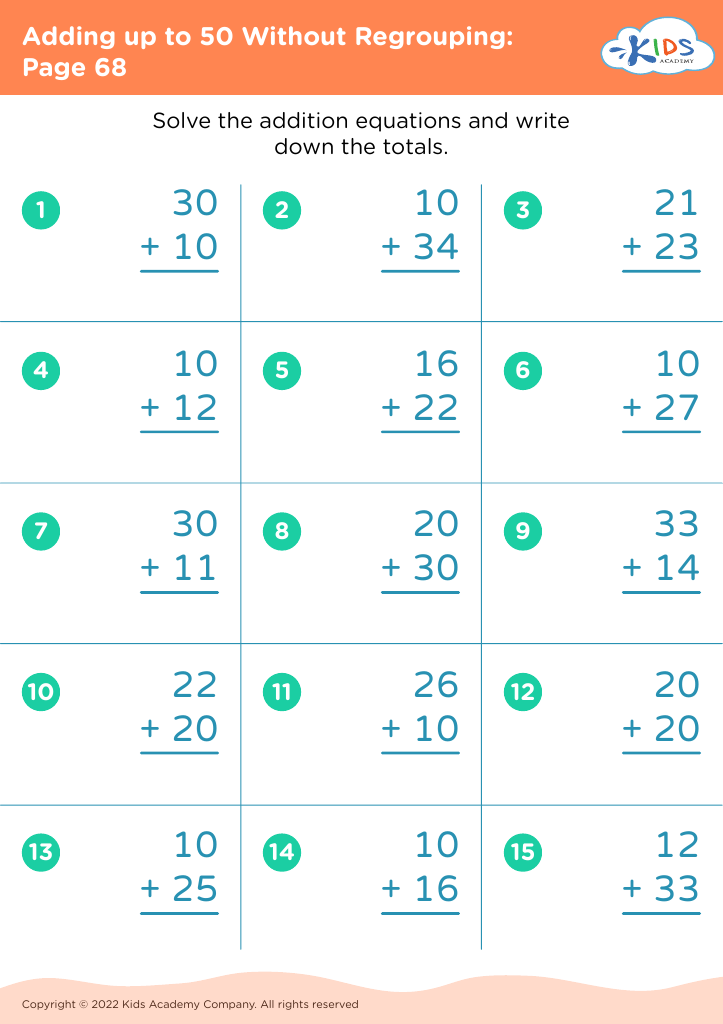
Adding up to 50 Without Regrouping: Page 68
Worksheet
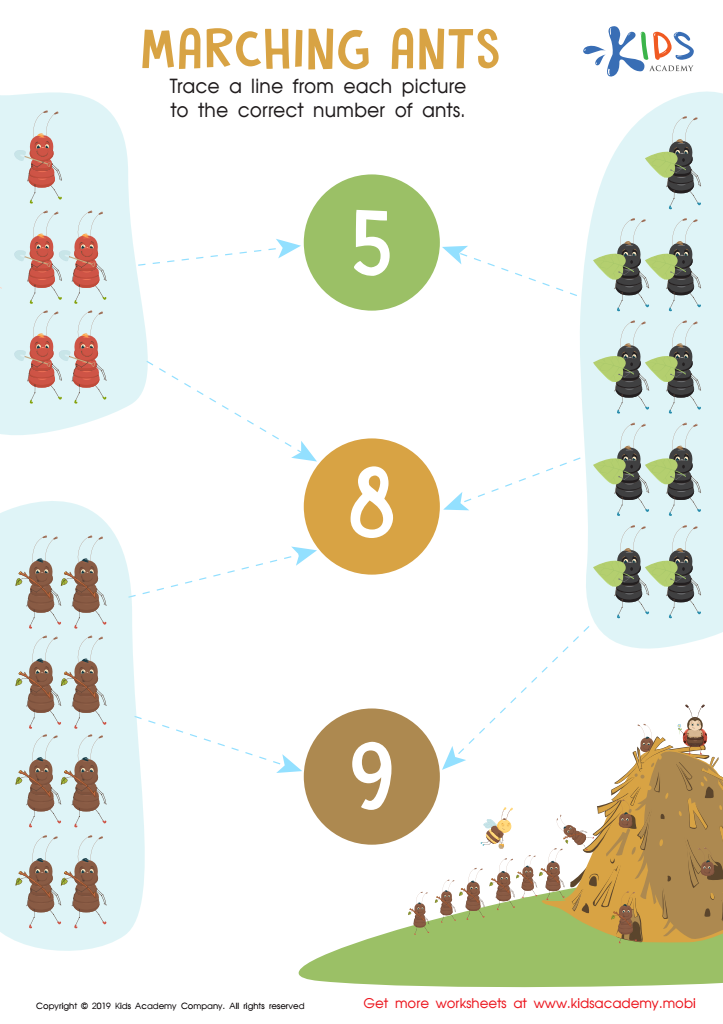
Marching Ants Worksheet

Marching Ants Worksheet

Assess and help your kids practice counting with this worksheet. Ask them to identify the four groups of ants in the picture. Guide them as they count each group and trace the lines to the corresponding number.
Marching Ants Worksheet
Worksheet
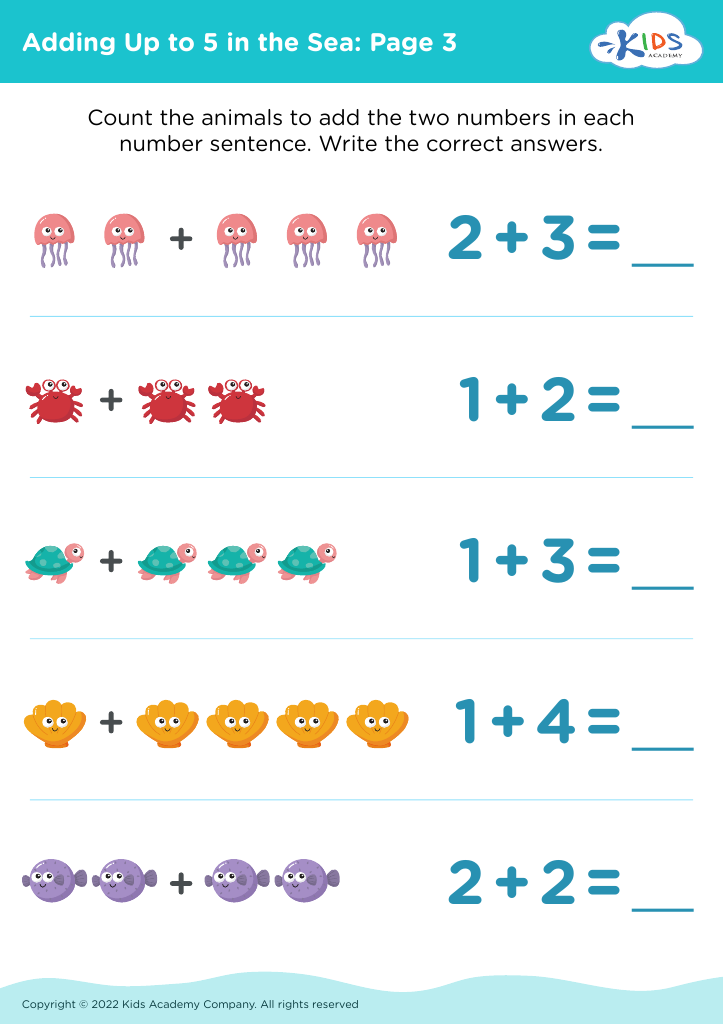
Adding Up to 5 in the Sea: Page 3

Adding Up to 5 in the Sea: Page 3

Adding Up to 5 in the Sea: Page 3
Worksheet
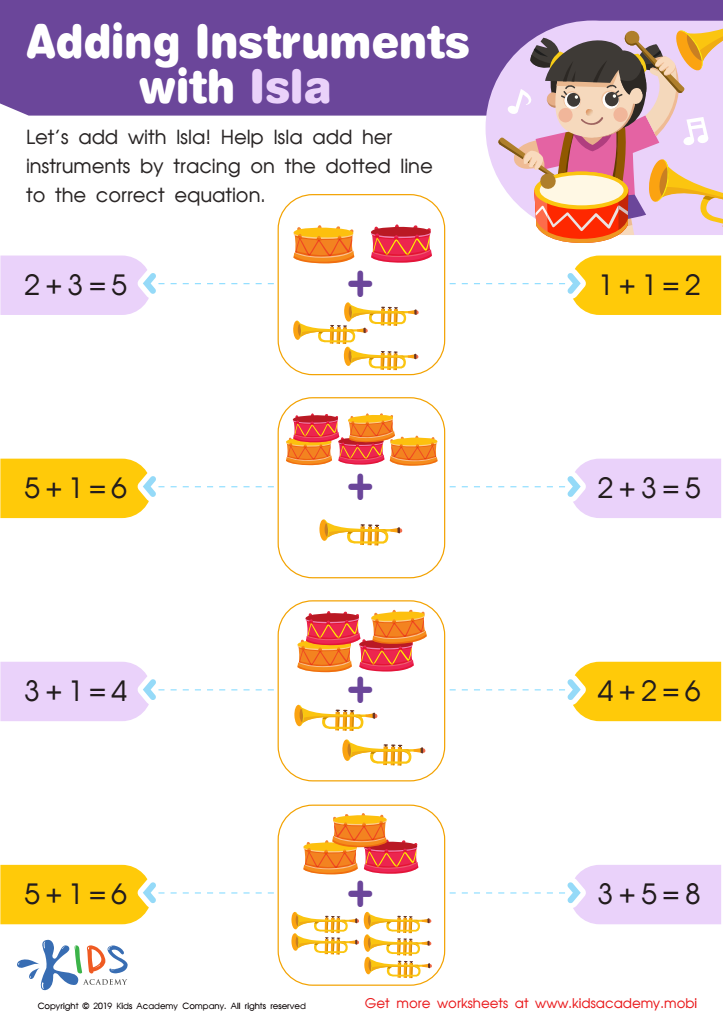
Adding Instruments with Isla Worksheet
Adding Instruments with Isla Worksheet
Your kids can have fun helping Isla add her musical instruments. With colorful pics and one-to-one representation, they can pick the correct addition sentence. They can connect each pic with traceable lines and get to the right sum up to 10.
Adding Instruments with Isla Worksheet
Worksheet
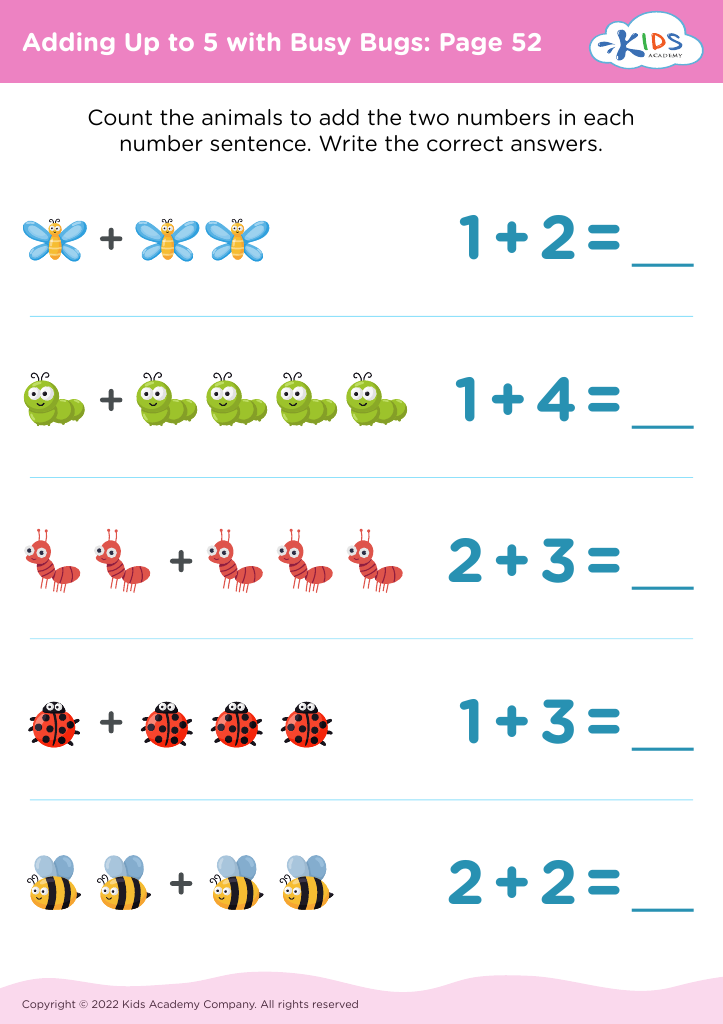
Adding Up to 5 with Busy Bugs: Page 52
Worksheet
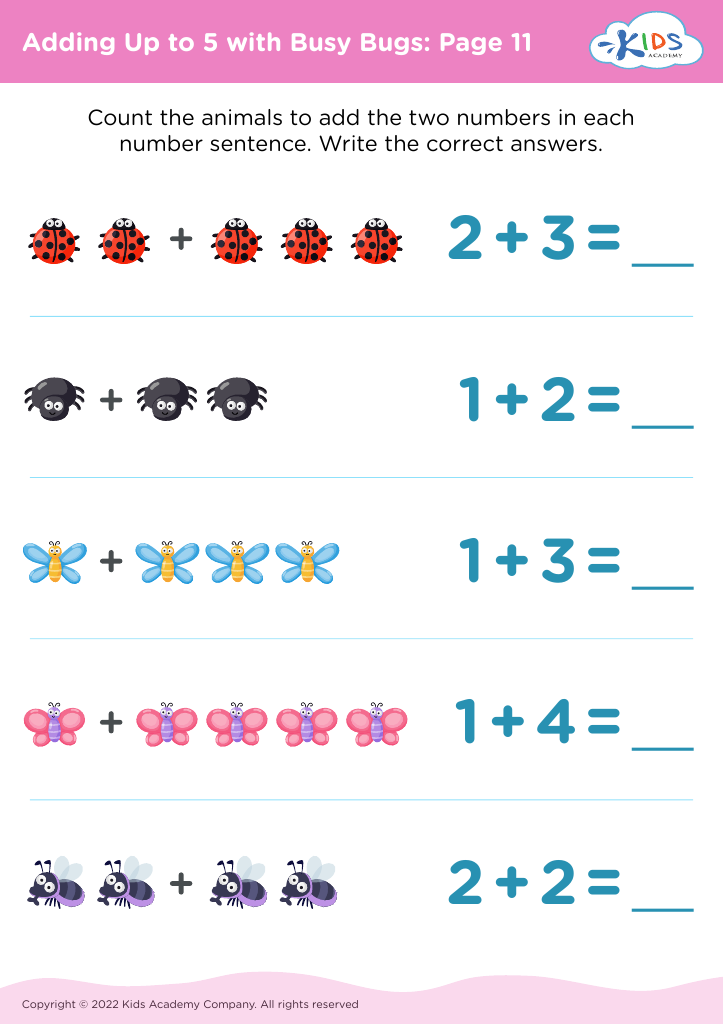
Adding Up to 5 with Busy Bugs: Page 11
Worksheet
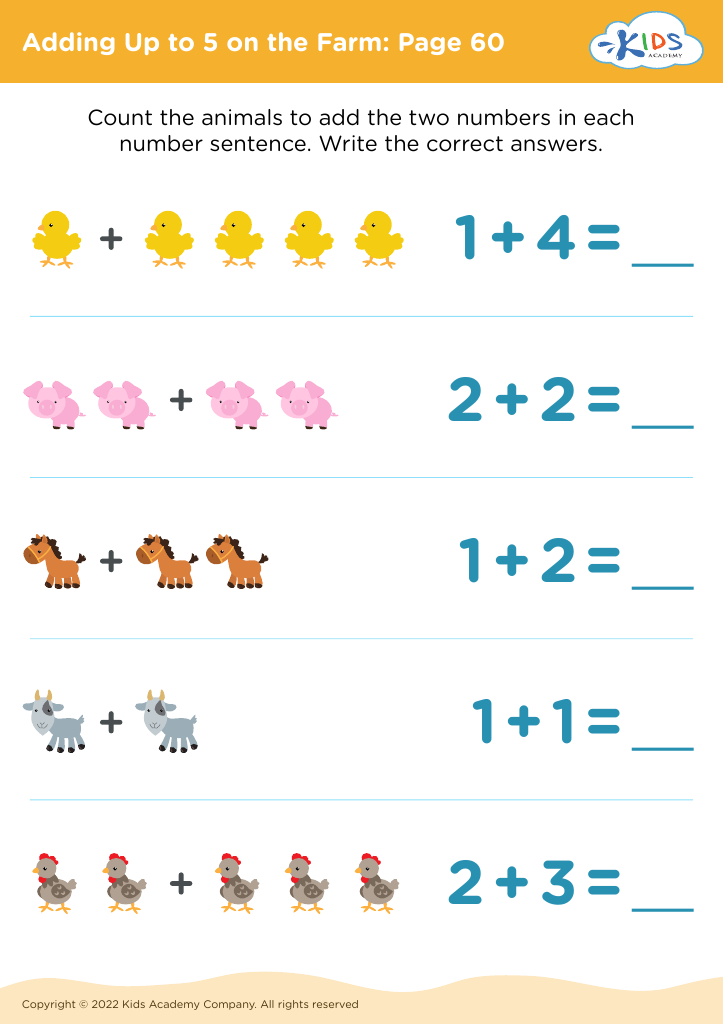
Adding Up to 5 on the Farm: Page 60
Worksheet
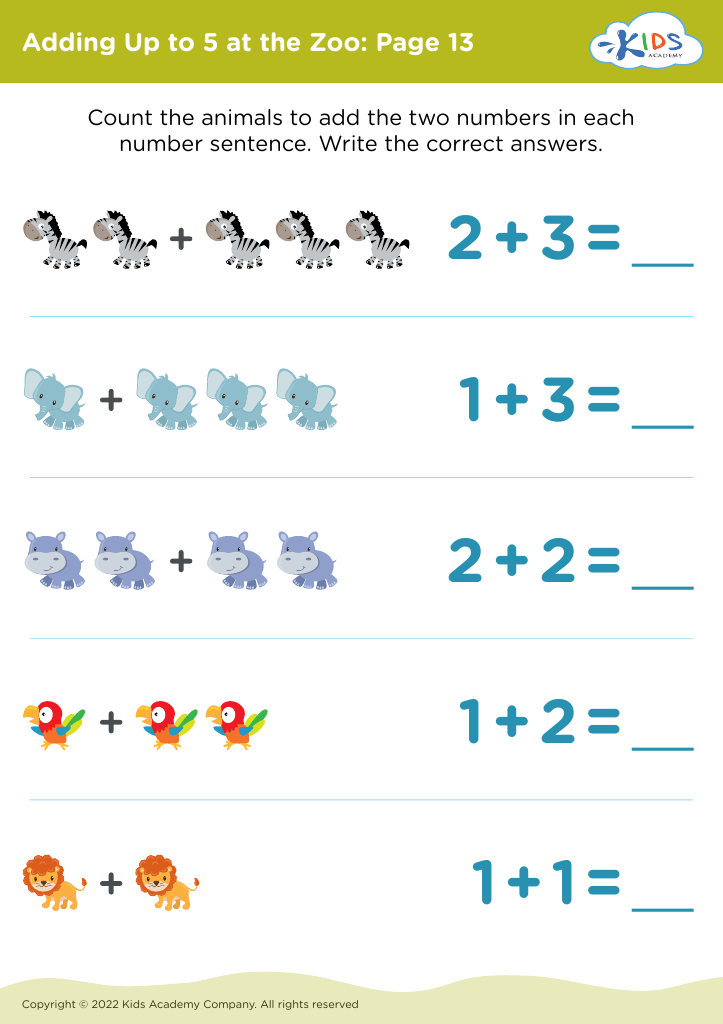
Adding Up to 5 at the Zoo: Page 13
Worksheet
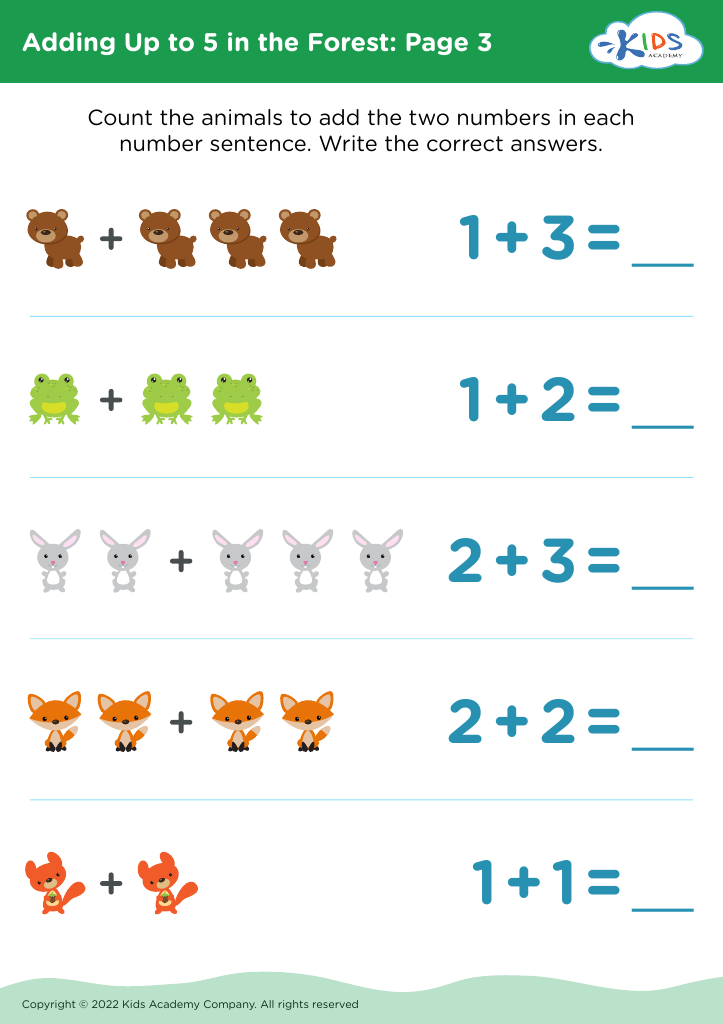
Adding Up to 5 in the Forest: Page 3
Worksheet
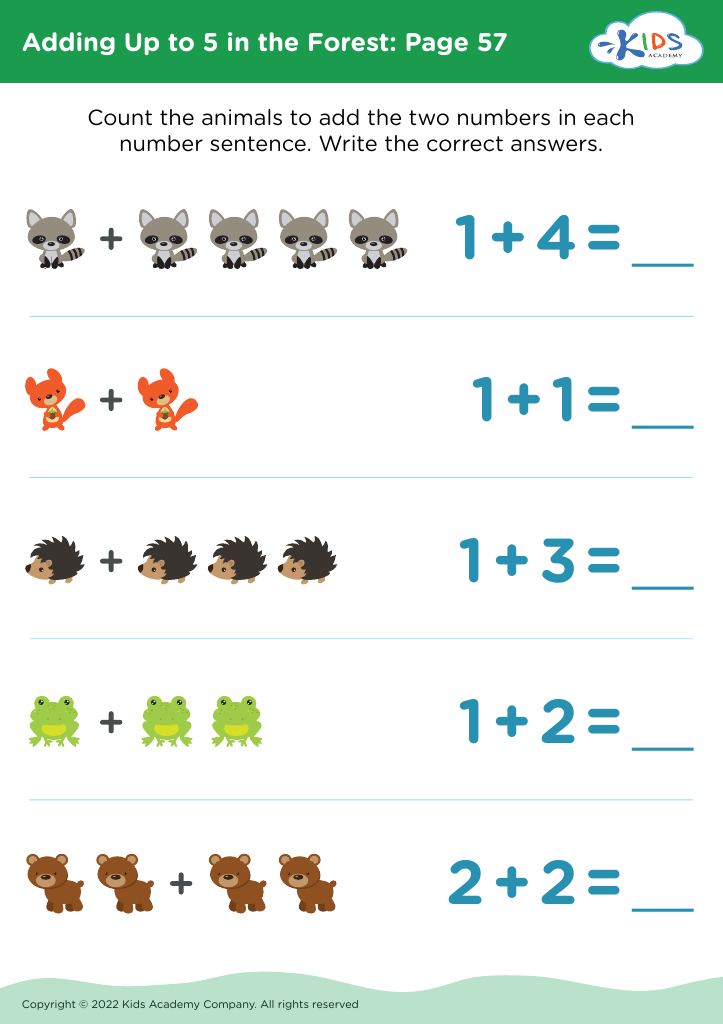
Adding Up to 5 in the Forest: Page 57
Worksheet
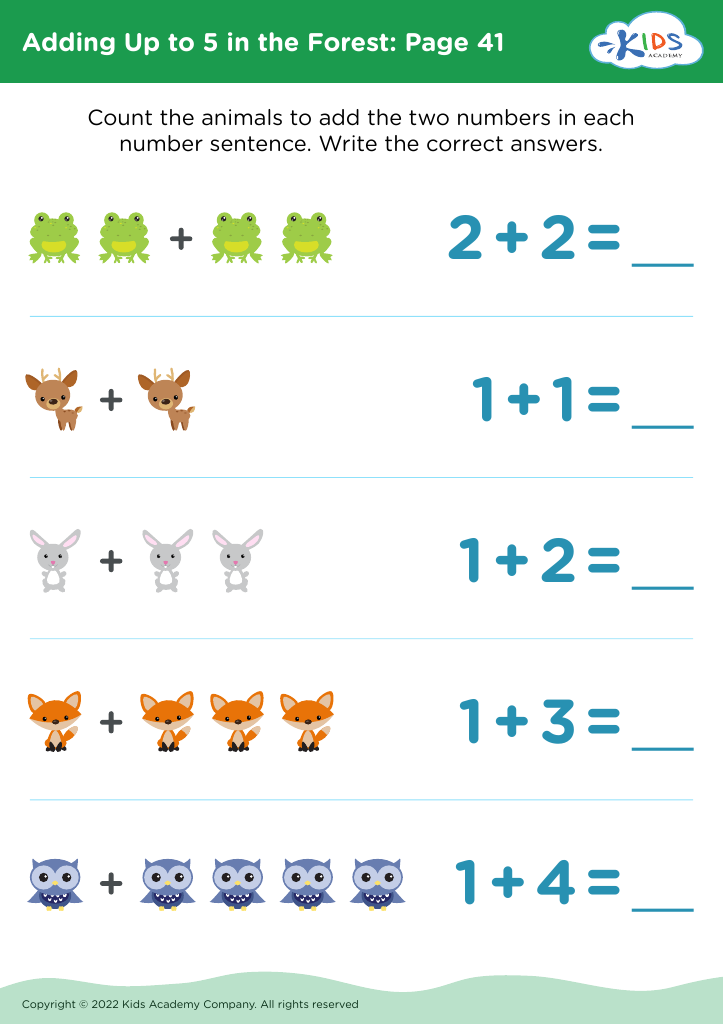
Adding Up to 5 in the Forest: Page 41
Worksheet
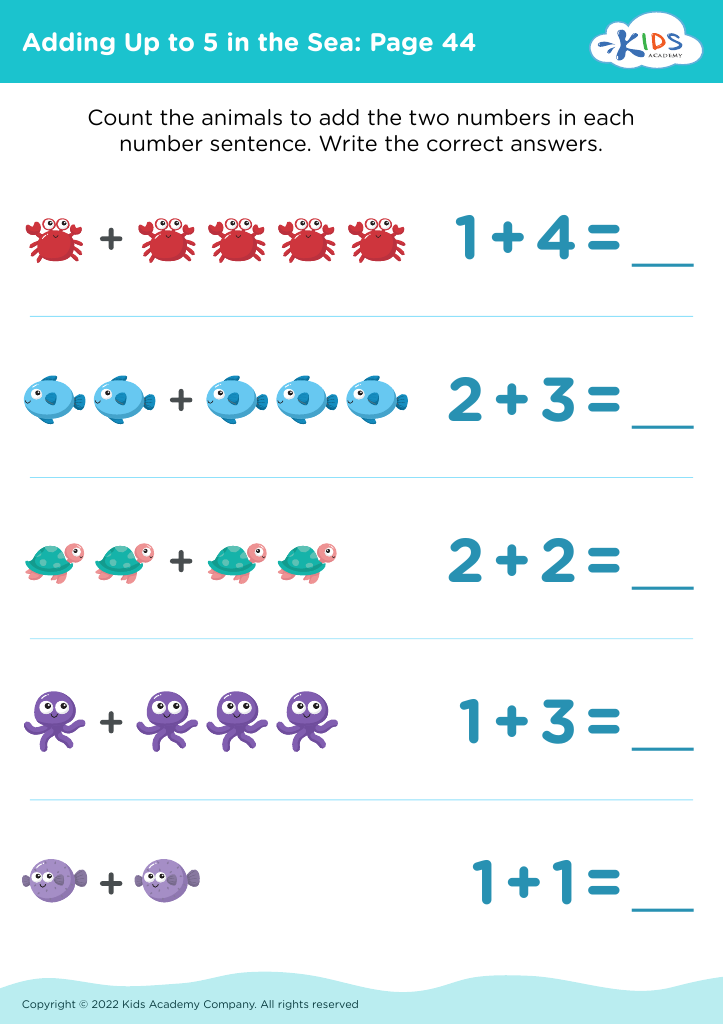
Adding Up to 5 in the Sea: Page 44
Worksheet


... 11 12

Basic addition skills are crucial for children aged 3-7 as they serve as the foundation for future mathematical understanding and problem-solving. At this stage, children's brains are particularly receptive to new concepts, making it an ideal time to introduce mathematical concepts in a fun and engaging way.

Mastering basic addition helps develop critical cognitive skills such as reasoning and understanding patterns, which are essential not just in math but in everyday decision-making. Furthermore, early math skills are linked to later academic success in higher mathematics, influencing a child's confidence and attitude towards learning in general.

For parents and teachers, nurturing basic addition skills translates to empowering children in their educational journey. Engaging in simple math activities can also enhance parent-child interactions, building a supportive learning environment while instilling a sense of achievement when children grasp new concepts.

Moreover, foundational math skills foster essential life skills such as time management, problem-solving, and financial literacy later on. By prioritizing these early math skills, parents and teachers invest proactively in a child’s academic future, paving the way for lifelong learning and curiosity about the world around them.