Basic geometry knowledge Math Worksheets for Ages 3-7
4 filtered results
-
From - To
Discover the joy of learning with our Basic Geometry Knowledge Math Worksheets designed for children ages 3-7. These worksheets are perfect for introducing young learners to essential geometric concepts, such as shapes, spatial awareness, and measurement. Each activity is thoughtfully crafted to engage children through fun illustrations and interactive exercises that promote early math skills. Kids will love identifying shapes, comparing sizes, and developing problem-solving abilities while enhancing their creativity. Our user-friendly printable resources ensure that math learning is both enjoyable and effective. Foster your child's love for geometry today with these engaging worksheets that lay a solid foundation for future success!
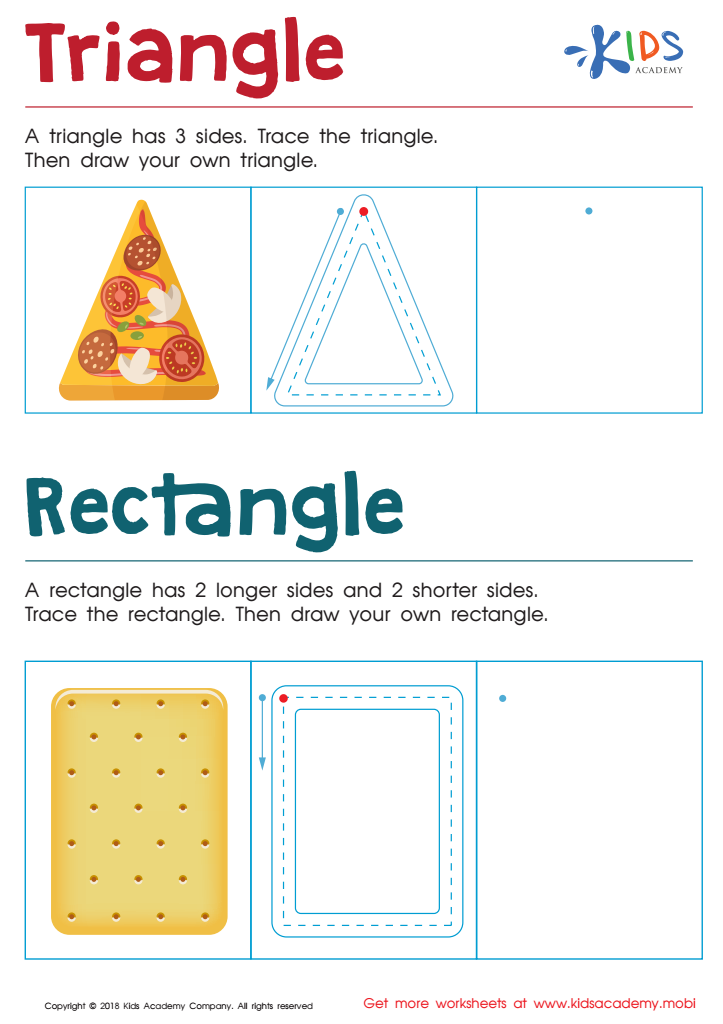
Triangle Rectangle Worksheet
 Assign to My Students
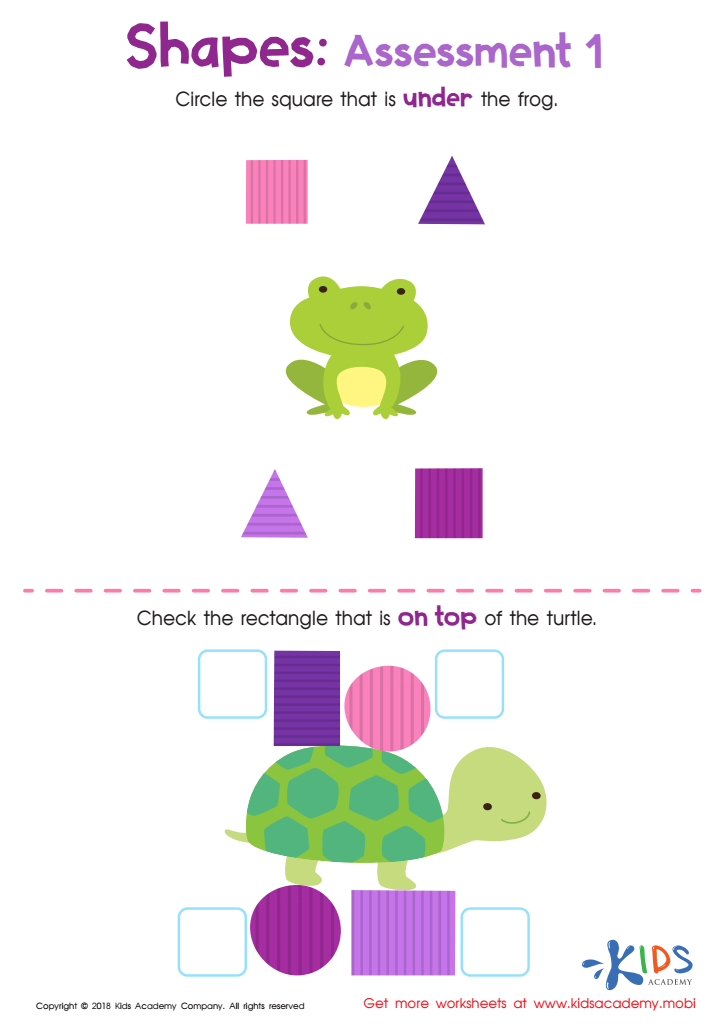
Geometry – Assessment 1 Worksheet
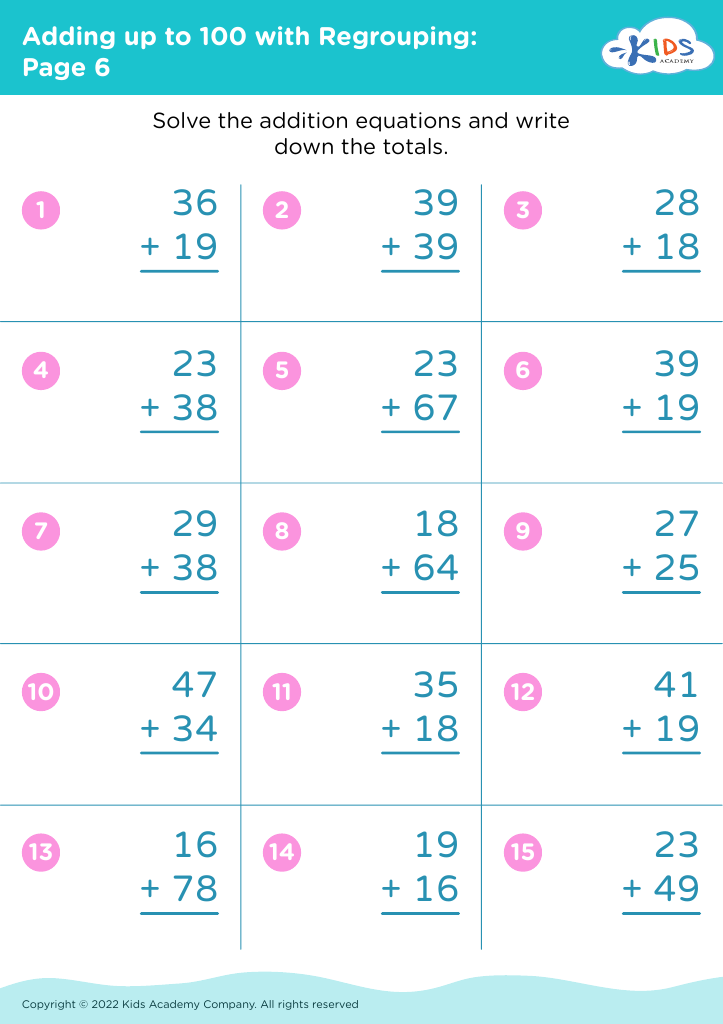
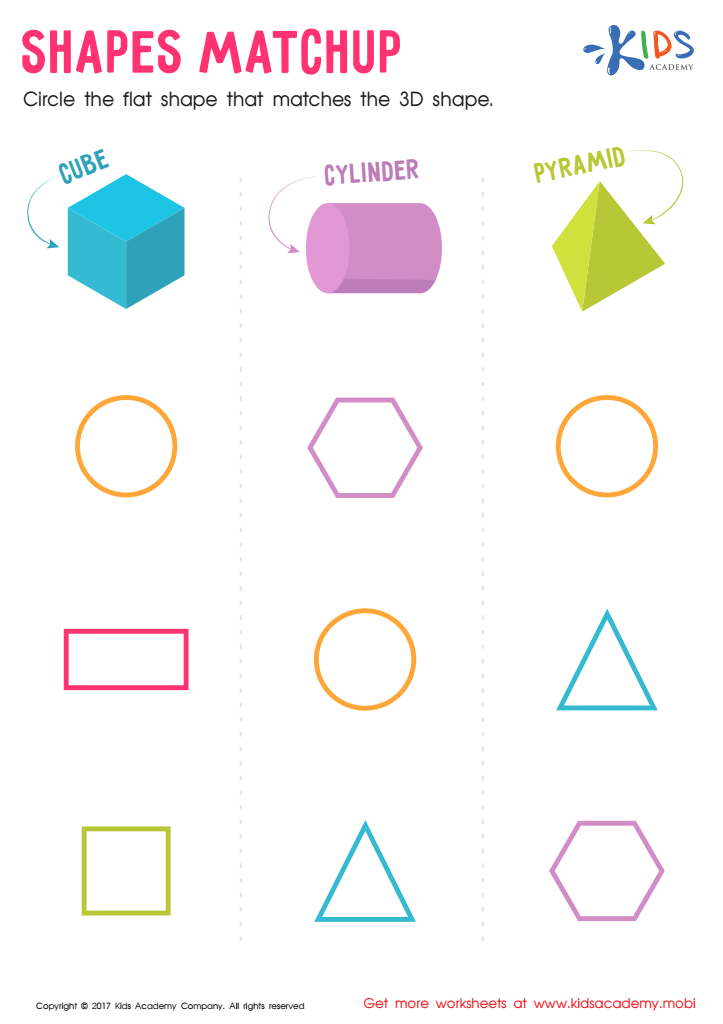
Shapes Matchup Worksheet




.jpg)



Basic geometry knowledge is crucial for children aged 3-7, serving as the foundation for their mathematical understanding and critical thinking skills. At this stage, children are naturally curious and perceptive, making early exposure to geometric concepts essential. Understanding shapes, sizes, patterns, and spatial relationships supports cognitive development, fostering skills like problem-solving and logical reasoning.
Parents and teachers play a pivotal role in nurturing this interest. Engaging children in geometry through playful activities and real-life contexts—like sorting shapes while playing or identifying geometric designs in everyday objects—makes learning both enjoyable and relatable. This hands-on approach enhances not only their comprehension of geometry but also their ability to articulate their reasoning.
Additionally, geometry enhances spatial awareness, which is vital for various everyday tasks, from navigation to art and design. Strengthening geometry knowledge at an early age lays the groundwork for more advanced math skills, which children will encounter in higher grades.
Ultimately, fostering a solid grasp of basic geometry equips children with essential tools to succeed academically and develop a lifelong appreciation for mathematics. As such, it is vital for parents and teachers to invest in and prioritize this foundational knowledge during the critical early learning years.








