Welcome to our “Basic Math Practice” worksheets designed for children ages 3-7! These engaging and colorful math worksheets help young learners enhance their foundational math skills in a fun and interactive way. Covering essential topics such as counting, addition, and subtraction, our worksheets promote early numeracy through playful activities. Each worksheet is thoughtfully crafted to cater to varying skill levels, ensuring children build confidence while learning. Perfect for parents and educators, these resources will aid in reinforcing key mathematical concepts at home or in the classroom. Start your child’s math journey today with our stimulating and creative worksheets!

Check out this FREE Trial Lesson on Math for age 3-7!

Telling time to the 5 Minute Mark

Favorites
With answer key
Interactive
  • 3-7
  • Basic math practice
  • Math
Sort and Count to the Moon Worksheet

Sort and Count to the Moon Worksheet

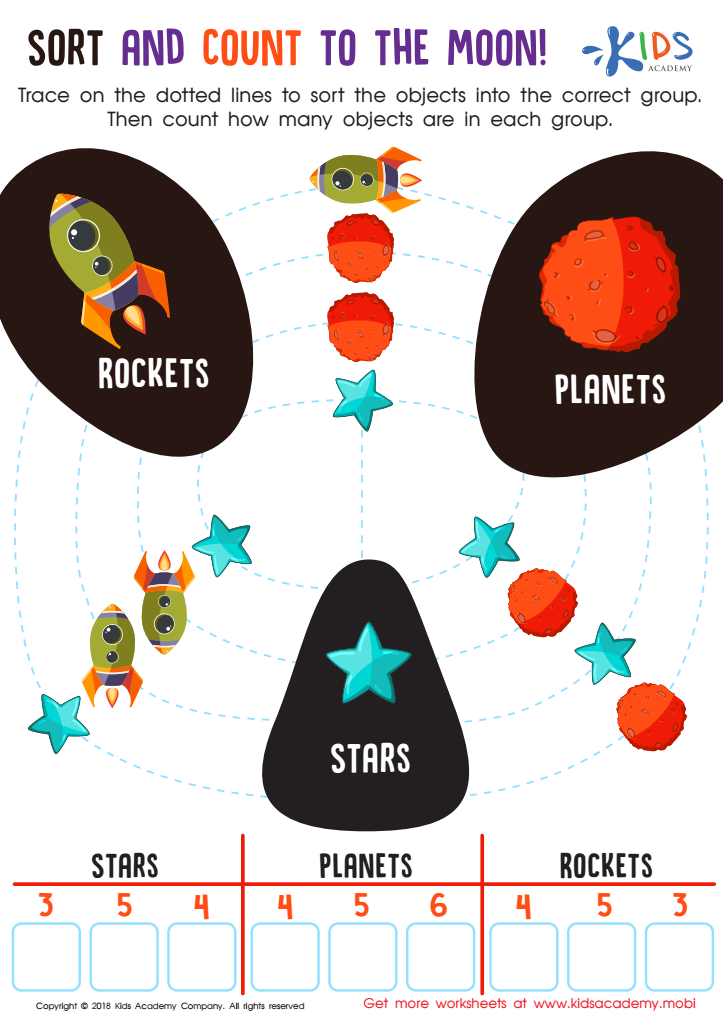
Little space explorers will love counting, sorting and strengthening number sense with this galactic worksheet! They'll use traceable lines to sort pictures of stars, planets and rockets into categories according to properties. After sorting, they'll count each item and fill in the boxes. Bold pictures make it fun and build critical thinking skills.
Sort and Count to the Moon Worksheet
Worksheet
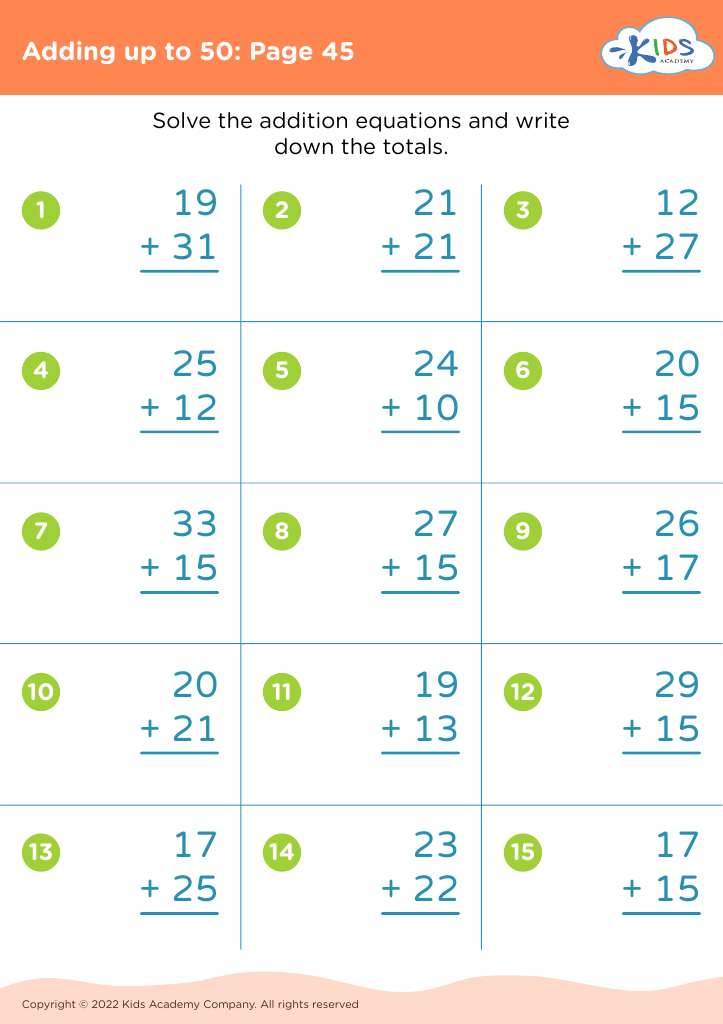
Adding up to 50: Page 45

Adding up to 50: Page 45

Adding up to 50: Page 45
Worksheet
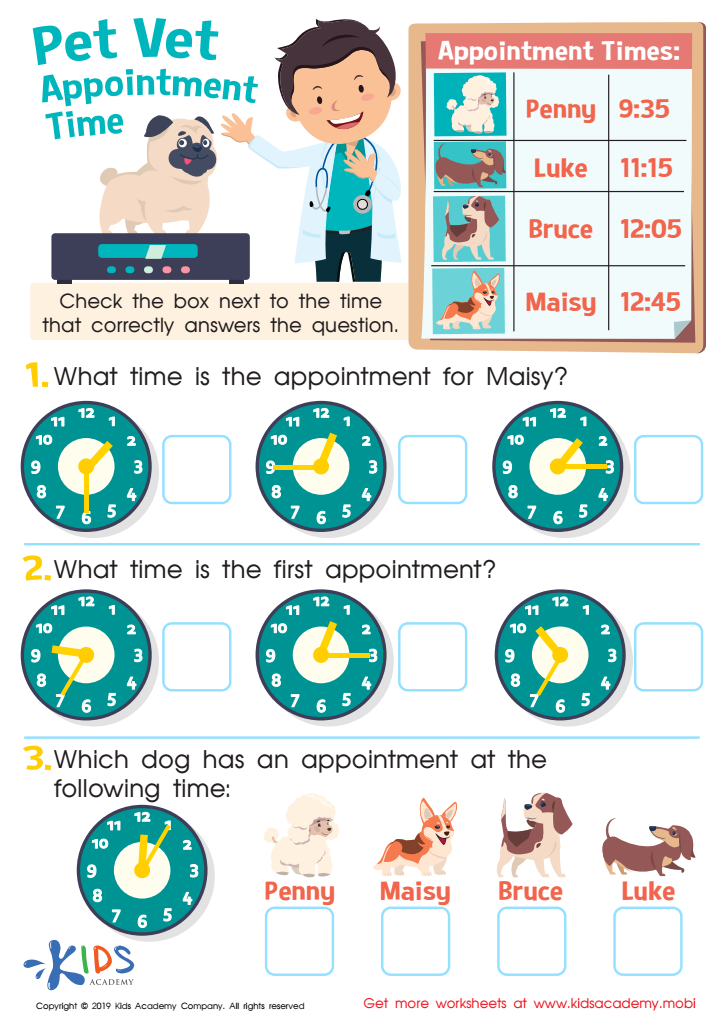
Pet Vet Appointment Time Worksheet

Pet Vet Appointment Time Worksheet

Teach your child how to read the time early, so they can master it. Explain the importance of being able to tell the time. Use this worksheet to have your child practice. Have them look at the clocks and check the box of the time that correctly answers the three questions.
Pet Vet Appointment Time Worksheet
Worksheet
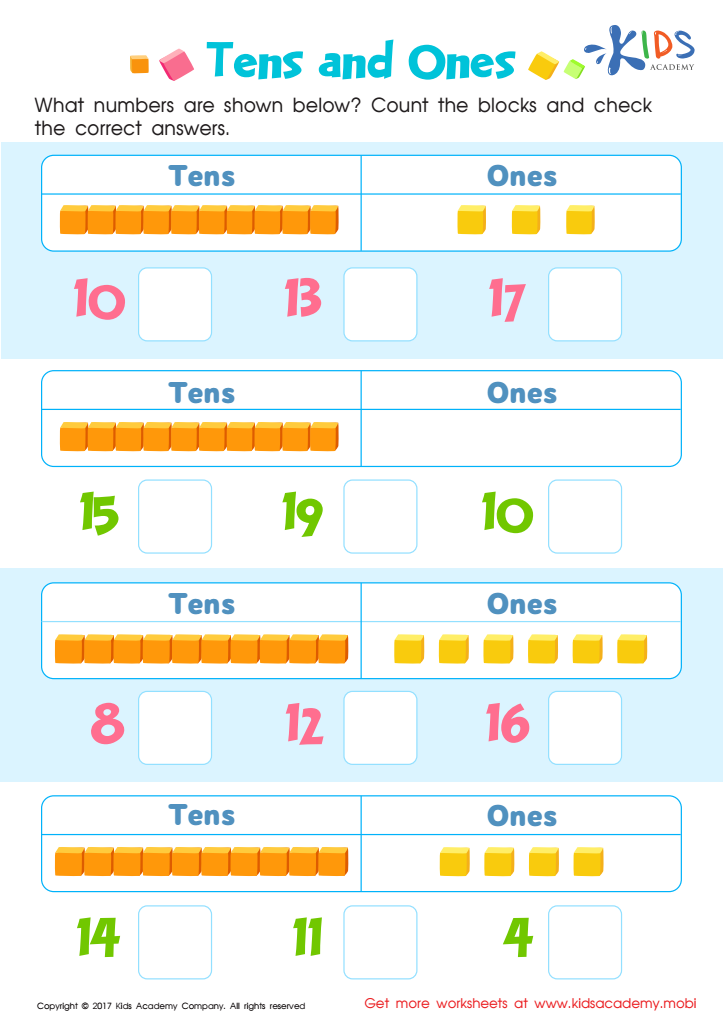
Tens and Ones Worksheet

Tens and Ones Worksheet

Help your child make math fun with this worksheet! Count the blocks on both sides and enter the total in the box below the figures. This will help them overcome any math-related anxieties they might have and let them enjoy the learning process.
Tens and Ones Worksheet
Worksheet
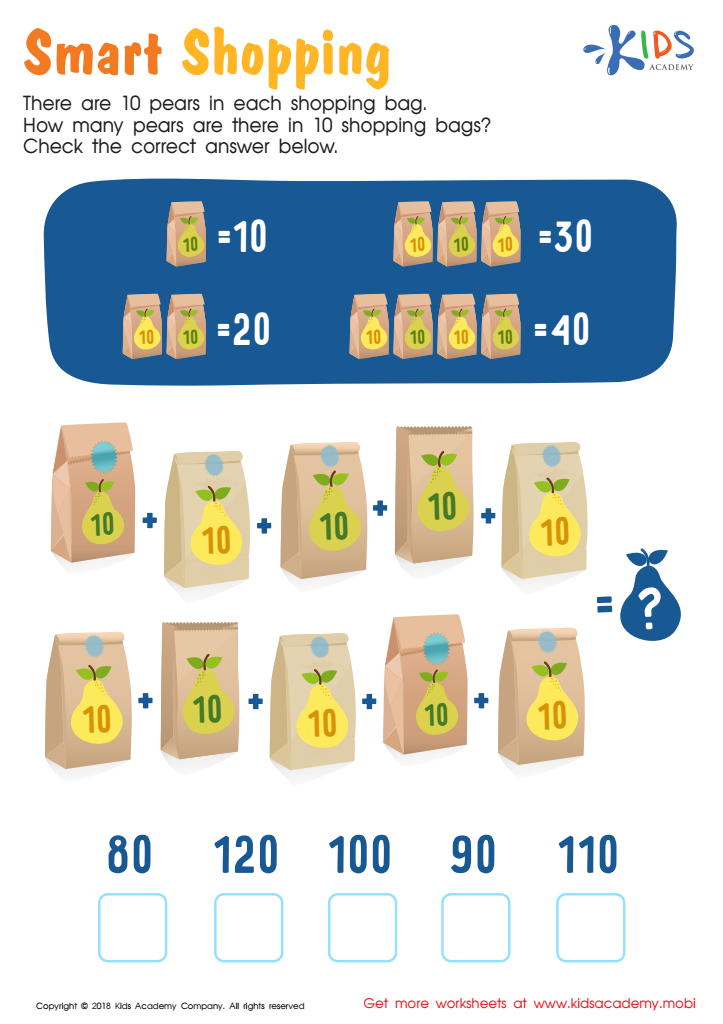
Smart Shopping: Trade Tens for a Hundred Worksheet

Smart Shopping: Trade Tens for a Hundred Worksheet

Use this worksheet to test counting skills: each bag has 10 pears. Ask your child how many pears are in 10 bags. Guide them as they count through the printout and check the answer below. See if they got it right!
Smart Shopping: Trade Tens for a Hundred Worksheet
Worksheet
Finding 4 in the Forest Worksheet
Finding 4 in the Forest Worksheet

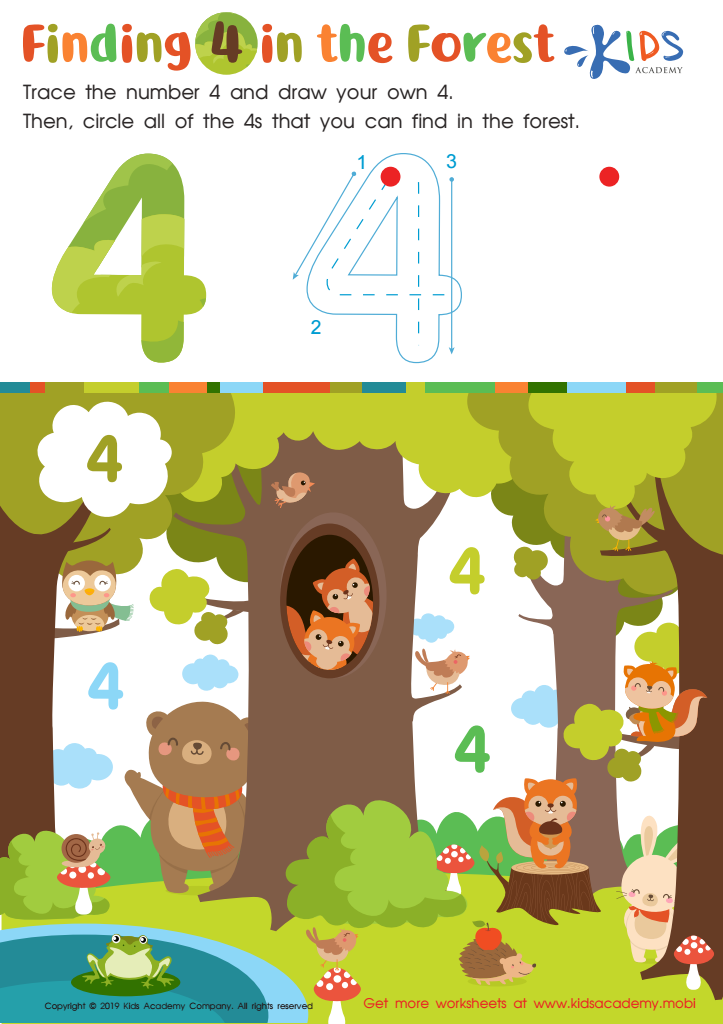
Before starting, have your kids count as high as they can. Ask them to identify the setting and point out the 4s. Trace 4 and draw your own. Help your kids circle all the 4s they can find in the forest. How far can they count? How well did they find the hidden 4s?
Finding 4 in the Forest Worksheet
Worksheet
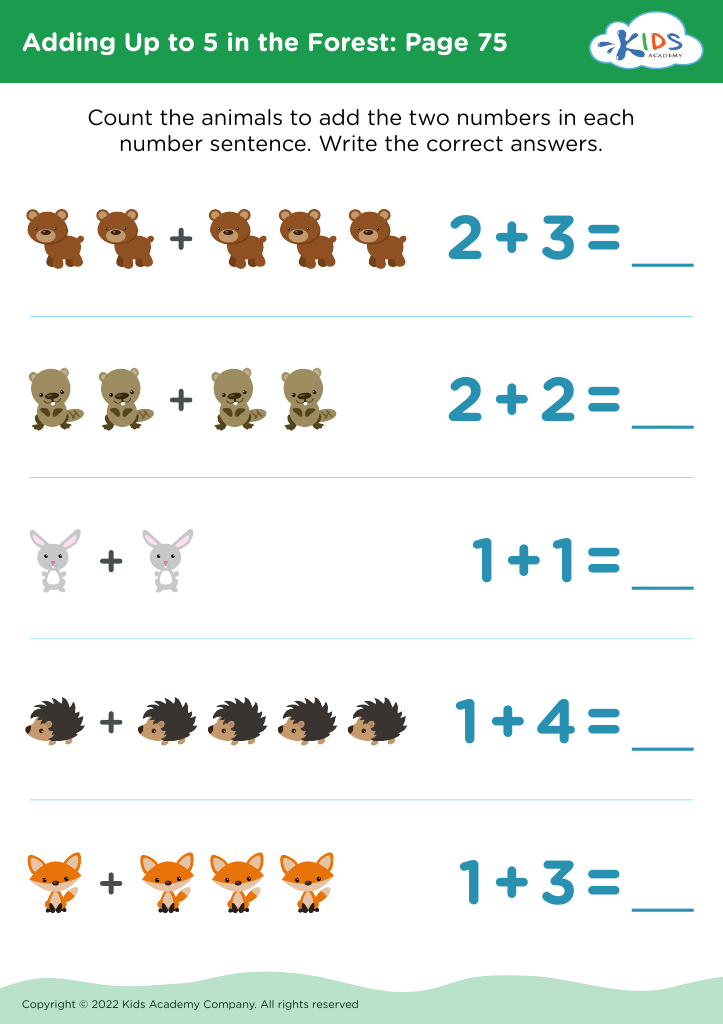
Adding Up to 5 in the Forest: Page 75
Worksheet
Add up the Dollars Worksheet


Add up the Dollars Worksheet

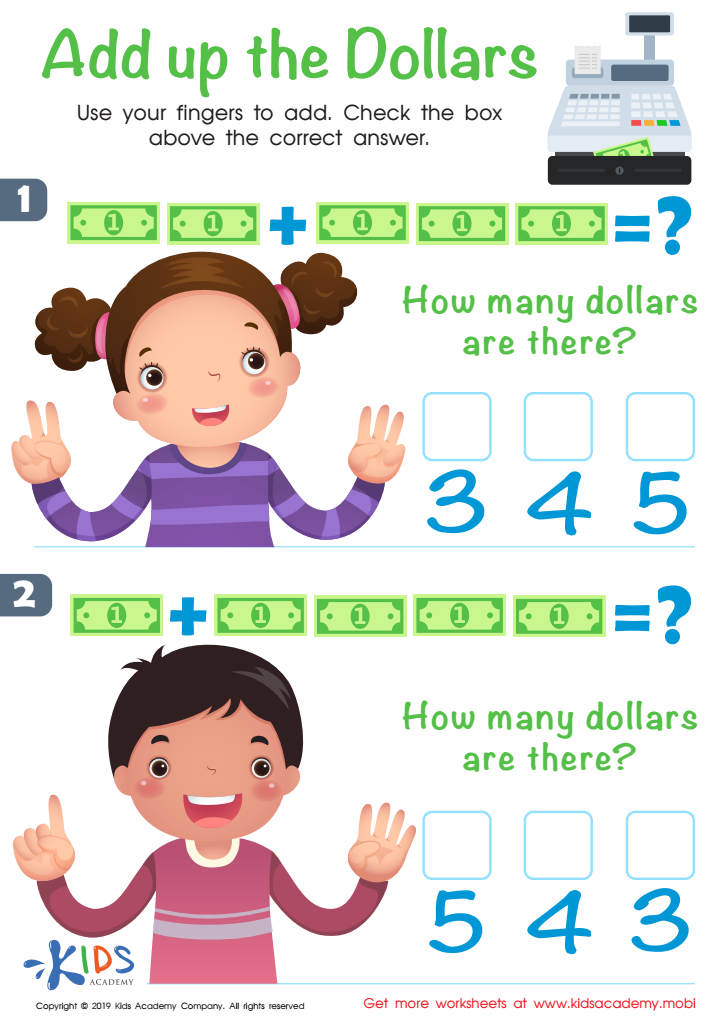
Money is key in life. It buys what we love and need. Get students to learn with exercises full of colour and familiar items like this worksheet. It shows two kids and some money. Ask pupils to use their fingers to add the money and check the box with the right answer.
Add up the Dollars Worksheet
Worksheet


Basic math practice for young children, aged 3-7, is crucial for several reasons. Firstly, early childhood is a critical developmental stage where foundational skills are established. Introducing basic math concepts through fun and engaging activities lays the groundwork for more complex mathematical understanding later on.

Research indicates that children who engage in early math practice are better equipped for future academic success. These skills not only enhance numeracy but also support problem-solving, logical reasoning, and critical thinking abilities. Additionally, math proficiency helps children develop confidence in their academic capabilities, promoting a positive attitude towards learning.

Furthermore, incorporating math into everyday activities fosters a stronger parent-child or teacher-student bond. When parents or teachers use games, stories, and interactive tasks to teach math, they create joyful learning experiences that engage children more deeply.

Moreover, basic math skills are essential for daily life tasks, helping children navigate the world around them. From counting toys to understanding time and measurements, the practical applications of math are evident even in early childhood.

In summary, early math practice equips children with essential skills, boosts confidence, aids social interactions, and prepares them for lifelong learning, making it a vital focus for parents and teachers alike.