Basic Mathematics Math Worksheets for Ages 3-7
7 filtered results
-
From - To
Sure, here's a 100-word description for the web page:
Explore our "Basic Mathematics Math Worksheets for Ages 3-7" at Kids Academy! Designed to make learning fun, our printable worksheets help young learners build foundational math skills through engaging activities. Children will practice counting, number recognition, addition, subtraction, and more, all tailored to their developmental stage. Each worksheet incorporates colorful images and interactive exercises that captivate and motivate kids. Perfect for both classroom use and home practice, our resources support parents and teachers in fostering early math confidence and proficiency. Unlock your child's potential and make math a joyous adventure with Kids Academy!
This description encapsulates key elements to attract and inform your target audience effectively.
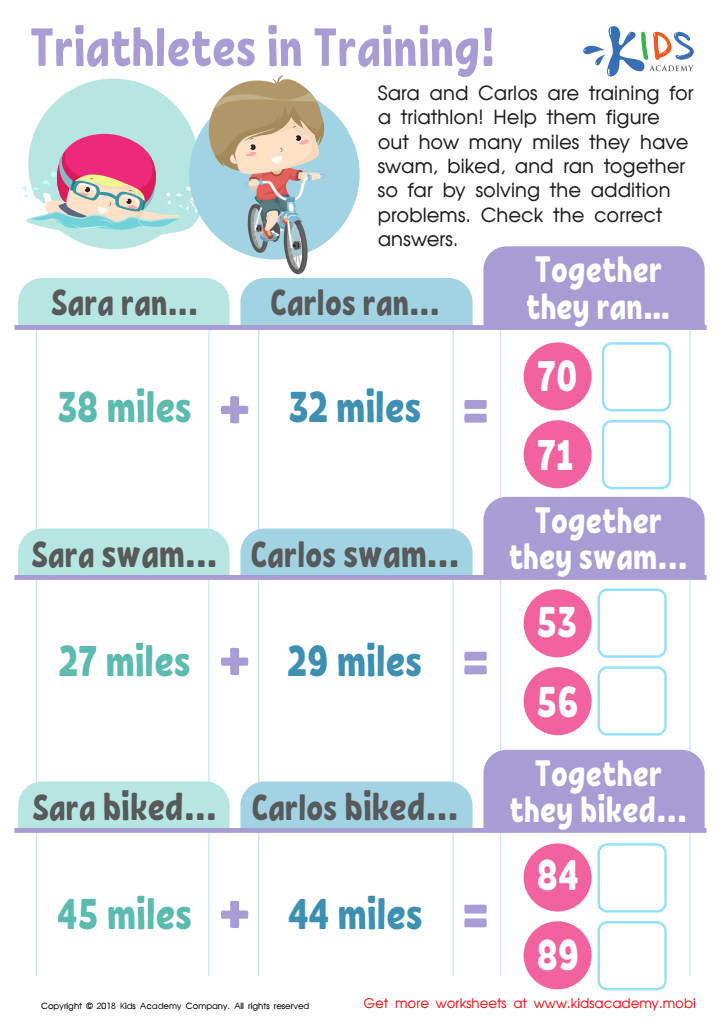
Triathletes in Training Worksheet
 Assign to My Students
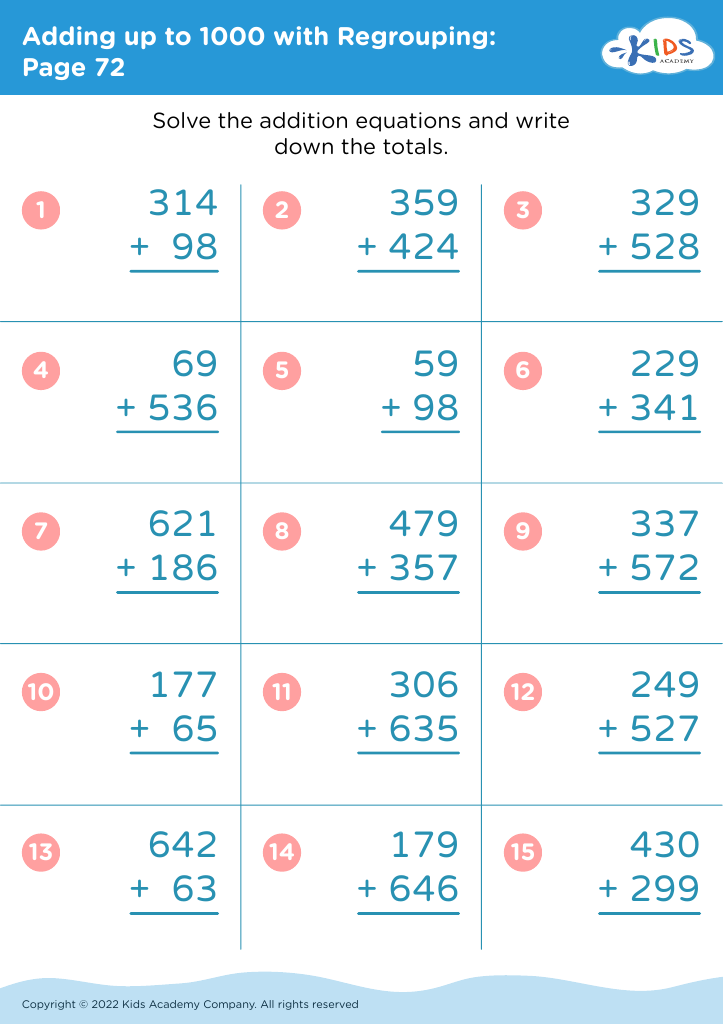
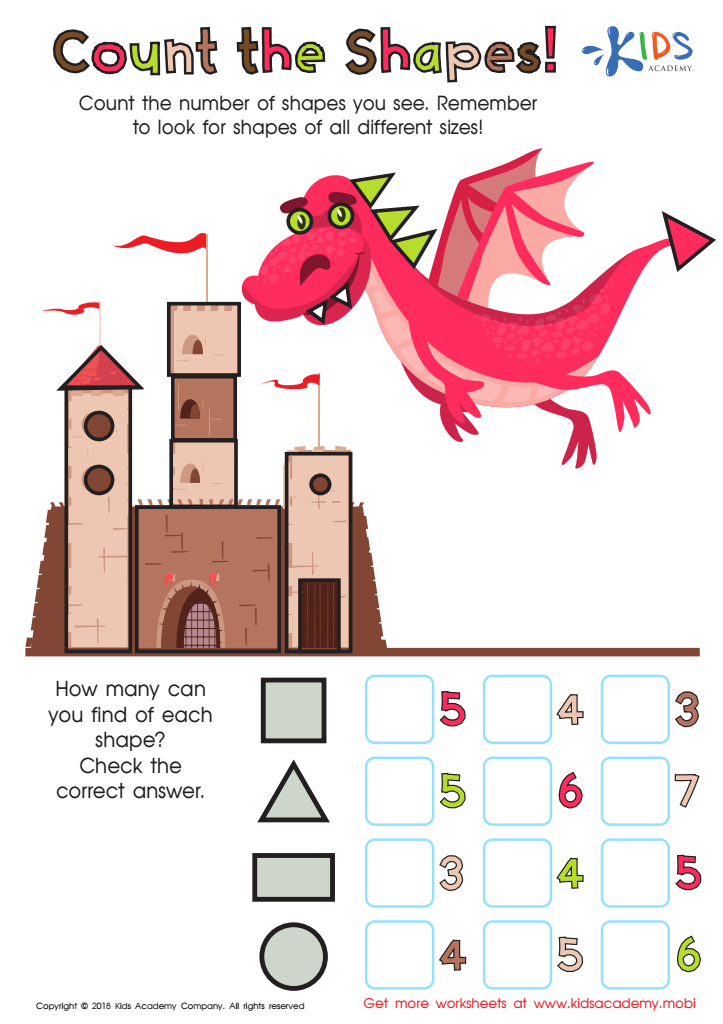
Count the Shapes Worksheet
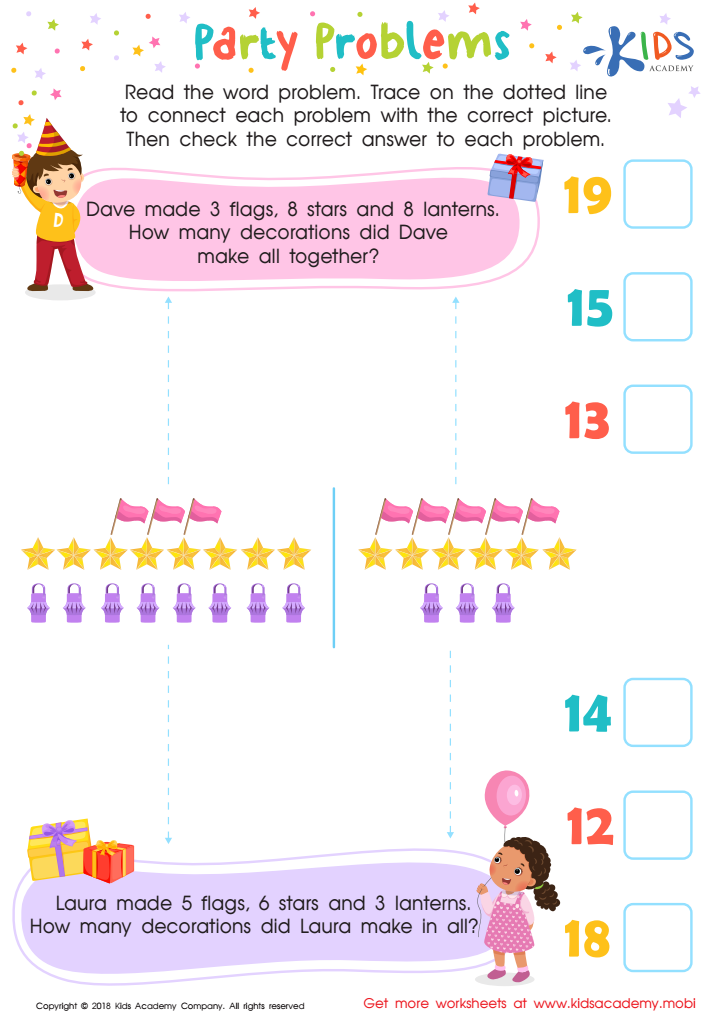
Party Problems Worksheet
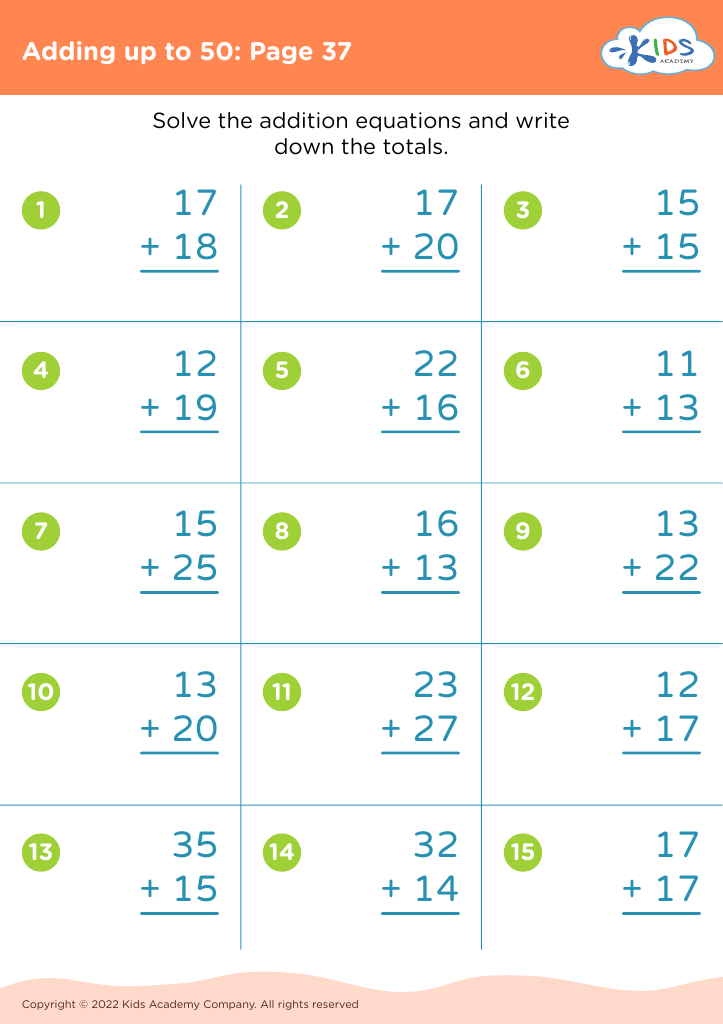
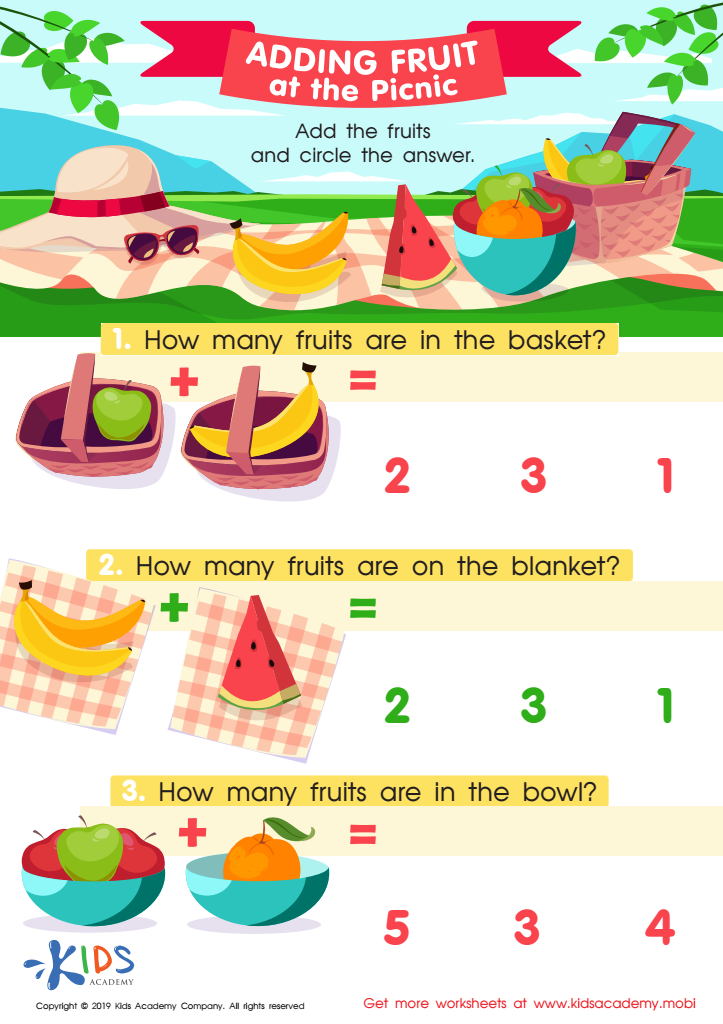
Adding Fruit at the Picnic Worksheet
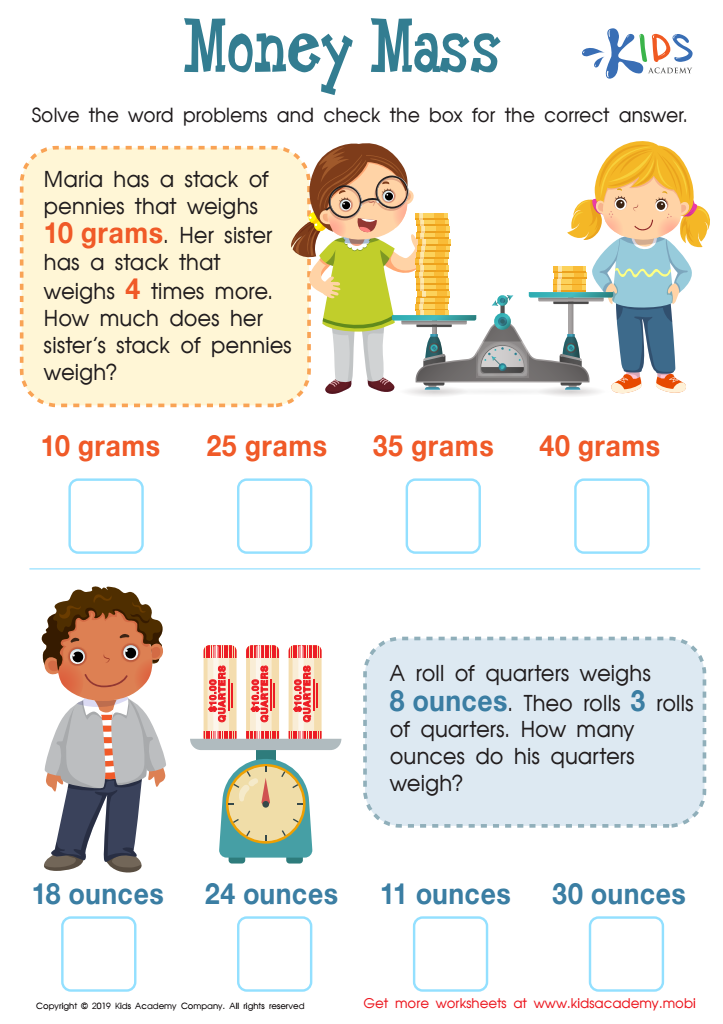
Money Mass Worksheet







Math skills are foundational for a child’s overall development and future academic success, making attention to basic mathematics for ages 3-7 crucial. During these formative years, children are exceptionally receptive and capable of grasping fundamental concepts that shape their cognitive abilities. Early introduction to basic math helps develop critical thinking, problem-solving skills, and logical reasoning. Encouraging familiarity with numbers, shapes, patterns, and basic arithmetic enables children to build a solid foundation for more complex mathematical concepts they’ll encounter later.
Parents and teachers should care because early math experiences are strongly linked to future achievements. Studies have shown that early numeracy skills are a strong predictor of later academic performance, often even more so than early literacy skills. Furthermore, engaging young children in math also supports language development, social skills, and confidence-building. Math activities like counting objects, identifying shapes, and following simple patterns can become playful, nurturing interactions that further enhance a child’s learning environment.
Ultimately, ensuring children gain a robust grounding in basic math not only supports their current learning journey but also equips them with essential skills they will use throughout their lives, both academically and in everyday situations. Investing in early math education sets the stage for future success and a positive relationship with learning.








