Comparing object weights Math Worksheets for Ages 3-7
3 filtered results
-
From - To
Discover our engaging "Comparing Object Weights" math worksheets tailored for children ages 3-7! These fun and interactive resources help young learners develop essential comparative skills by examining and contrasting the weights of various objects. Through colorful illustrations and easy-to-follow activities, children practice concepts such as heavier, lighter, and equal weight. Our worksheets encourage critical thinking and foster a hands-on approach to learning. Perfect for classroom or home use, they support early math education while keeping kids entertained. Start nurturing your child's mathematical abilities today with our delightful and educational comparing weights worksheets!
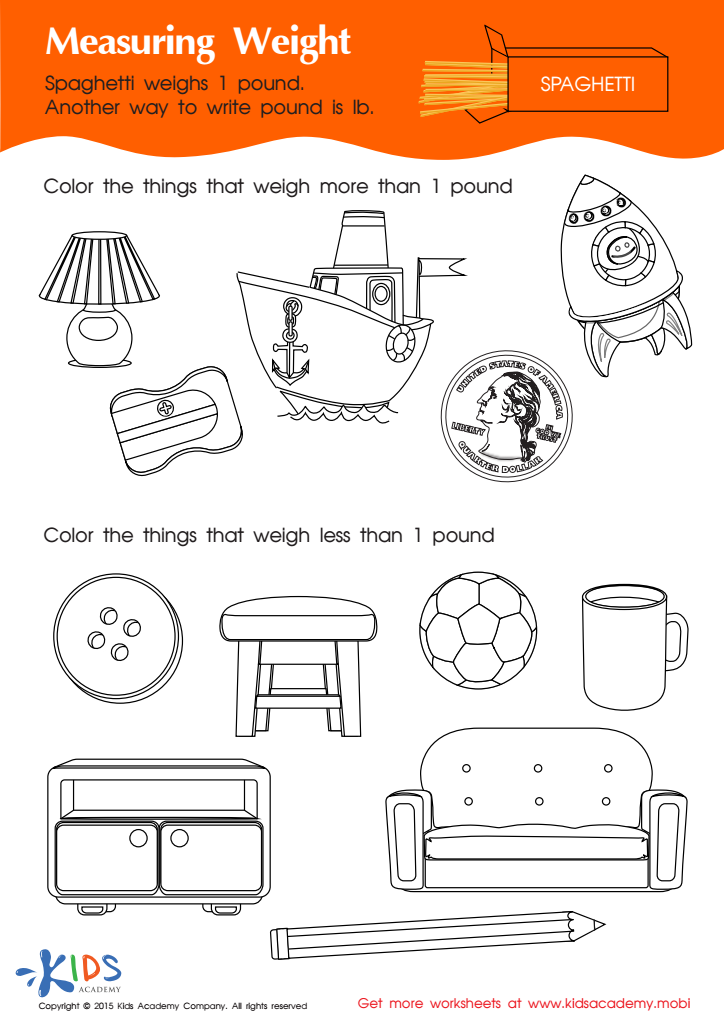
 Assign to My Students
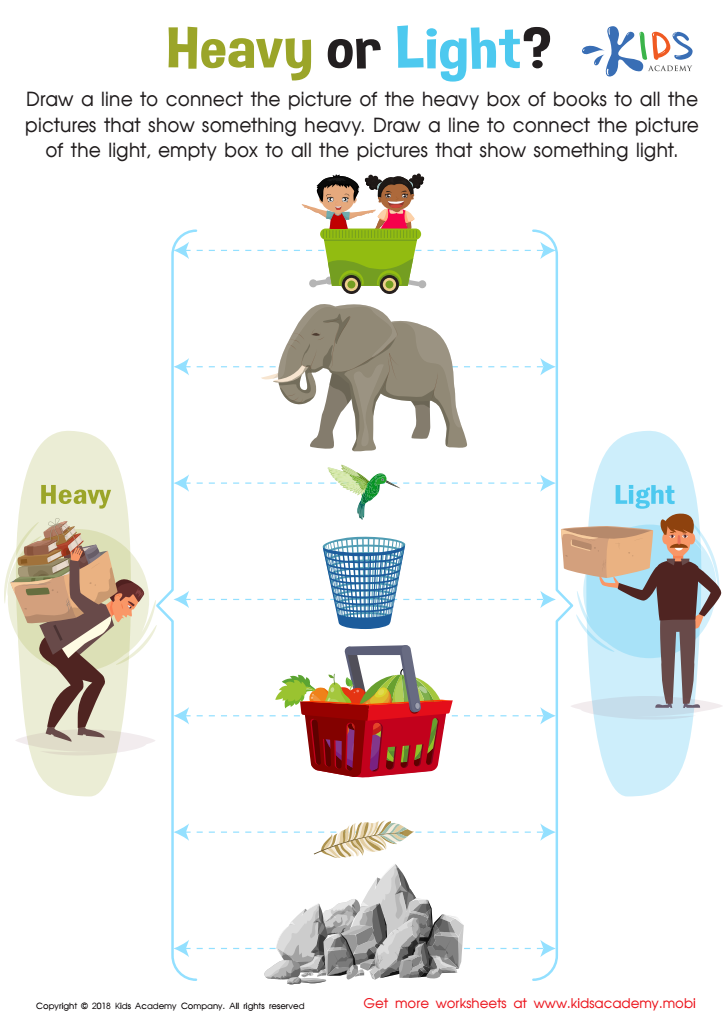
Heavy or Light? Worksheet
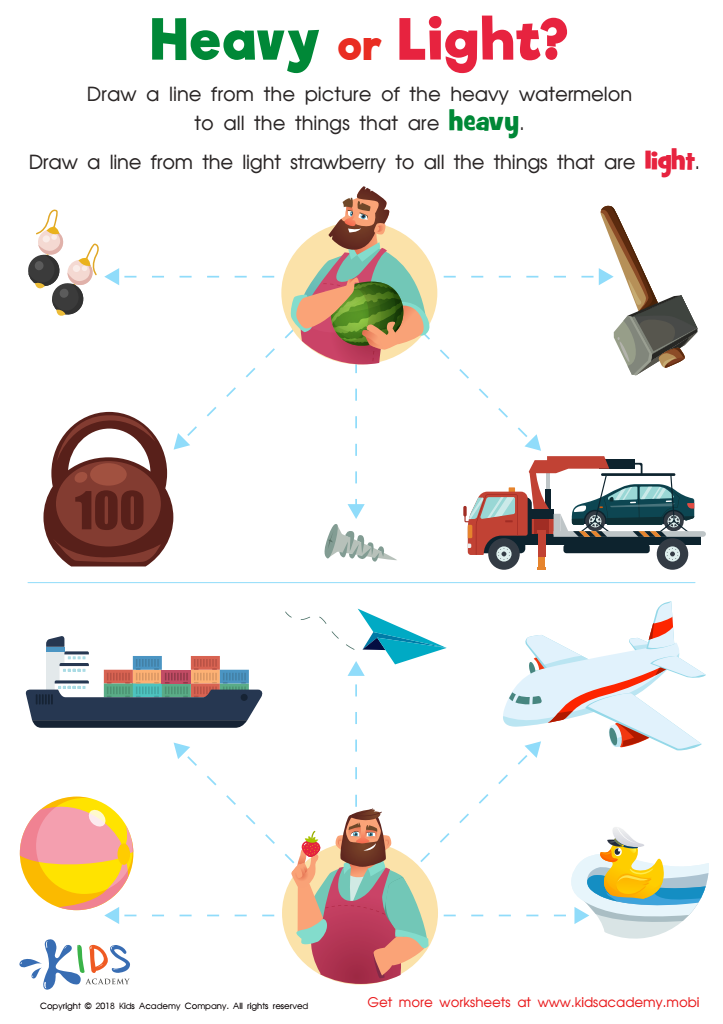
Heavy or Light? Worksheet





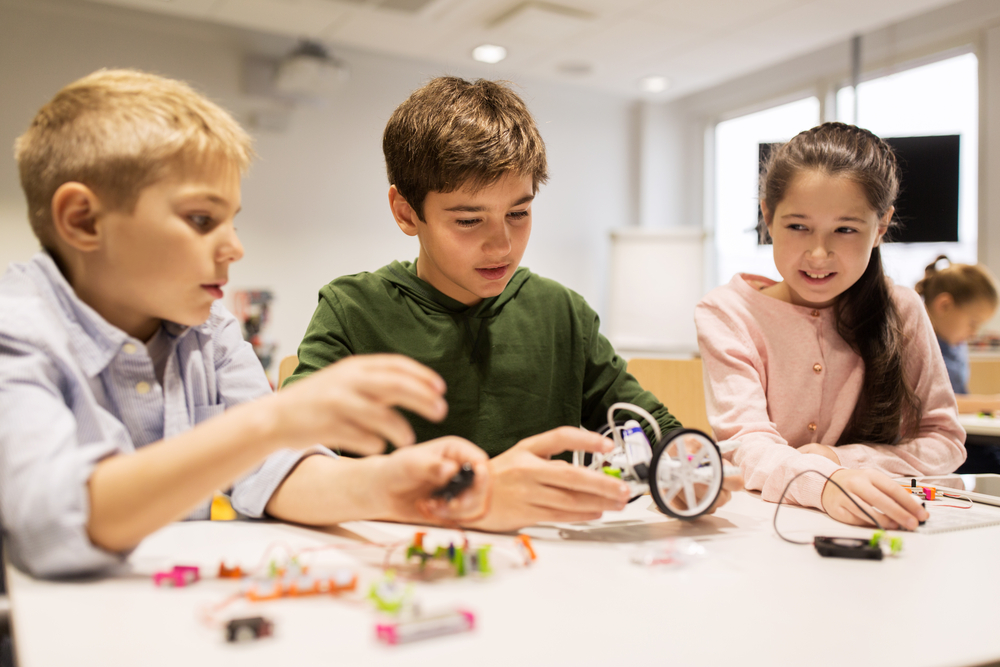

Comparing object weights is an essential mathematical skill for children aged 3-7, as it lays the foundation for various cognitive and motor skills. During this developmental stage, children are naturally curious about the world around them, making it the perfect time to introduce concepts of weight and measurement. Engaging in activities that involve comparing weights helps children enhance their critical thinking, observation, and reasoning abilities.
Understanding weight encourages children to use comparative language such as "heavier," "lighter," "more," or "less," facilitating their verbal skills. Additionally, these activities promote hands-on learning through play, which is vital at this age. As children lift, balance, and manipulate objects, they not only learn about weight but also refine their fine motor skills and hand-eye coordination.
Furthermore, comparing weights provides real-life applications for math, illustrating abstract concepts in tangible ways. Parents and teachers who promote such activities foster a positive relationship with math, reducing anxiety and building confidence in their abilities. Ultimately, emphasizing comparing weights contributes to a child’s overall development, preparing them for more complex mathematical concepts and fostering critical life skills, making it an invaluable part of early education.








