Conversion skills Math Worksheets for Ages 3-7
5 filtered results
-
From - To
Explore our engaging Conversion Skills Math Worksheets designed specifically for children ages 3-7! These worksheets help young learners develop essential math skills by introducing concepts of measurement and conversion in a fun and interactive way. With colorful illustrations and child-friendly activities, kids will practice comparing sizes, understanding weights, and converting between different measurement units. Our resources encourage analytical thinking and problem-solving, while aligning with early educational standards. Perfect for both classroom and at-home learning, these worksheets make mastering conversion skills enjoyable and accessible for all young learners. Start your child’s math journey today with our thoughtfully crafted materials!
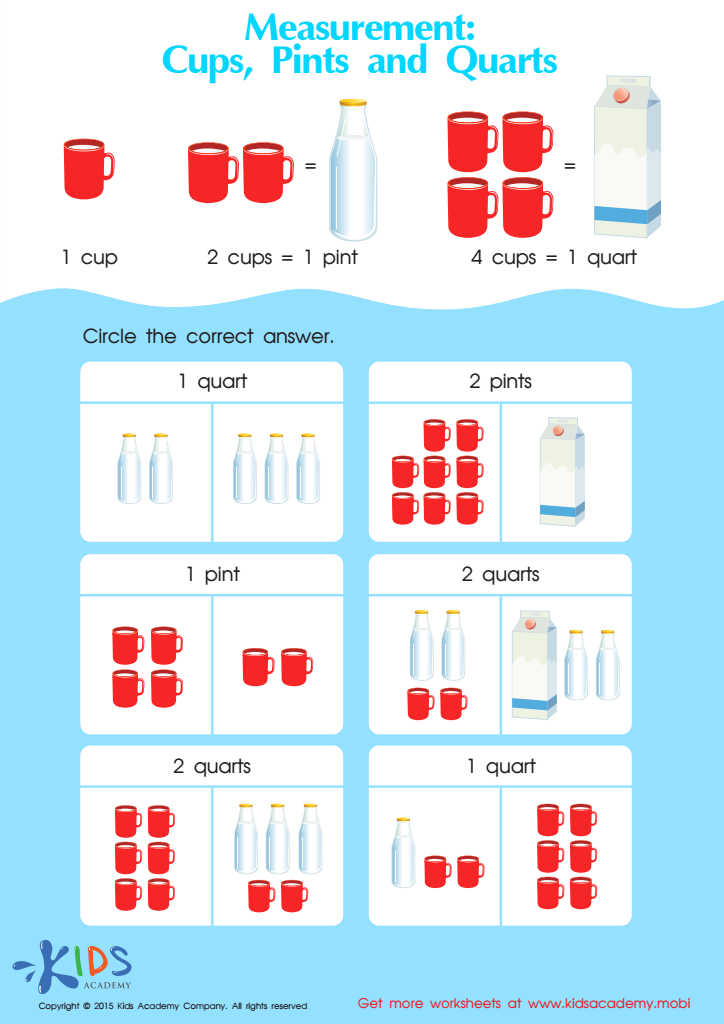
Cups, Pints and Quarts Worksheet
 Assign to My Students
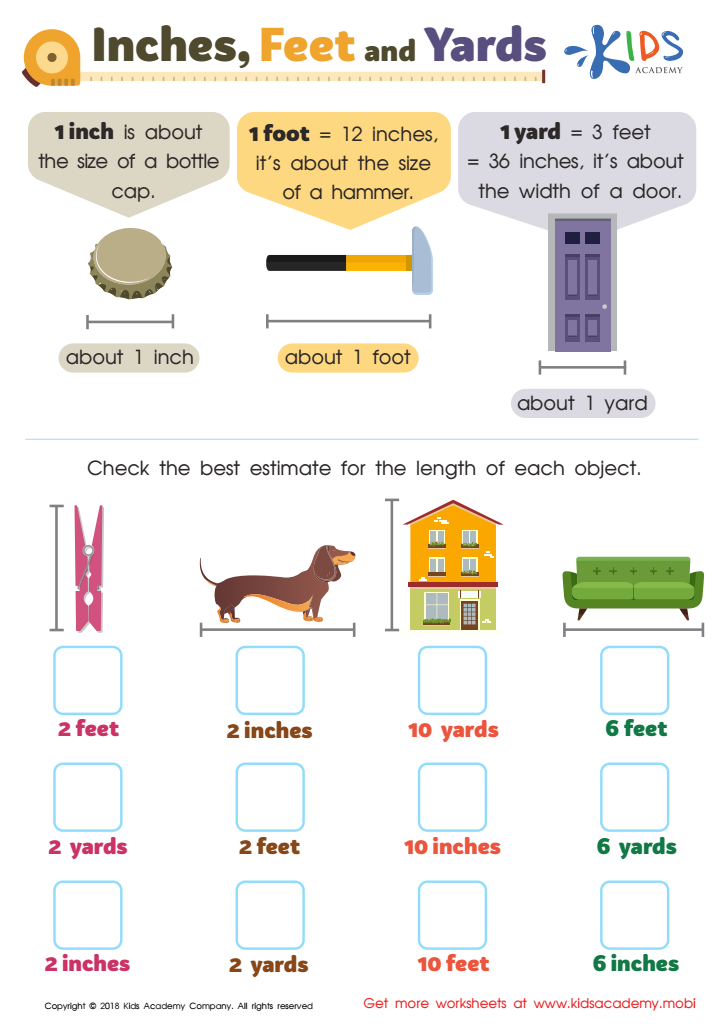
Inches, Feet and Yards Worksheet
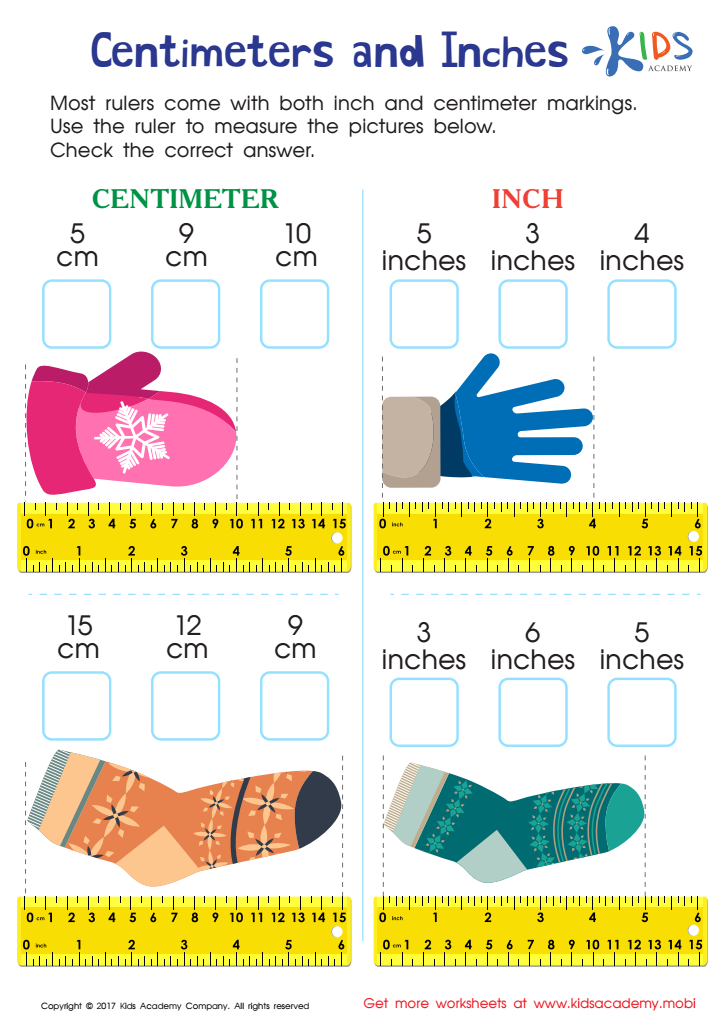
Centimeters and Inches Worksheet
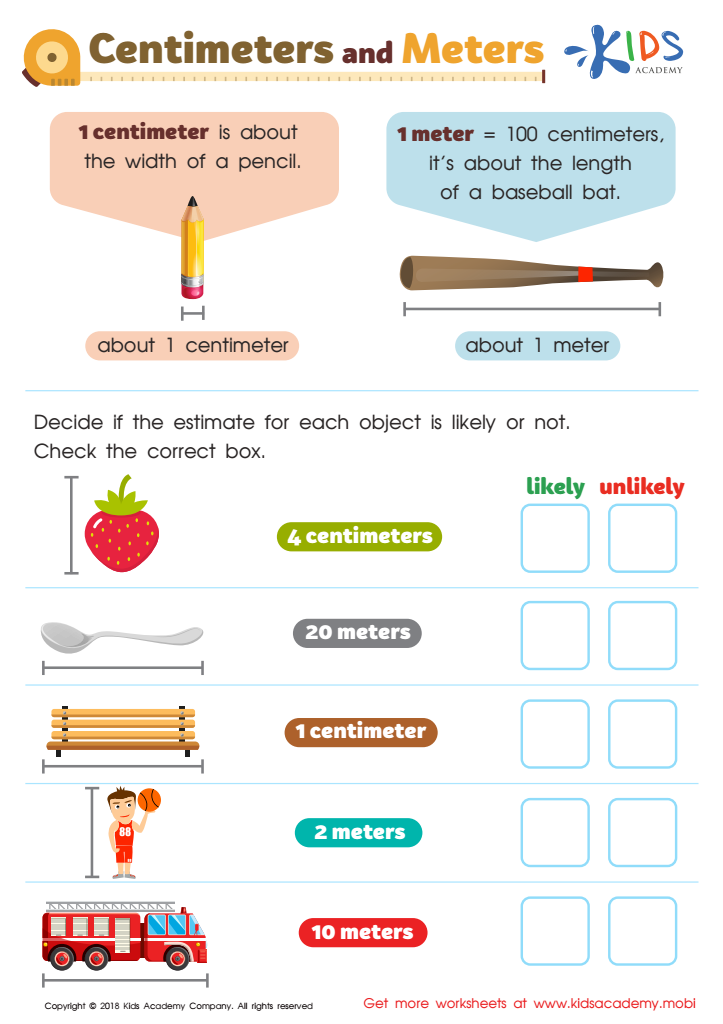
Centimeters and Meters Worksheet
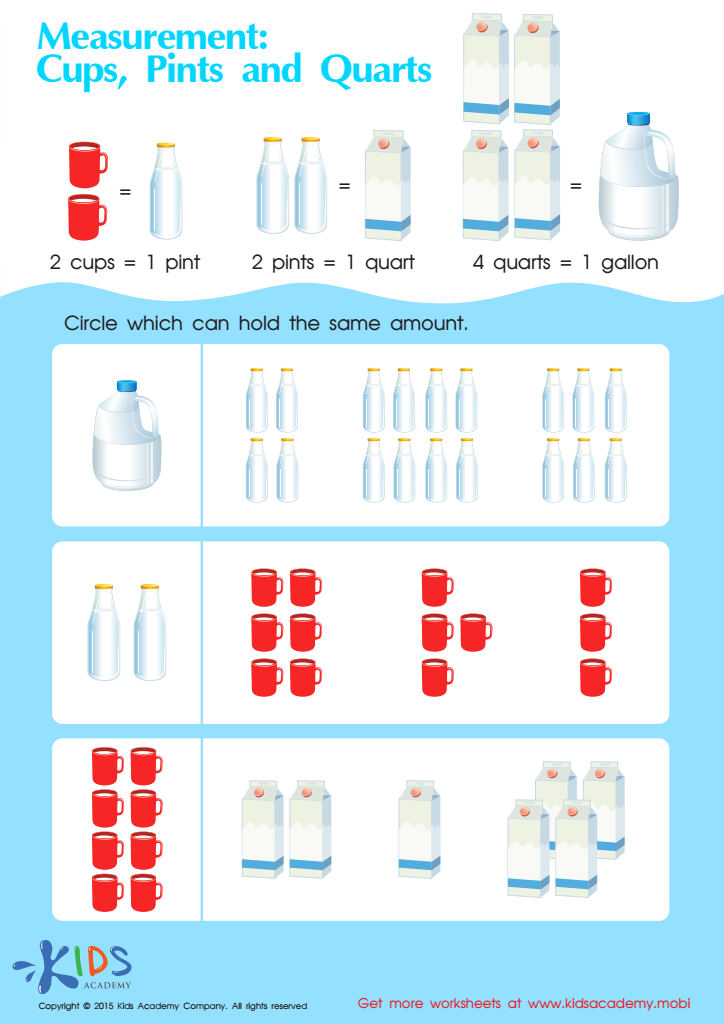
Cups, Pints and Quarts 2 Worksheet






Conversion skills in math, particularly for children ages 3-7, are essential building blocks for their future understanding of mathematics. Developing these skills early fosters critical thinking and reasoning abilities as children learn to understand and manipulate numbers, measurements, and different units of comparison. At this young age, children are naturally curious and ready to explore mathematical concepts, making it the ideal period for building a solid foundation.
Parents and teachers should prioritize conversion skills because they impact everyday functionality. Children learn how to compare sizes, weights, and quantities, which is crucial for problem-solving in real-life situations—like cooking, crafting, or shopping. When children grasp these skills early on, it enhances their confidence in math, reduces anxiety surrounding the subject, and sets the stage for more complex mathematical concepts in later years.
Moreover, integrating conversion skills into play can make learning enjoyable and effective. Engaging in fun activities such as measuring ingredients for a recipe or comparing lengths of different objects encourages exploration and practical application of math. Ultimately, strong conversion skills not only benefit academic performance but also equip children with essential life skills, contributing to their overall cognitive and emotional development.








