
Enhance problem-solving Math Worksheets for Ages 3-7
3 filtered results
Difficulty Level
Grade
Age
-
From - To
Subject
Activity
Standards
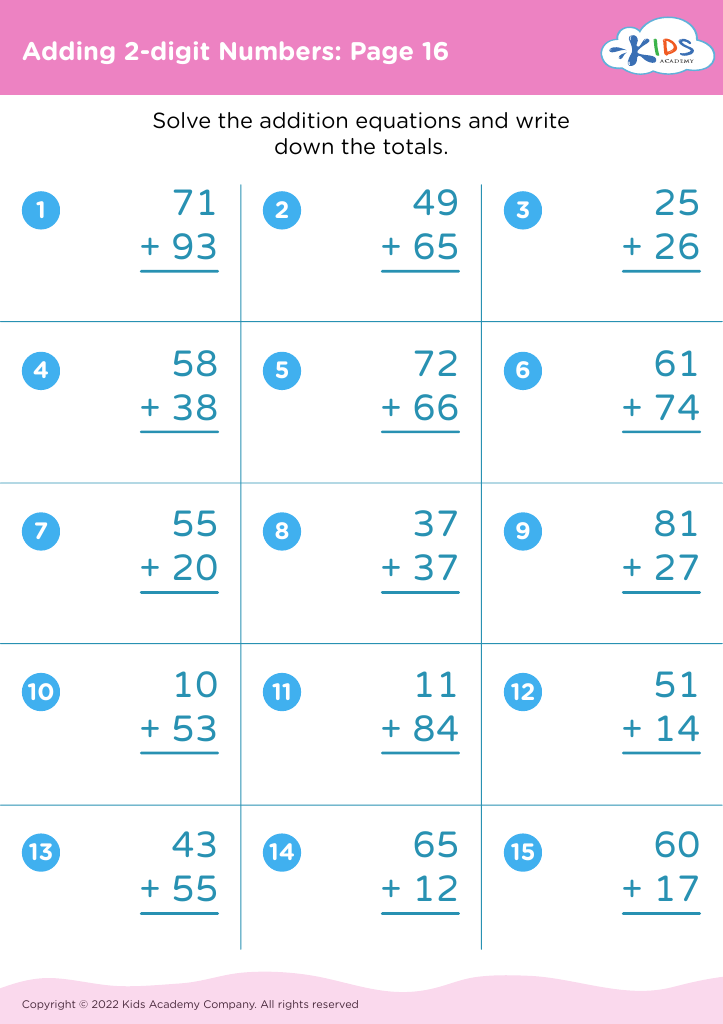
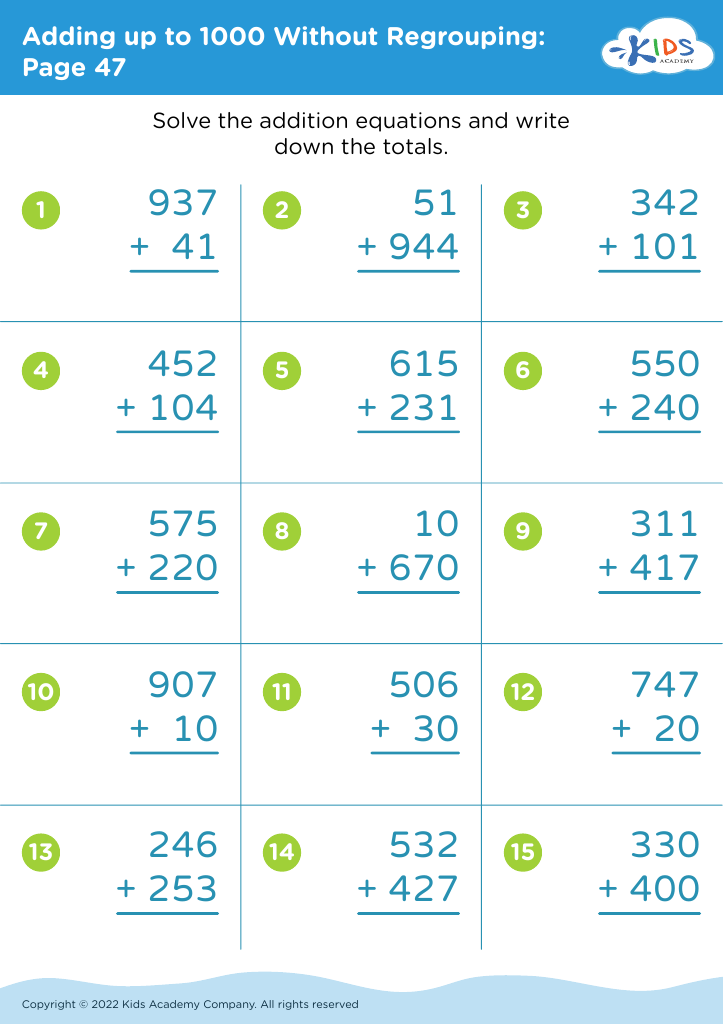
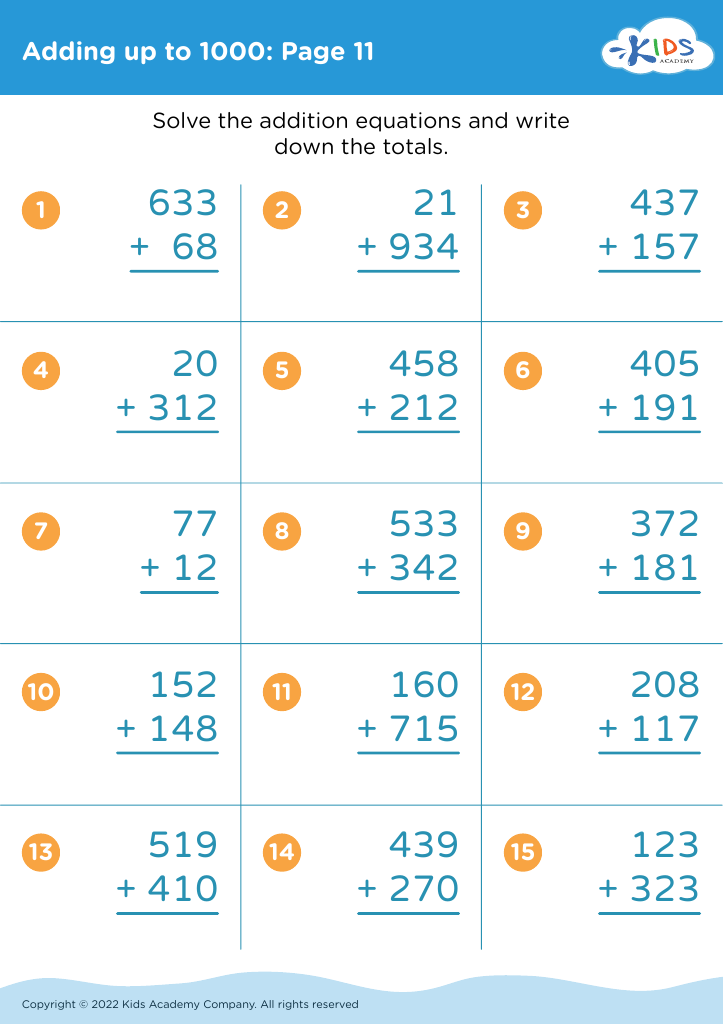
Discover our "Enhance Problem-Solving Math Worksheets" designed for children aged 3-7! These engaging activities aim to develop critical thinking and problem-solving skills in young learners. With colorful illustrations and age-appropriate challenges, our worksheets make learning math fun and interactive. Children will explore concepts such as addition, subtraction, shapes, and patterns while boosting their confidence and independence. Perfect for classroom settings or at-home learning, our worksheets support early math skills essential for future academic success. Download now and watch your child enjoy the journey of becoming a young problem solver! Help them build a strong foundation in math today!
Favorites
With answer key
Interactive
Join Kids Academy for Free
Who is primarily going to use this learning content?








Enhance problem-solving math for children ages 3-7 is crucial for various reasons. First, this foundational stage in a child's development is when they begin to cultivate critical thinking and cognitive skills. Engaging young learners with problem-solving math nurtures their innate curiosity and encourages them to explore, question, and find solutions independently.
Developing problem-solving abilities at this age fosters resilience in facing challenges, as children learn that mistakes are an essential part of the learning process. This mindset builds confidence and reduces anxiety around more complex mathematical concepts they will encounter later in their education.
Moreover, early math skills are connected to later academic success. Research shows that children who solve mathematical problems effectively in early years are more likely to excel in math and reading as they progress through school. School and home environments both play a vital role in shaping attitudes towards math; thus, when parents and teachers collaborate to enrich problem-solving experiences, they promote positive attitudes towards mathematics.
Lastly, enhancing problem-solving math at this stage equips children with essential life skills. As they learn to analyze, reason, and approach different scenarios logically, they prepare themselves not just for future coursework but for real-world challenges as well.








